

Xbiome's Genetically Engineered Microbial Drug AUP1602-C Granted IND Approval to Enter Phase II Clinical Trials in China for Diabetic Foot Ulcers

Xbiome
AI Drug Developer for Gut Microbiota
Recently, Xbiome Co. Ltd. (hereinafter referred to as "Xbiome") announced that its drug pipeline, with the registration code AUP1602-C and indicated for diabetic foot ulcers, has officially received the clinical trial approval notice from the National Medical Products Administration (hereinafter referred to as: NMPA), allowing it to directly enter Phase II clinical trials in China.
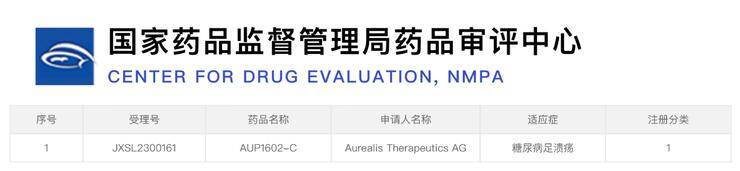
Public information shows that AUP1602-C is the first genetically engineered bacterial drug pipeline to receive clinical approval from the NMPA (Source: Center for Drug Evaluation, National Medical Products Administration, and PharmaCube database, same throughout the text), establishing another significant milestone for China's microbiome drug research and development.
Currently, diabetic foot ulcers are facing a global medical dilemma. Only in China, millions of people face the risk of amputation each year due to this condition; the proportion of diabetic patients in China has exceeded 10%, and the medical burden of diabetic foot ulcers is particularly heavy. AUP-1602C has quickly entered phase II clinical trials, with the hope of soon meeting the enormous, urgent, and unmet clinical needs of patients with this disease.
Dr. Tan Yan, co-founder and CEO of Xbiome, stated, "We are very pleased to see AUP1602-C become the first project of Xbiome to enter Phase II clinical trials, which also marks Xbiome entering a brand-new stage of development. In just six years since the company's establishment, we have formed a complete, efficient, and complementary layout for dual filings in China and the United States in the drug pipeline R&D. Through scientific decision-making and efficient R&D, all drug pipelines have formed a tiered advancement momentum."
AUP1602-C has successfully entered Phase II clinical trials in China, marking a significant step forward in Xbiome's three major strategic layouts: drug development, FMT, and probiotics. It also represents another remarkable achievement under the company’s long-term commitment to differentiated innovation and commercialization strategies.
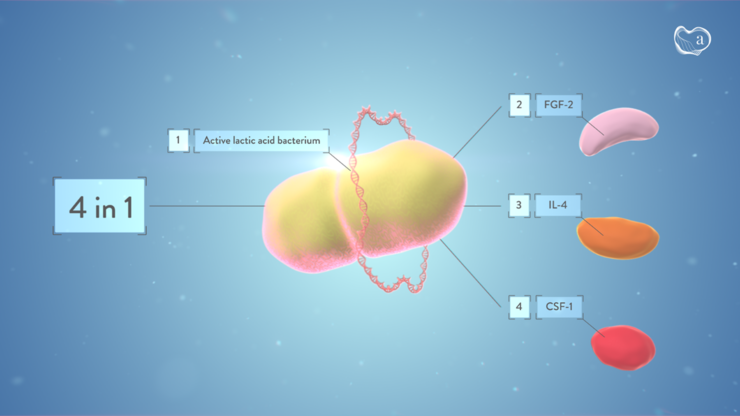
It is reported that AUP1602-C, developed by the European drug research and development company Aurealis Therapeutics, is a genetically engineered Lactococcus lactis, as well as a non-pathogenic probiotic.
It carries the coding genes of various regenerative factors inside, which can express human basic fibroblast growth factor (FGF2, bFGF), interleukin 4 (IL-4), and macrophage colony-stimulating factor (CSF1, mCSF). AUP-16 is locally administered at the wound site and covered with a dressing for the treatment of chronic wounds such as diabetic foot ulcers, lower extremity venous ulcers, and pressure ulcers.
Entering the wound microenvironment, AUP-16 acts as millions of "immune-activating bioreactors," promptly initiating the expression of regenerative factors, continuously modulating the immune system, and reversing chronic inflammation by inducing M2 macrophage polarization. On this basis, it ultimately achieves rapid and complete wound healing by promoting angiogenesis, granulation tissue formation, and re-epithelialization, innovatively addressing the current dilemma of balancing efficacy and cost control in mainstream therapies.
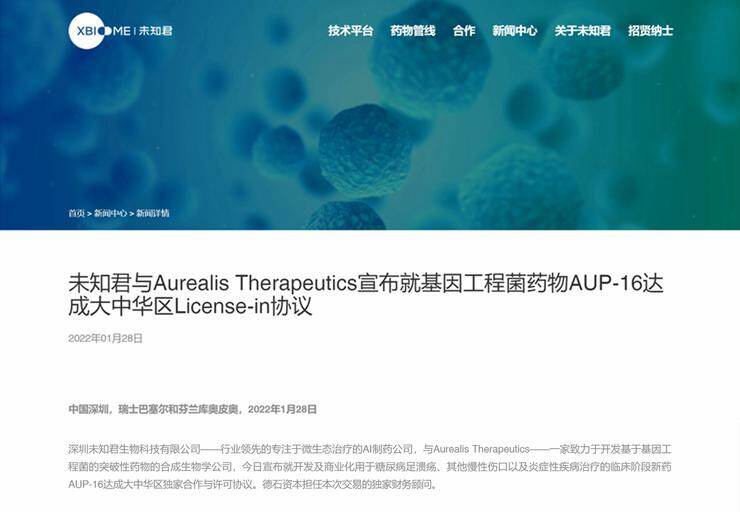
In 2022, Xbiome and Aurealis Therapeutics jointly announced an exclusive collaboration and licensing agreement for the development and commercialization of the pipeline in the Greater China region. Public information shows that this is the first global collaboration project for a synthetic biology drug pipeline in Asia. Subsequently, Xbiome submitted a clinical trial application to the NMPA, which was accepted on August 31, 2023; ultimately, it received formal approval the other day, allowing it to directly enter phase II clinical trials in China.
AUP1602-C is the first genetically engineered live bacterial preparation to be submitted for regulatory approval in China. Due to differences in regulatory frameworks between China and Europe, the submission of AUP1602-C's IND in China faced numerous challenges. The Xbiome team actively communicated with the NMPA regarding relevant issues and eventually reached an agreement with them.
Currently, the drug is undergoing clinical trials in Europe simultaneously. Phase I of the clinical trial has been completed. All subjects were divided into four groups according to the "3+3" dose escalation principle: safe dose, low dose, medium dose, and high dose. A total of 16 patients received local treatment with AUP1602-C.
Clinical results showed that AUP1602-C demonstrated good safety, tolerability, and positive efficacy, with no dose-limiting toxicity or systemic toxicity observed, no serious adverse reactions reported, and 83% of patients achieving complete healing. The Phase II clinical trial is also underway in Europe, currently in the patient enrollment stage.
Currently, the application of synthetic biology technology to industrial scenarios such as drug development remains a cutting-edge discipline and emerging field globally. AUP1602-C has received clinical trial approval from China's NMPA and will directly enter phase II clinical trials, indicating that Xbiome's technology platform and regulatory pathway for developing live biotherapeutic products based on synthetic biology technology have reached an internationally advanced level.
At the same time, the registration application of AUP1602-C has opened up a feasible pathway for the registration of genetically engineered microbial drugs in China, leading and promoting the healthy and rapid development of the industry.
Next, Xbiome will work with its European partners to accelerate the clinical trial process. At the same time, it will begin technology transfer to ultimately achieve localized production of the product in China. Xbiome will also further deepen its collaboration with European partners at the R&D level, exploring the drug's potential in treating more indications.
Leifeng.com Leifeng.com(Official Account: Lei Feng Network)
Original article by Leifeng.com. Reprint prohibited without authorization. For details, seeReprint Notice。