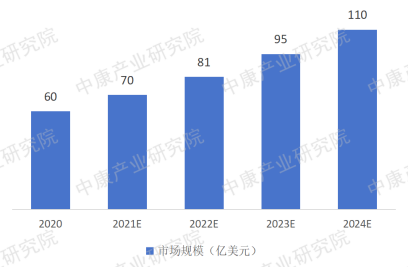
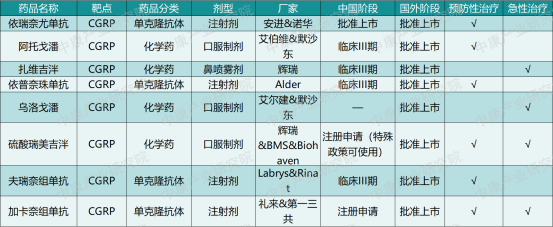
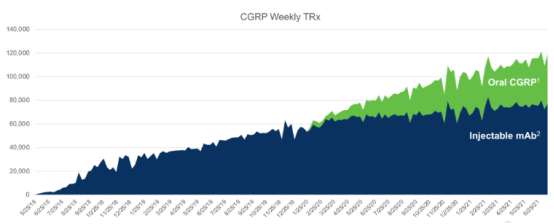
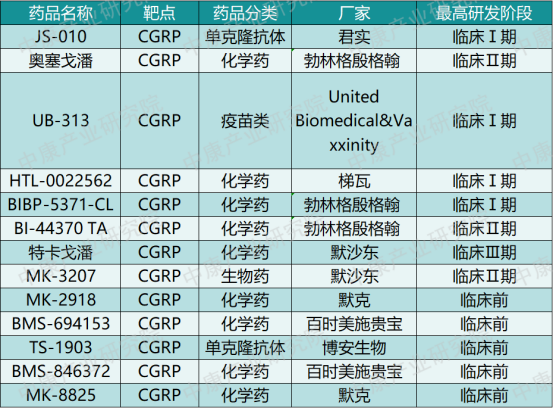
At the 6th CIIE, Pfizer showcased two migraine products: Rimegepant Orally Disintegrating Tablets and Zavzpret. Rimegepant Orally Disintegrating Tablets are currently the world’s first and only calcitonin gene-related peptide (CGRP) receptor antagonist available in a fast-dissolving oral disintegrating tablet formulation. It can be used for both acute treatment and preventive treatment of migraines. It has already been introduced in Boao Lecheng, Hainan, and the Guangdong-Hong Kong-Macao Greater Bay Area, with Pfizer rapidly advancing its approval process in China. Zavzpret is the world’s first and only nasal spray CGRP receptor antagonist for the acute treatment of migraines and is expected to arrive in the Boao Lecheng pilot zone in 2024, benefiting many patients in China. China has 130 million migraine patientsMigraine Market to Exceed $110 Billion in 2024 Migraine is a common chronic episodic brain dysfunction disease, characterized clinically by recurrent, mostly unilateral, moderate to severe pulsating headaches, often accompanied by symptoms such as nausea, vomiting, photophobia, and phonophobia. According to statistics, the global prevalence of migraine is about 14.4%, with a male lifetime prevalence of approximately 10% and a female prevalence of about 22%. The annual prevalence of migraine in China is 9.3%, with a total number of sufferers reaching approximately 130 million, and a higher prevalence among women. The affected population mainly concentrates in middle-aged individuals between 40-49 years old. Additionally, migraine has a certain degree of familial aggregation, with a heritability rate of 42%, ranging between 46.0% and 52.1%. However, past data shows that the diagnosis and treatment of migraine in China are still largely inadequate. The patient consultation rate is only 52.9%, and the correct diagnosis rate by physicians is merely 13.8%. Issues such as insufficient preventive treatment and overuse of painkillers are also widespread. Therefore, migraine medications in China are in a state of urgently needing to fill a gap, indicating huge market potential. According to forecasts, the global migraine market size is expected to exceed $11 billion by 2024. Figure 1: Global Migraine Market Size in 2024Data source: Evaluate Pharma,整理by 中康产业研究院 According to the recommendations of the 2022 edition of the "Chinese Migraine Diagnosis and Treatment Guidelines," acute treatment for migraine attacks is currently divided into specific and non-specific treatments. Non-specific treatments only involve pain relief and symptom alleviation. Specific treatment drugs mainly include four categories: triptans, ergotamines, ditans, and gepants. The guideline-recommended triptans are sumatriptan, rizatriptan, zolmitriptan (oral), and zolmitriptan (nasal spray); ergotamine and its derivatives include dihydroergotamine and ergotamine; ditans include lasmiditan; gepants include rimegepant and ubrogepant. Preventive drugs mainly include calcium channel blockers/modulators, antiepileptic drugs, beta-blockers, antidepressants, gepants, CGRP or its receptor monoclonal antibodies, etc. The Rise of CGRP: Only Novartis Approved in China In primary headache disorders, the trigeminal sensory nerve plays a crucial role. CGRP induces vasodilation in cerebral arteries, making it a significant factor in triggering headaches. Therefore, CGRP has become an important drug target for the treatment of migraine. Currently, there are a total of 8 CGRP-targeted drugs globally, including 4 chemical drugs and 4 monoclonal antibody drugs. Among them, Novartis' Erenumab is the first and only fully human monoclonal antibody drug targeting the calcitonin gene-related peptide (CGRP) receptor approved in China. With the support of the "Hong Kong-Macao Drug Importation Scheme," Erenumab was initially introduced in the Guangdong-Hong Kong-Macao Greater Bay Area. Table 1: Eight CGRP Drugs WorldwideData source: Public information,整理by the Sino Health Industry Research Institute There are currently no chemically synthesized drugs approved for use in China, with the exception of Rimegepant, which has entered the Greater Bay Area and Boao, Hainan through relevant policies. According to IQVIA data, the emergence of oral CGRP drugs has significantly impacted injectable medications, and oral CGRP drugs are also expected to rapidly drive the growth of the CGRP market. Compared to injectables, chemical drugs offer the advantage of convenience, which could positively influence the treatment of patients during acute episodes and provide a more convenient option for prevention. Therefore, if these drugs are launched in the Chinese market in the future, they may substantially affect the current market landscape. Novartis' leading position in the CGRP field in China could be threatened. Figure 2 Market Trends Driven by Oral CGRP and Injectable CGRP in 2020-2021Data source: IQVIA, Guosheng Securities Few domestic companies have made arrangements.Price Impact on the Rapid Popularization of Innovative Migraine Drugs Compared with the vigorous R&D activities overseas, there are fewer R&D layouts by domestic companies in China. Currently, only JS010 from Junshi Biosciences has entered clinical trials for the prevention of migraines. Table 2: R&D Status of CGRPData source: Public information,整理by the Sino Health Industry Research Institute At the same time, the pricing of drugs is also a problem that both companies and patients have to face. The prices of monoclonal antibodies targeting CGRP or its receptors are relatively high, with the cost of one injection of Erenumab exceeding 5,500 yuan, while Rimegepant Sulfate has not yet been officially launched in China. This price differs significantly from other drugs such as Ibuprofen, so whether patients can afford it will be a major issue in the future. Therefore, it is hoped that companies in China can speed up their pace and make arrangements according to their own situations. As more and more similar varieties are approved, the price will inevitably decrease. The best approach for innovative drugs is to enter the pharmaceuticals market, with a reduction of at least 50%. China's large population of people suffering from migraines also gives pharmaceutical companies ample room to exchange volume for price. Source: XinkangjieWorkAuthor: Liu Yao