

Qihan Bio Advances to Clinical Stage with Lead Product QN-019a and Secures Over RMB 100 Million in Pre-B Financing

Qihan Biotech
Gene Editing Technology Developer
▎WuXi AppTec Content Team Report
Biopharmaceutical company Qihan Biotech achieved several significant milestones in 2023: On July 18, the company's first product, QN-019a, received clinical approval in China, marking Qihan Biotech's official entry into the clinical stage; on September 13, Fortune released its 2023 list of "China's Most Socially Influential Startups," with Qihan Biotech making the list due to its innovative technology in cell therapy; on September 22, Qihan Biotech announced the completion of a Pre-B round of financing exceeding 100 million yuan, which will be used to support the rapid iteration and global development of the company’s gene-editing products over the next 4-5 years. These developments have once again drawn industry attention to this rising star.
Hangzhou Qihan Biotech Co., Ltd. was founded in 2017 and is committed to applying high-throughput gene editing technology in the fields of cell therapy and organ transplantation. The company was named one of the "50 Smartest Companies of 2019" by MIT Technology Review. Since its establishment, Qihan Biotech has received support from numerous investment institutions, including Sequoia Capital China, CMB International Capital, Lilly Asia Ventures, Matrix Partners China, and Zhejiang Industrial Fund. The company has established a high-throughput gene editing platform, a stem cell differentiation immune cell platform, and a non-human primate platform, which can be used to develop various universal products. Currently, Qihan Biotech has multiple allogeneic cell therapy products undergoing investigator-initiated clinical trials, among which the gene-edited iPSC-derived cell therapy product QN-019a has received tacit approval for clinical trials from the National Medical Products Administration of China.
So, what are the core advantages of Hangzhou Qihan Biotech Co., Ltd. in the field of cell and organ therapy? What are the key challenges for cell therapy transitioning from individualized treatments to off-the-shelf universal options? And what potential solutions does Qihan Biotech offer for these challenges? With these questions in mind, the content team of WuXi AppTec recently interviewed Dr. Luhan Yang, founder and CEO of Qihan Biotech. Dr. Yang received her bachelor's degree from Peking University and her Ph.D. from Harvard University, and has been repeatedly featured on various elite lists published by renowned magazines such as Forbes and Fortune.
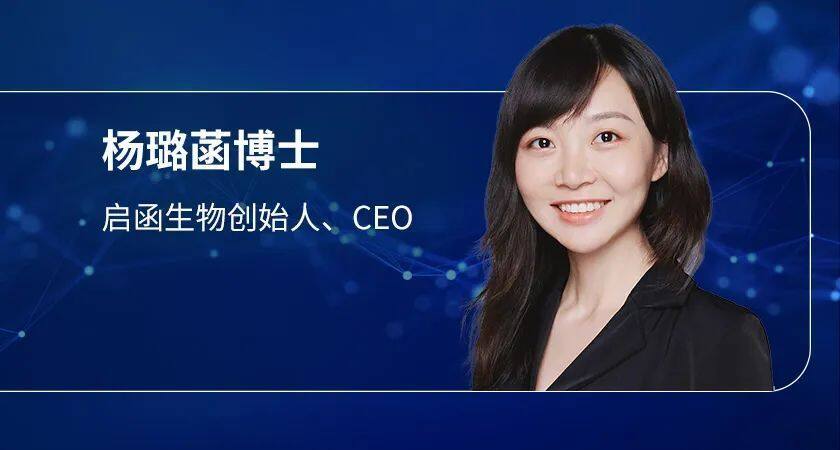
Image Source: Provided by Qihan Biotech, Produced by the WuXi AppTec Content Team
WuXi AppTec Content Team: Why did you choose to start a business in the field of cell and organ therapy?
Dr. Luhan Yang
: A review of the entire history of pharmaceutical development, from small molecules to large molecules, shows that drug development has increasingly tended toward targeting and functional diversity. Unlike small molecules and large molecules, cell therapy is a living drug. It not only possesses killing ability and expansion capability, but after expansion, it also attracts other immune cells to attack tumors, offering more diverse and long-lasting functionality. Additionally, cell therapy can exert many structural functions. Therefore, I believe that cell therapy will undoubtedly be a future trend in drug development.
Organ transplantation is another field that I am optimistic about. I once read a book that had a particularly profound impact on me called
The Puzzle People," written by Dr. Thomas Starzl, the founding figure in the field of organ transplantation. This book made me realize that organ transplantation can save critically ill patients and enable post-transplant patients to survive continuously for 30 to 40 years, which is a remarkable feat in the biopharmaceutical and life sciences fields.
I myself majored in biotechnology, and have been working in the cell and organ therapy industry since graduation, for nearly 8 years now. I feel extremely fortunate to have caught the right era, learned and mastered advanced technologies and tools, and been lucky enough to participate in and witness the rise of the cell and gene therapy (CGT) industry.
WuXi AppTec Content Team: What are the unique advantages of Qihan Biotech's technologies and products? Which pain points in current disease treatment do they have the potential to address? What are the key challenges to fully realizing the potential of Qihan Biotech's cell therapy products? And what are the potential solutions?
Dr. Luhan Yang
: The mission of Hangzhou Qihan Biotech Co., Ltd. is to leverage its strengths, namely the use of multi-gene editing technology and knowledge of transplant rejection, to develop allogeneic off-the-shelf cell therapies and xenotransplantation organ therapies, ultimately alleviating patient suffering. Our short-term goal is to develop off-the-shelf cell therapies, while our long-term vision is directed towards organ therapies, which require long-term accumulation.
Off-the-shelf cells hold great potential, especially those derived from stem cells. This field as a whole is still in the early stages of industrial exploration, primarily due to two fundamental biological issues that remain unresolved. First, if the source is allogeneic cells, they will inevitably face host rejection, which challenges the sustainability of the cells. In this context, how to design and optimize the product so that it can rapidly kill tumors like autologous cells while providing long-term monitoring of tumor recurrence is an urgent problem for the industry to solve. Second, if the source is stem cells, ensuring that their differentiated cells can match primary cells in terms of safety, efficacy, and long-term persistence also presents a significant challenge.
At Hangzhou Qihan Biotech Co., Ltd., we have established multiple technological platforms with the potential to address core issues in the field. The first is a high-throughput gene-editing platform, which can modify dozens of genes in a single cell. This is especially crucial when product assembly is complex and requires consideration of multiple factors such as anti-rejection responses, sustainability, and cytotoxic functionality—making multi-gene editing essential while also accelerating product development. The second is a non-human primate platform that mirrors human biology. Through this platform, we can reprogram monkeys' fibroblast stem cells into induced pluripotent stem cells, which are then differentiated into immune cells and infused back into the monkey's body. Unlike most cell therapy companies that rely on xenogeneic mouse models for preclinical animal experiments, our non-human primate platform better simulates the human immune system. It provides robust animal data to test the clinical safety, persistence, and efficacy of gene-edited NK cells, giving us greater confidence in our products before they enter clinical trials. For example, different edited cells can be introduced into the same monkey to screen for beneficial edits. Additionally, PET-CT scans and in vivo monitoring can be performed on monkeys to better understand cell distribution, homing, and survival within the body. Furthermore, thanks to China’s dual-track system for cell therapy products, Qihan Biotech can rapidly iterate its products and conduct clinical trials under the supervision and collaboration of health authorities and hospitals.
Of course, in my opinion, for a company, technology is the cornerstone, but the key to success lies in the people and culture of the company. Over the past few years, Hangzhou Qihan Biotech Co., Ltd. has developed several distinct cultural traits that have helped address research and development challenges in the field of cell therapy. We are a hard-fighting team. Although the scientific research we engage in is challenging, if we consider the issues from the perspective of first principles, the two fundamental problems of cell therapy are solvable scientific questions. What we need to do is figure out how to solve them. At the same time, we are also an open and self-reflective team. After all, our understanding of diseases, cells, and even tools is limited, and the entire field is still in the early stages of learning by doing. Therefore, every day, the team at Qihan Biotech learns new skills, knowledge, and working methods, which allows us to progress together. Unity and collaboration are also core aspects of our culture. Since products require rapid iteration from R&D to production and then to clinical application, not only does this necessitate quick translation from upstream to downstream processes, but it also requires downstream teams to rapidly feedback critical information to upstream teams. In this process, teamwork and synergy are crucial. Qihan Biotech started with technology, but if one day we succeed, I believe it will be because of our people and culture.
WuXi AppTec Content Team: In the next few years, what milestone developments are expected in Qihan Biotech's R&D pipeline?
Dr. Luhan Yang
QN-019a is an immunocyte product that combines gene editing with stem cells. Its clinical trial application has received tacit approval from the China National Medical Products Administration. We will steadily advance its clinical trials targeting B-cell lymphoma.
At the same time, we are also developing iPSC-derived off-the-shelf products for acute myeloid leukemia (AML), hoping to achieve a 50% complete remission (CR) rate and long-term sustained remission in research, thereby benefiting patients. AML is a hematological malignancy with significant unmet clinical needs. Patients who are intolerant to radiotherapy and chemotherapy or experience recurrence have an average survival of only about six months. CAR-T therapy also has limitations in terms of safety and efficacy in treating AML. iPSC-derived immune cells, especially NK cells, offer certain advantages in AML treatment, which is also a key area our rapid iteration platform needs to breakthrough.
In addition, we will also explore the application of other iPSC-derived immune cell products in other disease categories.
WuXi AppTec Content Team: If we gather here again 10 years from now, what changes do you think the cell and gene therapy field will witness? Could you paint a picture of what the landscape might look like in 10 years?
Dr. Luhan Yang
: I am cautiously optimistic about this. According to the innovation curve proposed by Gartner, a globally renowned technology consulting firm, all innovative technologies go through stages of rapid growth, sharp decline, and recovery. When a new technology emerges, everyone rushes to embrace it; when it is discovered that the technology cannot be successfully implemented, people start to panic and withdraw, which is a process of disillusionment; as the technology gradually matures, it will experience a slow upward climb of enlightenment; finally, the technology achieves mature development and widespread application. In fact, all technologies in various industries, including TMT (telecom, media, and technology), biopharmaceuticals, chips, artificial intelligence, etc., follow this curve, although the cycles, peaks, and troughs may vary for different technologies.
In my view, the current off-the-shelf cell therapy is still in a stage of disillusionment. However, looking ahead to the next decade, I believe that there will definitely be companies capable of developing off-the-shelf cell therapy products, including some from China. At the same time, the indications for cell therapy will be greatly expanded—not only for hematological tumors, but also for solid tumors, autoimmune diseases, infectious diseases, and even anti-aging, which is an inevitable trend. Hopefully, one day, whatever immunotherapy can achieve, cell therapy will be able to achieve as well.
WuXi AppTec Content Team: As an entrepreneur in the innovative drug field, what other viewpoints and voices do you hope to convey to the industry?
Dr. Luhan Yang
: The development of off-the-shelf cell therapy products is a long and challenging journey, but progress will come if we persist. This field is currently facing numerous difficulties: scientific uncertainties, an industry capital winter, and the recruitment, training, and retention of talent, among others. However, imagine 10 years from now—if we truly manage to transform innovative technologies into products that benefit patients, it will not only reshape the entire pharmaceutical landscape but may also revolutionize the way new drugs are developed globally. If this vision becomes reality, all the effort and dedication will have been worthwhile. I also hope more like-minded individuals who wish to contribute to the biopharmaceutical field will join Hangzhou Qihan Biotech Co., Ltd., to realize our shared value and shape the future together.
.data_color_scheme_dark{--weui-ORANGERED: #ff6146;--weui-BG-0: #111;--weui-BG-1: #1e1e1e;--weui-BG-2: #191919;--weui-BG-3: #202020;--weui-BG-4: #404040;--weui-BG-5: #2c2c2c;--weui-FG-0: rgba(255, 255, 255, .8);--weui-FG-HALF: rgba(255, 255, 255, .6);--weui-FG-1: rgba(255, 255, 255, .5);--weui-FG-2: rgba(255, 255, 255, .3);--weui-FG-3: rgba(255, 255, 255, .1);--weui-FG-4: rgba(255, 255, 255, .15);--weui-FG-5: rgba(255, 255, 255, .1);--weui-RED: #fa5151;--weui-REDORANGE: #ff6146;--weui-ORANGE: #c87d2f;--weui-YELLOW: #cc9c00;--weui-GREEN: #74a800;--weui-LIGHTGREEN: #3eb575;--weui-BRAND: #07c160;--weui-BLUE: #10aeff;--weui-INDIGO: #1196ff;--weui-PURPLE: #8183ff;--weui-WHITE: rgba(255, 255, 255, .8);--weui-LINK: #7d90a9;--weui-TEXTGREEN: #259c5c;--weui-FG: #fff;--weui-BG: #000;--weui-TAG-TEXT-RED: rgba(250, 81, 81, .6);--weui-TAG-BACKGROUND-RED: rgba(250, 81, 81, .1);--weui-TAG-TEXT-ORANGE: rgba(250, 157, 59, .6);--weui-TAG-BACKGROUND-ORANGE: rgba(250, 157, 59, .1);--weui-TAG-TEXT-GREEN: rgba(6, 174, 86, .6);--weui-TAG-BACKGROUND-GREEN: rgba(6, 174, 86, .1);--weui-TAG-TEXT-BLUE: rgba(16, 174, 255, .6);--weui-TAG-BACKGROUND-BLUE: rgba(16, 174, 255, .1);--weui-TAG-TEXT-BLACK: rgba(255, 255, 255, .5);--weui-TAG-BACKGROUND-BLACK: rgba(255, 255, 255, .05)}.data_color_scheme_dark{--weui-BTN-ACTIVE-MASK: rgba(255, 255, 255, .1)}.data_color_scheme_dark{--weui-BTN-DEFAULT-ACTIVE-BG: rgba(255, 255, 255, .126)}.data_color_scheme_dark{--weui-DIALOG-LINE-COLOR: rgba(255, 255, 255, .1)}.data_color_scheme_dark{--weui-BG-COLOR-ACTIVE: #373737}.data_color_scheme_dark{--weui-BG-6: rgba(255, 255, 255, .1);--weui-ACTIVE-MASK: rgba(255, 255, 255, .1)}.rich_media_content{color:#000000e5;font-size:17px;font-size:var(--articleFontsize);overflow:hidden;text-align:justify}.rich_media_content{color:#ffffffa6;color:var(--weui-FG-HALF)}.rich_media_content{position:relative;z-index:0}.wxw-img{vertical-align:bottom}body,.wx-root,page{--weui-BTN-HEIGHT: 48;--weui-BTN-HEIGHT-MEDIUM: 40;--weui-BTN-HEIGHT-SMALL: 32}.wx-root,body{--weui-BTN-ACTIVE-MASK: rgba(0, 0, 0, .1)}.wx-root,body{--weui-BTN-DEFAULT-ACTIVE-BG: #e6e6e6}.wx-root,body{--weui-DIALOG-LINE-COLOR: rgba(0, 0, 0, .1)}.wx-root,body{--weui-BG-COLOR-ACTIVE: #ececec}body,.wx-root{--weui-FG-1: rgba(0, 0, 0, .55);--weui-ORANGERED: #ff6146;--weui-BG-0: #ededed;--weui-BG-1: #f7f7f7;--weui-BG-2: #fff;--weui-BG-3: #f7f7f7;--weui-BG-4: #4c4c4c;--weui-BG-5: #fff;--weui-FG-0: rgba(0, 0, 0, .9);--weui-FG-HALF: rgba(0, 0, 0, .9);--weui-FG-1: rgba(0, 0, 0, .5);--weui-FG-2: rgba(0, 0, 0, .3);--weui-FG-3: rgba(0, 0, 0, .1);--weui-FG-4: rgba(0, 0, 0, .15);--weui-FG-5: rgba(0, 0, 0, .05);--weui-RED: #fa5151;--weui-REDORANGE: #ff6146;--weui-ORANGE: #fa9d3b;--weui-YELLOW: #ffc300;--weui-GREEN: #91d300;--weui-LIGHTGREEN: #95ec69;--weui-BRAND: #07c160;--weui-BLUE: #10aeff;--weui-INDIGO: #1485ee;--weui-PURPLE: #6467f0;--weui-WHITE: #fff;--weui-LINK: #576b95;--weui-TEXTGREEN: #06ae56;--weui-FG: #000;--weui-BG: #fff;--weui-TAG-TEXT-RED: rgba(250, 81, 81, .6);--weui-TAG-BACKGROUND-RED: rgba(250, 81, 81, .1);--weui-TAG-TEXT-ORANGE: #fa9d3b;--weui-TAG-BACKGROUND-ORANGE: rgba(250, 157, 59, .1);--weui-TAG-TEXT-GREEN: #06ae56;--weui-TAG-BACKGROUND-GREEN: rgba(6, 174, 86, .1);--weui-TAG-TEXT-BLUE: #10aeff;--weui-TAG-BACKGROUND-BLUE: rgba(16, 174, 255, .1);--weui-TAG-TEXT-BLACK: rgba(0, 0, 0, .5);--weui-TAG-BACKGROUND-BLACK: rgba(0, 0, 0, .05)}body,.wx-root{--weui-BG-6: rgba(0, 0, 0, .05);--weui-ACTIVE-MASK: rgba(0, 0, 0, .05)}@media(prefers-color-scheme:dark){.wx-root:not([data-weui-theme=light]),body:not([data-weui-theme=light]){--weui-ORANGERED: #ff6146;--weui-BG-0: #111;--weui-BG-1: #1e1e1e;--weui-BG-2: #191919;--weui-BG-3: #202020;--weui-BG-4: #404040;--weui-BG-5: #2c2c2c;--weui-FG-0: rgba(255, 255, 255, .8);--weui-FG-HALF: rgba(255, 255, 255, .6);--weui-FG-1: rgba(255, 255, 255, .5);--weui-FG-2: rgba(255, 255, 255, .3);--weui-FG-3: rgba(255, 255, 255, .1);--weui-FG-4: rgba(255, 255, 255, .15);--weui-FG-5: rgba(255, 255, 255, .1);--weui-RED: #fa5151;--weui-REDORANGE: #ff6146;--weui-ORANGE: #c87d2f;--weui-YELLOW: #cc9c00;--weui-GREEN: #74a800;--weui-LIGHTGREEN: #3eb575;--weui-BRAND: #07c160;--weui-BLUE: #10aeff;--weui-INDIGO: #1196ff;--weui-PURPLE: #8183ff;--weui-WHITE: rgba(255, 255, 255, .8);--weui-LINK: #7d90a9;--weui-TEXTGREEN: #259c5c;--weui-FG: #fff;--weui-BG: #000;--weui-TAG-TEXT-RED: rgba(250, 81, 81, .6);--weui-TAG-BACKGROUND-RED: rgba(250, 81, 81, .1);--weui-TAG-TEXT-ORANGE: rgba(250, 157, 59, .6);--weui-TAG-BACKGROUND-ORANGE: rgba(250, 157, 59, .1);--weui-TAG-TEXT-GREEN: rgba(6, 174, 86, .6);--weui-TAG-BACKGROUND-GREEN: rgba(6, 174, 86, .1);--weui-TAG-TEXT-BLUE: rgba(16, 174, 255, .6);--weui-TAG-BACKGROUND-BLUE: rgba(16, 174, 255, .1);--weui-TAG-TEXT-BLACK: rgba(255, 255, 255, .5);--weui-TAG-BACKGROUND-BLACK: rgba(255, 255, 255, .05)}}@media(prefers-color-scheme:dark){.wx-root:not([data-weui-theme=light]),body:not([data-weui-theme=light]){--weui-BTN-ACTIVE-MASK: rgba(255, 255, 255, .1)}}@media(prefers-color-scheme:dark){.wx-root:not([data-weui-theme=light]),body:not([data-weui-theme=light]){--weui-BTN-DEFAULT-ACTIVE-BG: rgba(255, 255, 255, .126)}}@media(prefers-color-scheme:dark){.wx-root:not([data-weui-theme=light]),body:not([data-weui-theme=light]){--weui-DIALOG-LINE-COLOR: rgba(255, 255, 255, .1)}}@media(prefers-color-scheme:dark){.wx-root:not([data-weui-theme=light]),body:not([data-weui-theme=light]){--weui-BG-COLOR-ACTIVE: #373737}}@media(prefers-color-scheme:dark){.wx-root:not([data-weui-theme=light]),body:not([data-weui-theme=light]){--weui-BG-6: rgba(255, 255, 255, .1);--weui-ACTIVE-MASK: rgba(255, 255, 255, .1)}}@media(prefers-color-scheme:dark){body:not([data-weui-theme=light]).appmsg_skin_default.rich_media_empty_extra{background-color:#191919}}@media(prefers-color-scheme:dark){body:not([data-weui-theme=light]).my_comment_empty_data{background-color:#111}}.rich_media_content em{font-style:italic}:root{--articleFontsize: 17px}:root{--sab: env(safe-area-inset-bottom)}:root{--wxBorderAvatarRatio: 3}:root{--discussPageGap: 16px}:root{--appmsgPageGap: 20px}*{margin:0;padding:0}.rich_media_content *{max-width:100%!important;box-sizing:border-box!important;-webkit-box-sizing:border-box!important;word-wrap:break-word!important}h1,h2,h3,h4,h5,h6{font-weight:400;font-size:16px}@media(prefers-color-scheme:dark){body:not([data-weui-theme=light]) .rich_media_content img:not(.wx_img_placeholder){filter:brightness(.8)}}