

BeiGene Bets Big on CDK2 Inhibitor with $1.33B Deal, Filing IPO Amid Ambitious Breast Cancer Strategy
BeOne
Developer of Molecular Targeted and Immune Anti-Tumor Drugs

Ensem Therapeutics
Innovative Small Molecule Drug Developer
On November 21, BeOne Medicines and Ensem Therapeutics reached a cooperation agreement. BeOne Medicines introduced the CDK2 inhibitor ETX-197, while Ensem Therapeutics received an upfront payment, potential future milestones, and sales royalties. The total value of the deal could reach up to 1.33 billion US dollars.
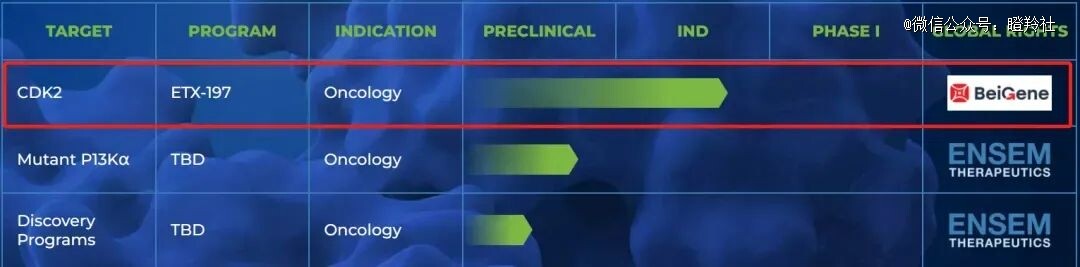
(Image source: Onsen Pharma official website)
Although a week has passed since the transaction event occurred, its underlying implications are worth careful examination.
Although the upfront payment for this transaction has not been disclosed, the total amount of the deal is believed to exceed everyone's expectations. Is a preclinical molecule really worth that much?
Behind the significant "premium" in transactions, the "leading innovative drug company" has plunged headfirst into the "R&D black hole."
01 The "Top Achiever" of the CDKs Family
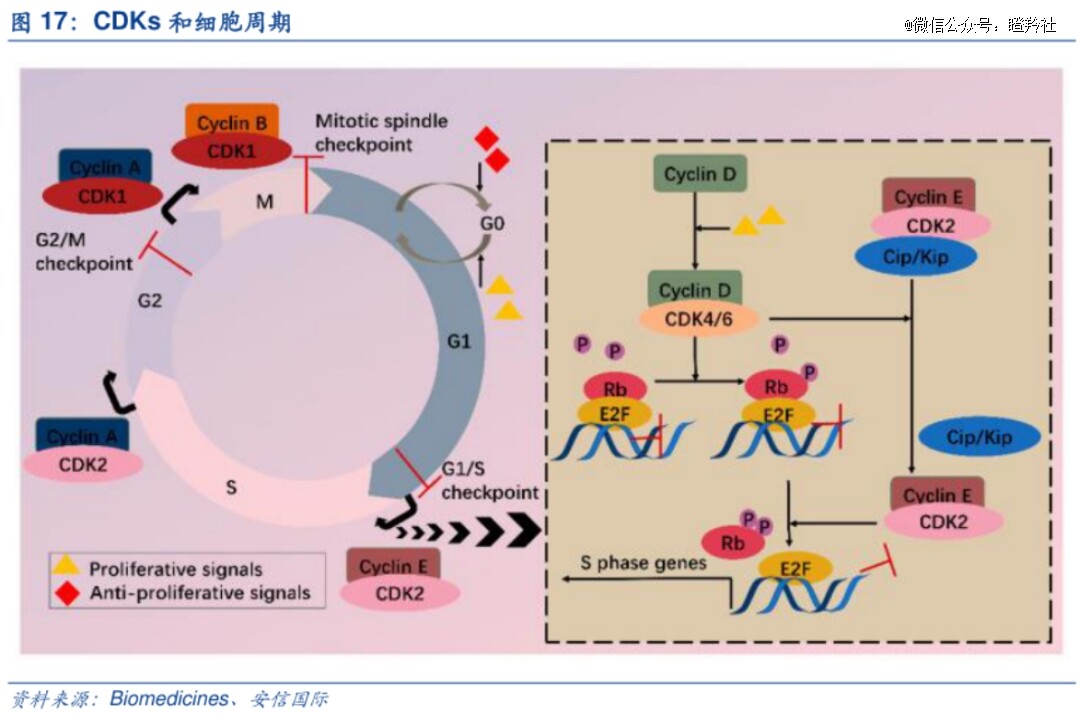
CDKs (Cyclin-Dependent Kinases) are members of the serine/threonine protein kinase family and play a crucial role in cell cycle regulation. CDK family targets are mainly divided into two categories: one participates in cell cycle regulation, related to mitosis, with subtype representatives including CDK1, 2, 4, and 6; the other mainly participates in transcriptional regulation, modulating the phosphorylation modification of RNA polymerase II, with subtype representatives including CDK7, 8, 9, and 11.
The cell cycle refers to the entire process that a cell undergoes from the completion of one division to the end of the next division, which is divided into two phases: interphase (subdivided into G1, S, and G2 phases) and mitotic phase (M phase).
Currently, the most favored targets in the CDKs family for cancer researchers undoubtedly include the two major targets: CDK4/6 and CDK2.
CDK4/6It is a key conditional protein in the human cell division and proliferation cycle, capable of triggering the transition of the cell cycle from the growth phase (G1 phase) to the DNA replication phase (S phase); CDK4/6 is overexpressed in many cancer cells, excessively phosphorylating and inhibiting the Rb protein, leading to uncontrolled cancer cell proliferation. CDK4/6 inhibitors can arrest the cell growth cycle in the G1 phase, thereby suppressing tumor cell proliferation.
CDK2CDK2 plays a crucial role in the G1 phase (pre-DNA synthesis phase) and S phase (DNA synthesis phase) of the cell cycle, activating downstream signaling molecules and promoting the normal progression of the cell cycle. According to available data, overexpression of CDK2 leads to abnormal regulation of the cell cycle and is directly associated with excessive proliferation of cancer cells, making CDK2 inhibitors a popular area of research and development.
Currently, there are five CDK4/6 inhibitors available on the global market: Pfizer's Palbociclib, Simcere Pharmaceutical's Trilaciclib, Novartis' Ribociclib, Hengrui Pharma's Dalpiciclib, and Eli Lilly's Abemaciclib.
The main core area of CDK4/6 inhibitors is breast cancer indications, and their combination with endocrine therapy has become the new standard for first-line, second-line, and early adjuvant treatment in HR+/HER2- breast cancer patients (accounting for 70% of all cases). As a result, the global market size of CDK4/6 inhibitors has approached nearly 9 billion US dollars.
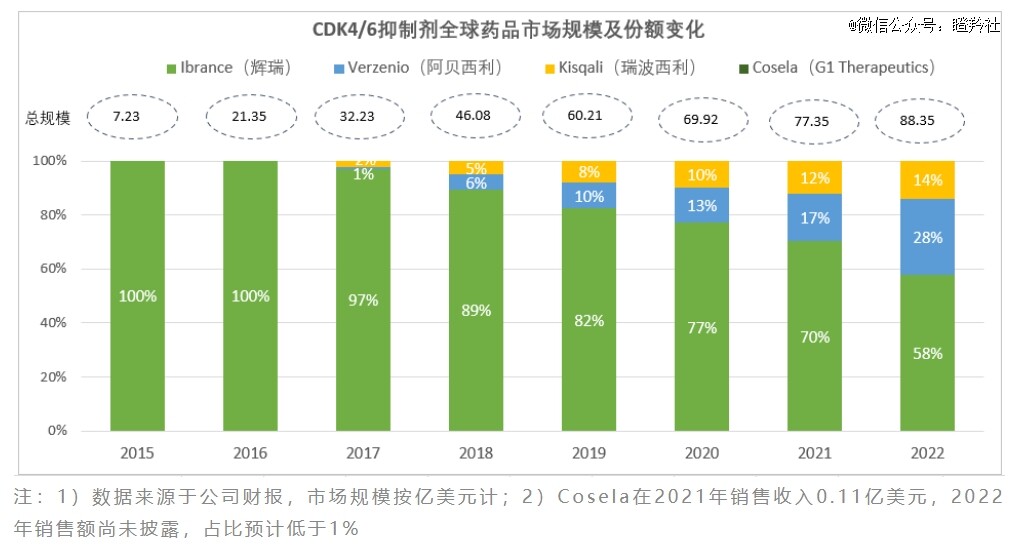
(Source: PharmaCube)
In contrast, there are currently no CDK2 inhibitors approved globally, but multiple candidates have entered clinical stages (which can be broadly categorized into pan-CDK and selective CDK2 inhibitors). Setting aside multi-target blockers of the CDKs family, the most advanced candidate is Pfizer's PF-07104091, which is being explored for indications such as breast cancer, small cell lung cancer, non-small cell lung cancer, and ovarian cancer.
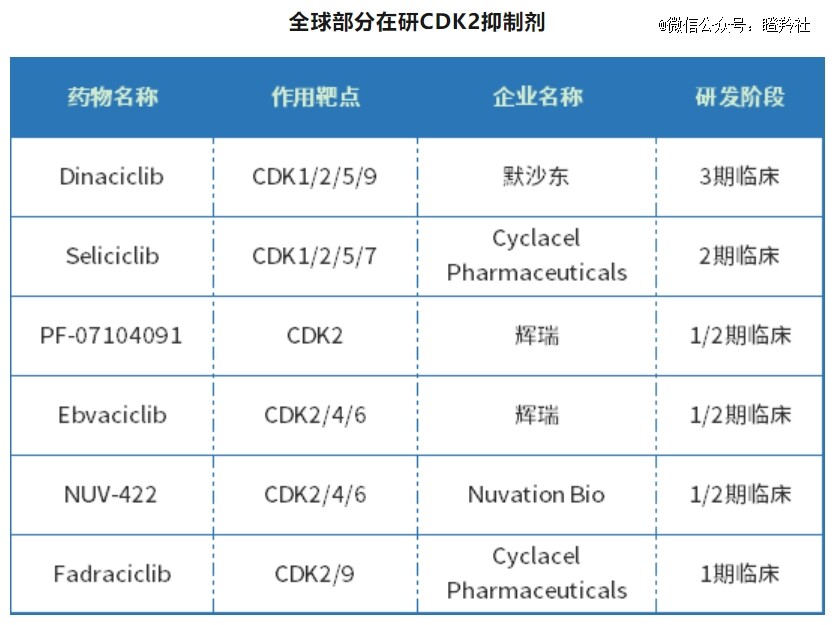
(Source: Pharma Intelligence Network)
BeOne Medicines’ introduction of ETX-197 from Ensem Therapeutics may not be at the forefront in terms of R&D progress, but it is touted as a "potential BIC candidate drug." As for ETX-197, this highly selective CDK2, the leading innovator in pharmaceuticals has its own plans.
1) Potential Direction Synergy: A review of the development history of CDK2 inhibitors shows that hematologic malignancies and breast cancer are the main research and development directions, which aligns with BeOne Medicines' areas of expertise and strategic focus.
2) The Potential of CDK2 in Breast Cancer: ETX-197 Can Complement BeOne Medicines' Clinical CDK4 Inhibitor; Activation of CDK2 is a Common Resistance Mechanism to CDK4/6 Inhibitors, and Combined Inhibition of CDK2 and CDK4/6 is Expected to Enhance Anti-Tumor Effects in Breast Cancer Patients.
02 Perilous CDK2 Development
According to the statistics from "Medicine Geek Stop," on November 23, 2023, there were a total of 63 global pipelines targeting CDK2, of which 47 pipelines were abandoned, leaving 16 existing pipelines. Among these, 10 pipelines are in or prior to Phase I clinical trials.
Aggregating past failed molecular cases, the failure of some CDK2 inhibitors may stem from multiple reasons:
1) The experiment found that although the use of CDK2 inhibitors led to a rapid decrease in CDK2 substrate phosphorylation, subsequent activity rebounded (e.g., CDK1 helped its substrates become phosphorylated again), causing the CDK2 inhibitor to fail.
2) A significant reason for the stagnation in the early development of a large number of CDK2 inhibitor molecules was the insufficient selectivity of candidate compounds, leading to off-target effects in trials and causing numerous severe side effects.
...
Among them, clinical failures or stagnations caused by drug side effects account for the majority.
As with Nuvation's CDK2/4/6 inhibitor NUV-422, which was previously at the forefront, several patients in Phase I developed uveitis. After failing to identify the related causes and solutions, the clinical trial ultimately failed.
Similarly, for ocular adverse events, Blueprint's CDK2 inhibitor BLU-222 observed visual adverse events (photosensitivity and blurred vision) in a limited number of patients during Phase I/II clinical trials. In February 2023, the FDA partially suspended the trial, which was later resolved by dose reduction and treatment discontinuation.
Moreover, even MNCs couldn't escape the "R&D black hole" in the CDK2 field. Before PF-07104091, Pfizer initiated a Phase 1/2a clinical trial for the CDK2/4/6 inhibitor PF-06873600 in early 2018, but ultimately, Pfizer discontinued the development of this drug.
Whether BeOne Medicines' ETX-197 can stand out in such a perilous R&D field remains to be seen.
03 BeOne Medicines' Solid Tumor Efforts
From the analysis of BeOne Medicines' product revenue in the first three quarters of 2023, as zanubrutinib accelerated its market expansion in the U.S. in Q3, the company's prominence in the hematological malignancies field has begun to overshadow its focus on solid tumors, giving investors a sense of "imbalance" between the two areas of development.
Of course, as the "leading innovator in pharmaceuticals," BeOne Medicines' success with zanubrutinib in CLL/SLL demonstrates that the company understands scaling up in solid tumors requires capturing major indications, just as it did with hematological malignancies.
According to BeOne Medicines' interim report, excluding the existence of PD-1 as a "basic drug," it is not difficult to see that the company's several late-stage solid tumor pipelines are mainly focused on lung cancer, gastrointestinal cancer, and other related areas.
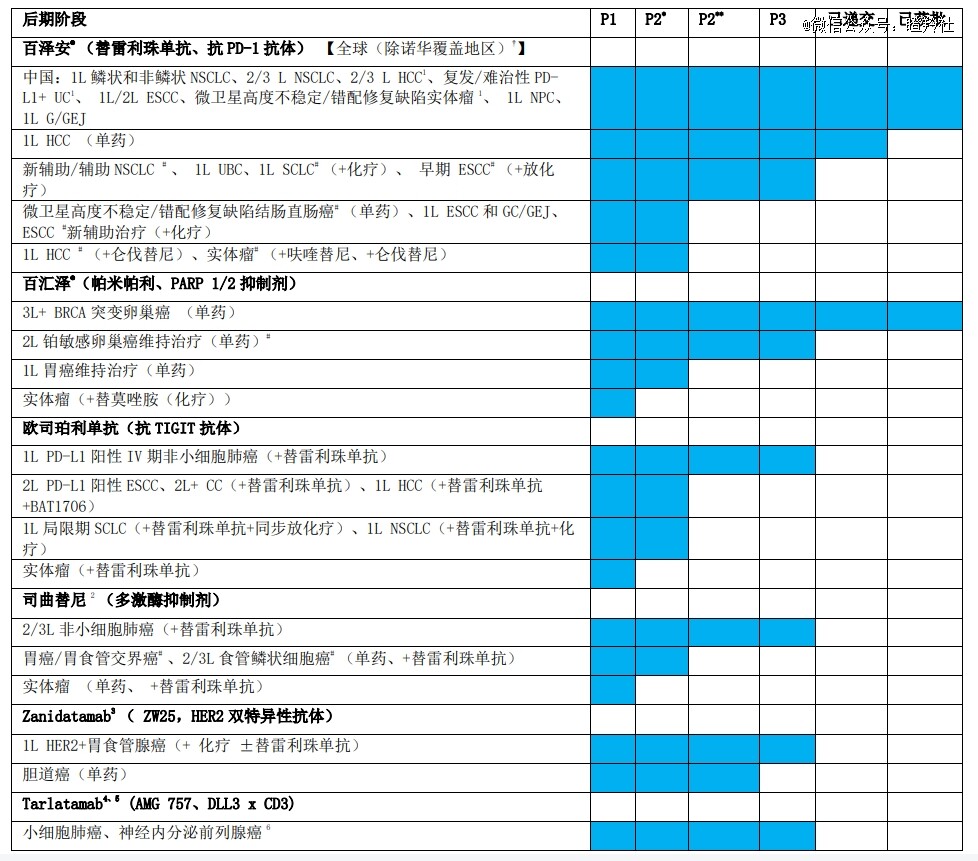
(Source: Company's 2023 Mid-Year Report)
Temporarily missing the ADC layout opportunity in the short term, BeOne Medicines' recent series of actions undoubtedly signify that the company cannot afford to miss the opportunity to establish a presence in breast cancer — the leading cancer among women.
Among several major late-stage pipelines, BeOne Medicines' PARP inhibitor shows considerable potential in the triple-negative breast cancer patient population.
As early as July this year, BeOne Medicines partnered with Luye Pharma to secure the commercial rights in China for Batovir (Goserelin Microsphere Formulation). Subsequently, in September, the breast cancer indication for Batovir was approved for marketing by the CDE.
GnRH agonists represented by goserelin are the * for OFS in premenopausal hormone receptor-positive early breast cancer. BeOne Medicines may have followed its original intention and approach in the development of CDK4/6 and PD-1, establishing an advantage in a disease area starting from early-stage patients ("traffic entry point").
This time, with such a substantial total amount, the acquisition of Ensem Therapeutics' CDK2 is undoubtedly a long-term strategic move for the company’s breast cancer portfolio, as the commercialization capabilities for female oncology are gradually being established.
Notably, the CDK4 inhibitor BGB-43395 is one of BeOne Medicines' key projects in the breast cancer indication.
Currently, all globally approved CDK4/6 inhibitors have limitations, with common side effects such as neutropenia. For instance, abemaciclib can cause diarrhea and has a relatively high incidence of elevated transaminases.
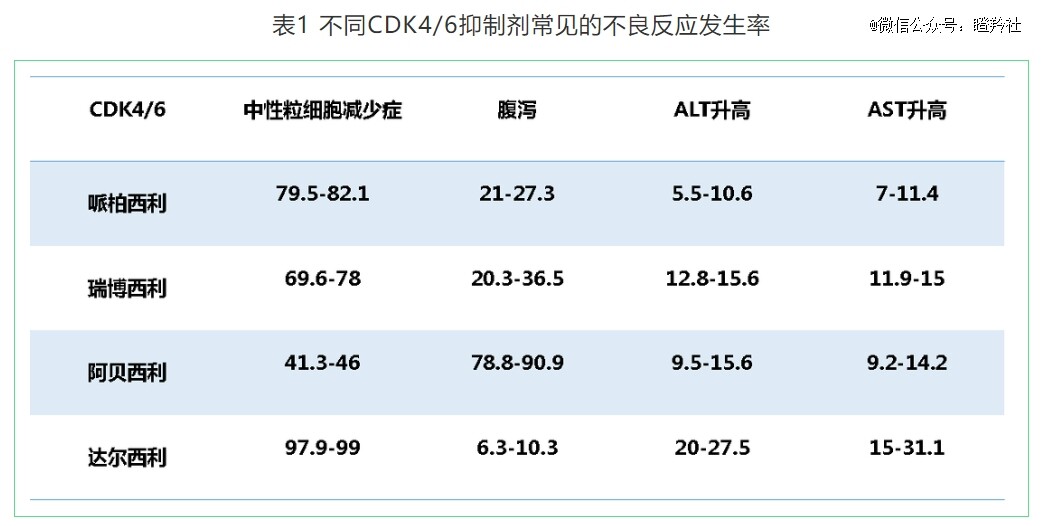
With BeOne Medicines' me-better and best-in-class strategy, the goal may not only be to develop a better next-generation CDK4/6 inhibitor but also to achieve greater ambition by implementing a comprehensive combination layout of CDKs family inhibitors to "intercept" early-stage patients across all subtypes of breast cancer.
Conclusion:Let's look forward to how BeOne Medicines, which missed the early opportunity in the ADC field, can achieve success in capturing market share of breast cancer drugs in China and even globally.
[This article is authorized for release by瞪羚社, a WeChat Official Account partner of Zero2IPO. This platform only provides information storage services.] If you have any questions, please contact (editor@zero2ipo.com.cn) for handling by Zero2IPO.