

Exclusive interview with Minova: pioneering China’s first approved injectable lipolytic drug & the world’s first 3-day oral therapy for postpartum depression

MINOVA PHARMA
Developer of New Drugs for Mental Illnesses and Disfiguring Diseases
In the development history of China's innovative drug industry, a group of entrepreneurs has witnessed and personally participated in the transition from "generic-focused" to "innovation-driven." Dr. Liu Fei, founder of Nanjing Minova Pharma, is one of them.
Dr. Liu Fei's journey began with his experience at Simcere Pharmaceutical. At that time, Simcere had just successfully listed on the New York Stock Exchange, establishing itself as one of the key representatives of China's innovative pharmaceutical companies. After completing his postdoctoral research, Dr. Liu joined Simcere as Director of Medicinal Chemistry, where he collaborated with a group of recently recruited overseas-returned scientists to advance novel drug development targeting multiple mechanisms. His years at Simcere not only provided him with firsthand industry experience but also brought him face-to-face with both the opportunities and challenges in China's innovative drug development landscape.
In 2013, Dr. Liu Fei embarked on his entrepreneurial journey by founding Nanjing Xinnuotai Pharmaceutical. During those years, the company pursued two parallel paths: providing innovative drug R&D services for other companies while generating revenue through the transfer of Category 3.1 new drug approvals. This "Service + Transfer" model represented a common survival strategy for many biotech companies operating within the funding landscape of that period. Leveraging precise project judgment, Xinnuotai successfully transferred two new drug projects within a year, swiftly alleviating its financial pressure.
In the second year of his entrepreneurial journey, Dr. Liu Fei met Dr. Chen Zhiming, a renowned entrepreneur in the U.S. pharmaceutical formulations sector. The two quickly reached a consensus: by combining medicinal chemistry with specialized dosage forms or novel drug delivery systems, they could potentially forge a distinct innovation pathway. In 2014, they co-founded Nora Tech, establishing a dual-focused strategy: introducing advanced formulation technologies from abroad to China, while simultaneously integrating molecular structure innovation with drug delivery systems to build a new technology platform.
Previously, Dr. Liu had primarily focused on the Chinese market. However, during the Nora Tech period, the company's products were largely oriented toward the U.S. market and advanced via the 505(b)(2) pathway. To this end, the team systematically researched all mid-to-large-sized 505(b)(2) companies in the United States to understand their technological characteristics and development strategies. This period of accumulation not only gave Dr. Liu a deep understanding of international market dynamics but also allowed the team to mature in integrating medicinal chemistry with drug delivery.
Over time, Dr. Liu Fei aspired to scale the company toward an IPO. Ultimately, he led the original core team to establish Minova Pharma, with continued support from Dr. Chen Zhiming, steadfastly advancing along the path of "Medicinal Chemistry + Drug Delivery Systems."
Four R&D Platforms Powering "Inner Well-being & Outer Aesthetics"
Within China's innovative drug ecosystem, "oncology" and "metabolic diseases" have long been hotspots for capital and R&D investment. Minova Pharma, however, has chosen a distinct path—focusing on "Inner Well-being & Outer Aesthetics."
"Inner Well-being" refers to the development of innovative drugs for psychiatric disorders, with postpartum depression as a key therapeutic area. "Outer Aesthetics" targets dermatological or appearance-affecting conditions, such as fat reduction, hair loss, photoaging, and scar management. While these two domains may seem unrelated at first glance, they are in fact underpinned by a shared strategic logic.
First, at the technical level:
Complex Mechanisms: The pathogenesis of both psychiatric and appearance-affecting conditions often cannot be explained by a single target, leading to complex drug discovery pathways.
High Development Barriers: Many candidate molecules face challenges such as poor physicochemical properties, low oral bioavailability, and limited delivery options, making them difficult to advance via traditional approaches.
Distinct Starting Points for Innovation: Unlike the "target-first" strategy common in oncology, innovation in these areas often begins with "established molecules, natural products, or endogenous substances," which are then optimized for drug-like properties through chemical and delivery system engineering.
Second, from a market perspective, Minova conducted a differentiated analysis. The company was founded during a peak in capital market enthusiasm for biopharma, a period dominated by intense focus and competition in areas like immuno-oncology and GLP-1-based weight loss drugs. However, Minova recognized that while innovative oncology drugs face fierce market share competition and complex commercialization challenges—especially within reimbursement systems—the landscapes for mental health and appearance-related conditions are fundamentally different. These areas not only address significant unmet clinical needs and garner substantial societal attention but also possess inherent consumer-paid attributes. This creates the potential for substantial market space that may not rely heavily on national reimbursement systems.
This strategic positioning is both a hedge and an expansion.
Furthermore, leveraging the team's long-term and robust expertise, Minova Pharma primarily addresses drug development challenges by integrating medicinal chemistry with novel drug delivery systems. This approach precisely targets the poor drug-like properties associated with established drugs, existing molecules, or endogenous natural substances.
Currently, Minova has established four synergistic R&D platforms. These platforms combine strengths in medicinal chemistry – particularly in molecular structure innovation, synthesis, and drug design – with specialized delivery systems. This integrated capability allows for the flexible selection of optimal delivery strategies to overcome the development hurdles of challenging molecules.
Phenotype-Based Screening Platform for Appearance-Related Conditions
This platform utilizes cell-based and/or animal disease models to identify active ingredients for specific appearance-related conditions by observing phenotypic changes induced by drug candidates. It further enables mechanistic studies to elucidate molecular-level pathways.
Total Synthesis Platform for Complex Natural Small Molecules
Natural small molecules and their derivatives are frequently utilized as lead compounds or even candidate molecules in novel drug development for both appearance-related and psychiatric conditions. However, many natural small molecules exist in low abundance in nature, making it difficult to meet the bulk requirements for pharmaceutical development. Consequently, total chemical synthesis is employed to achieve large-scale production. Furthermore, while some natural small molecules exhibit promising in vitro activity, their drug-like properties are often poor, necessitating structural modifications based on the original scaffold. Currently, this platform has advanced multiple totally synthesized complex natural small molecules or their structurally optimized derivatives into clinical development and industrialization stages.
Drug-Likeness Evaluation Technology Platform
This platform enables rapid, multi-dimensional assessment of the drug-like properties of candidate molecules/formulations. It efficiently narrows the screening scope by identifying those candidates that meet established druggability criteria, thereby significantly mitigating downstream development risks.
Novel Drug Delivery System Technology Platform
Many drug candidates—particularly natural small molecules—face development challenges due to limitations such as poor physicochemical properties and suboptimal pharmacokinetic profiles, hindering their translation into viable clinical products. Building on its strong expertise in novel drug delivery systems, the company has established multiple advanced formulation platforms, including complex injectables, sophisticated topical formulations, and advanced oral delivery systems. For a given candidate molecule, the platform enables parallel development of multiple potential dosage forms. By leveraging the company's integrated screening and evaluation platforms, the optimal drug delivery strategy can be rapidly identified.
First in China, Best in the World
When discussing Minova Pharma's product selection strategy, Dr. Liu Fei articulated a "first in China, best in the world" approach. This entails developing treatments that are the "first" of their kind for specific indications within China to avoid crowded therapeutic areas, while simultaneously striving to be the "best" in their class globally.
On June 10, 2025, Minova Pharma's first self-developed injectable fat-dissolving drug—Deoxycholic Acid Injection (Chinese brand name: 蓉芷®)—was officially approved for market by China's National Medical Products Administration (NMPA) (Approval Number: H20254519). It is indicated for the improvement of moderate to severe convexity or excessive fullness of the lower face contour in adults caused by submental fat accumulation.
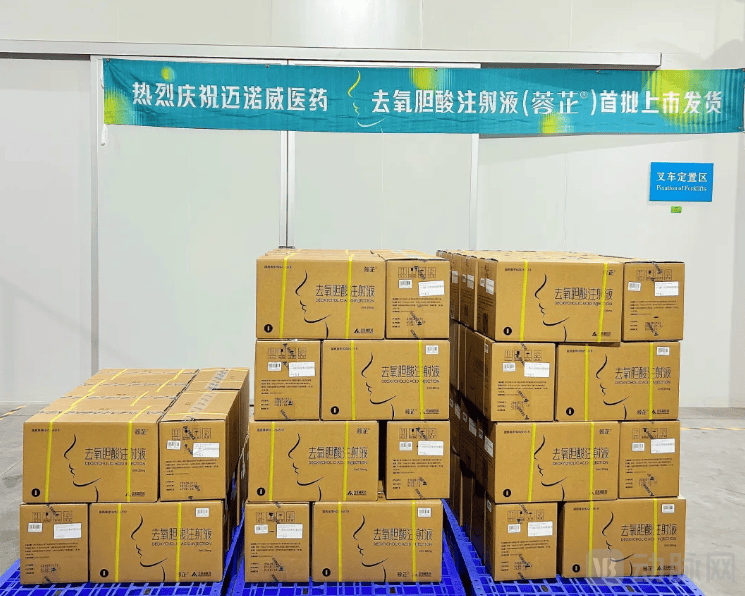
Image Source: Nanjing Minova Pharma
Indeed, approved products already exist in the fat-dissolving market in the United States. Deoxycholic acid is an endogenous substance in the human body; however, most commercially available deoxycholic acid is derived from animal sources, which presents safety and purity concerns that often fail to meet clinical requirements. The U.S.-approved product utilizes a fully synthetic form of deoxycholic acid. Its core structure is complex, containing numerous chiral centers, which necessitates the construction of multiple stereocenters and the synthesis of extensive impurity reference standards during the total synthesis process, making its production extremely challenging.
Furthermore, as no product was approved for this specific indication in China, Minova Pharma had to establish the clinical development standards from the ground up. The company first developed a submental fat rating scale tailored to the anatomical characteristics of the Chinese population, and then sequentially conducted Phase I to Phase III clinical trials. This demonstrates the significant challenges overcome in both the synthesis and clinical development of this product.
The approval of Rongzhi® has filled a gap in the field of non-surgical, localized, and precise fat reduction in China. It not only marks a significant breakthrough in non-surgical body contouring technology within the Chinese medical aesthetics market but also provides Chinese patients with a new safe and effective option for localized fat management.
In terms of clinical feedback, Rongzhi® has demonstrated outstanding performance. According to Dr. Liu Fei, although the product was already marketed in the U.S. and classified as a Category 3 product in China, its clinical data in China were exceptionally robust. The Phase III clinical results were published in Aesthetic Surgery Journal (ASJ), a top-tier journal in the field of aesthetic plastic surgery, making Rongzhi® the only Chinese medical aesthetic product to have its confirmatory registrational clinical study published in such a prestigious international journal.
Shortly after the approval of Rongzhi®, Minova Pharma's self-developed Class 1 innovative drug for postpartum depression, MI078 capsule, achieved a significant milestone: it successfully completed patient enrollment, follow-up, and database lock with unblinding in its Phase II clinical trial.
The statistical analysis of the unblinded data revealed that for the primary efficacy endpoint—change from baseline in HAMD-17 score at Day 4—MI078 capsule demonstrated a clear dose-response relationship. Both dose groups showed excellent efficacy, with the high-dose group exhibiting a statistically significant reduction in HAMD-17 score compared to the placebo group (difference: -6.0 ± 1.78, p = 0.0013).
Long-term efficacy observations indicated that MI078 capsule maintained stable therapeutic effects throughout the 28-day follow-up period after the completion of dosing.
Regarding safety, the incidence of adverse events across all dose groups was similar to that of the placebo group. The most common adverse reactions were primarily gastrointestinal discomfort, which were mostly mild to moderate in severity, well-tolerated by patients, and no serious adverse events were reported.
Dr. Liu Fei explained to VCBeat that the decision to develop a postpartum depression pipeline was driven by several factors. Firstly, it aligns with the international trend in psychiatry toward segmenting and exploring new indications, as developing broad-spectrum antidepressants has become increasingly challenging and promoting such new drugs in China faces uncertainties regarding reimbursement. Secondly, postpartum depression is a relatively new therapeutic area, with the first drug approval in the United States only occurring in 2019. Additionally, products targeting postpartum depression possess certain consumer-paid attributes.
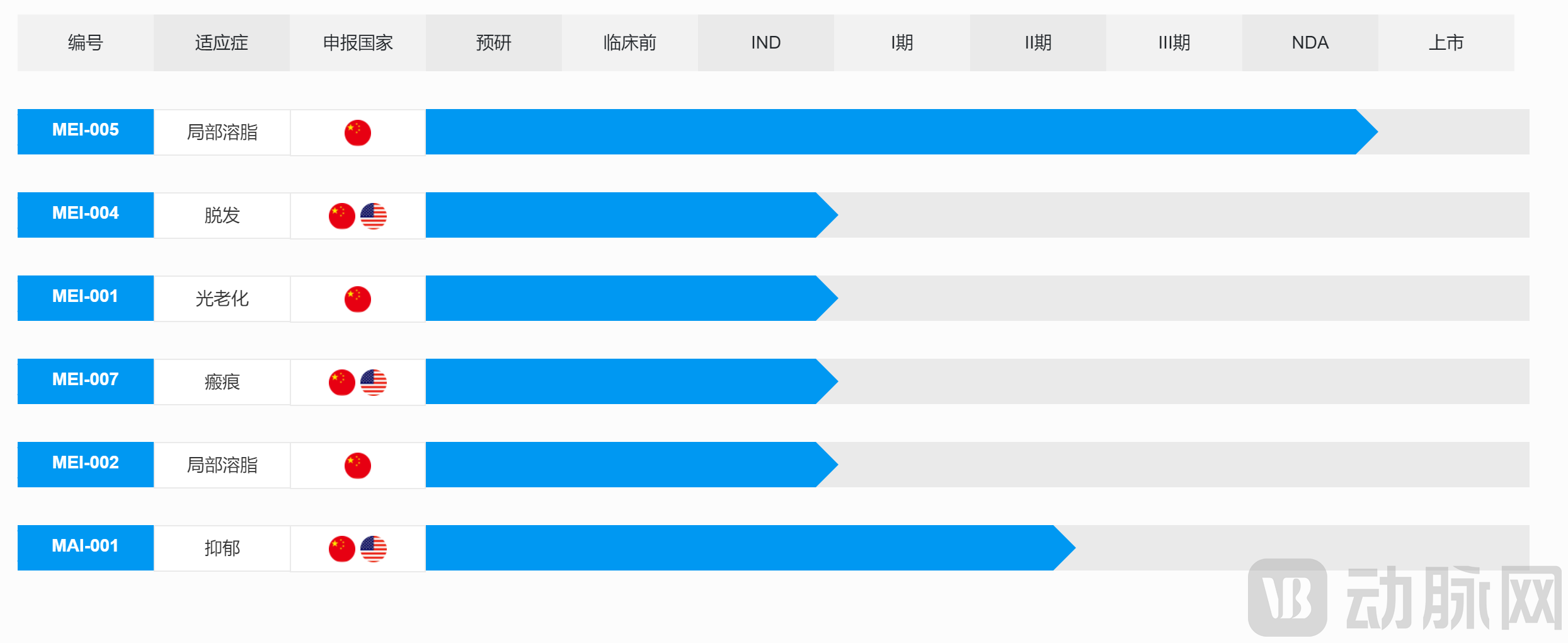 Minova's R&D pipeline
It is worth mentioning that other R&D pipelines of Minova also follow a similar approach, which is to develop new formulations for molecules with suboptimal drug delivery methods or drugability issues, exploring new indications in areas such as hair loss, photoaging, and scars. Among these, the photoaging project has recently initiated Phase I clinical trials, while the hair loss and scar projects have been approved for clinical trials.
From Biotech to Biopharma
In 2025, Minova enters a new phase, striving to gradually transform from a R&D-focused Biotech to a Biopharma with commercialization capabilities.
Currently, the company has established a nationwide self-operated sales team. As prescription drugs cannot rely on advertising for promotion, their marketing primarily depends on physician education and professional conferences. However, this approach places higher demands on the team's market development capabilities and clinical communication skills.
At the same time, Minova is also considering its industrial chain layout. Due to the diversity of its product dosage forms, it is difficult to find suitable contract manufacturing lines. Therefore, the company plans to build small-scale specialized production lines in the future to ensure flexible production of some products.
Yet transformation is no easy task. The success rate of transitioning from a Biotech to a Biopharma has always been relatively low, and striking a balance between team integration, product promotion, and subsequent pipeline reserves is a practical challenge that Minova must face.
On the R&D front, Minova plans to further expand its indications in the psychiatric field, such as menopausal depression—areas that have been gaining increasing attention in both clinical practice and public discourse.
On the commercial front, the company will not only rely on its own pipeline but also consider collaborating with upstream R&D companies to maximize the value of its sales team.
For Minova, a differentiated path brings both risks and opportunities. Whether it can truly open up a new channel for the transition from Biotech to Biopharma still requires the dual verification of time and the market.
Among the landscape of innovative pharmaceutical companies in China, Minova stands out as a notably representative "outlier." It has neither chosen the hot tracks pursued by capital nor stuck to the safe paths of selling projects or operating as a CRO; instead, it has forged a path of cross-sector integration—one that may serve as a new model for the transformation of China's Biotech enterprises.