

30 Years in the Making: Once a 'Black Hole,' Alzheimer's Drug Development Emerges as a Golden Opportunity

Huichuang Medical
Near-Infrared Brain Function Imaging Product Developer

Hengrui Pharma
Innovative and High-Quality Pharmaceutical Developer

Simcere
Innovative Drug Developer
Eli Lilly
Global Pharmaceutical R&D and Production Company
Eisai
Pharmaceutical Product R&D and Manufacturer
For decades, we have been accustomed to the failures in Alzheimer's disease (AD) drug development. After all, in the past 20 years, only a few AD drugs have been approved for marketing.
However, since the beginning of this year, the situation seems to have changed. In January, Eisai's Lecanemab received accelerated approval from the FDA; in July, Lecanemab gained full FDA approval, and on the same day of approval, U.S. Medicare selected Lecanemab as an insurance-covered treatment; in October, Lecanemab passed the review by the Hainan Drug Administration and was introduced into the Boao Lecheng International Medical Tourism Pilot Zone in Hainan, with expectations for full approval in China by the first half of 2024.
The approval of Lecanemab answers a crucial question in the field of AD drugs: Is this path feasible? At the same time, the approval of the new drug also means that there will be more changes in the AD track in the future.
In November, Eli Lilly's chief scientist announced a "major breakthrough" in their new Alzheimer's drug Donanemab. Following this news, Eli Lilly's stock price rose by 4.82%, reaching $595.
For a moment, the gloom that had hung over Alzheimer's disease for decades seemed to start dissipating, offering hope of a breakthrough after years of researchers' groping in the dark.
The clinical failure rate is as high as 99.6%, and AD drugs have once been dubbed a research and development black hole.
As the aging of society deepens, the social problems caused by AD are becoming increasingly complex. However, for many years, the industry's efforts to conquer this fortress have not made substantial progress.
Clinical Data on ClinicalTrials Doesn't Lie. Between 2002 and 2012, there were a total of 413 trials for AD drugs, including 124 in Phase 1, 206 in Phase 2, and 83 in Phase 3. The largest proportion of these trials, accounting for 36.6%, focused on drugs intended to improve cognitive symptoms, followed by small molecule drug trials (35.1%), and immunotherapy (18%).
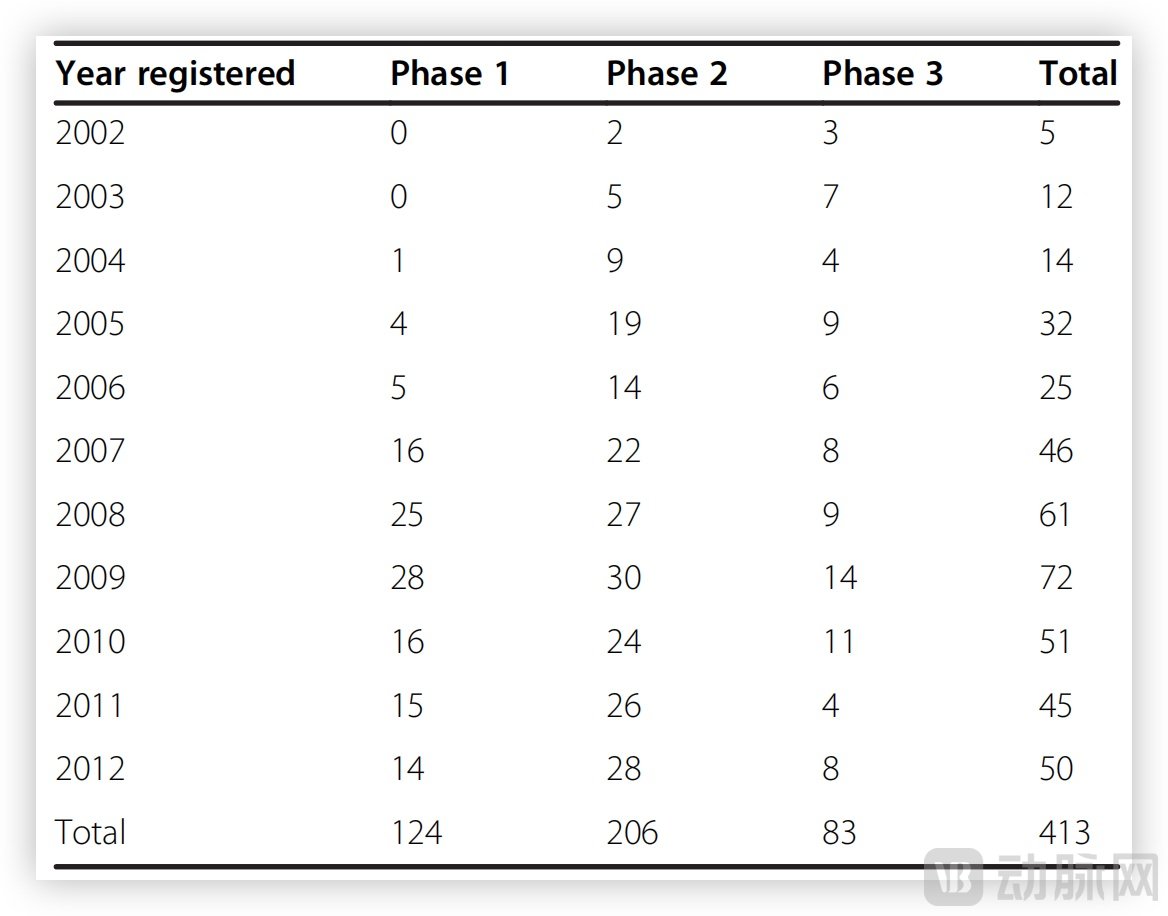
Overview of AD Drug Clinical Trials from 2022 to 2012, Data Sourced from Clinicaltrials
Over this span of 10 years, only 21 projects progressed from Phase 1 to Phase 2, with an attrition rate of 72%; only 14 projects moved from Phase 2 to Phase 3, resulting in an attrition rate as high as 92%; and only one drug (Memantine) successfully passed Phase 3 and received FDA approval for marketing. Overall, during the 10-year period, a total of 244 drugs underwent clinical trials. Even after excluding the 14 projects that were still in Phase 3 at the time, the overall success rate was only 0.4%, with a failure rate as high as 99.6%.
Even in the past decade, the development of AD drugs has been an extremely risky endeavor. Even multinational pharmaceutical companies have stumbled quite a bit.
Bapineuzumab, jointly developed by Johnson & Johnson and Pfizer, and Gantenerumab from Roche, were halted in Phase 3 clinical trials in 2012 and 2014, respectively. In 2016, LMTX, known as the "miracle drug for Alzheimer's," also failed during Phase 3 clinical trials. In 2018, Eli Lilly and AstraZeneca announced the discontinuation of the Phase 3 clinical trial for the oral inhibitor Lanabecestat.
Later, Roche restarted Gantenerumab, attempting to use higher doses of the antibody in two clinical trials. These two trials recruited nearly 2,000 patients with mild cognitive impairment or mild dementia due to Alzheimer's disease across 30 countries. After 27 months of treatment, no statistically significant difference was observed in the clinical endpoints, casting a dim outlook.
According to data from the Pharmaceutical Research and Manufacturers of America (PhRMA), between 1998 and 2017, approximately 146 clinical trials for Alzheimer's disease drugs failed, with major pharmaceutical companies investing a total of about $600 billion since 2000.
Decades of time, hundreds of billions of dollars in investment, and thousands of trials have been conducted, yet there is still no cure. This is the current state of Alzheimer's drug research and development, which is referred to as a "black hole."
The reason for this phenomenon lies in the extremely complex pathogenesis of Alzheimer's disease. To date, the medical community has not fully unraveled its causes. Over the years, drug development for Alzheimer's disease has been primarily based on the most widely accepted "hypothesis" — Aβ deposition. Beyond that, new research has also led to various emerging hypotheses such as inflammatory responses, mitochondrial dysfunction, and lysosomal abnormalities, which correspondingly have given rise to some target-based studies. Even the "weight-loss wonder drug" semaglutide is being explored for expanding its indications into the AD field.
The approval of Lecanemab has given the industry hope, proving that the path for Alzheimer’s disease is not entirely bleak. Through the continuous efforts of numerous pharmaceutical companies, a glimmer of light has already emerged.
Despite the setbacks experienced by multiple multinational pharmaceutical companies in AD, this has not made them abandon their years of persistence.
Taking the birth of Lecanemab as an example, more than 30 years ago, Lars Lannfelt first discovered a gene mutation that produces β-amyloid in AD patients; 20 years ago, Lannfelt founded BioArctic; 11 years ago, Osswald and several experts joined BioArctic, which had only dozens of employees at the time, to participate in AD drug development. Afterwards, BioArctic collaborated with Eisai, and Eisai further partnered with Biogen for joint research, development, and commercialization, leading to the recent approval of Lecanemab.
The success of Lecanemab is inseparable from the long-term dedication of numerous practitioners, and there are many who have shown such perseverance.
In early November, Dr. Daniel Skovronsky, Chief Scientific Officer of Eli Lilly, expressed "extreme optimism" that a major breakthrough in Alzheimer's disease treatment is on the horizon. The drug currently under development by Eli Lilly could potentially become the next big sensation akin to the weight-loss wonder drug "GLP-1."
What makes Dr. Skovronsky so optimistic is perhaps the potential for Eli Lilly's complete approval application for Donanemab, submitted to the FDA in the second quarter of this year, to receive a review decision by the end of the year, as well as the glimmer of hope after years of persistence. As early as 1998, while at the University of Pennsylvania School of Medicine, Skovronsky published research papers in the field of Alzheimer's disease (AD). He later founded Avid Radiopharmaceuticals, a company that develops diagnostic reagents for Alzheimer's patients. Dr. Skovronsky has also publicly stated on multiple occasions that researching Alzheimer's disease is his life's work.
As one of the most challenging diseases to tackle today, no innovative drugs targeting new mechanisms have been successfully developed for Alzheimer's disease since acetylcholinesterase and NMDAR. During this period, some pharmaceutical companies have been forced to temporarily give up.
In 2017, Merck's Verubecestat Phase 3 clinical trial failed, after which it gradually withdrew from the AD drug development race; in the same year, GSK also closed its R&D center in China, which focused on AD, Parkinson's, and various pain-related diseases. In 2018, Pfizer announced the termination of all AD and Parkinson’s and other CNS projects under research; in 2019, Amgen exited the CNS field.
On the other hand, despite the extremely high difficulty and risk in research and development, pharmaceutical companies will not hesitate to act once they see an opportunity.
BMS Collaborates with Prothena, Secures U.S. Development Rights for PRX005, a Tau Protein Antibody Therapy; AbbVie Acquires Syndesi Therapeutics for up to $1 Billion, Focusing on Alzheimer’s Drug Pipeline SDI-118; GSK Partners with Alector to Develop AL001, a Potential First-in-Class Monoclonal Antibody Therapy that Enhances PGRN Levels via Sortilin Receptor; Additionally, Merck Collaborates with Cerevance in an $11 Billion Deal Leveraging the NETSseq Technology Platform to Identify Novel AD Drug Targets.
It is precisely because of the perseverance and unwavering commitment of pharmaceutical companies and professionals over the years that the industry has reached a point of comprehensive success.
After 20 years of silence, AD drugs are gradually entering the harvest period.
Biogen's Aducanumab was granted accelerated approval by the FDA in 2021, becoming the first approved drug targeting Aβ therapy. Despite being questioned for its efficacy and safety, performing poorly commercially, and Biogen even withdrawing its marketing application in Europe, it is undeniable that this seemingly failed drug has sounded the charge for the industry.
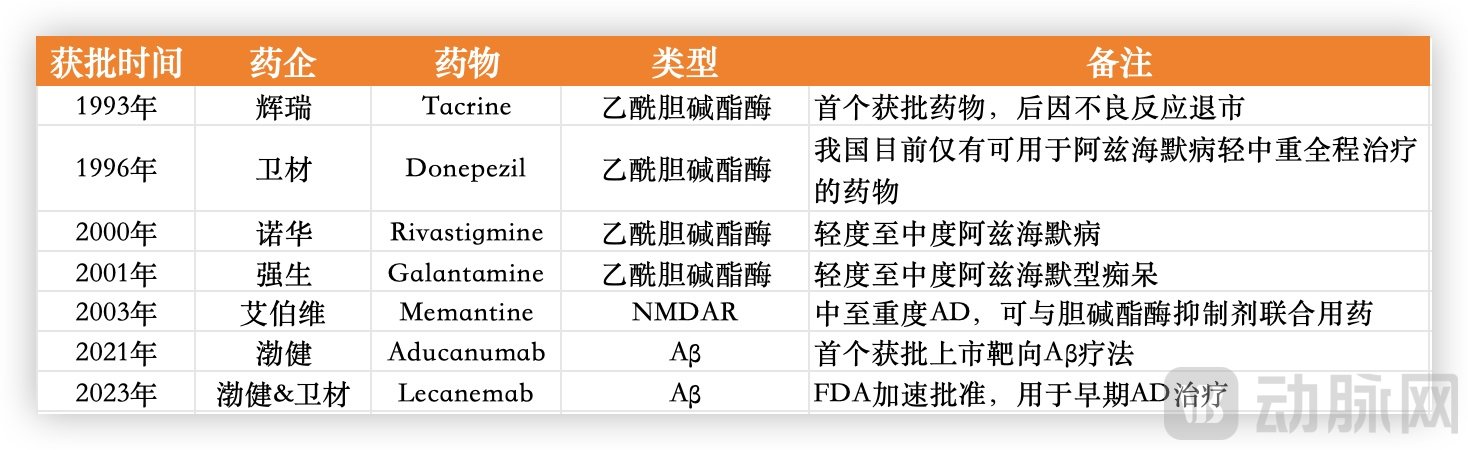
Approved AD Drugs, Data Compiled from Public Information
Eli Lilly's highly anticipated N3pG (Aβ subtype)-targeted monoclonal antibody Donanemab, following its outstanding performance in a head-to-head trial with Aducanumab at the end of last year, also achieved promising results in the Phase 3 clinical study TRAILBLAZER-ALZ 2, which was announced in July this year.
The study results showed that Donanemab significantly slowed the cognitive and functional decline in patients with early symptomatic AD; subgroup analysis also indicated that subjects in the early stages of the disease benefited more, with a 60% reduction in cognitive and functional decline compared to the placebo group. Compared to other similar drugs, the patients included in the TRAILBLAZER-ALZ 2 study had more advanced disease states, meaning the corresponding patient population was also broader.
Given the positive results of the Phase 3 clinical trial, Eli Lilly has submitted marketing applications to the global market and filed for marketing approval in China at the end of October.
In addition, another AD drug of Eli Lilly, Remternetug, is currently in Phase 3 clinical trials. Remternetug is a new generation N3pG monoclonal antibody developed by Eli Lilly, also targeting the N3pG subtype of amyloid protein as an upgraded version of Donanemab. It is currently undergoing an international multicenter (including China) Phase 3 clinical trial for the treatment of early AD, and has been granted Breakthrough Therapy Designation by the National Medical Products Administration.
Not only Eli Lilly, but also other multinational pharmaceutical companies have shown promising results in clinical trials.
At the 2023 Clinical Trials on Alzheimer's Disease (CTAD) conference, which just concluded at the end of October, several pharmaceutical companies announced the results of their latest clinical trials.
Eisai Announces Clinical Data of Approved Drug Lecanemab at Conference
In addition, Eisai shared a study indicating that the subcutaneous injection formulation of Lecanemab has advantages over the intravenous formulation. Currently, the approved formulation of Lecanemab is for intravenous injection, but the subcutaneous method is more effective in clearing amyloid proteins, with an efficiency approximately 14% higher than intravenous injection. Moreover, the time required for subcutaneous injection is significantly less than that for intravenous injection.
Biogen also announced at the conference that its investigational tau-targeting antisense oligonucleotide (ASO) therapy BIIB080 has shown excellent results in a Phase 1b clinical trial for the treatment of mild Alzheimer's disease. The company has initiated the CELIA Phase 2 clinical trial to further study the drug’s efficacy and safety. The Phase 2 trial is expected to recruit 735 participants and is planned to be completed by December 2026.
Alnylam's RNAi therapy ALN-APP has also achieved positive interim results in the Phase 1 clinical trial for treating AD. Data shows that the sustained efficacy of a single dose of ALN-APP can last up to 10 months, with significant reductions in Aβ42 and Aβ40 amyloid protein fragments associated with AD. Currently, the Phase 1b clinical trial of ALN-APP has been initiated in Canada.
Moreover, Cognito's audio-visual therapy also achieved positive results in Phase 2 clinical trials. After AD patients received treatment for over 18 months, the rate of brain atrophy and decline in daily self-care abilities slowed down. During the treatment period, the audio-visual therapy did not cause amyloid-related imaging abnormalities typically associated with monoclonal antibodies targeting amyloid-beta (Aβ). Notably, this therapy can be used alone or in combination with anti-Aβ monoclonal antibodies.
According to data from the Pharmaceutical Research and Manufacturers of America (PhRMA), from 1998 to 2021, approximately 85 new AD drugs globally have been under development. With the emergence of new targets and in-depth research, future AD drugs are expected to show a strong momentum of breakthroughs.
The AD Drug Development Race Also Drives the Advancement of AD Diagnosis.
With the approval of Aducanumab and Lecanemab, the screening and diagnosis of Alzheimer's disease have become a focus for many clinical testing companies. In the past, due to the long-term lack of available treatments for Alzheimer's, early AD screening held limited clinical value and thus did not receive much attention.
Currently, the gold standard for clinical diagnosis of AD is neuroimaging and cerebrospinal fluid (CSF) analysis. However, with the discovery of more biomarkers and advancements in detection methods, it has become possible to measure analytes associated with Alzheimer's disease in patients' blood. Additionally, due to its minimally invasive nature and low cost, blood testing can be widely applied for screening in large-scale, potentially asymptomatic populations.
In July this year, Beckman Coulter, under Danaher, collaborated with Fujirebio, a long-standing leader in Japanese medical testing, to jointly develop a blood-based screening method for Alzheimer's disease. The cerebrospinal fluid-based Gβ-amyloid ratio (1-42/1-40) test developed by Fujirebio received a new classification from the FDA and has already been adopted by doctors in Europe and the U.S. for AD testing. Once a blood-based Gβ-amyloid ratio detection method is successfully developed, it will undoubtedly further accelerate the market penetration of blood-based AD screening.
In addition, Roche has also collaborated with Eli Lilly to develop the Elecsys Amyloid Plasma Panel (EAPP), a blood test for early AD screening. EAPP assesses the risk of developing AD by measuring phosphorylated Tau181 (pTau181) protein and apolipoprotein E4 (APOE4) in the blood. The elevation of the former typically occurs during the early stages of AD, while the latter is the most common genetic risk factor for AD.
Although there are currently no AD blood tests approved by the FDA, some companies such as Quest, C2N Diagnostics, and Quanterix have begun offering testing services through the LDT approach.
Quest Launched AD Blood Test Project AD-Detect Test at the End of July. This project uses mass spectrometry to measure the ratio of amyloid-beta (Aβ) 42/40 in the blood to assess the likelihood of Alzheimer's disease-characteristic amyloid pathology in the brain, priced at $399.
Like Quest's test, C2N's PrecivityAD and PrecivityAD2 tests also use mass spectrometry to assess the likelihood of brain amyloid pathology. The PrecivityAD test model includes the Aβ42/40 ratio, apolipoprotein E isoform measurements, and patient age. The PrecivityAD2 test incorporates these factors as well as the ratio of phosphorylated-tau 217 to non-phosphorylated-tau 217. Quanterix's LucentAD LDT measures levels of p-tau 181 in blood to evaluate brain amyloid pathology as a method to rule out the disease.
The launch of Quest's testing products has sparked some controversy, with some experts worried that Quest's tests could lead to a large number of false positives. The healthcare demands of these false-positive patients could further strain the already scarce resources of Alzheimer's disease specialists.
Despite the fact that early screening for AD is gaining a new wave of attention, the commercialization of AD early screening has just begun, as seen from the response after the launch of Quest AD-Detect Test. There are still many issues that need to be addressed moving forward.
Facing the blue ocean market of Alzheimer's disease, domestic companies are also actively laying out their strategies.
Currently, the R&D of pharmaceutical companies in China mainly focuses on cholinesterase and NMDA receptors, with most drugs in Phase 2 clinical trials. For the Aβ target, only a few drugs, such as Hengrui Pharma's SHR-1707, are under development. SHR-1707 is the first domestically developed Aβ antibody to enter clinical trials in China and is currently in Phase 1b clinical trials. Hengrui stated on its investor platform that the latest research results showed overall performance in line with expectations.
Simcere's introduction of Varoglutamstat is based on glutaminyl cyclase (QPCT) upstream of Aβ. The levels of this enzyme are much higher in the brains of AD patients than in healthy individuals and can catalyze the formation of N3pE amyloid protein. This is a highly neurotoxic variant of the Aβ peptide unique to the brains of AD patients, which can lead to cognitive decline in those patients. The drug has been approved by the CDE for clinical trials in China and is currently in Phase 2 clinical trials.
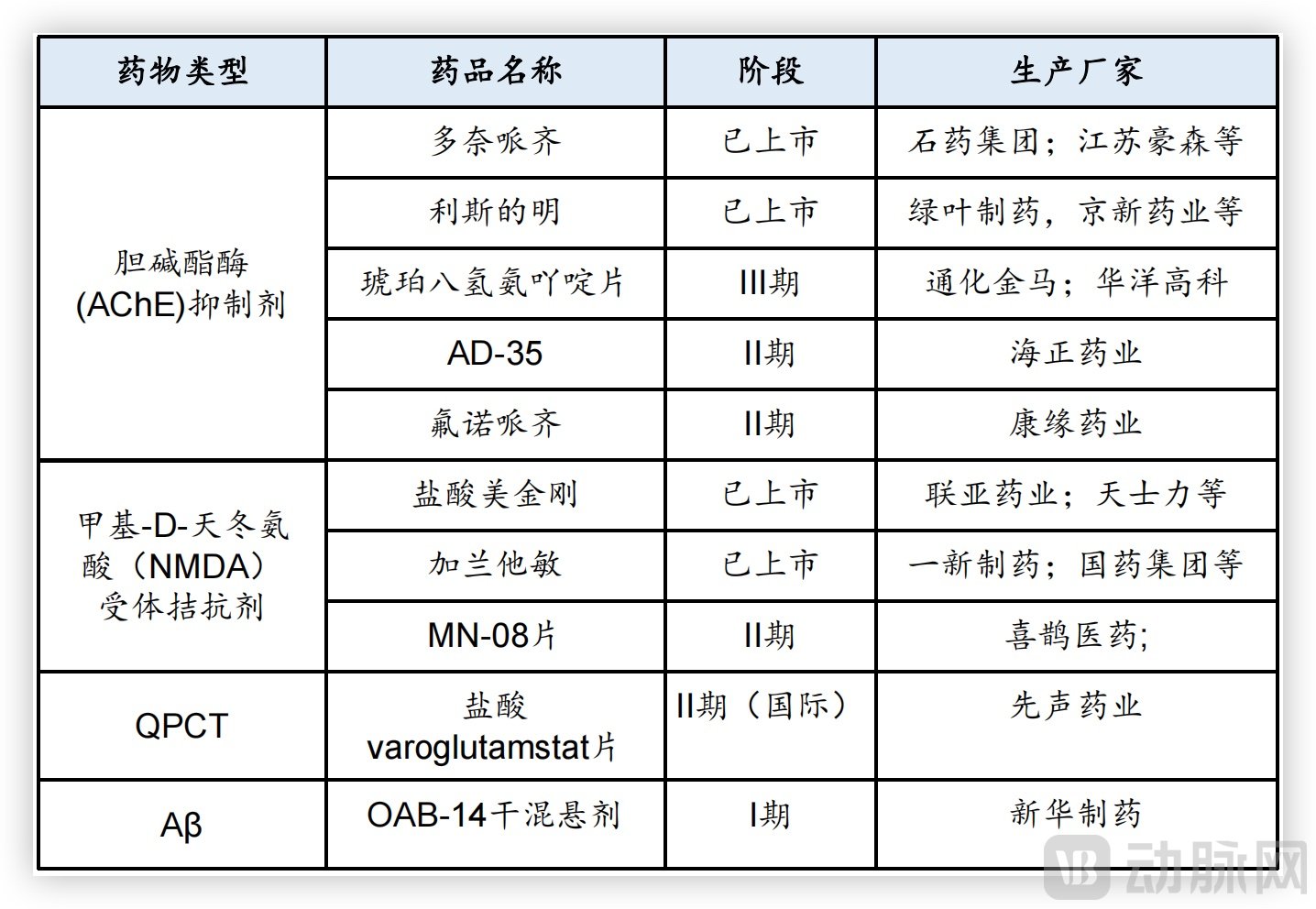
Progress of Some AD Drug Developments in China, Image Source: Huafu Securities Research Institute
Overall, the domestically produced drugs with relatively rapid progress currently include Varoglutamstat by Simcere, AD-35 by Hisun Pharma, Fluonopiril by Kangyuan Pharma, and SHR-1707 by Hengrui Pharma. Besides pharmaceuticals, utilizing near-infrared light technology to treat Alzheimer's disease has also become an option. Huichuang Medical applied for the earliest principle patent in China for using near-infrared light to treat degenerative diseases in 2019. After more than three years of innovative research and development, the phototherapy AD product has now entered the special review process for national innovative medical devices.
At the end of August, TONGLIAO JINMA, a traditional Chinese medicine company, announced the completion of the blind data review for Phase III clinical trials of Succinyl Octahydro Amide Tablets used in AD treatment. Upon the release of this news, the secondary market was jubilant. In the subsequent trading days, the stock price of TONGLIAO JINMA hit the upper limit eight times.
The frenzy in the secondary market, to some extent, also represents society's desire for breakthroughs in the AD field. Although the development of AD drugs in China still needs time, Chinese companies have achieved several breakthroughs from 0 to 1 in the early screening of AD. Companies such as Yonghe Sunshine, Xiantong Pharmaceuticals, Yiwei Healthcare, and Haosi Biotech have all launched relevant products. In the past two years, multiple related companies have completed financing rounds, with professional institutions like Qiming Venture Partners, Guoke Jiahe, and GSR Ventures entering the arena.
With the approval of Lecanemab and its conditional inclusion in Medicare, the market is highly optimistic about the commercial prospects of Alzheimer's disease (AD) drugs. Meanwhile, the advancement of multiple research and development projects has also paved new directions for AD drug exploration, including the world’s first Rac1-targeting drug based on the AD memory loss mechanism developed by Zhuokai Biotechnology in China, which is currently in Phase 2 clinical trials, as well as SHR-1707, an anti-Aβ monoclonal antibody independently developed by Hengrui Pharma.
The approval of new drugs and the excellent clinical results shown by multiple drugs under research undoubtedly demonstrate that the development of AD drugs has entered an era of a hundred schools of thought contending. According to the "China Alzheimer's Disease Report 2021," the total treatment cost for AD patients in China was approximately 1.2 trillion yuan in 2015, and it is expected to increase to about 13.2 trillion yuan by 2050. The huge market demand has yet to be met. Give AD drugs a little more time—hope is just ahead!
References:
https://www.science.org/content/article/potential-fabrication-research-images-threatens-key-theory-alzheimers-disease
Alzheimer’s disease drug-development pipeline: few candidates, frequent failures. Alzheimer's Research &Amp; Therapy, 6(4), 37. doi: 10.1186/alzrt269
https://www.springer.com/journal/42414/updates/26238582