Medtronic CEO Addresses Impact of China's Volume-Based Procurement, Signals Recovery and Growth

Medtronic
Chronic Disease Medical Device and Therapy Developer

Medical Device Media Reporting Pioneer
Share Professional Medical Device Knowledge

Source:Instrument Family,Reproduction without authorization is prohibited, and reproduction is allowed 24 hours later.
Recently, according to foreign media reports, Medtronic CEO Geoff Martha stated that the impact of bulk procurement in the Chinese market on Medtronic has largely passed.It is expected to completely emerge from the impact of centralized procurement before the end of the 2024 fiscal year, continuing to achieve strong growth in China.

Since China launched the volume-based procurement of medical devices in 2019, medical device companies both domestically and internationally have been affected to varying degrees.Medtronic CFO Karen Parkhill mentioned during the Q3 FY2023 earnings call that China's volume-based procurement policy has a greater impact on Medtronic because the company's operations in China are larger and broader compared to other medical device companies.
According to foreign media reports, the impact of China's previous volume-based procurement policy on Medtronic's volume has been significant; affected businesses include revenue from cardiac ablation solutions, neurovascular products (especially coils), and surgical stapling devices.
Medtronic Chief Financial Officer Karen Parkhill once stated"Given the scale and breadth of our operations in China, the impact of the volume-based procurement policy on us exceeds that of many of our competitors."

It was previously reported that Medtronic's Surgical Portfolio segment declined in the third quarter of fiscal year 2023 due to volume-based procurement tenders in China. However, excluding sales in China, the business grew by 5% this quarter. Similarly, the company’s Cardiac Ablation Solutions business increased by 3% globally, with high single-digit growth achieved outside of China. At the time, Medtronic CEO Geoff Martha also noted that the Neurovascular business grew by 9% this quarter, but would have grown by a few additional percentage points if not for the volume-based procurement in China.
However, the company also stated that it is actively adapting to this change and gradually moving out of the "impact of centralized procurement," which will also provide a new revenue base for Medtronic, albeit a lower one, with the potential for growth in the future.

In 2023, Medtronic made some new adjustments and arrangements in the Chinese market, including a major restructuring of its cardiovascular platform in China this March.Medtronic's traditional seven cardiovascular platform teams in the China region will be consolidated into three, each led by one of three leaders:
Among them, the Cardiac Rhythm Management, Diagnostics, and Mechanical Circulatory Support businesses, along with Cardiac Ablation Solutions and Cardiac Surgery, have been merged into one team, led by Forrest Lin (Lin Song), the former Vice President of Cardiac Rhythm Management, Diagnostics, and Mechanical Circulatory Support.
The localization of structural heart disease and aortic businesses, as well as the integration of structural heart disease with aortic, peripheral vascular, and venous businesses, will be led by Laura Huang.
The business of coronary and renal artery sympathetic nerve ablation remains unchanged, continuing to be led by Sam Tao (陶嘉).
In addition, the company has also carried out a full range of layouts in production, manufacturing, R&D, and innovation to reduce the impact of "centralized procurement" on its own business.
Medtronic CEO Geoff Martha once publicly stated that after winning the bid in the centralized procurement, Medtronic has eliminated a large amount of costs, including those related to sales and marketing. Removing these costs can mitigate the impact of price cuts from the centralized procurement. For Medtronic, although the profit margin has decreased, it is still acceptable.Moreover, Medtronic is investing in China, a large and growing market. It is forecasted that following the decline in business due to bulk procurement in the last fiscal year, growth is expected to stabilize in the fiscal year 2024, then return to high single-digit or even double-digit growth.
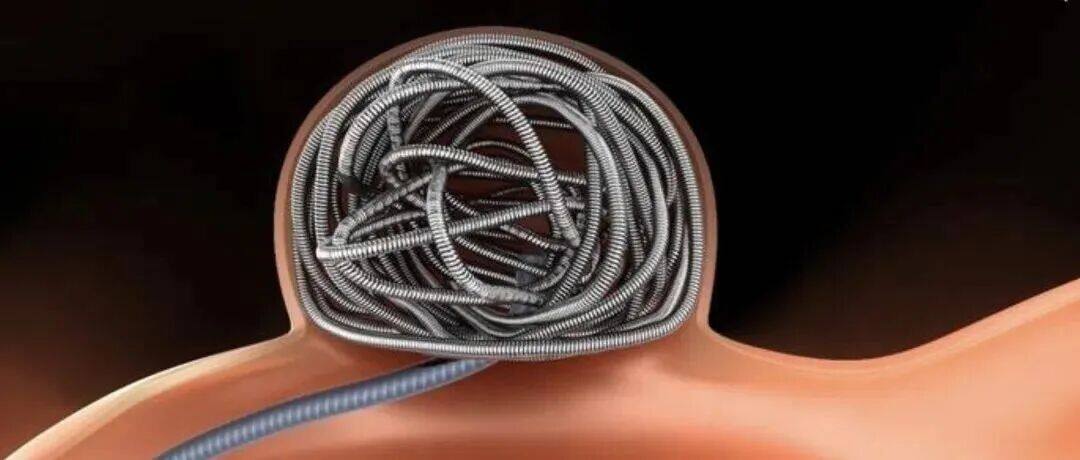
In this earnings call for the second quarter of fiscal year 2024, Medtronic also provided a new response. Apart from the coil products in the neurovascular business, they are still impacted by the volume-based procurement policy.The "headwind" impact brought by bulk procurement seems to have become a thing of the past, and Medtronic expects to resolve the impact of China's bulk procurement by the end of fiscal year 2024.
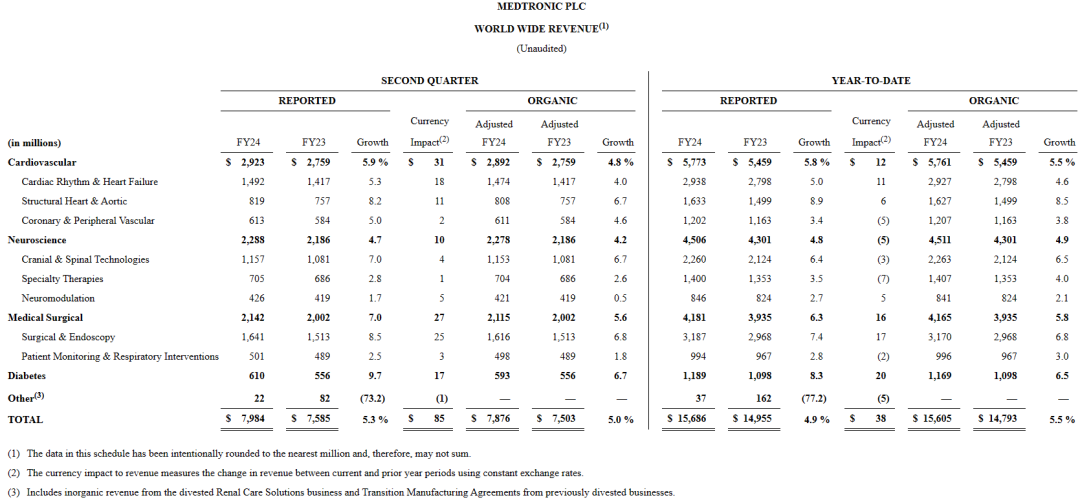
On November 21, 2023, Medtronic, the world's largest medical device company, announced its financial results for the second quarter of the 2024 fiscal year (FY24) ended October 27, 2023.The report shows that in the second quarter, Medtronic achieved revenue of 8 billion US dollars (approximately 56.8 billion RMB), a year-on-year increase of 5.3%, with organic growth of 5.0%. The company will raise its guidance for organic revenue growth and earnings per share for the fiscal year 2024.
GAAP net income for the second quarter was $909 million, an increase of 113% year-over-year, while non-GAAP net income was $1.667 billion, a decrease of 3% year-over-year. The growth in performance was mainly driven by strong execution, broad strength across multiple businesses and regions, and the approval of significant innovative products.
Cardiovascular Business
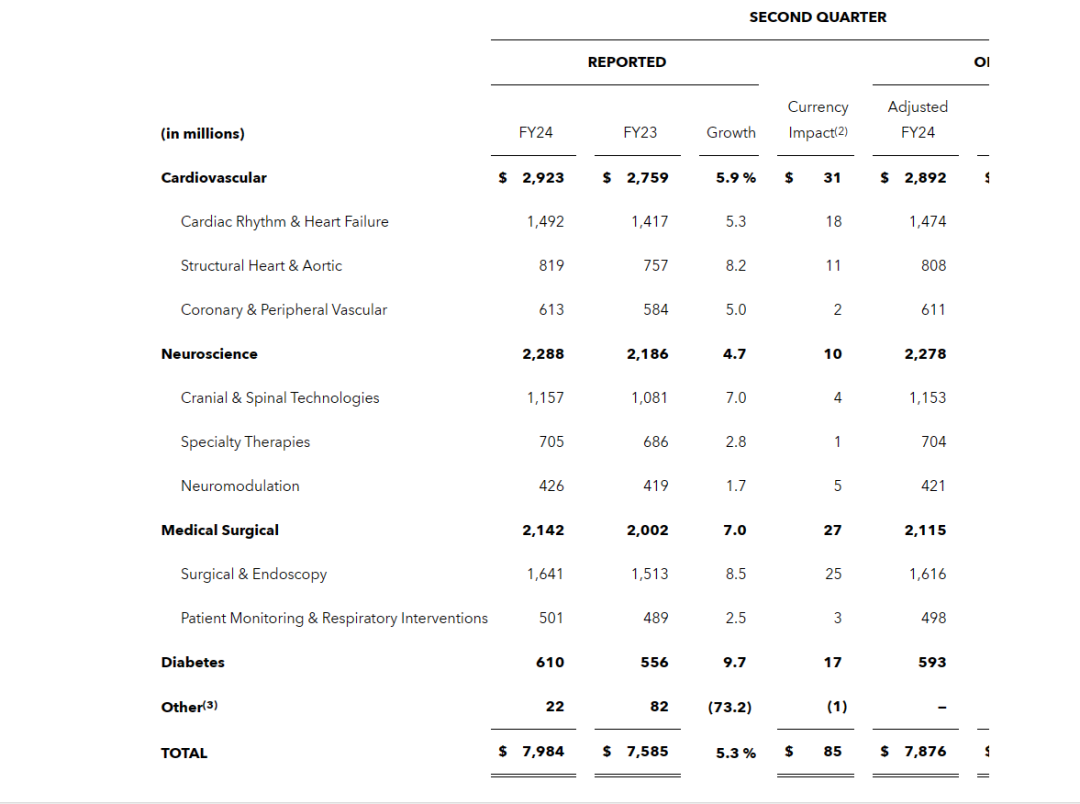
Cardiovascular business portfolio revenue was $2.923 billion, a year-on-year increase of 5.9%.Organic revenue increased by 4.8% year-over-year, with SHA achieving high single-digit organic growth, and CRHF and CPV achieving mid-single-digit organic growth.
Neuroscience Portfolio
The Neuroscience Portfolio includes Cranial & Spinal Technologies (CST), Specialty Therapies, and Neuromodulation. Revenue was $2.288 billion, an increase of 4.7%, with organic growth of 4.2%.Among them, CST achieved organic growth in the high single digits, while Specialty Therapies and Neuromodulation achieved organic growth in the low single digits.
Medical Surgical Products
The medical surgical product portfolio includes the Surgical and Endoscopic (SE) and Patient Monitoring and Respiratory Interventions (PMRI) divisions. Revenue was $2.142 billion, representing a year-over-year increase of 7.0%.Organic revenue increased by 5.6% year-over-year, with SE achieving high single-digit organic growth and PMRI achieving low single-digit organic growth.
Diabetes Business
Diabetes business revenue was $610 million, an increase of 9.7%, with organic revenue growth of 6.7%.
Multiple Innovative Products Approved
At the same time, several innovative products of Medtronic have been officially approved.Among them, the Aurora EV-ICD™ System (Extravascular Implantable Cardioverter Defibrillator) and the Symplicity Spyral™ Renal Denervation (RDN) System have received FDA approval. Meanwhile, the Evolut™ FX Transcatheter Aortic Valve Implantation (TAVI) System, the integrated Simplera™ Continuous Glucose Monitoring (CGM) System, and the PulseSelect™ Pulsed Field Ablation (PFA) System have obtained CE certification.
Raise Financial Guidance
Moreover, Medtronic has raised its organic revenue growth guidance for FY24 from the previous 4.5% to 4.75%. The organic revenue growth guidance excludes the impact of foreign exchange and revenue associated with certain businesses reported as other businesses. Including other income and the impact of foreign currency, if the foreign currency exchange rates as of early November remain unchanged, the revenue growth for FY24 would be approximately 2.6%.
Raises FY24 Diluted Non-GAAP EPS Guidance to a New Range of $5.13 to $5.19 from the Prior Range of $5.08 to $5.16, with a 4-Cent Increase at the Midpoint. Given the changes in foreign exchange rates last quarter, the impact of foreign exchange on FY24 diluted Non-GAAP EPS is now estimated to add 2 cents in the second half, with an expected 6% unfavorable impact for the full year.
Volume-based procurement is one of the key measures in China's healthcare system reform. Since the State Council issued the "Reform Plan for the Governance of High-value Medical Consumables" in 2019, by the end of 2022, the national level has carried out four rounds of volume-based procurement for medical devices, focusing on high-value consumables in areas such as interventional cardiology and orthopedics. This year marks the fourth year of volume-based procurement for medical devices. As the rules for volume-based procurement have gradually matured, the National Healthcare Security Administration has further requested all regions to accelerate coverage through provincial and provincial alliance-based initiatives, continuously expanding the range of products included.

At present, bulk procurement has covered all major categories of medical devices and has been fully implemented in the fields of high-value consumables, low-value consumables, and in vitro diagnostic reagents.. As a new normal under the medical reform,Since the development of medical devices in 2019,Volume-based procurement has a broader and deeper impact on the medical device industry.In the Chinese medical device market, multiple domestic and international medical device companies have been affected to varying degrees.
On the one hand, the prices of medical devices procured in bulk have dropped sharply. For example, before the "centralized procurement," the average selling price of total knee replacement systems was tens of thousands of RMB, but after the procurement, the average price of knee joint implants has fallen to around a few thousand RMB.On the other hand, "centralized procurement" has also intensified competition in China's medical device industry, promoting a certain degree of domestic substitution. In some newly added market segments of medical devices, domestically produced enterprises have already surpassed multinational giants like Medtronic.In addition, bulk procurement has also impacted the supply chain and R&D innovation of medical devices.
Different Choices

In response to the volume-based procurement policy, various medical device companies have made different choices. Chinese medical device companies possess multiple advantages such as price, service, and efficiency. In sectors with lower penetration of domestically produced devices and earlier stages in the product lifecycle, there is often significant growth potential. In the future, China's medical device companies can enhance their market share through innovative R&D technologies and accelerated procurement, successfully achieving a trade-off between price and volume while maintaining a stable high-growth model.As for multinational medical device companies, some have further increased their investments in localized production, manufacturing, and R&D innovation in China, while others have chosen to exit the Chinese market.
Joaquin Duato, Chairman of the Board and Chief Executive Officer of Johnson & Johnson, once stated: "On the one hand, volume-based procurement undoubtedly represents price headwinds. On the other hand, it also represents an opportunity because you can promote high-quality products and medical technologies to more patients. The headwinds from volume-based procurement affecting Johnson & Johnson's medical technology business will persist until the end of this year and part of 2024. Similarly, as we look ahead to 2024, we expect to continue achieving strong growth in China, which will remain a key part of our growth."
What is different from this,In early March 2023, ZimVie, the dental and spine company spun off from Zimmer Biomet, reported a fourth-quarter earnings miss and announced that it would fully exit its spine business in China due to the impact of China's national spinal volume-based procurement.In addition, due to the centralized procurement of dental implants, the company's management is also evaluating the development trend of its dental business in China.
——
Currently, the volume-based procurement in China has covered the main categories of medical devices.High-value consumables, low-value consumables, in vitro diagnostic reagentsComprehensive Development in the Field. As the world's largest medical device company, Medtronic experienced impacts on multiple businesses, leading to a decline in revenue growth and reduced profits in its China region. This situation represents both an opportunity and a challenge. After a period of active adaptation, Medtronic has largely moved past the "impact of centralized procurement" and is expected to fully resolve the effects of volume-based procurement before the end of the 2024 fiscal year. Medical Device Community will continue to monitor the situation.
Welcome to follow WeChat Video Channel


Heavyweight! The first domestically produced intracardiac ultrasound product approved by NMPA
Pioneer of Tumor Electric Field Therapy Lays Off 200 Employees
Over 3.5 Billion: Imaging Giant Reaches Major Collaboration
Innovation Leads the Way: United Imaging Sets a New Benchmark for Chinese Medical Technology Overseas
China's First Certification: "AI Innovative Medical Device" Promotes Digital Upgrade in Orthopedics
The First Stock of Medical Device State-Owned Enterprise Reform, Late-Night Barrage of Announcements
"Laparoscope Giant" Makes Another Acquisition
Fosun Group, This Company to Be Spun Off and Listed
RSNA Preview: GPS, United Imaging Healthcare, Canon...


BusinessBusiness cooperation email: qxzj@landianyiliao.com