

Nuoyi Mai'er Secures China's First Class III Approval for Innovative Gingival Repair Membrane After 6-Year Development

Neo Modulus
Developer of Human Tissue Repair and Organ Regeneration Products
Irreversible gum recession troubles many people.
The consequence of gum recession is enlarged gaps between teeth, loose teeth, which is not only unaesthetic but also unhealthy. Severe gum recession is a major contraindication for dental implants. In the past, the only way to repair receded gums was to take autologous tissue from the patient's palate, with no other options available. Now, this clinical gap has been filled by an innovative product made in China.
On November 29, Neo Modulus (Suzhou) Medical Sci-Tech Co., Ltd., an innovative medical device company based in Suzhou, independently developed the innovative medical device called Wenno.®Gelatin-Polycaprolactone Layered Gingival Repair Membrane Receives Class III Medical Device Registration Certificate (Registration No. 20233171776) Approved by the National Medical Products Administration, Can Be Used for Oral Keratinized Gingiva Widening, Deepening of Vestibular Fossa, Providing a Simpler and More Efficient Method for Gum Repair.
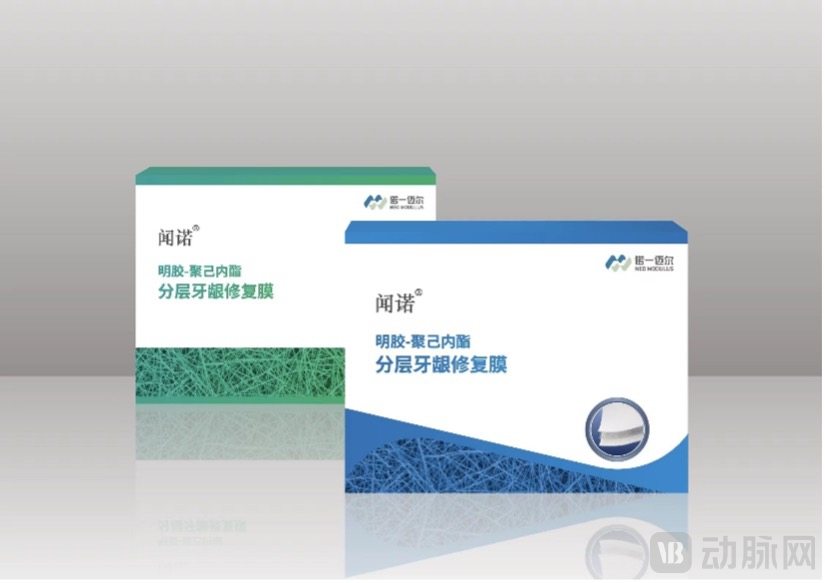
Neo Modulus®Gelatin-Polycaprolactone Layered Gingival Repair Membrane Image Source: Provided by the respondent
Notably, just one year ago in September 2022, Neo Modulus's gelatin-polycaprolactone gingival repair membrane was approved to enter the special review process for innovative medical devices. With the news spreading...®The approval marks a breakthrough for domestically produced, non-powered implantable dental instruments in China, as the first national-level innovative device under the Special Review Procedure for Innovative Medical Devices since its implementation. VCBeat learned that Neo Modulus®The development took 6 years and is one of Neo Modulus's core products. Through continuous investment in proprietary intellectual property technology, Neo Modulus has achieved®Full domestic production of process flow and core equipment.
"This is a product that feels very comfortable, and it has met expectations in terms of production technology, application value, and clinical outcomes." Zhang Wencai, the founder of Neo Modulus, is a veteran in the regenerative medicine industry. Since entering the field in 2011, Zhang Wencai has led multiple innovative regenerative medicine products in making the leap from laboratory technology to industrial application. In his view, after years of accumulation, China's regenerative medicine industry has developed the comprehensive strength to surpass international competitors in relatively mature subfields such as oral and orthopedics. Only by creating high-end innovative products that address clinical pain points can a global competitive advantage be formed.
In 2017, when Neo Modulus was newly established, Wen Nuo®The research and development began six years ago. As an innovative medical device company, Neo Modulus invests substantial funds annually into developing new products.®It is one of the most significant products.
Specifically, Neo Modulus®It is a three-layer composite membrane made from gelatin and polycaprolactone using electrospinning technology. The top and bottom layers are composed of gelatin, while the middle layer is made of polycaprolactone. In this structure, the gelatin fiber layer comes into contact with the wound surface, assisting in the widening of the keratinized gingiva, which is crucial for achieving periodontal tissue regeneration by providing a comfortable microenvironment for gingival cell growth; the polycaprolactone fiber layer is used to enhance the overall mechanical strength of the membrane, meeting clinical operational requirements.
VCBeat learned that, during use, Neo Modulus®It will be sutured onto the wound after the removal of receded gum tissue. Tissue regeneration refers to the process where, as the membrane degrades, gum cells migrate along the complex microstructure of the repair membrane, completing revascularization and epithelialization of the wound to form new gum tissue. Typically, patients can have their stitches removed two weeks after gum repair surgery, by which time the new gum tissue has fully healed, and it matures through keratinization in about four weeks. Data shows that approximately 90% of adults suffer from varying degrees of periodontal disease, with gum recession being a particularly challenging clinical issue in dentistry. In past clinical practice, many patients with gum recession often forgo gum repair due to concerns about the trauma associated with free gingival grafts.
Zhang Wencai told VCBeat that gum cells are very special, with extremely high requirements for their growth microenvironment, which makes it impossible for the vast majority of tissue repair materials to guide gum regeneration. "At the beginning of the project, when we decided to focus on gum repair, there were differing opinions within the team and among many technical experts, who believed the difficulty was too great." Zhang Wencai stated that, to date, there have been no industry standards, expert consensus, or treatment guidelines for gum repair internationally that could serve as references. From raw material selection to process construction, Neo Modulus had to navigate uncharted waters every step of the way, accumulating a wealth of innovations in the process.
On the one hand, Neo Modulus innovatively selected raw materials more suitable for preparing gingival repair membranes.For regenerative medicine products, mechanical strength and regenerative effects are the core indicators for measuring quality. After experimenting with dozens of raw materials, the Neo Modulus research team discovered that the microstructure formed by the combination of gelatin and polycaprolactone is most suitable for gum repair in terms of mechanical strength and pore distribution. "Gelatin and polycaprolactone are both quite mature raw materials that are widely used in the field of implantable medical devices, making them easy to procure and their costs manageable," Zhang Wencai pointed out.
On the other hand, Neo Modulus has developed a complex and efficient product manufacturing process based on its commitment to independent innovation and industry-university-research cooperation.After the raw materials were determined, Neo Modulus encountered new problems during the membrane production process. To create a suitable microenvironment for gingival cell growth, a series of parameters such as the tearing force, tensile strength, and degradation time of the membrane needed to meet specific standards, which required extremely high control over temperature and humidity. Moreover, gelatin itself is a viscous substance, and even slight temperature changes can cause flow instability, let alone film formation. After repeated attempts, the Sino-German scientific team of Neo Modulus successfully achieved stable production of the repair membrane.
On the other hand, Neo Modulus has developed a high-end equipment system suitable for the production of gingival repair membranes based on the development of raw materials and process optimization. VCBeat learned that the development of this high-end process equipment took four years, during which the Sino-German scientific team of Neo Modulus proposed a series of effective solutions.
In fact, in specific niche areas, collaborating with leading research teams to achieve the efficient transformation of advanced technologies has become an important underlying logic for Neo Modulus' strategic layout in regenerative medicine products. As Zhang Wencai mentioned, from oral to skin and bone repair, the process requirements vary greatly across different types of repair products. Only by continuously transforming innovative technologies can new products that meet clinical needs be iteratively developed.
"The clinical trial, which was originally planned to have an enrollment period of 18 months, unexpectedly completed the enrollment of all 148 patients in just 8 months." Zhang Wencai admitted that he had always been confident about the market value of the gingival repair membrane, but the enthusiasm of patients to try such an innovative product exceeded his expectations.
In May 2022, under the leadership of the Affiliated Stomatological Hospital of Nanjing University Medical School, Neo Modulus®Clinical trials have been completed at five leading oral hospitals in China, including the Stomatological Hospital of Nanjing Medical University and the West China Stomatological Hospital of Sichuan University. The results of these clinical trials provide evidence for the safety and effectiveness of its clinical application. VCBeat learned that some users of Neo Modulus...®For early patients, Neo Modulus has been tracking and following up for nearly 24 months, with currently positive feedback, which makes Zhang Wencai more optimistic about the future.®Market performance after commercialization. He told VCBeat that Neo Modulus has already prepared for the future.®The large-scale commercialization has been prepared for capacity release, market awareness cultivation, etc. "It is expected that as early as the first quarter of 2024, end users will be able to use Neo Modulus."®"To achieve gum repair."
It is reported that the production center at Neo Modulus' Suzhou headquarters can meet the rapidly expanding capacity demands, while ongoing clinical research collaborations are helping more dental clinicians build awareness and technical skills regarding gingival repair.
Since its establishment six years ago, Neo Modulus has been deeply engaged in innovative regenerative medicine products, with business covering medical fields such as dentistry, orthopedics, otorhinolaryngology, and ophthalmology. The company has developed over 20 implantable medical device products, striving to address complex tissue regeneration challenges worldwide—such as periodontal soft tissue augmentation, cartilage regeneration, and pathological high myopia—through high-quality innovative solutions.
Zhang Wencai told VCBeat, Neo Modulus®The listing is an important commercial milestone for Neo Modulus. In the future, Neo Modulus will continue to strengthen its innovation efforts and efficiently launch various regenerative medicine products with clinical value.
At this stage, the endometrial repair product independently developed by Neo Modulus has completed preclinical research on 8 cases in a hospital, showing good therapeutic effects for endometrial repair in infertile women. Zhang Wencai told VCBeat that another joint cartilage repair product under research by Neo Modulus, which directly addresses the market pain point of the difficulty in repairing damaged joint cartilage, also demonstrated excellent data in preclinical studies.
According to Zhang Wencai's plan, Neo Modulus has formed a product strategy that encompasses multiple technologies, varieties, and fields. It will also continue to develop an international, innovative, and irreplaceable rich regenerative medicine product system through its self-built R&D team of nearly 100 people, in collaboration with top global experts. This effort aims to build a China-produced medical device brand with international influence. We also look forward to domestic medical device companies with independent innovation capabilities filling clinical gaps and delivering more unique value.