Procyrion Enrolls First Patient in Pivotal DRAIN-HF IDE Trial of Aortix pMCS System for Acute Decompensated Heart Failure

Procyrion
Clinical Medical Device Developer
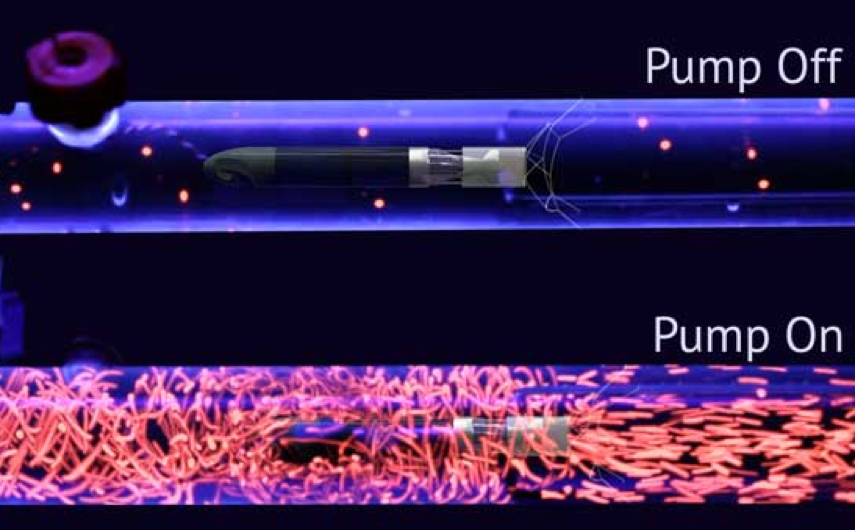
Recently, Procyrion announced the enrollment of the first patients in the company's Aortix percutaneous mechanical circulatory support Investigational Device Exemption (IDE) pivotal trial.
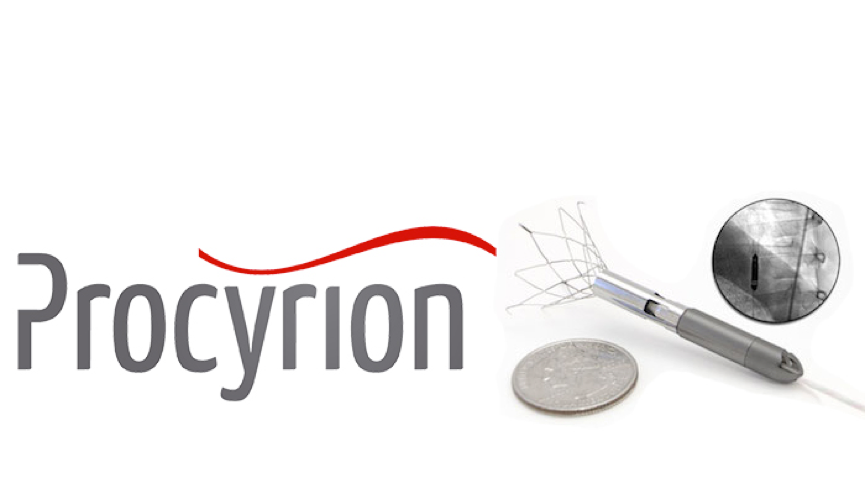
DRAIN-HF Study to Evaluate the Efficacy of Aortix Percutaneous Mechanical Circulatory Support (pMCS) Technology in Patients with Acute Decompensated Heart Failure (ADHF) Refractory to Standard Medical Therapy. The first patient in the randomized portion of the trial was enrolled by Bassem Chehab (Ascension Via Christi Hospital, Manhattan, USA).
Chehab said, "We are excited to enroll the first patient in this important trial. Currently, there are no effective treatment options for ADHF patients who remain congested after receiving high-dose intravenous diuretics. These patients have a very poor prognosis in terms of death and readmission, so there is an urgent need for new treatment options."
The study also includes the enrollment of patients with advanced heart failure who are in the end stage and are not considered surgical candidates for heart transplantation or left ventricular assist device (LVAD) implantation due to severe fluid retention and poor renal function. The first patient in the registry was enrolled by Gillian Grafton at Henry Ford Hospital (Detroit, USA).
The Aortix pump has shown promising results in helping to reduce fluid overload and improve renal function. Placed in the descending thoracic aorta, it is designed to directly unload the heart and improve cardiac function while increasing renal perfusion.
DRAIN-HF Pivotal Trial is evaluating the safety and efficacy of the Aortix pump compared to standard-of-care medication therapy, including high-dose intravenous (IV) diuretics, in hospitalized ADHF patients with persistent congestion who exhibit diuretic resistance despite optimal medical management.
The study will enroll up to 45 patients across 268 centers in the United States and will include a randomized arm and a registry arm, which will recruit patients who are candidates for heart transplantation or left ventricular assist device (LVAD) but are too ill to be considered for surgery. The company recently announced that it has received approval from the Centers for Medicare & Medicaid Services (CMS) for Medicare coverage during the pivotal DRAIN-HF trial.
Procyrion President and CEO Eric S Fain stated, "The initiation of the DRAIN-HF pivotal study represents a significant milestone for the company in its commitment to providing Aortix for these patients with acute decompensated heart failure who have not been successfully treated through aggressive standard-of-care medical management."
In the preliminary CRS study published in the *Journal of the American College of Cardiology: Heart Failure*, patients demonstrated rapid decongestion, significant removal of excess fluid, improved hemodynamics, as well as notable enhancements in renal and cardiac function, with patient-reported assessments of shortness of breath continuing to improve up to 30 days after initiation of aortic pump therapy.
About Aortix
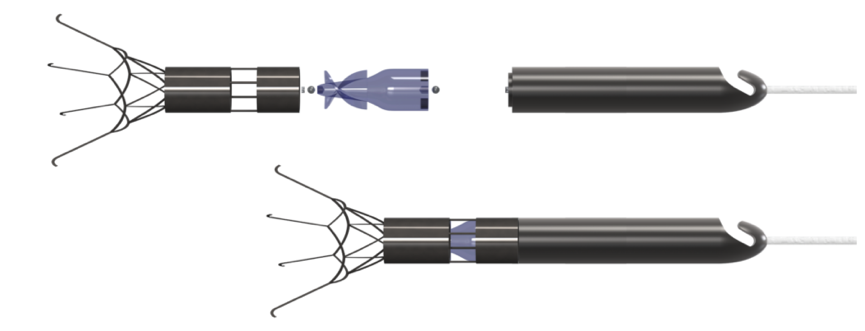
Aortix™ is a percutaneous mechanical circulatory support (pMCS) device designed to treat heart failure patients who are too critically ill to be managed by medication alone. Aortix is a continuous-flow catheter system with a micro-rotary pump housed within a nitinol strut framework. The Aortix is percutaneously inserted into the descending aorta, reducing proximal aortic resistance and increasing distal aortic flow, thereby unloading the left ventricular workload. Aortix significantly improves cardiac output and urine volume in patients, and is used for treating acute decompensated heart failure associated with cardiorenal syndrome.
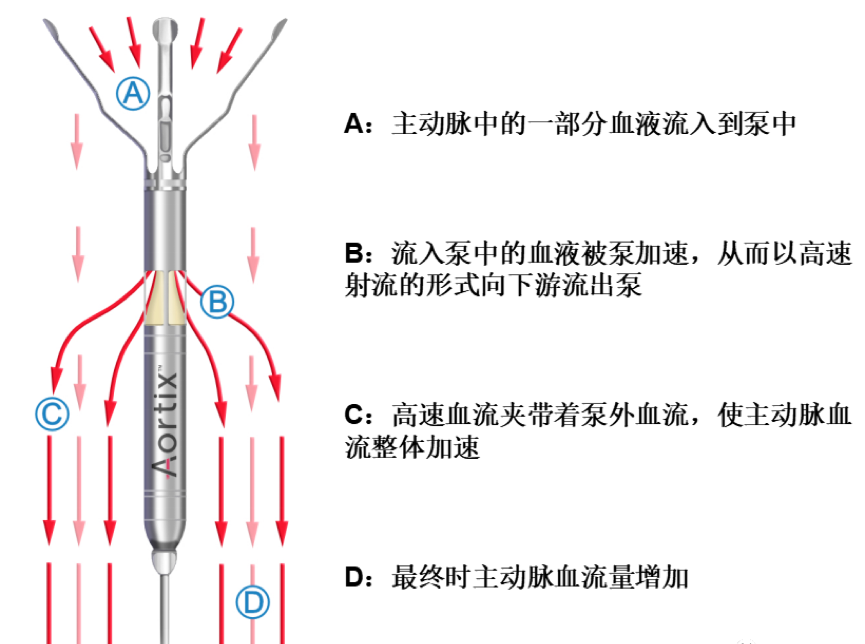
Aortix is a 6-millimeter percutaneous axial flow pump located at the level of the diaphragm in the descending aorta, designed to directly increase renal perfusion. The device is deployed via an 18Fr delivery system through a femoral approach and can provide up to 5L/min of flow. Blood enters through the pump inlet, is accelerated, and exits through the pump outlet, resulting in increased downstream aortic blood flow. In addition to directly increasing renal blood flow, the device also reduces left ventricular afterload and improves cardiac output. We conducted a preliminary study on the safety and feasibility of the aortic pump in patients with left ventricular and renal dysfunction undergoing high-risk percutaneous coronary intervention (PCI). During support, the pump increased urine output tenfold and improved eGFR (6.95 ± 8.09 mL/min) at discharge without significant hemolysis or vascular access complications. Based on the potential renal benefits of the device, we designed a multicenter non-randomized study to evaluate the safety and efficacy of the aortic system in hospitalized ADHF patients (NCT04145635), whose renal function continued to deteriorate despite medical therapy. This study will enroll 60 patients hospitalized for ADHF (HFrEF or HFpEF) who, despite 48 hours of intravenous diuretic therapy, experience worsening renal function (serum creatinine increase of 0.3 mg/dL), persistent circulatory congestion, and a PCWP ≥20 mmHg or CVP ≥12 mmHg as measured by catheter.
About Procyrion

Procyrion is a private innovative medical device company dedicated to providing effective treatment options for patients with heart and kidney damage. Procyrion is developing a platform technology utilizing interventional pump technology to address multiple conditions with significant unmet needs. This platform technology is applied in the treatment of heart failure and cardiorenal syndrome patients.
The technical opinions in this article do not represent the views of CCI.



CCI Cardiovascular Physicians Innovation Club
Long press the QR code to follow us
Planning: Shen Li/Editor: Chen Baolin
Author: Yun Ye Xuan /Production: Wang Rui