

Novartis Receives FDA Approval for Fabhalta (iptacopan), the First Oral Monotherapy for Paroxysmal Nocturnal Hemoglobinuria

Novartis
Drug Development and Manufacturing
▎Edited by the WuXi AppTec content team

Novartis today announced,The US FDA Approves Fabhalta (iptacopan) as the First Oral Monotherapy for Treating Adult Paroxysmal Nocturnal Hemoglobinuria (PNH)Fabhalta is a complement factor B inhibitor that acts on the alternative complement pathway of the immune system, providing comprehensive control over the destruction of red blood cells (RBCs) both inside and outside blood vessels. Clinical trials have shown that Fabhalta effectively increases hemoglobin levels in most patients, and in the Phase 3 clinical trial APPLY-PNH, nearly all patients using Fabhalta did not require transfusions. This drug was listed by the industry media Evaluate as10 Potential Blockbuster Therapies Worth WatchingOne of.

82.3% of patients previously treated with anti-C5 therapy experienced a sustained increase in hemoglobin levels of ≥2 g/dL without the need for transfusions after receiving Fabhalta., the value for patients who continued to receive anti-C5 therapy was 0% (P<0.0001). Among patients who had not received complement inhibitor therapy,77.5%Patients treated with Fabhalta achieved this outcome.
Without blood transfusion,67.7% of patients treated with anti-C5 therapy maintained hemoglobin levels ≥12 g/dL, the value for patients who continued to receive anti-C5 therapy was 0% (P<0.0001).
For patients who have received anti-C5 therapy,The transfusion avoidance rate after receiving Fabhalta treatment is 95.2%., while the value for patients in the anti-C5 therapy group was 45.7% (P<0.0001).
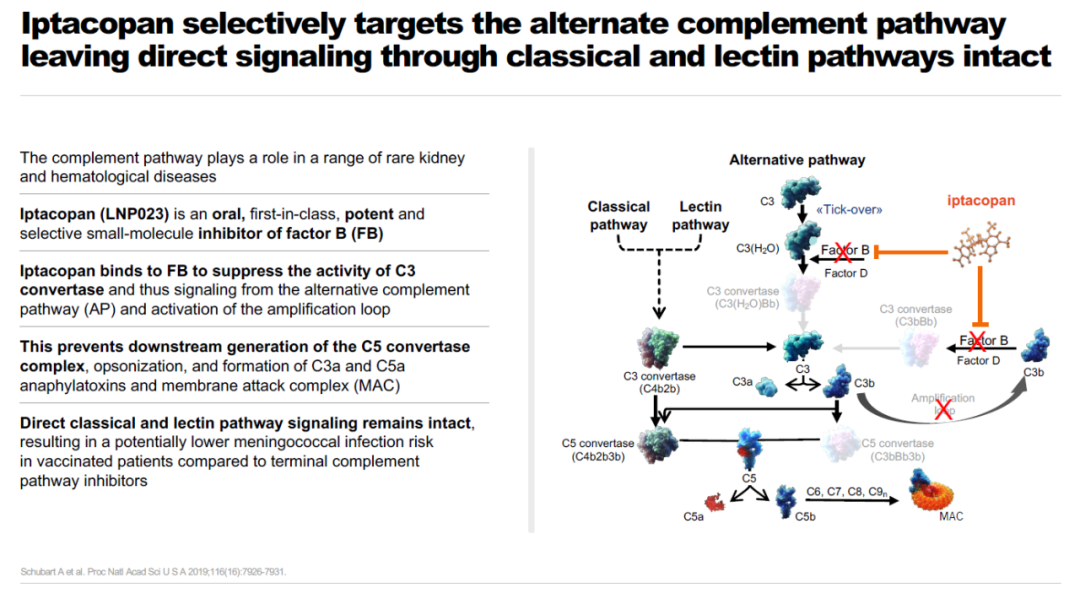
▲Introduction to Iptacopan (Image Source: Novartis official website)
In the APPLY-PNH trial, the most frequently reported adverse reactions (≥10%) for Fabhalta compared to anti-C5 therapy included: headache (19% vs 3%), nasopharyngitis (16% vs 17%), diarrhea (15% vs 6%), abdominal pain (15% vs 3%), bacterial infections (11% vs 11%), nausea (10% vs 3%), and viral infections (10% vs 31%). In the APPOINT-PNH trial, the most frequently reported adverse reactions (≥10%) included headache (28%), viral infections (18%), nasopharyngitis (15%), and rash (10%). In APPLY-PNH, two patients (3%) with PNH treated with Fabhalta reported serious adverse reactions, including pyelonephritis, urinary tract infection, and COVID-19. In APPOINT-PNH, two patients (5%) with PNH treated with Fabhalta reported serious adverse reactions, including COVID-19 and bacterial pneumonia.



Everyone is watching






▲To learn more about the application of cutting-edge technologies in the biopharmaceutical industry, please long press and scan the QR code above to access "WuXi Live Studio" and watch live discussions and exciting replays on related topics.
Disclaimer: The content team of WuXi AppTec focuses on introducing the research progress in global biopharmaceuticals and health. This article is for information exchange only, and the views expressed in the article do not represent the position of WuXi AppTec, nor does it mean that WuXi AppTec supports or opposes the views in the article. This article is not a recommendation for treatment plans. For guidance on treatment options, please visit a正规 hospital.
Copyright Statement: This article is from the content team of WuXi AppTec. Individuals are welcome to share it on their social media circles, but unauthorized reproduction by media or institutions in any form to other platforms is prohibited. For authorization to reproduce, please reply with "reprint" on the WeChat Official Account of "WuXi AppTec" to obtain reprint guidelines.


Share,PointLike,In View, Focusing on Global Biomedical Health Innovation