

Epigenic Therapeutics Files for IPO, Leading Global Epigenetic Regulation with Over $50M Raised

Epigenic
Gene Editing Technology Developer
This year marks the 70th anniversary of the discovery of the DNA double helix structure.
In 1953, James Watson and Francis Crick discovered the double-helix structure of DNA, establishing a physical foundation for genetics that has influenced nearly every aspect of modern biology and medicine. As the genetic code continues to be deciphered, scientists have found that the correctness of gene expression is not only controlled by DNA sequences but also constrained by epigenetic information.
Epigenetic regulation of gene expression allows cells with identical genes to ultimately exhibit different expression outcomes. For example, twins possess the same genome but display different phenotypes. The resulting epigenetic regulatory therapies can selectively and precisely modulate heritable or inheritable mechanisms of gene expression without altering the DNA sequence of the genes.
Over the past decade, the field of epigenetics has rapidly advanced, providing a more comprehensive and profound understanding of gene regulation mechanisms in both health and disease states. Currently, there are already more than ten drugs on the market. However, whether domestically or internationally, epigenetic regulation therapies are still in their infancy, and all approved drugs target only specific sites.
In other words, humans have not yet fundamentally achieved complete control over gene expression, meaning targeted control over whether a gene is expressed, as well as the level and timing of its expression. But is there a tool that could truly be a "game-changer"?
In response, four or five biotechnology companies worldwide are working towards this goal. Among them is an internationally leading force from China—Epigenic Therapeutics, Inc. (referred to as: Epigenic).
According to publicly available information, Epigenic Therapeutics, Inc., founded in the second half of 2021, is currently the first and only biotechnology company in China dedicated to developing a new generation of gene therapies by utilizing the body's endogenous epigenetic gene regulation mechanisms. The company’s current pipeline primarily focuses on chronic disease areas.
In August 2023, Epigenic successfully completed a $32 million Series A financing round. This round was co-led by Qiming Venture Partners and Orbimed, with participation from existing investor Morningside Ventures. Previously, in 2022, the company also completed $20 million in angel and Pre-A financing rounds.
Under the favor of capital, how does epigenetic information influence gene expression, and what new ideas and paradigms can it offer for gene therapy? What strength does Epigenic Therapeutics, Inc. possess to be at the forefront and secure a $32 million financing from top dollar funds?
First, unlike traditional gene editing, as one of the biggest trends in post-genomic era research, epigenetic regulation therapy, where Epigenic is positioned, represents an entirely new track.
From the perspective of epigenetic regulatory mechanisms, unlike traditional gene editing technologies that require operations such as breaking the DNA double helix to alter the DNA sequence, epigenetic regulation technology does not change the DNA sequence in any way. Moreover, the regulated genetic information can be expressed in a long-term and stable manner. Therefore, this technology naturally avoids impacts such as gene mutations, chromosomal translocations, or the generation of harmful repair products caused by the repair of DNA double-strand breaks (DSB).
Based on the disruptive differences in two genetic mechanisms, the scientific founders and R&D team of Epigenic have collaborated to develop a next-generation epigenetic regulation tool that can efficiently and persistently intervene with disease-causing genes through the body's endogenous epigenetic regulatory mechanisms — the EPIREG technology platform.
Before the establishment of Epigenic, the founding team had already accumulated rich practical experience by continuously refining gene regulation tools through optimization, iteration, and application. After recognizing the future druggability of this technology and its advantages in breakthroughs and improvements over existing therapies, the founding team decided to establish Epigenic in the second half of 2021. Using the company as a vehicle, they continued to deepen the EPIREG technology platform and its accompanying delivery technologies. This is an important supporting force behind why the company has reached the international forefront within just two years of its establishment.
From a global perspective, the EPIREG technology platform represents an original innovation by Chinese "artisans" in this field, addressing China's lag in traditional gene therapy compared to cutting-edge global science. The founding journey of Epigenic Therapeutics, Inc. also reflects China's path of innovation in epigenetic regulation technology. It can be said that since the establishment of Epigenic, China has found its own voice in the field of epigenetic regulation.
Before discussing the innovative advantages of the EPIREG technology platform, Zhang Baohong spoke to VCBeat about the technical barriers in this field, as they not only reflect the company's theoretical and technical strengths but also establish its competitive edge in this high-barrier industry.
The main genetic phenomena of epigenetic regulation include DNA methylation, histone modification, chromatin remodeling, and non-coding RNA regulation, etc. Studies have found that during gene transcription, the correct transcription and expression can only be achieved by reading DNA methylation and histone modifications on specific sequences.
Although DNA methylation and histone modification are two influencing factors, they actually promote and strengthen each other in a closely related biological process. When DNA methylation and histone modification overlap at the right time and in the appropriate context, the expression of the gene will produce a lasting biological effect.
But from the perspective of drug development, simultaneously affecting these two epigenetic regulators is extremely challenging. Moreover, there is currently a lack of effective and targeted drug delivery tools for epigenetic drugs. These two major challenges are like two huge mountains blocking the path of epigenetic regulation therapies moving towards clinical applications, but this is precisely where the value of Epigenic's EPIREG epigenetic regulator and patented delivery system lies.
Unlike traditional "cut-and-paste" gene editing tools,EPIREGBy combining nuclease-deactivated CRISPR-Cas with epigenetic modification systems, it is possible to precisely edit epigenetic modifiers at any genomic locus without altering the DNA sequence, offering accurate, safe, and long-lasting treatment for various genetic and non-genetic diseases.
"Biologically speaking, EPIREG adopts a safer, more efficient, and lower-cost method of gene regulation," said Zhang Baohong.
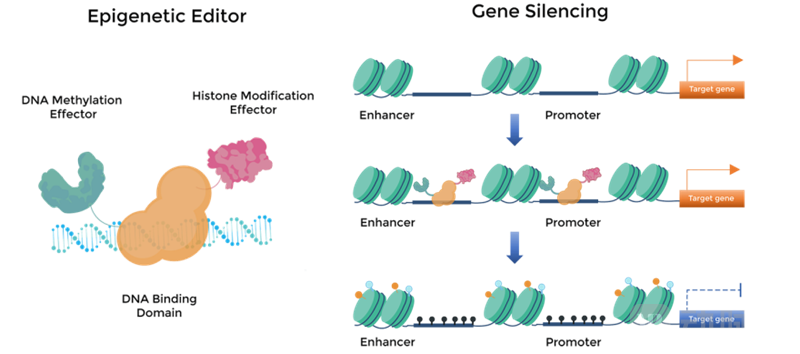
EPIREG Epigenetic Regulator
Source: Epigenic official website
How are the platform's safety, cost, and efficiency reflected?
First, compared with traditional gene editors such as CRISPR-Cas, EPIREG adopts an optimized CRISPR-Cas tool that retains only the binding function of the tool without cutting the gene itself. Therefore, it overcomes the potential safety risks associated with the in vivo application of traditional gene editing and has unprecedented safety advantages.
Secondly, as introduced earlier, EPIREG utilizes the body's natural gene transcription regulation pathways to adjust specific genes within the activated or suppressed endogenous genome to normal levels, correcting imbalanced endogenous genes without introducing exogenous genetic material into the recipient organism’s genome.
Finally, EPIREG enables precise dual regulation of both DNA methylation and histone modification simultaneously. Its mechanism mimics the biological regulatory effects of genomic imprinting, with long-lasting results.
Epigenetic modifications are key mechanisms for regulating gene expression in almost all living organisms, and stable and heritable epigenetic modifications form the basis for the development of a fertilized egg into an individual with multiple organs. From the perspective of drug development, after solving the safe, efficient, and long-lasting regulation of target genes, conquering the "last mile" of drug development—delivery technology—is equally crucial.
Epigenic adopts its self-developed LNP (lipid nanoparticle) drug delivery system.
LNP is one of the most important non-viral vectors for in vivo gene editing drugs and also one of the more mature delivery tools currently available. Specifically, LNPs can protect the active ingredients encapsulated within from enzymatic degradation during delivery, exhibit strong tissue penetration, low cytotoxicity, and low immunogenicity, and effectively deliver drugs to target cells.
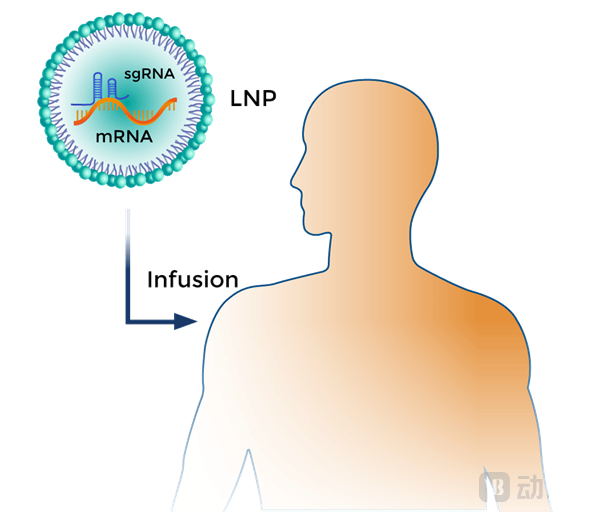
Epigenetic Regulation Achieved by Delivering mRNA and sgRNA via LNP
Source: Epigenic official website
Zhang Baohong introduced to VCBeat that Epigenic has achieved efficient targeted delivery of epigenetic editing tools.And has developed more than 10 new delivery systems., enabling the optimization of multi-scale processes such as tissue enrichment, cell targeting, lysosomal escape, and intracellular release of regulatory tools.Currently, the Epigenic R&D team has successfully achieved highly efficient and specific targeted delivery in the spleen, liver, nervous system, choroid, and corneal epithelial cells.
Moreover, with the continuous development and maturation of AI pharmaceutical technology,Epigenic is also leveraging its self-developed fine-tuned deep learning model to promote optimization across multiple systems.. This model is built on extensively collected and lab-generated data, and can utilize AI models to discover and predict new components of epigenetic regulators, optimal targets, tissue-specific LNP components, and more, thereby precisely optimizing drug development to further improve human health.
As a cutting-edge biotechnology company dedicated to treating various diseases through epigenetic regulation, Epigenic Therapeutics, Inc. combines "epigenetic regulators + precision delivery systems."A number of pipeline candidate products have been laid out, targeting indications that cover various chronic diseases such as metabolism, cardiovascular, viral hepatitis, ophthalmology, and rare diseases.
With the development of the economy and society, especially due to population aging and changes in residents' production and lifestyle, the proportion of deaths caused by chronic diseases in China has exceeded 80% of total resident deaths. Additionally, the over-reliance on treatment by chronic disease patients, who require lifelong medication, also places a heavy burden on the national medical insurance fund.
Epigenic's goal is to fundamentally meet the clinical needs of patients with chronic diseases, disrupt existing treatment options, and achieve this from the perspective of epigenetic regulation."One treatment, lifelong cure"The goal is to bring real benefits to patients with chronic diseases.
Zhang Baohong expressed: "Epigenetic editing therapy is expected to become a revolutionary breakthrough therapy in the field of chronic diseases."
In order to quickly bring the results to clinical practice, Epigenic has also formulated corresponding research and development plans and pipeline layouts in terms of technical advantages, indications, in-depth understanding of targets, and strategy.It is expected that within two years, the company will have two leading pipelines entering the clinical development stage, one of which targets chronic hepatitis B, a condition with a global patient population of nearly 300 million.
There is no denying that drug research and development is a long and complex process. From the second half of 2021 to the present, whether it is the tightening of capital in the primary market or the "sell-offs" and "delistings" in the secondary market, the spring for Biotech remains "far out of reach." Against this backdrop, the industry's leading dollar funds have heavily invested in Epigenic, not only because of the innovative advantages of its technology platform but also due to confidence in China’s cutting-edge original innovations on the international stage.
Currently, Epigenic is in the midst of a new round of financing. As a nascent Biotech, there are still many aspects and details that need continuous exploration, iteration, and refinement in order to develop truly clinically valuable epigenetic regulation drugs and address the health issues of patients with chronic diseases.In this regard, Zhang Baohong concluded the interview by saying, "Only by preparing your own bullets and preparing them sufficiently can you ensure that you reach your own milestones."