

Why Eisai’s DAYVIGO and Simcere’s QUVIVIQ are the hottest new insomnia drugs on China’s e-commerce platforms
Simcere
Innovative Drug Developer
Eisai
Pharmaceutical Product R&D and Manufacturer
In September 2025, two innovative drugs for the treatment of insomnia in adults—Eisai's Lemborexant Tablets (DAYVIGO®) and Simcere Pharmaceutical's Daridorexant Hydrochloride Tablets (QUVIVIQTM)—achieved remarkable sales through pharmaceutical e-commerce channels in China.
Both drugs, approved in China in May and June of this year respectively, share the same mechanism of action as dual orexin receptor antagonists (DORAs). Their sales performance on major Chinese pharmaceutical e-commerce platforms can be described as exceptionally strong.
DAYVIGO launched initially on JD Health in early August, with first-day sales exceeding 8,000 boxes and cumulative sales surpassing 20,000 within the first month. Since its debut on Alibaba Health's platform in early September, QUVIVIQ has already sold over 6,000.
Unlike traditional sedative-hypnotic drugs, neither QUVIVIQ nor DAYVIGO is classified as a controlled psychotropic substance, and they can be purchased in China with an online prescription. This indicates that these innovative drugs have huge potential for market expansion; they are expected to replace part of the health supplement/traditional Chinese medicine market and break through the market ceiling for insomnia medications.
Globally, DORA-class drugs already have a mature market. As the world's top-selling DORA drug, DAYVIGO has been launched in 20 countries and approved in 26 countries worldwide. To date, more than 6 million patients globally have used this medication. In the Japanese market, 40% of new insomnia patients receive DAYVIGO as their initial treatment, and it holds a share of over 30% in Japan's national prescription drug market for insomnia.
An industry insider said: "Insomnia is a common major issue in the downward cycle., there is a large space for market expansion."
For thousands of years, humans have tried various methods to address insomnia, including alcohol, benzodiazepines, and melatonin. However, none of these have successfully achieved an optimal balance across the five key dimensions: efficacy, drug resistance, dependence, safety, and accessibility.
Currently, the mainstream drugs in Chinese clinical practice remain traditional benzodiazepine receptor agonists (BZRAs). These drugs primarily exert sedative and hypnotic effects by inhibiting the activity of the central nervous system. Nevertheless, issues such as addiction with long-term use, withdrawal reactions that easily occur after discontinuation, and suboptimal efficacy still make them unable to meet the long-term treatment needs of insomnia patients.
From 2007 to 2023, no new drugs for insomnia were approved for marketing in China.
Among new insomnia drugs, dual orexin receptor antagonists (DORAs) can be said to have no obvious shortcomings and have been recommended as first-line treatment in clinical guidelines in China. Currently, three DORAs have been approved for marketing globally: Eisai's Lemborexant Tablets (DAYVIGO®) and Simcere Pharmaceutical's Daridorexant Hydrochloride Tablets (QUVIVIQTM), and Merck's Suvorexant. Of these, the first two have been launched in China.
In terms of mechanism of action, unlike sedative-hypnotic drugs, dual orexin receptor antagonists (DORAs) work by "turning off the wakefulness switch." Traditional sedative-hypnotic drugs promote sleep by sedating the brain. In contrast, DORAs facilitate natural sleep by inhibiting the overactivity of the orexin nervous system: they block the binding of orexin neuropeptides (orexin A and orexin B)—which promote wakefulness—to their receptors, thereby alleviating the state of excessive wakefulness in the human body. This mechanism helps reduce drug dependence and next-day residual effects, decreases wake-after-sleep onset (WASO), and prolongs total sleep time—all without altering sleep architecture, making the sleep experience closer to natural sleep. As a result, DORAs not only improve nighttime sleep quality but also enhance daytime functioning.
From the perspective of pharmaceutical regulation, DORAs are not classified as controlled psychotropic substances. The targets of action of traditional sedative-hypnotic drugs are mostly concentrated in the central nervous system; they exert hypnotic effects by regulating the activity of neurotransmitters or receptors. However, this mechanism is often accompanied by addictiveness, dependence, and potential for abuse. In contrast, there is currently no evidence that DORAs cause drug dependence—they can be used long-term, and no significant rebound insomnia occurs after discontinuation. Take Simcere Pharmaceutical's QUVIVIQ as an example: clinical study results show that QUVIVIQ has good safety and tolerability, with no evidence of rebound insomnia, withdrawal symptoms, or drug abuse observed.
The groundbreaking nature of dual orexin receptor antagonists (DORAs) has gained clinical recognition, as they have been included in the Chinese Guidelines for the Diagnosis and Treatment of Adult Insomnia as a first-line recommendation. This means that when a clear diagnosis of insomnia is confirmed, DORAs should be prioritized for use.
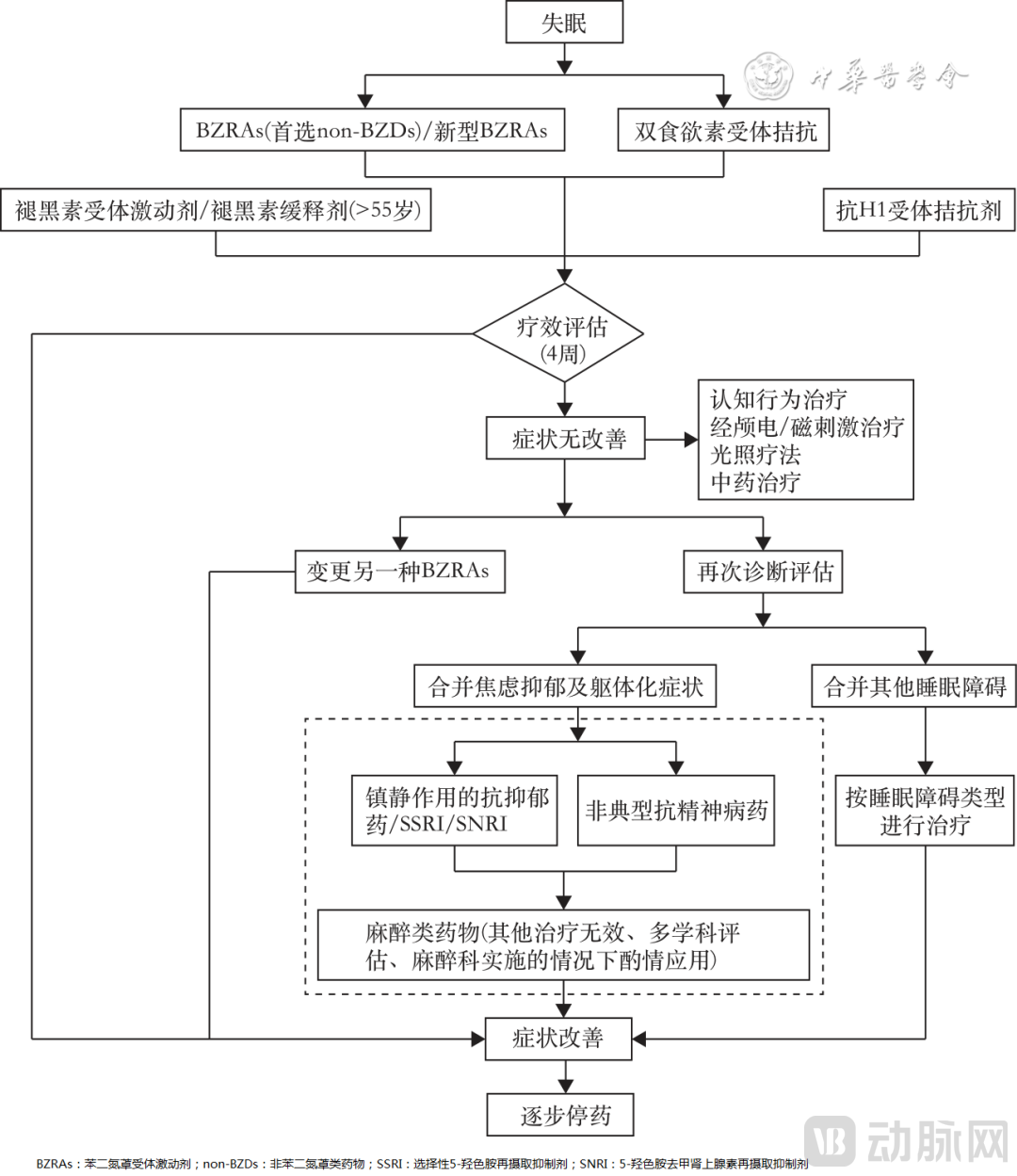
Insomnia Medication Treatment Process in China
DORAs are expected to break through the market ceiling for insomnia medications. According to data from Topsperity Securities, the scale of China's insomnia chemical drug market reached 4.2 billion yuan in 2022, with a year-on-year growth of 18.9%. Among all drug categories, benzodiazepine-class drugs accounted for the highest sales share, reaching 1.48 billion yuan.
Beyond the inherent competitiveness of the products themselves, massive market demand and channel advantages are also key drivers behind the rapid rise of DORAs. Not being classified as controlled psychotropic substances allows DORAs to be obtained via online prescriptions, creating channel dividends.
In addition to traditional hospital channels, Eisai has chosen to launch DAYVIGO exclusively online with JD Health—this decision also reflects its recognition of JD Health's strengths and expertise in digital marketing within the prescription drug sector.
Lemborexant Tablets (DAYVIGO®) has quickly reached users across China through its exclusive online launch on JD Health. Leveraging JD's robust self-built logistics system, DAYVIGO has been able to rapidly penetrate diverse markets after its launch—not only covering first- and second-tier cities, but also quickly reaching users in third- and fourth-tier cities and even more remote areas. This addresses the issue of insufficient drug accessibility in traditional offline channels.
Meanwhile, JD Health has over 200 million annual active users. Leveraging big data and AI technologies, it accurately identifies and reaches potential users with needs—not only recognizing those who have explicit search behaviors related to "insomnia," but also using algorithmic models to tap into potential insomnia groups who exhibit signs such as anxiety, high stress, late-night activity, searching for or purchasing sleep-aid products (e.g., melatonin, sleep devices), or browsing relevant health content. During time periods with high attention to insomnia—such as nighttime (e.g., 10 PM to 4 AM) and periods when work stress topics are widely discussed—JD Health conducts precise delivery of feed ads. The content of these ads focuses more on solution-oriented communication, such as "how to fall asleep quickly" and "what to do if you can't sleep," naturally introducing the innovative features of DAYVIGO.
The launch of a new drug is not merely a simple product listing; it is rather a comprehensive test of supply chain capabilities, medical professional services, and digital technologies. It is reported that to ensure the successful launch of DAYVIGO, JD Health conducted in-depth collaboration with Eisai in advance. Based on historical data, market research, and in-depth insights into the needs of insomnia patients, JD Health used algorithmic models to accurately predict the demand volume, geographical distribution, and user profile for DAYVIGO. This enabled JD Health to plan the optimal inventory level and warehouse distribution in advance, ensuring sufficient supply of the drug during the launch period and rapid response to order demands from across the country. At the same time, JD Health also provided access to JD Internet Hospital to offer service support to patients in need.
Three key actions—online launch, precise reach, and supply chain management—enabled DAYVIGO to quickly gain market traction.
The success of innovative drugs in online channels depends not only on their outstanding scientific value. Take the best-selling DAYVIGO as an example: innovation is not limited to the product and channel levels, but also extends to market education—building patient recognition through market education, user sharing, and patient management.
JD Health stated, "The core lies in working with pharmaceutical companies to jointly build a field of professional cognition and trust. For drugs with innovative mechanisms of action like DAYVIGO, market education is a top priority. We need to develop authoritative content interpretations and knowledge popularization. By collaborating with Eisai China, we have clearly explained DAYVIGO’s mechanism of action to users and highlighted its differences from traditional sleeping pills through popular science articles, short videos, and expert free consultations.
"Meanwhile, we encourage early users to share their medication experiences, with a particular focus on their alertness the next morning—such as no grogginess and the ability to drive or work normally. These real stories are more effective in resonating with people who suffer from insomnia but worry about drug side effects than mere product promotions.
"Third, we establish long-term relationships with users to improve treatment adherence and satisfaction: we provide medication reminders to help users develop regular medication habits and avoid missed doses. We also set up a Sleep Care Center, where users can share experiences and encourage each other, enhancing their sense of belonging and confidence in overcoming insomnia.”
In an era where more and more patients are proactively seeking precise treatment plans, digital marketing must start from the patients' perspective and actively participate in the decision-making process of the entire disease course to achieve success.
Insomnia is becoming an increasingly prominent issue in modern society, and long-term sleep deprivation brings a higher risk of additional diseases. According to a survey by the World Health Organization (WHO), the global rate of sleep disorders is approximately 27%. Meanwhile, a sleep survey released by the Chinese Sleep Research Society in 2016 showed that the insomnia rate among Chinese adults is as high as 38.2%, with an estimated 300 million or more people suffering from sleep disorders.
Currently, a number of new insomnia drugs are under development in China. It is expected that there will be a greater supply of new drugs in the field of insomnia treatment in the future, opening up new growth space for insomnia therapy.
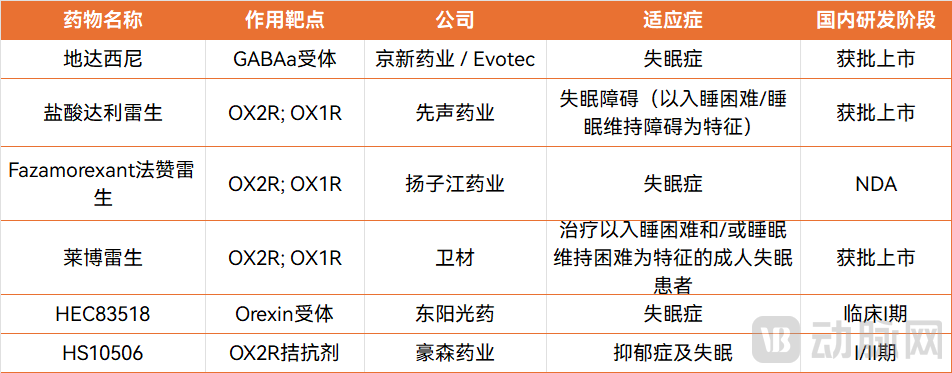
New Insomnia Drug, Data Source: Topsperity Securities
In the long-standing battle between humans and insomnia, the DORAs igniting the market immediately upon launch is no accident—it is the inevitable result of the "triple resonance" of "demand + product innovation + digital ecosystem."
The commercialization of innovative drugs requires not only fighting a "blitzkrieg"—converting scientific credibility into public awareness the moment the drug is approved—but also waging a "protracted war": centering on patients, extending every prescription into full-course companionship, transforming drugs into an ecosystem, and solidifying therapeutic effects into trust.