AI Drug Development Field Witnesses the Busiest Week of 2023On December 4, AstraZeneca signed an agreement with the U.S. artificial intelligence biologics company Absci to design an anti-cancer antibody. On the same day, AI + immunotherapy startup Seismic completed a $121 million Series B financing round, with Amgen participating in the investment.On December 5, Sanofi partnered with Aqemia, a biotech company driven by AI and quantum physics, to discover small molecule drug candidates. On the same day, AbbVie collaborated with BigHat Biosciences, an expert in machine learning and synthetic biology, to discover and develop new therapeutic antibodies in the fields of oncology and neuroscience.The pharmaceutical industry is actively embracing artificial intelligence, and these projects are expected to revolutionize drug development.Paris-based startup Iktos is also joining in, with a strategic focus on integrating artificial intelligence solutions into robotics.In a recent interview, Yann Gaston-Mathé, CEO of Iktos, stated: "In five years, all small molecules will be discovered through generative artificial intelligence methods.。”Save 50% of Drug Discovery Time
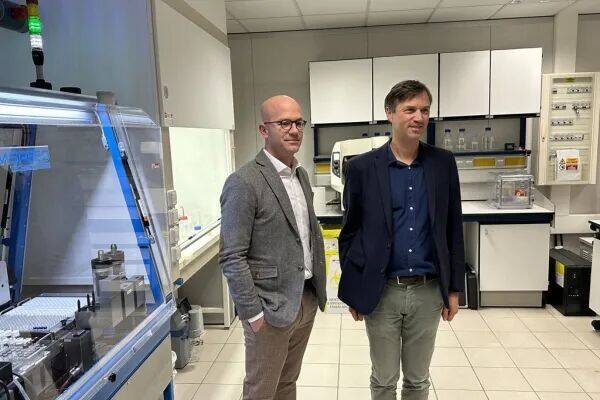
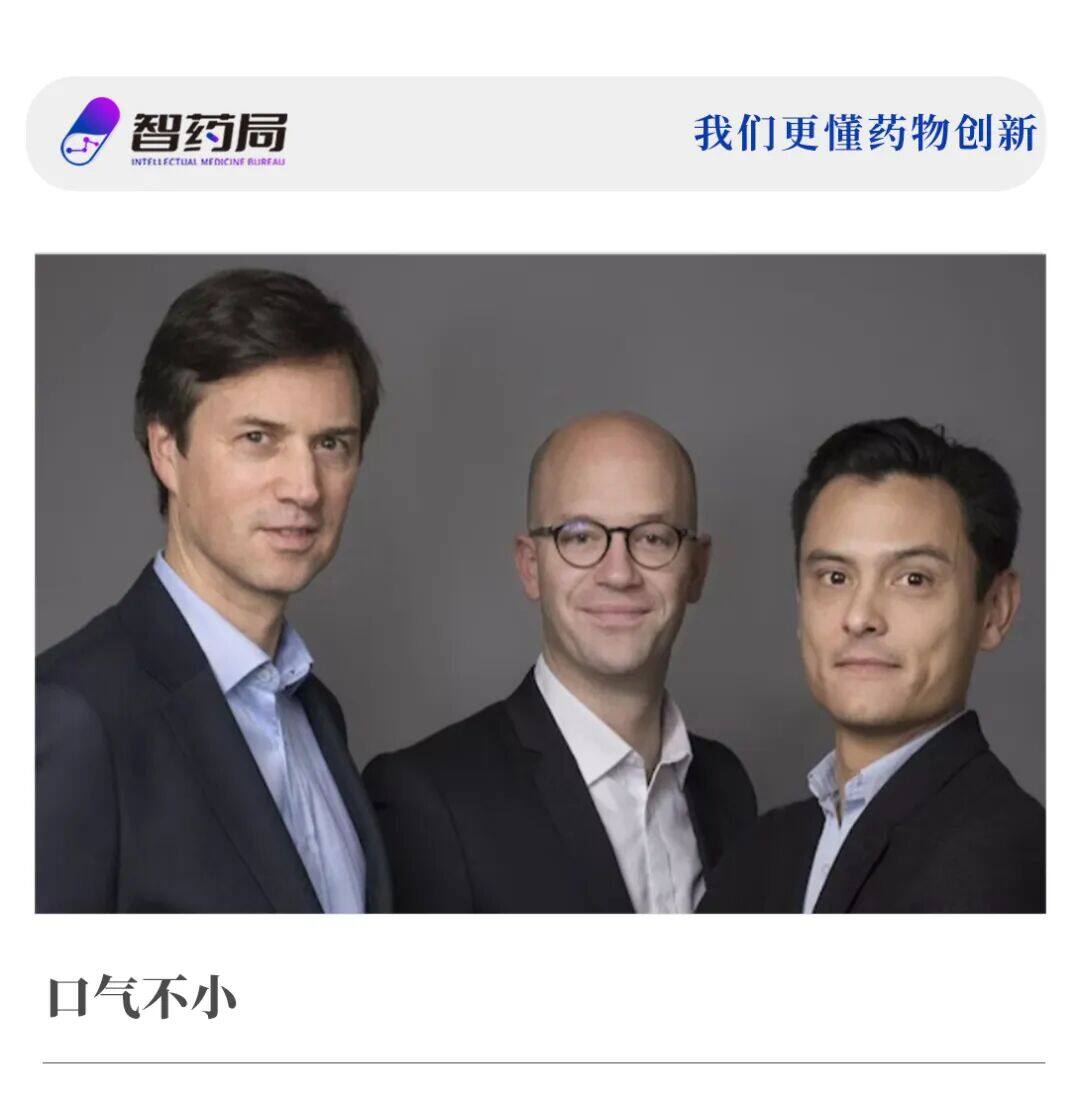
Iktos, founded in 2016, has about 60 employees and is headquartered in Paris, France. It is the only company providingCompanies with Built-in Synthetic Accessibility in Generative Models。Since its establishment, Iktos has completed three rounds of financing, raising over 100 million yuan, with more than 50 completed or ongoing projects. Its partners include Johnson & Johnson and Merck.、PfizerSuch as multinational pharmaceutical companies.Quentin Perron, Chief Strategy Officer of Iktos, stated that the company's goal isHalve the time required to identify preclinical candidate drugs,AndWillBefore clinical trialsCost halved.Fig.: Quentin Perron and Yann Gaston-Mathe, founders of IktosDrug development is not only a race against time but also a time-consuming and labor-intensive process."Developing a drug takes twice as long as making an airplane," described a senior executive in the French pharmaceutical industry.Drug development involves identifying compounds with characteristics that can achieve the desired therapeutic effect."It's like searching for solutions in an almost infinite chemical space, as we believe the number of molecules that can be synthesized is about 10 to the power of 60, which is nearly the number of atoms in the universe."”,Yann Gaston-MathéSay.Drug Discovery PhaseIt takes up to five years.Each candidate drug requires an average investment of nearly 100 million US dollars.Traditionally, medicinal chemists in laboratories create and test compounds, but artificial intelligence can transform this process.
Iktos Hopes to Leverage Its AGI Solution(Makya, Spaya, and Ilaka)Accelerating New Drug Research with Autonomous RobotsThe first phase.AGI SolutionThe case includes three parts:- Makya: Used for generating candidate molecules;
- Spaya: Used for exploring synthetic pathways;
- And Ilaka's automated task scheduling platform: This platform can propose detailed long-term schedules to maximize efficiency and is capable of scheduling robotic operations.
The core strategy is to integrate these three artificial intelligence solutions into robots.Makya Acting as the "brain", feeding on biological data, to create a "meets all criteria" molecule: a molecule that is effective at the lowest possible dose, safe, stable, patentable, and synthesizable."It only takes a few hours," said Quentin Perron.Spaya Provide Synthetic "Recipes",Then,Ilaka Software-ControlledRobotCapable of synthesizing 96 compounds at once."We are in the testing phase, but we hope to increase the number of compounds to 100 per day in January and to nearly 500 within six months," said Quentin Perron.Quentin Perron said:"Five chemists plus our solutions and an autonomous robot will be equivalent in efficiency to a laboratory with about 30 people."
It is reported that the robot was purchased from Italy for hundreds of thousands of euros.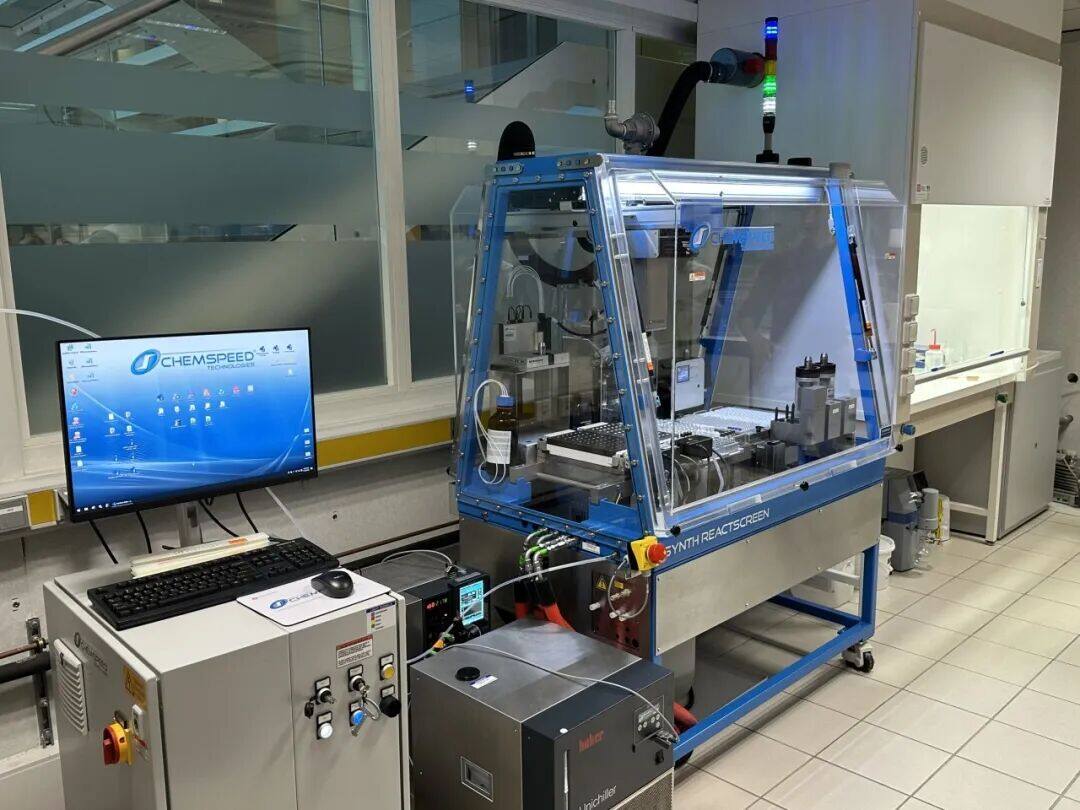
This process can be repeated continuously to identify more promising compounds.Although still small in scale, this phase of development uses artificial intelligence and robotics to reduce the time required for the parallel production of 100 molecules from two to three months in the lab to just one to two months.It is reported that several companies have become customers of AGI solutions, but currently, Iktos does not wish to sell the services of its autonomous robots.More hope to continue making their own molecules, in order to successfully apply for a patent and prove to customers that it is effective.Yann Gaston-Mathé also stated: "It is still too early for AGI to produce drugs, butI think that in five years, the small molecules entering clinical trials will come from AGI.。” Notably, the entire drug development process still takes over a decade, with only one in ten candidate drugs eventually making it to market.
Although there are currently no statistics comparing drug discovery projects using traditional methods with those employing generative artificial intelligence, leading pharmaceutical companies have established collaborations with biotechnology firms and startups to...Artificial Intelligence Becomes the Core of Its Model。For example, the British biotechnology companyExscientia, has already reached cooperation with major pharmaceutical companies such as Sanofi, Sumitomo Pharma, and GlaxoSmithKline.Schrödinger and Atomwise from the United States, Insilico Medicine based in Hong Kong, and BenevolentAI from the United Kingdom have also reached varying levels of cooperation with large pharmaceutical enterprises.On December 5, Sanofi also partnered with FranceAI + Quantum Physics-Driven Biotech CompanyAqemia Signs Partnership to Leverage AI for Drug Discovery.
By 2032, the global artificial intelligence in drug discovery market is expected to reach approximately USD 14.51868 billion, with a compound annual growth rate (CAGR) of 20.08%.
Currently, the Iktos platform has not yet produced any drugs, but it has already made such a grand proclamation. Is it being overconfident?