

London King's College and Marengo Therapeutics Reveal Mechanism of Novel Anti-Vβ TCR Antibodies with Immunotherapeutic Potential

Marengo Therapeutics
Developer of Anti-Tumor Therapeutics
TCRCan serve as an innate receptor, binding to ligands through non-clonal germline-encoded sites. Therefore, the so-calledSuperantigen (SAg) protein is usually associated withCDR2Highly Variable Region4(HV4) encoded inTCRVβSequence Binding.SAgInteractions may be related to clonotype,CDR3Mediated interactions yield different qualitative results, butCDR3The co-allocation of motifs, at least in streptococcusPyogenesEnterotoxinC(SpeC) and Staphylococcus aureus enterotoxinH(SEH) In the case of, andSAgAndMHC IIBinding of proteins, these proteins may be related toTCRThe other points interact variably with each other.
Vβ TCR Variants are a class of specific receptors on the surface of T cells. Peripheral blood T cells are mainly T cells carrying α/β TCR, with 24 lineages in the Vβ region reported, namely Vβ1~24. In normal individuals, T cell subsets expressing all TCR Vβ lineages are present in peripheral blood.Novel antibodies targeting Vβ TCR variants can precisely identify and activate specific T cells without affecting other cells.These drugs induce T-cell activation by binding to the Vβ TCR variants on the surface of T cells, thereby achieving the purpose of treating diseases.
Recently, researchers from King's College London and Marengo Therapeutics published a research paper titled "Innate TCRβ-chain engagement drives human T cells toward distinct memory-like effector phenotypes with immunotherapeutic potentials" in a journal.The study found that, unlike the T cell states induced by common CD3 antibodies or SAg stimulation, anti-Vβ antibodies induce polyclonal T cells to adopt a distinct memory-like effector (TMLE) phenotype. Furthermore, in a therapeutic setting, anti-Vβ antibody stimulation may aid in the activation and maintenance of specific subcomponents of the αβT cell repertoire, thereby reducing the occurrence of T cell states similar to those induced by CD3 antibodies or SAg stimulation (cytokine release, activation-induced cell death, T cell exhaustion). This research provides developmental strategies for targeting non-clonotypic TCRVβ and translating it into clinical treatments.
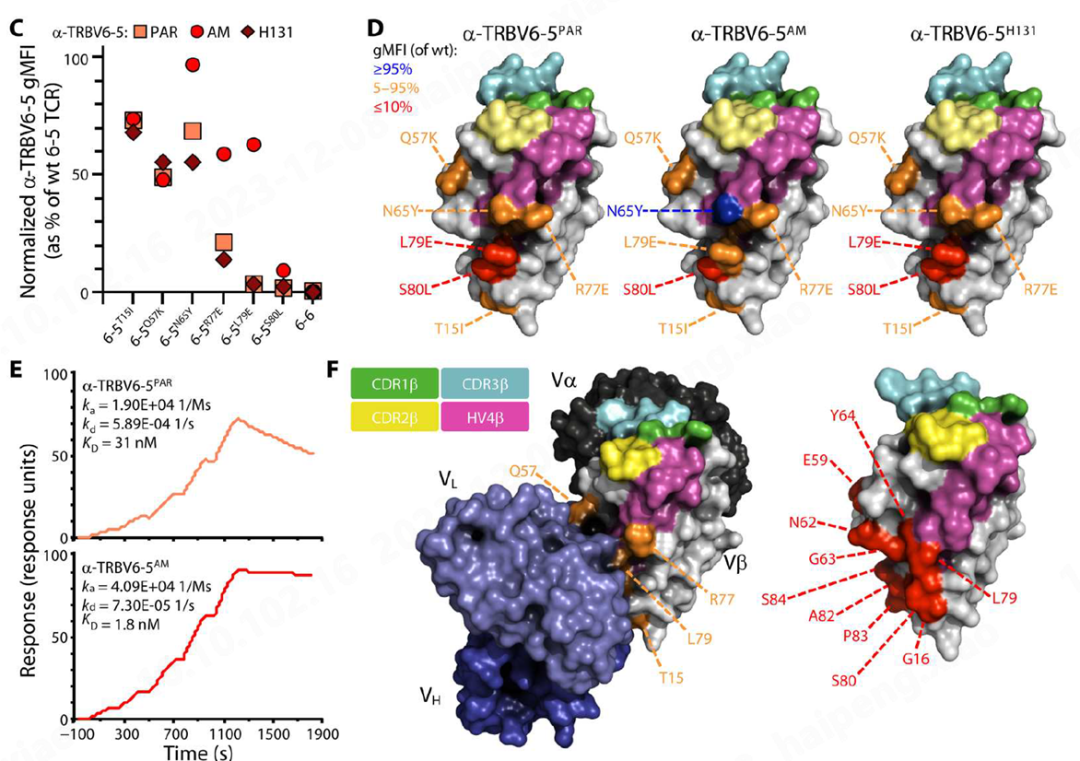
Research on constructing an antibody targeting the germline-encoded human TCRVβ motif TRBV6-5 (Vβ13.1), named anti-TRBV6-5 antibody (α-TRBV), for T cell stimulation experiments. The results showed that the constructed anti-Vβ antibody induced polyclonal T cells to adopt different memory-like effector (TMLE) phenotypes, indicating that non-clonotypic TCRs are involved in mediating different phenotypes of TCRαβ+ cells.
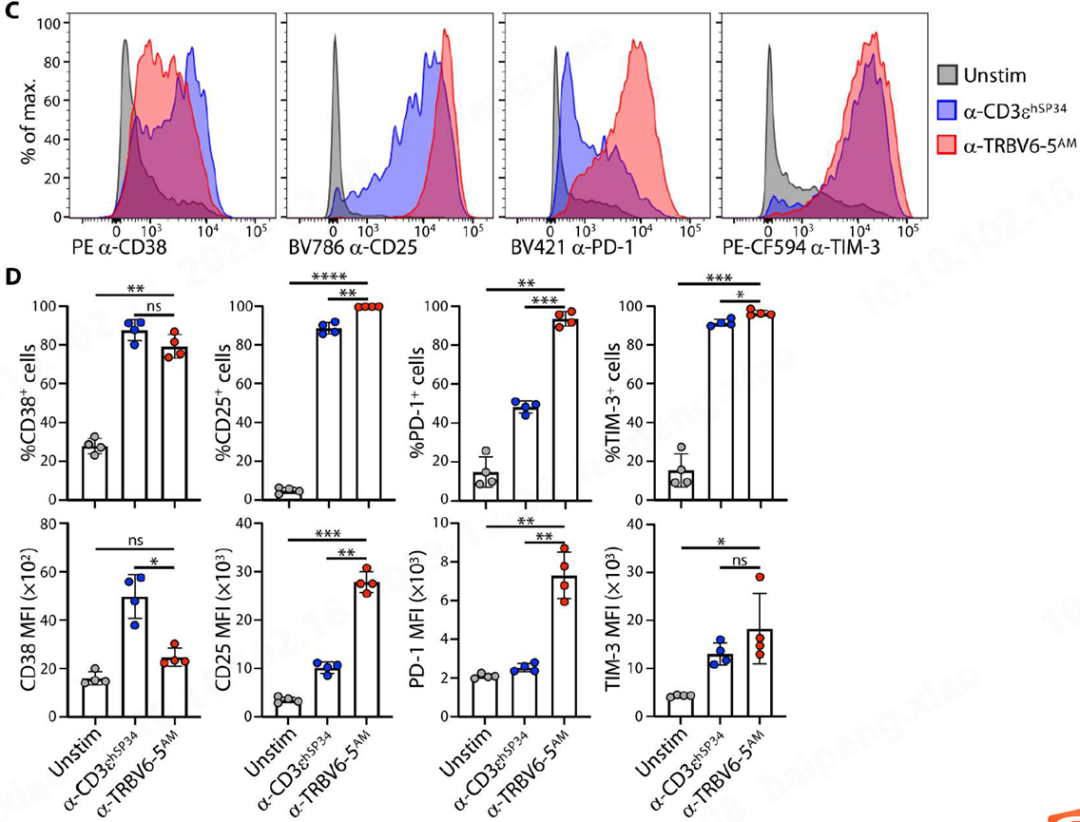
Further observations showed that, in addition,α-TRBV-mediated non-clonal Vβ-dependent stimulation may contribute to the selective activation and/or maintenance of specific subcomponents (memory-type) of the αβT cell repertoire, a state that combines selective proliferation and effector function with activation-induced inhibitory receptor expression and memory differentiation.
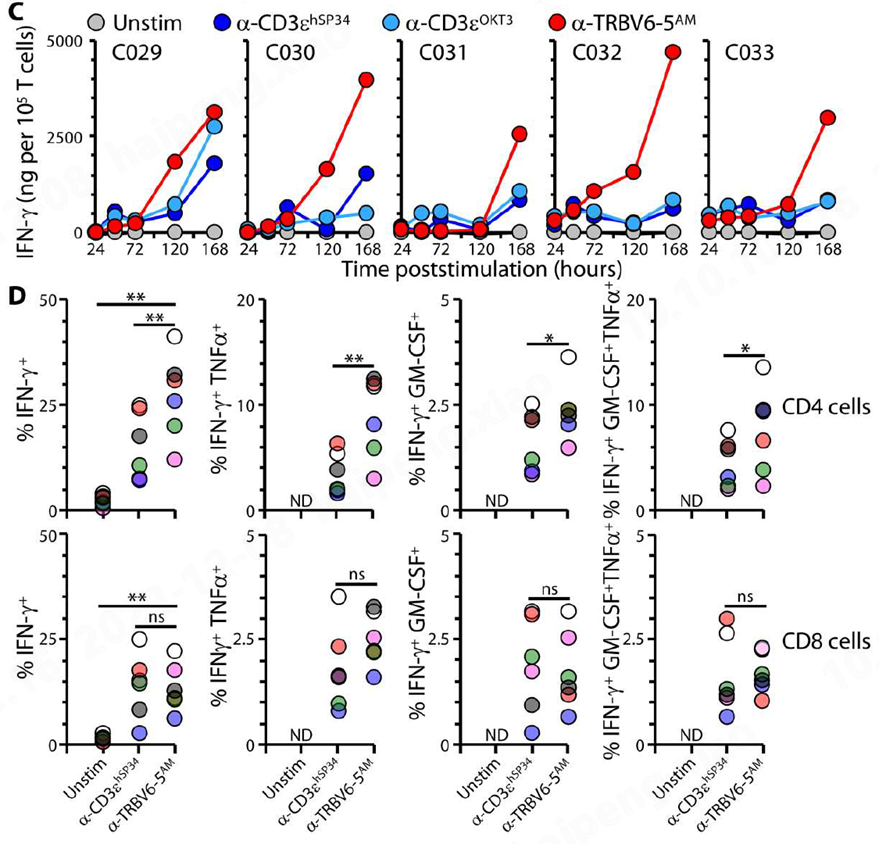
Thereby limiting the release of large amounts of cytokines, activation-induced cell death, and the exhaustion of residual T cells, placing them in a core state distinct from that induced by CD3 antibodies or superantigens.
Therefore, targeting non-clonal TCRVβ broadens the perspective on human T-cell response patterns and may provide a method for inducing clinically beneficial phenotypes in specific T-cell subsets.
Thinking
Few T cell-activating antibodies have demonstrated functional memory and long-term protection as single agents in solid tumor models within tumor immunity sensitivity and resistance models. Scientists at Marengo Therapeutics have discovered a novel approach: initiating specific T cells to combat tumors through new antibodies that directly target VβTCR variants.MarengoTherapeutic antibodies that mimic the action of bacterial superantigens (SAgs) can be generated through the STAR technology platform. Unlike traditional CD3 antibodies, they can bind to different TCR Vβ variants to activate specific subpopulations of T cells. Since different T cells express different TCR Vβ variants, these therapeutic antibodies can selectively activate specific T cell populations within CD8-positive and CD4-positive cells. By "turbocharging" T cells, they drive potent anti-tumor activity and promote long-term tumor immunity through memory T cells.Vβ Antibody Mimics Natural "Super" TCR Activators, Featuring the Flexibility/"Tunable" Properties of Antibody Fusion Molecules. In January 2023, a Phase I/II trial (NCT05592626) of STAR0602 in patients with advanced solid tumors was initiated.
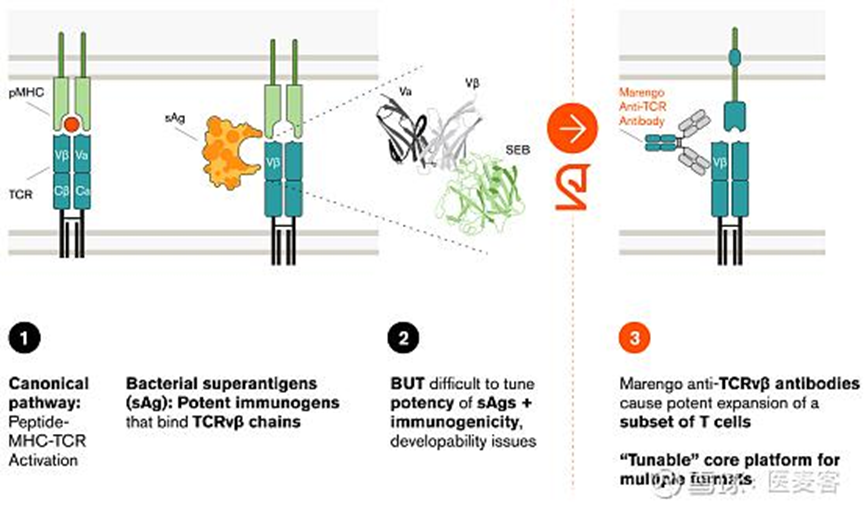
Germline-encoded subregions participating in TCR can reproducibly induce a clustered TMLE phenotype, which may expand the perspective on T cell biology. Future research might determine whether there is a natural environment where detectable αβ TMLE cells exist.At the same time, the different outcomes of TRBV stimulation strongly suggest the clinical application of this approach in manipulating T cells both in vitro and in vivo, particularly in cancer immunotherapy. As the research demonstrates, strategies that stimulate only defined αβT cell subsets (such as TRBV6-5+) may simultaneously reduce the adverse clinical effects associated with pan-T cell stimulation using CD3 antibodies.Moreover, this method may promote the beneficial activation of Vβ-specific T cell subsets associated with responses to discrete immune challenges.
Reference:Innate TCRβ-chain engagement drives human T cells toward distinct memory-like effector phenotypes with immunotherapeutic potentials. Sci Adv. 2023 Dec 8;9(49):eadj6174. doi: 10.1126/sciadv.adj6174. Epub 2023 Dec 6.