

AstraZeneca Reports a Novel Chemical Series of Cbl-b Inhibitors with Distinct Binding Mode and Improved Selectivity

AstraZeneca
Biopharmaceutical Manufacturer
Cbl-b previously inLook at an example of a biotech developing FICIt was mentioned earlier that, overall, it is a potential tumor immunotherapy target. Nurix may have been the first to report a molecule with drug potential, and subsequently, more companies have published related patents.
Recently, AstraZeneca published an article reporting a new series of molecules, as shown in the figure below. The figure below shows some previously disclosed literature or patent molecules.
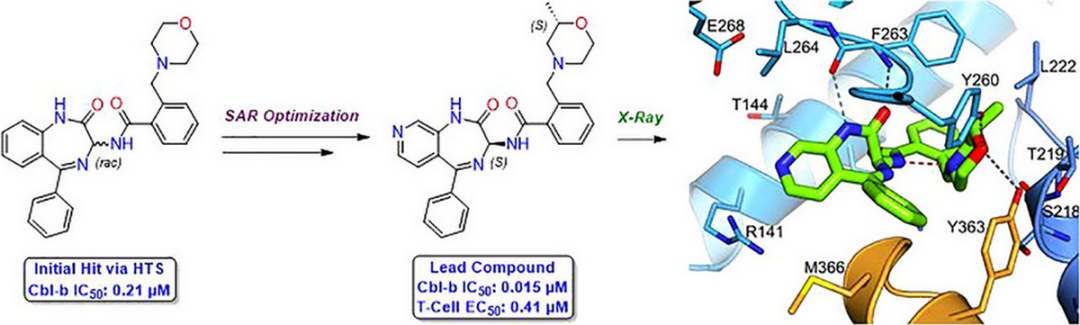
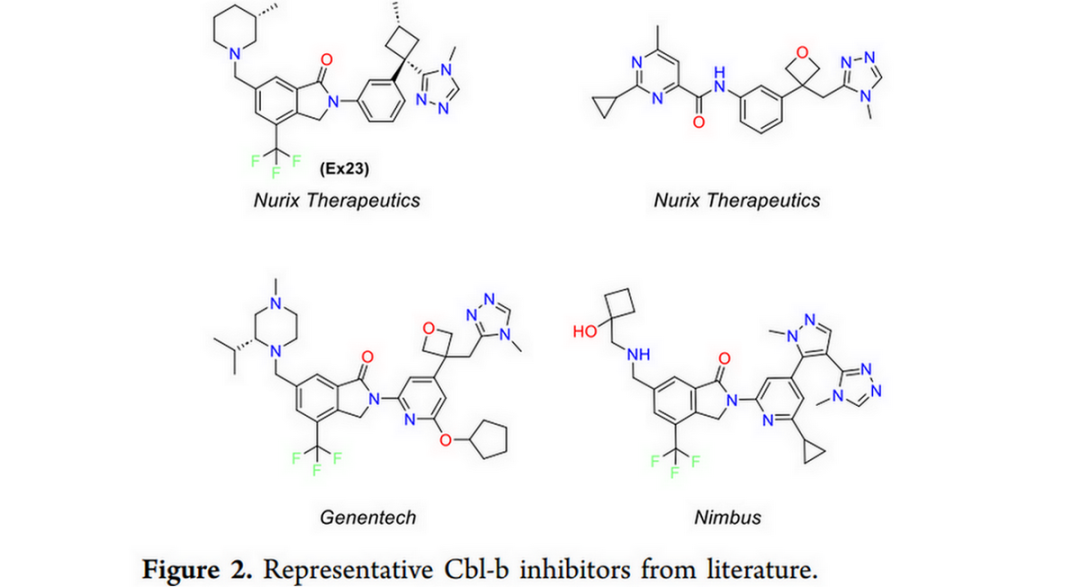
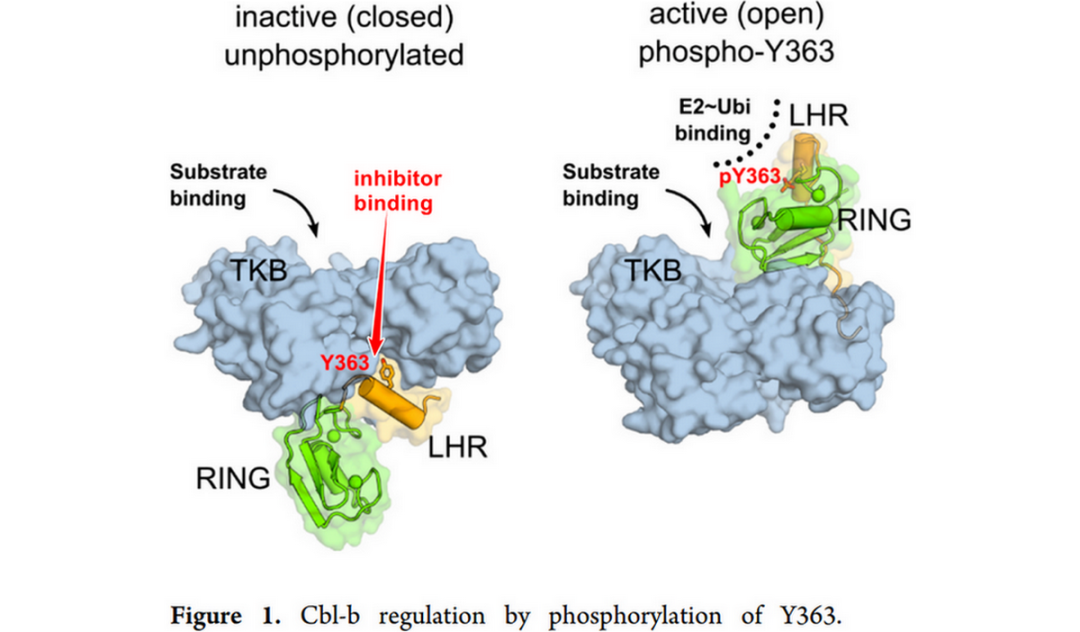
Let's take another look at the inhibition mechanism of small molecules. As shown in the figure below, Cbl-b is composed of different domains, and the relative displacement between these domains can cause the protein to present either a closed inactive conformation or an open active conformation. The small molecule binds between the TKB and LHR domains of the inactive conformation, stabilizing the protein in the inactive state. This mechanism is somewhat similar to that of SHP2 allosteric inhibitors. In the binding mode diagram below, Y363 can also be found among the pocket residues.
Let's look at the binding mode of small molecules. On the left is a new series of hits reported in AstraZeneca's article, and on the right is a representative molecule from the previous series.Example 23 of a Nurix patent). The two have distinctly different chemical series and binding modes, but they bind to the same binding pocket.
The green molecule below is AstraZeneca's lead molecule compound 25 from the article. Compared to the hit molecule, one major change is the addition of a chiral methyl group on the morpholine ring, which occupies...The methyl group on the four-membered ring of Nurix molecule has a similar spatial arrangement. Another modification is that the benzene ring on the left is changed to a pyridine ring, which appropriately reduces the logD without affecting the activity.
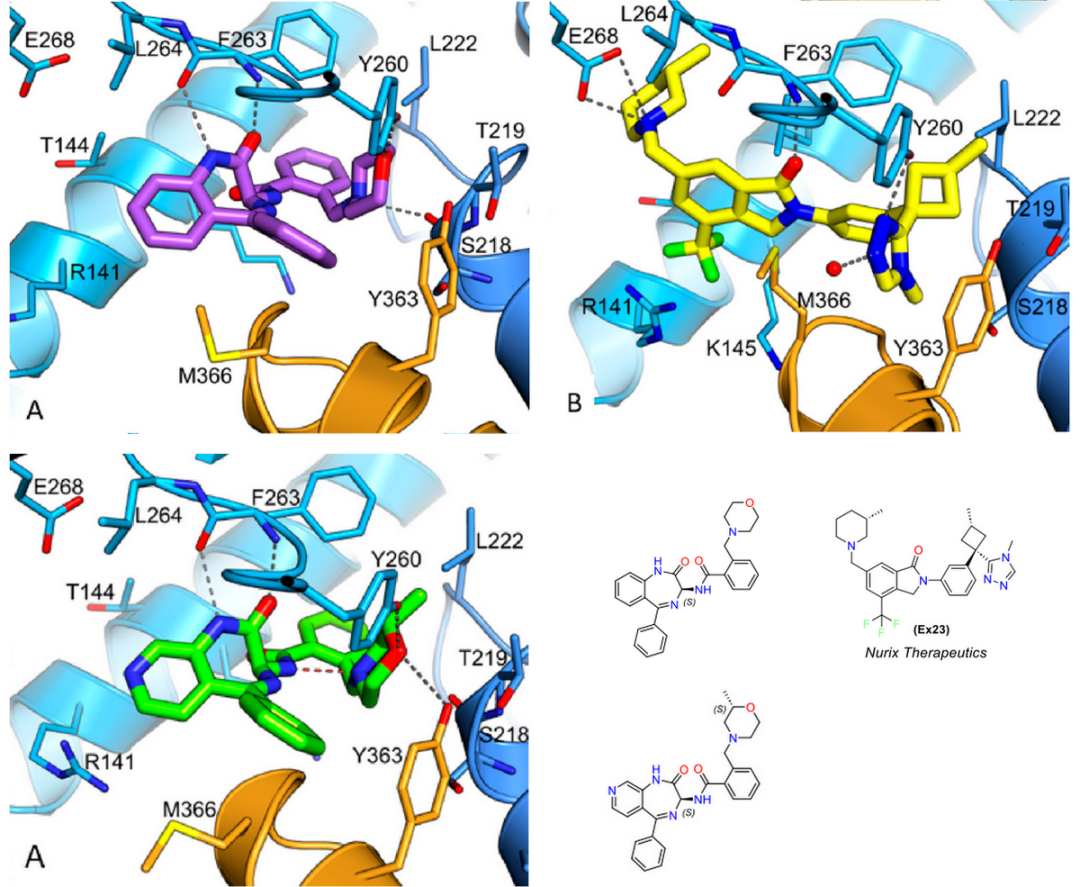
Although there are only two modifications from hit to lead (excluding the separation of chirality), many other changes/modifications were attempted in the process.Partial SARAs follows. It is interesting to take a look in conjunction with the binding mode. For instance, removing the oxygen of the morpholine ring results in significant loss of activity, as we know this oxygen forms a hydrogen bond with Y260. Similarly, a hydrogen bond also exists in Nurix's molecule, but it is formed by triazole participation. Additionally, modifications on rings B and C are mostly not tolerated, leading to substantial activity reduction. If interested, you can also examine it in combination with the binding mode; we won't analyze each case individually here.
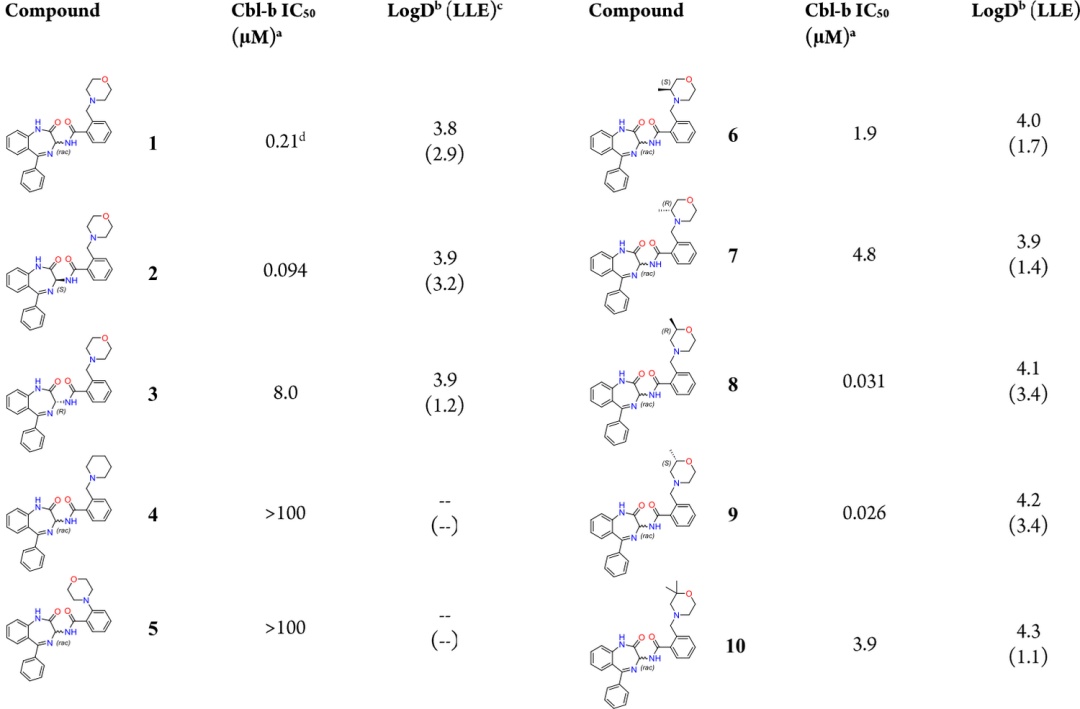
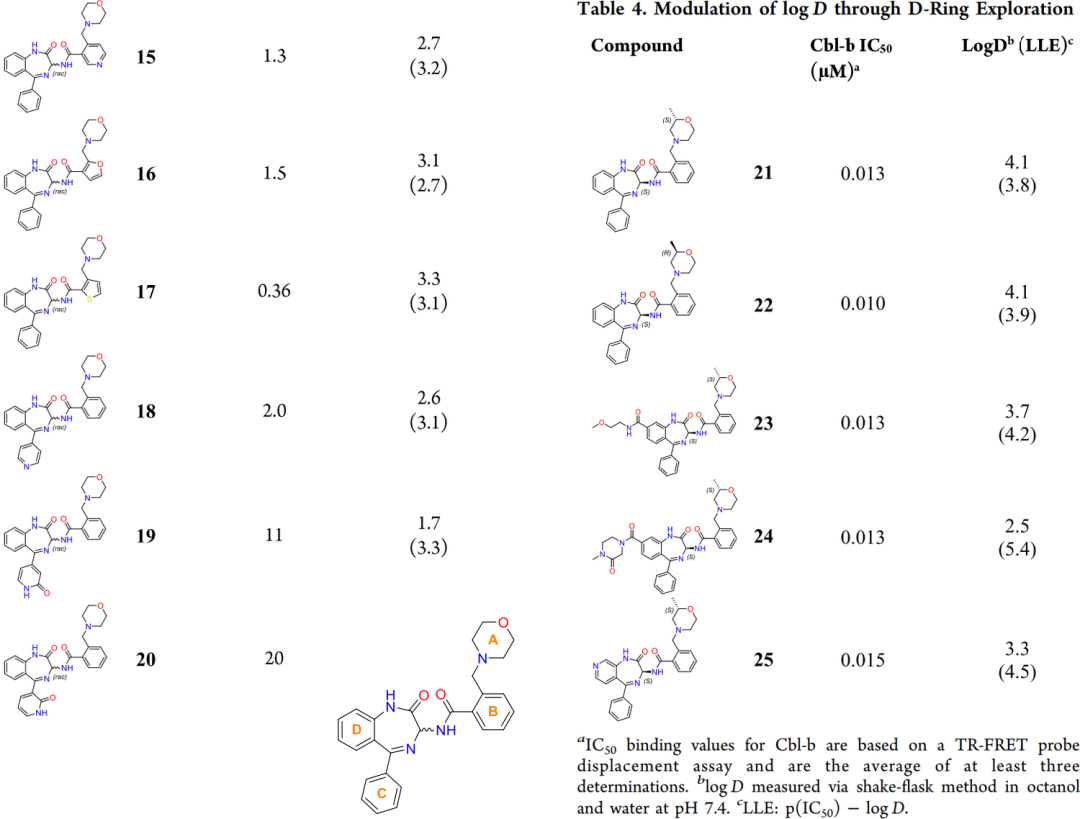
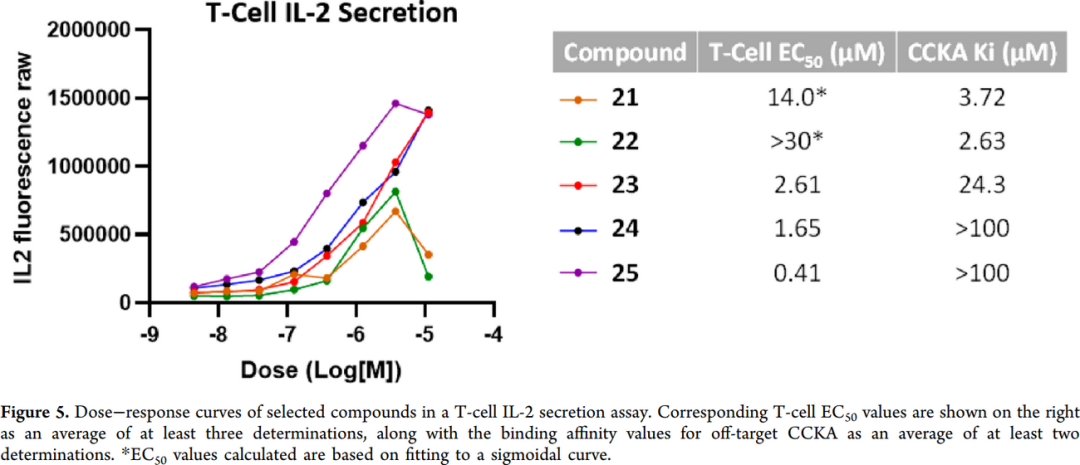
In addition, AZ researchers found that, althoughMolecules 21-25The biochemical IC50 values are the same or similar, but their performance in promoting IL-2 secretion at the cellular level is different. Especially for molecules 21 and 22, they show a curve that first rises and then falls. The author of the article speculates.Possibly due toCaused by the off-target of these two molecules.
First, the internal routine safety panel of 85 targets was tested for molecules 22 and 23, revealing a protein called CCKA as a potential suspect. Further testing of CCKA binding for molecules 21, 24, and 25 showed that molecules 21 and 22 had relatively strong CCKA binding, while molecules 23, 24, and 25 exhibited weaker or no binding, consistent with the observed IL-2 curve. CCKA can currently only be considered a suspect, but in terms of molecular properties, molecules 21 and 22 are more lipophilic, which generally implies a higher likelihood of off-target effects.
The process of Nurix's initial discovery of the Cbl-b inhibitor can be explored further.Look at an example of a biotech company developing an FIC.
Discovery of a Novel Benzodiazepine Series of Cbl‑b Inhibitors for the Enhancement of Antitumor Immunity
https://doi.org/10.1021/acsmedchemlett.3c00439