

AbbVie/ImmunoGen Reports Positive Phase 1b/2 Data of CD123-Targeting ADC Pivekimab Sunirine in Combination Therapy for Newly Diagnosed Acute Myeloid Leukemia

AbbVie
Innovative Drug Developer

ImmunoGen
Antibody-Drug Conjugates (ADC) Developer

Welcome to follow Asymchem Pharma News

Recently, ImmunoGen announcedPivekimab Sunirine (pivekimab) in Combination with Azacitidine (Vidaza) and Venetoclax (Venclexta) Shows Positive Study Results in Newly Diagnosed (ND) Acute Myeloid Leukemia (AML) PatientsThe specific data will be disclosed at the poster session of the 65th American Society of Hematology (ASH) Annual Meeting held in San Diego, California.
Regarding the Latest Announced Data
In this open-label, multicenter, Phase 1b/2 study of pivekimab in combination with azacitidine and venetoclax for the treatment of ND CD123-positive AML patients, the primary endpoints are complete response rate (CR), composite complete response rate (CCR [CR+CRh+CRp+CRi]), minimal residual disease (MRD) negativity rate, and duration of response; key secondary endpoints include safety, pharmacokinetics, and immunogenicity.
As of September 29, 2023, the research data includes:
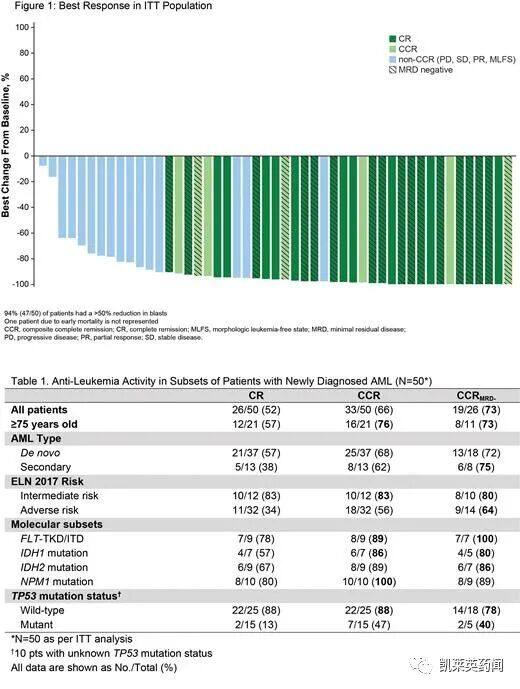
In the overall population, the CCR rate was 68% (34/50), the CR rate was 54% (27/50), and the MRD negativity rate was 76% (22/29) in evaluable patients.
In a post-hoc subgroup analysis of patients unsuitable for intensive chemotherapy (i.e., >75 years old and/or with pre-specified comorbidities) (n=23), the CCR rate was 78% (18/23), the CR rate was 61% (14/23), and the MRD-negative rate was 79% (11/14).
In TP53wt patients (n=25), the CCR rate was 88% (22/25), the CR rate was 84% (21/25), and the MRD negativity rate was 80% (16/20).
CCR and MRD negativity rates were high in other major molecular subgroups, including:
(1) FLT3 (ITD or TKD):100% (6/6) and 100% (6/6)
(2) IDH1 mutant: 100% (4/4) and 67% (2/3)
(3) IDH2 mutants: 100% (6/6) and 83% (5/6)
(4) NPM1 mutant: 100% (8/8) and 86% (6/7)
(5) K/NRAS Mutants: 50% (3/6) and 67% (2/3)
(6) TP53 Mutants: 50% (7/14) and 50% (3/6)
In all MRD-negative patients, the median time to MRD negativity was 1.87 months (range: 0.79–5.16 months).
Although the follow-up time was relatively short (median 5.2 months), the landmark overall survival rate at 6 months was estimated to be 86%.
In terms of safety, no new safety signals were observed compared to previously reported data.
The most common non-hematologic treatment-related adverse events (TEAEs) (all grades [grade 3+]) occurring in ≥20% of all patients were constipation (48% [2%]), peripheral edema (44% [4%]), diarrhea (40% [2%]), hypophosphatemia (34% [2%]), nausea (32% [4%]), hypokalemia (28% [4%]), fatigue (24% [6%]), hypotension (24% [2%]), and pyrexia (24% [0%]).
16% of patients experienced infusion-related reactions (IRR) (Grade 0 3+ IRR).
The discontinuation rate due to adverse events (AE) was 4% (2 patients).
The 30-day mortality rate was 0%; the 60-day mortality rate was 4% (2 patients; due to pneumonia and early disease progression).
About Pivekimab sunirine
Pivekimab sunirine(IMGN632,PVEK) is a CD123-targeted ADC being developed for blastic plasmacytoid dendritic cell neoplasm (BPDCN) and AML, currently in Phase II clinical trials. Previously, the drug was granted Breakthrough Therapy designation by the FDA for the treatment of relapsed/refractory BPDCN. BPDCN is a rare and aggressive hematologic malignancy that affects the skin, lymph nodes, blood, central nervous system, and bone marrow (BM).
A Phase 1b/2 study in BPDCN showed that adult patients with frontline or R/R BPDCN received PVEK 0.045 mg/kg in 21-day cycles. As of September 14, 2022, data from a total of 58 BPDCN patients were available (16 frontline and 42 R/R BPDCN).
The objective response rate (ORR [CR, CRc, CRh, CRi, PR]) in 16 first-line BPDCN patients was 81% (13/16), with a composite complete response rate (CCR [CR, CRc, CRh, CRi]) of 75% (12/16), achieving CR post-transplant. Six out of six first-line patients with baseline cranial involvement reported cranial lesion resolution. Four (25%) first-line patients underwent allogeneic transplantation. The median time to first response was 1.5 months (0.5-3.7 months). The median duration of response (DOR) in first-line patients was 10.7 months (up to 13.3 months without transplantation); seven patients are still receiving PVEK treatment.
For R/R BPDCN patients (including those who failed intensive chemotherapy and transplantation), the ORR was 31% (13/42), and the CCR was 19% (8/42). In patients previously treated with TAG, the ORR was 26% (5/19), and the CCR was 16% (3/19). The median DOR for BPDCN patients was 3.1 months (up to 9.2 months); 10 patients are still receiving PVEK treatment.
The most common TEAEs (all grades [≥3 grades]) in 20% of patients were: edema (53% [12%]), thrombocytopenia (31% [26%]), infusion-related reactions (26% [5%]), constipation (24% [0%]), fatigue (22% [5%]), nausea (22% [0%]), and neutropenia (22% [21%]), etc. Grade 3 hypoalbuminemia was reported in 3% of patients. No CLS or CRS events were reported, the 30-day mortality rate was 2% (1 case died due to disease progression), no treatment-related deaths occurred, 1 case (2%) of treatment-related AE (TRAE) led to dose reduction, and 2 cases (3%) discontinued PVEK due to TRAE.
About CD123 Drugs
CD123 is the alpha subunit of the leukocyte IL-3 receptor (CD123). This receptor belongs to the common beta (βC) cytokine receptor subfamily, which includes the IL-5 and granulocyte-macrophage colony-stimulating factor receptors. All these membrane receptors are expressed on the surface of bone marrow progenitor cells and play a crucial role in the regulation of hematopoiesis and inflammatory responses. Although CD123 is expressed on most CD34+ hematopoietic progenitor cells, it is only continuously expressed in the monocytic and granulocytic lineages, participating in the proliferation and differentiation of myeloid progenitors, particularly by activating the JAK/STAT pathway after receiving IL-3.
According to incomplete statistics, currentlyThere are more than 80 CD123 drugs under research, and the only approved drug is Elzonris (tagraxofusp, SL-401)., which was approved in December 2018 for the treatment of pediatric and adult patients aged 2 years and older with BPDCN. The following is a summary of CD123 drugs currently in clinical stages:

About AML
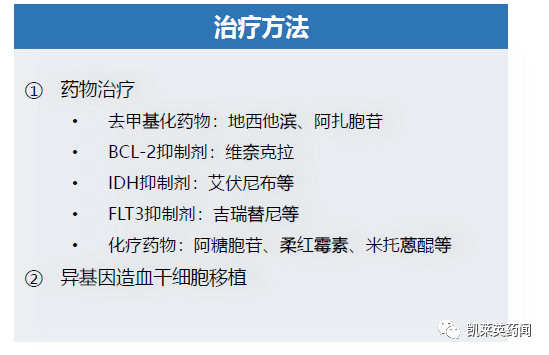
AML is a disease characterized by the uncontrolled proliferation of myeloid cells in the peripheral blood, bone marrow, and other tissues. It is the most common type of adult leukemia but has the lowest five-year overall survival rate among all hematologic malignancies. The age distribution of AML incidence follows an exponential pattern, with a sharp increase in incidence after the age of 75, nearly doubling that of adults aged 60-74. Additionally, the survival rate of AML varies significantly with age, showing a marked decline in older patients. The overall five-year relative survival rate for patients diagnosed before the age of 65 is 45.6%, whereas for those diagnosed at 65 years or older, the five-year relative survival rate is 7.1%.
According to statistics, the annual incidence rate of AML in China is approximately 1.6~2.3 per 100,000, with 24,000 new cases each year, including about 8,000 elderly patients over 60 years old. According to data from GlobalData, the acute myeloid leukemia (AML) market in the world's eight major markets is expected to grow from $1.4 billion in 2019 to $5.1 billion in 2029, with a compound annual growth rate (CAGR) of 13.6%.
Currently, the treatment of AML is still mainly based on chemotherapy, but about 70% of patients who achieve remission eventually relapse and progress to refractory leukemia, leading to treatment failure and death. The market for AML indications still faces the following challenges: 1) Existing therapies cannot provide long-term survival; 2) Low-cost chemotherapy drugs remain the core treatment; 3) Current targeted drugs address a small patient population; 4) Current drugs have poor safety profiles, limiting the number of people who can benefit.
About ImmunoGen
ImmunoGen is a leader in ADC technology, and its technical platform has given rise to the well-known ADC drug Kadcyla (trastuzumab emtansine). Elahere was granted accelerated FDA approval in November 2022 for the monotherapy treatment of platinum-resistant advanced ovarian cancer patients. It is the world’s first folate receptor alpha (FRα)-targeted ADC. In the first three quarters of this year, Elahere's sales were $29.5 million, $77.4 million, and $105.2 million, respectively, showing rapid growth.
ImmunoGen's Pipeline
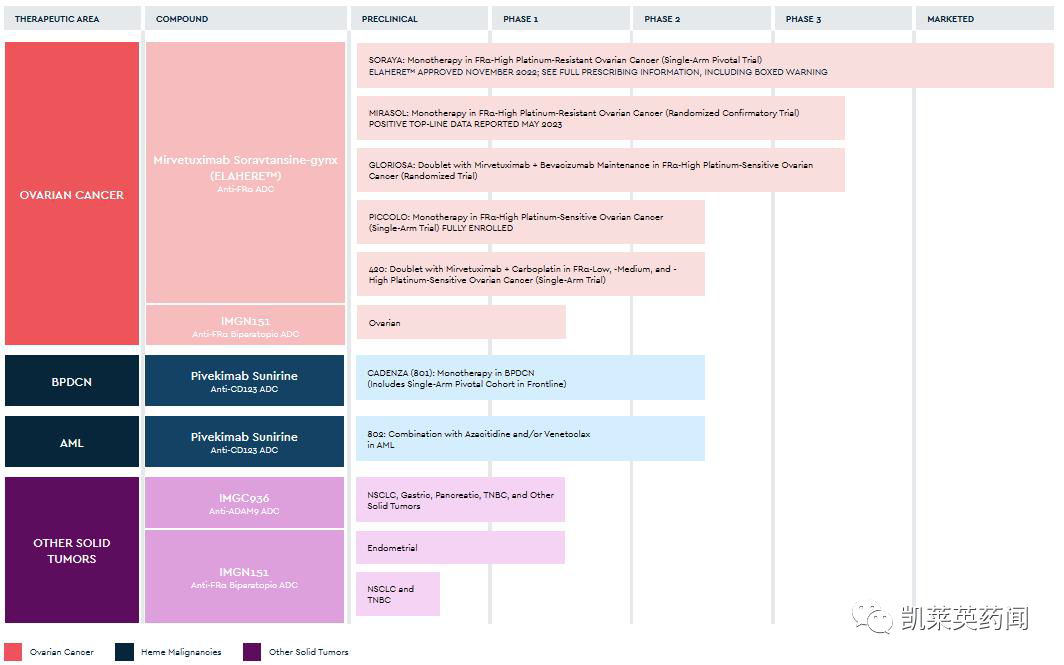
In November 2023, AbbVie and ImmunoGen announced an agreement whereby AbbVie will acquire ImmunoGen and obtain its core product ELAHERE at a price of $31.26 per share, with a total value of $10.1 billion. ImmunoGen currently has three ADC molecules under development, with a research pipeline covering ovarian cancer, hematological malignancies, and solid tumors.Pivekimab sunirine,IMGN151 is a next-generation anti-FRα candidate product, with the expectation of expanding indications to more tumor types with medium to low FRα expression; IMGC936 is an ADC targeting ADAM9, co-developed with MacroGenics, for the treatment of solid tumors such as non-small cell lung cancer, gastric cancer, pancreatic cancer, triple-negative breast cancer, and colorectal cancer.
References
1. WANG Ying, XU Wenjing, LI Zhuanli, et al. Research progress and considerations on CD123-targeted therapy for blastic plasmacytoid dendritic cell neoplasm [J]. Hainan Medical Journal, 2021, 32(14): 1865-1869.
2. Company official website, MedSci Oncology Frontier, PharmaCube, PharmSnap
3. East Wu Securities, Industrial Securities




"Views"Click once