

Five Emerging Trends in Medical AI and Digital Health Following ChatGPT's Breakthrough

BioMap
Developer of Innovative Drug R&D Platform
"AI technology is developing rapidly, with model parameters continuously expanding. Quantitative changes lead to qualitative changes, and intelligence begins to emerge." Liu Junwei, General Manager of Baidu Smart Healthcare, remarked at the Future Medical Technology Conference.
Although 2022 seemed to be a cooling year for digital healthcare, from the primary market to IPOs, the initial pandemic-driven enthusiasm waned, and investors became more cautious.In 2023, the digital technology track once again surged with enthusiasm.Most notably, the industry leader has emerged. ChatGPT, under OpenAI, fires the first shot of deep AI application.
The underlying reason isIn-depth Exploration of Technical Value。
Large Models Attract Wide Attention from Academia and Industry
From the audience at the 2023 Future Healthcare Technology Conference, we can also feel the extremely high enthusiasm for digital technology. The conference room was filled with spectators, including scientists, investors, and corporate business development professionals.
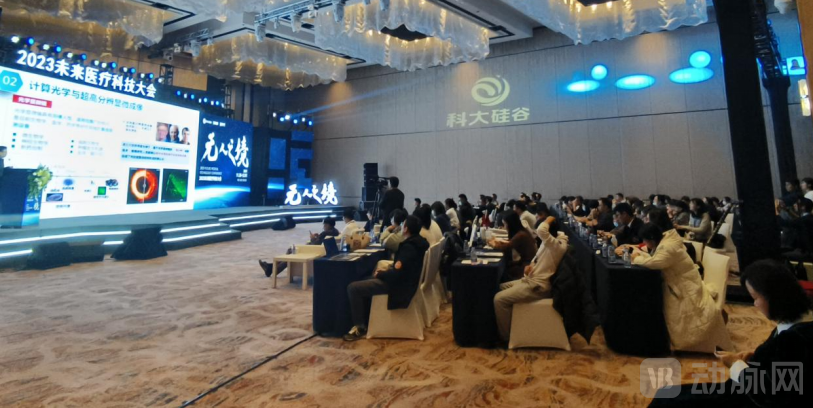
As Professor Wang Guangyu from Beijing University of Posts and Telecommunications puts it,The development of basic (large) models enables machines to possess the ability to transition from perception to thinking, exploration, and creation, which will have a profound impact on society and industries, attracting attention and research from both academia and the industrial community.。
In academia, Professors Yuanqing Zhang, Shaohua Zhou, Guangyu Wang, and Yan Gong, who attended this conference, all believe that with the development of digital technology, artificial intelligence will have a profound impact on the industry. They are respectively conducting cutting-edge explorations in intelligent detection equipment, medical imaging, medical services, and microscope imaging.
At the same time, in the capital market, digital technology has undergone a rapid heating process. The popularity of ChatGPT has spread from the product itself to various fields, igniting globally from Silicon Valley. According to Google Trends, the global heat index for ChatGPT has surged; from the perspective of the venture capital circle, since the beginning of 2023, start-up companies within the track have been continuously favored by investors.
There is no doubt that this wave of enthusiasm has brought opportunities to all enterprises, and for digital technology, it is also a breakthrough point——Find real application scenarios and look forward to rapid implementation.。
Five Major Application Trends of Digital Technology Integration in Healthcare
Digital technology has deeply penetrated the medical industry. Taking medical services as an example, the Elsevier "Future Doctor White Paper" shows that in the next decade, the deep integration of digital technology and medical services, the comprehensive improvement of patients' health literacy, and diversified medical scenarios will be the three major trends in global medical development. Big data will be deeply integrated into population health management. The continuous accumulation of information collected after the interconnection of scientific research data, electronic medical records, and medical devices will help doctors formulate more precise diagnosis and treatment plans and improve decision-making efficiency.
At the Future Technology Conference, we not only witnessed the integration of digital technology with medical services but also the diverse combination of digital technology with intelligent testing, drug research and development, and medical imaging.
1Enter the Medical Service Field, Improve the Efficiency of Medical Visits
The integration of digital technology with medical processes brings multiple advantages.
From the patient's perspective, digital healthcare not only transcends time and space to address information asymmetry between doctors and patients but also simplifies the medical process, reduces medical costs, and improves the overall medical experience. From the doctor's perspective, digital healthcare enables the digitization of patient records and health archives, enhancing the efficiency of disease diagnosis and patient management, further unleashing medical productivity. From the perspective of medical institutions, digital healthcare helps refine internal hospital management, elevating both management standards and service quality.
At the Future Healthcare Technology Conference, Professor Wang Guangyu shared“Multimodal Foundation Large Model for Healthcare", the BUPT team, based on tens of millions of biomedical data, conducted research on understanding and generation based on large-scale language models. They integrated medical knowledge and reasoning core, multimodal intelligent semantic computing methods, to promote 'human-centered' semantic alignment and natural interaction.
Currently, the BUPT team has developed ClinicalBERT 1.2B for general medical scenarios, the large language model ClinicalGPT 175B (ClinicalGPT 7B-Base released on Hugging Face), and the protein function analysis framework UniBind based on large-scale pre-trained models (published in...Nature Medicine). In addition, the team has also explored TCM-GPT, a large multimodal model in Traditional Chinese Medicine based on ClinicalGPT. It demonstrates superior performance in dimensions such as TCM theory, syndrome differentiation and treatment, meridians and acupoints, and Chinese medicine compatibility.
Xu Liqun, Chief Scientist of China Mobile Research Institute, also discussed "Opportunities and Challenges in the Transformation of Healthcare Services in the Era of Large Language Models," whereinAutomatic Medical Record Generation SolutionIntegrating large models into clinical workflows to assist doctors with documentation tasks in various work scenarios such as outpatient, emergency, and inpatient care.
In addition, Liu Junwei, General Manager of Baidu Smart Healthcare, also shared at the conference Baidu's work based on the Lingyi Large Model in “Patient-Doctor-Medicine"In terms of practical implementation, he stated: 'Large models have higher accuracy and shorter development cycles. They will bring new effects of professional empowerment, quality improvement, efficiency enhancement, and experience upgrades in areas such as intelligent health管家, intelligent doctor assistants, and intelligent enterprise services, truly bringing new productivity to the large health industry.'"
2Upgrade Wearable Detection Equipment to Predict Cardiovascular Diseases
"Health engineering advocates early screening, early diagnosis, and early rehabilitation. The policies are in place, but there is still a severe lack of medical devices," said Zhang Yuanting, academician of the International Academy of Medical and Biological Engineering and founder of the Hong Kong Institute of Medical Engineering.
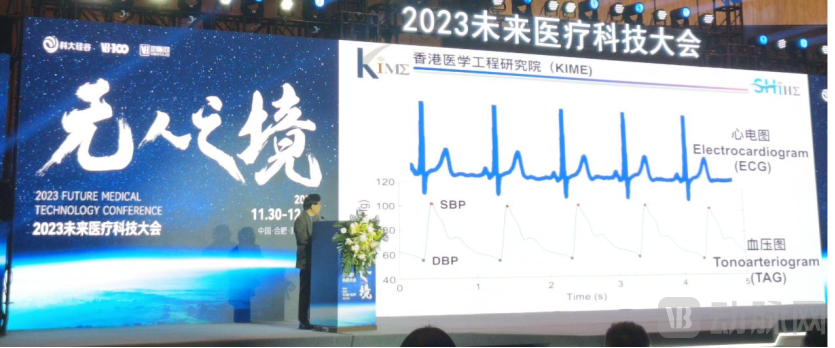
Therefore, wearable detection devices have significant importance for both C-end users and B-end users. For C-end users, wearable medical devices will provide users with...Provide real-time health monitoring data, allowing users to understand their own health conditions and helping them conduct scientific health management. For B-end users, the timeliness of wearable medical devices provides strong medical support for the allocation of medical resources in medical institutions. Doctors can conduct remote consultations, reducing treatment costs.
"Past wearable detection devices were not very convenient," said Professor Zhang Yuanting. In 2001, Professor Zhang Yuanting was the first to propose non-wearable intelligent detection devices. He also stated,Future intelligent wearable detection devices will develop towards miniaturization, intelligence, standardization, and non-intrusiveness.。
3Next-Generation Optoelectronic Imaging Technology: Computational Optical Fusion Microscopy Imaging
The high-end microscope market in China is currently monopolized by the four major German and Japanese companies, while domestically produced equipment mostly focuses on quantity over quality and has an extremely low market share. Whether viewed from a market perspective or a technology integration perspective,The combination of computational optics and microscope imaging is an inevitable development in the market/information age.。
Traditional optical imaging is based on geometric optics, drawing from the principle of human vision "what you see is what you get," while ignoring much high-dimensional optical information. In the field of microscopic imaging, it is unable to simultaneously meet the demands of a wide field of view and high resolution.
In contrast,Computational Optical ImagingGuided by specific application tasks, we acquire or encode light field information (such as angle, polarization, phase, etc.) through multiple dimensions to design sensors with perception paradigms far beyond human vision; simultaneously, by integrating mathematical and signal processing knowledge, we deeply explore light field information to surpass the limits of traditional optical imaging.
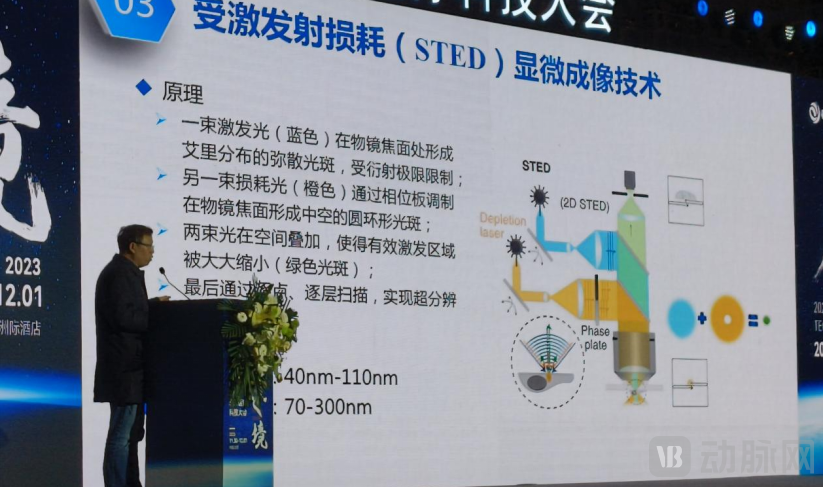
Gong Yan, specially appointed researcher of the Chinese Academy of Sciences, stated,Optical microscopes, with their non-invasive nature and wide suitability, are the preferred observation equipment in current research fields such as biology, medicine, and pharmacy.In this field, Professor Gong Yan's team has comprehensively upgraded the full-chain digital manufacturing process, including design, processing, assembly integration, and system testing, and independently developed a series of high-end microscope objective lenses.
These include the completion of a STED-two-photon composite microscope prototype (achieving an ultra-high resolution of 47nm and an imaging depth of 141.5um); focusing on asymmetric three-beam interference illumination + segmented half-wave plate to improve imaging speed; large field-of-view optical tomography microscopy technology to enhance the spatial hundred-megapixel imaging system, etc.
In the future, high-end microscopes will continue to pursue goals such as higher resolution, faster imaging speed, and deeper imaging depth. Professor Gong Yan mentioned that new technologies will be integrated with photoelectric microscopes in the future.
One isNew Optical Devices and Light Field Regulation Mechanisms. Metalenses, metamaterials, permil plasmas, photonic crystals, and other novel devices provide entirely new optical modulation for computational optics. Another isEmerging Mathematical Algorithms and Computational Performance. New theories, mechanisms, and technologies for various complex real-world imaging applications, establishing better multi-parameter design and optical control mechanisms, provide strong support for the development of computational imaging.
4Generative AI Enters Medical Imaging, Breaking Spatiotemporal Limitations
Another highly popular application of digital technology is medical imaging. The global craze surrounding software like ChatGPT demonstrates the capability of generative AI to produce text or images from complex user prompts, indicating broad application prospects. It has already begun to achieve significant results in the healthcare field.
In 2023, Siemens Healthineers showcased innovative concepts and technical prototypes based on generative AI. Unlike other companies focusing on text or image generation, Siemens Healthineers enables users to quickly locate and highlight corresponding areas in reports by clicking on medical images through the integration, linking, and preparation of an intelligent chat system. Even more impressive is that Siemens HealthineersUtilize AI to dynamically generate diagnostic imaging reports and prioritize them based on importance, enabling doctors to process information more efficiently.。
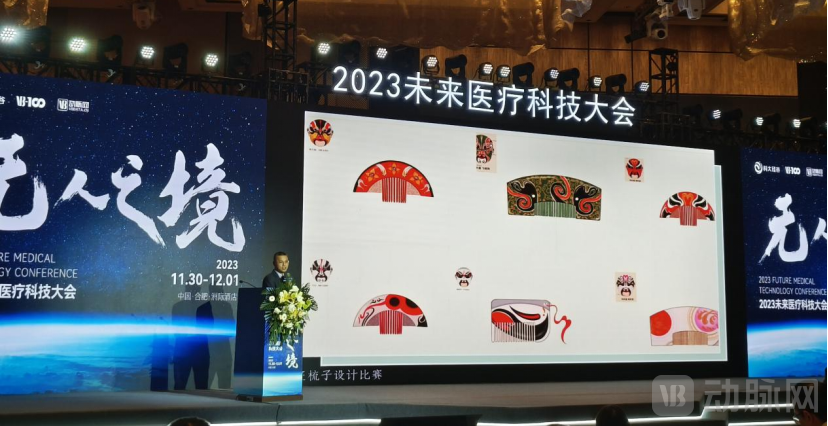
At this conference, Shaohua Zhou, Chair Professor at the University of Science and Technology of China and Academician of the National Academy of Inventors, outlined two possible forms of AI-generated medical imaging: one is medical image restoration, and the other isMedical Image Synthesis。
Currently, Professor Zhou Shaohua's team is exploring new methods to synthesize MRI images. "We will measure different parameters, including demographics, genetic sequencing, biomarkers, imaging data, etc. It is evident that there is causality among these types of measurements, and the final synthesized images can reflect human statistical information as well as biomarker information." Using causal models to regulate different parameters also breaks through the limitations of time and space.Images from ten years ago can also be synthesized through computer means.。”
5Digital Technology Empowers Drug Development
Drug discovery and development are important research areas for pharmaceutical companies and chemical scientists. However, inefficiency and high costs have always been obstacles in this field.
Many people engaged in drug research and development agree that the digital age is transforming the pharmaceutical industry. Machine learning and deep learning algorithms have been applied to various processes of drug discovery, including peptide synthesis, virtual screening, toxicity prediction, drug monitoring and release, pharmacophore modeling, quantitative structure-activity relationship, drug repositioning, polypharmacology, and physiological activity.Greatly Shorten Drug Time-to-Market and Enhance Safety。
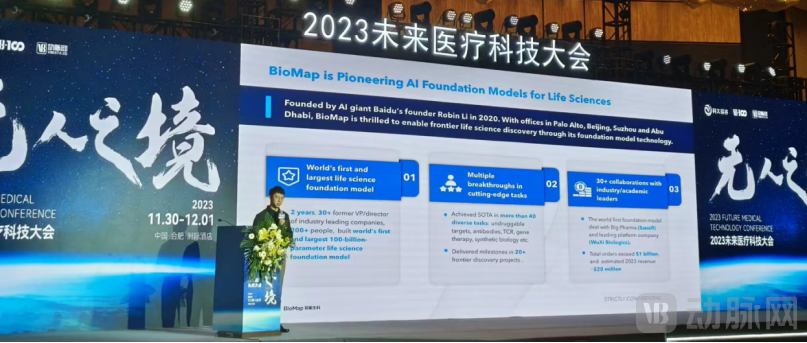
Wang Taifeng, the AI algorithm leader of BioMap, is one such example. At the Future Medical Technology Conference, Wang Taifeng shared “AI Foundation Models for Target Discovery and Drug Design.” He stated that natural language can hardly help pharmaceutical companies utilize more information. Therefore, BioMap developed aProtein Language Large Model with a Scale of One Trillion, using this model as the foundation, to advance protein prediction and design work, and then further select compounds for new drug development through an AI-generated drug system.
The Key to the Implementation of Digital Technology
The above describes the combination of digital technology with multiple application scenarios. Despite its diverse innovations, its bold breakthroughs, and its boundless creativity, it still couldn't escape the critical challenge:How Digital Technology Can Be Quickly Implemented While Ensuring Accuracy and Security of Information?
In terms of technology commercialization, the large model industry in China is currently plagued by intense competition. In contrast, foreign manufacturers pay more attention to the implementation and application of large models.From the technology itself to application scenarios, it is an inevitable process for the commercialization of China's data technology.。
In terms of information accuracy, Wang Guangyu stated: “Current general-purpose large models still severely lack domain knowledge.Although ChatGPT can answer medical questions to a certain extent, it is still very lacking in some highly specialized fields, such as how to better diagnose patients' symptoms or provide treatment plans. Current large models still lack genuine professional reasoning capabilities, as well as the correctness, compliance, and safety specific to the medical field." There are still many technical issues that need to be explored and resolved in transitioning from general large models to specialized large models in the health domain.
And on the issue of moral ethics,The training and application of generative AI require a large amount of patient data, which may raise issues of data privacy and confidentiality.。To ensure the security of patient information, medical institutions and enterprises need to adopt strict data management measures and comply with relevant laws and regulations.
Revolutionary changes often coexist with risks.Despite the challenges and ethical issues faced by digital technology, industry professionals are discussing this field with a focus on safety, fairness, evidence-based approaches, and privacy. With proper planning and management, digital technology is expected to propel the healthcare industry into a new era of greater efficiency, precision, and personalization.