

AstraZeneca to Acquire Icosavax for $1.1 Billion with 130% Premium to Enter RSV/hMPV Vaccine Market

AstraZeneca
Biopharmaceutical Manufacturer

Icosavax
Infectious Disease Vaccine Developer
On December 12, Icosavax announced that it had signed a definitive agreement with AstraZeneca on the 11th. According to the agreement, AstraZeneca will initiate a tender offer to acquire all outstanding shares of Icosavax through a subsidiary acquisition. The closing price of Icosavax's outstanding shares is $15.00 per share in cash, representing an equity value of approximately $838 million. Additionally, Icosavax holds contingent value rights, which are non-tradable and worth $5 per share, based on the achievement of specified regulatory or net sales milestones.If achieved, the equity value of the upfront payment and the maximum potential or valuable payment combined is approximately $1.1 billion.
Tender Offer, also known as "buyout merger," refers to the acquirer's effort to gain controlling interest in a listed company and acquire the majority of shares (>95%) by making an offer to purchase shares of the listed company to all stockholders. This must comply with the specified terms outlined in the acquisition offer, including acquisition conditions, price, duration, and other stipulated items. Similarly, AstraZeneca’s current acquisition must meet the following conditions: the tender offer must cover at least the majority of Icosavax's total issued shares, along with other customary closing conditions and regulatory approvals.
According to overseas practices, to ensure the completion of the acquisition purpose—gaining control of the company—the acquirer usually offers an acquisition price much higher than the normal trading price of the shares in the securities market, generally exceeding the market price by more than 20%. The equity value of $8.38 billion represents a 43% premium over Icosavax's closing price on December 11 and a 73% premium over the volume-weighted average price of the previous 60 trading days.Currently, the highest equity value of Icosavax is $1.1 billion, representing a 91% premium over the closing price on December 11, 2023, and a 130% premium over the volume-weighted average price in the past 60 trading days.
After the offer is made, shareholders of the target company must decide whether to accept or reject the offer within a relatively short commitment period. Continuing to hold shares might be more beneficial, but it could also carry the risk of internal share imbalance after the acquisition is completed.The acquisition is expected to be completed in the first quarter of 2024, subject to the satisfaction of the conditions of the merger agreement.Upon completion of the tender offer, Icosavax will become a wholly owned indirect subsidiary of AstraZeneca, and any remaining common stock of Icosavax will be canceled and converted into the right to receive the same consideration on a pro rata basis (including contingent value rights).
Under this "forceful" tender offer, AstraZeneca has gained a proprietary protein virus-like particle (VLP) platform and a series of innovative vaccine pipelines for high-burden respiratory infections. Icosavax, Inc. also announced positive interim results from the Phase II study of its most advanced asset, IVX-A12.
In 2022, AstraZeneca faced issues with its COVID-19 vaccine drug, including production delays, rare severe side effects, regulatory investigations, and a shorter shelf life. Pascal Soriot, the then CEO, mentioned in an interview with Reuters that AstraZeneca was expanding its portfolio of antibody treatments for COVID-19, Respiratory Syncytial Virus (RSV), and other viruses, but was still evaluating whether to expand its business in other infectious disease vaccines.
Back in 2021, AstraZeneca established a separate vaccine and antibody therapy division. However, investors reportedly questioned the future of its vaccine business, citing reasons such as slowing sales, intense competition from mRNA vaccines, and a lack of expertise and platform.
Reviewing AstraZeneca's annual financial report, in 2021, AstraZeneca's global total revenue was $37.4 billion, increasing by 38%. Excluding COVID-19 vaccine revenue, the growth was 23%, reaching $33.4 billion, with COVID-19 vaccine sales amounting to $4 billion, making it the second best-selling product. In 2022, due to the expiration of initial contracts and the impact of an oversaturated vaccine market, Vaxzevria's total revenue was only $1.575 billion, also bringing numerous controversies to AstraZeneca.
At the same time, the newly established vaccine and antibody therapy division is also actively seeking change. In an interview with the industry media Endpoint News, Executive Vice President Iskra Reic, who leads the vaccine and antibody therapy division, stated that since launching the vaccine division at the end of 2021, AstraZeneca has been "diligently researching all different vaccine platforms relatively broadly." Ultimately, Icosavax's protein virus-like particle technology stood out as the platform that AstraZeneca believes "will add the most value."
Previously, AstraZeneca focused on antibody-based vaccines and paid attention to respiratory infectious diseases, including RSV, influenza, and COVID-19. Its portfolio includes: Evusheld (a combination of long-acting antibodies tixagevimab and cilgavimab, approved for pre-exposure prophylaxis of the coronavirus).Synagis (Palivizumab, acquired in 2007, the world's first approved RSV preventive drug)Fluenz Tetra/FluMist Quadrivalent (the world's first quadrivalent influenza vaccine, nasal spray formulation). The disclosed R&D pipeline includes AZD3152 (an antibody that neutralizes all known COVID-19 variants, used for the prevention of COVID-19, currently in Phase III).Beyfortus (Sanofi collaboration project, approved by the EU, the first antibody for the prevention of RSV in newborns and infants)。
According to AstraZeneca's announcement, Icosavax's main vaccine candidate IVX-A12 will strengthen AstraZeneca's late-stage vaccine pipeline and enhance its layout in the RSV field. IVX-A12 is a potential first-in-class, Phase III-ready combination protein VLP bivalent vaccine, consisting of the RSV prefusion F protein VLP candidate vaccine IVX-121 and the hMPV prefusion F protein VLP candidate vaccine IVX-241, targeting respiratory syncytial virus (RSV) and human metapneumovirus (hMPV).
Respiratory Syncytial Virus (RSV) is a common, airborne RNA virus with seasonal transmission characteristics, typically entering the trachea and lungs through inhalation via the mouth and nose. RSV invades epithelial cells, causing cell death, secreting respiratory mucus that obstructs the airway lumen, leading to breathing difficulties. Children, the elderly, and adults with compromised immune systems are susceptible populations for this virus. Most adult RSV disease cases occur in the elderly, and respiratory syncytial virus infection can cause severe complications, with an estimated 60,000-160,000 hospitalizations annually and 6,000-10,000 deaths among American adults aged 65 and above.
Human Metapneumovirus (hMPV) is an acute respiratory infectious disease, sporadic throughout the year, and occurs mostly in late winter and early spring. Most infections present as mild self-limiting diseases, but some patients require hospitalization due to complications such as bronchiolitis, pneumonia, acute exacerbation of chronic obstructive pulmonary disease (COPD), and acute episodes of bronchial asthma. Immunocompromised individuals may progress to severe pneumonia, develop acute respiratory distress syndrome (ARDS) or multiple organ dysfunction, and even face death. Currently, there are no specific treatments or preventive therapies for hMPV, nor are there combined vaccines targeting RSV.
Despite facing two major marketed RSV vaccines from Pfizer and GSK, IVX-A12 still promises "differentiated features" in the announcement.Phase II data show that IVX-A12 can elicit a robust immune response against RSV and hMPV one month after vaccination, further confirming its high immunogenicity data:
In different strains of RSV and hMPV, the vaccine significantly increased antibody levels in elderly patients, boosting neutralizing antibodies by 2-6 times.On Day 28, the geometric mean titers of IVX-A12-induced RSV-A and RSV-B neutralizing antibody titers were approximately 12,200 IU/mL and 5,500 IU/mL, compared to 2,000 IU/mL and 1,300 IU/mL in the placebo group; the geometric mean titers of IVX-A12-induced hMPV-A and hMPV-B neutralizing antibody titers were approximately 1,600 assay units/mL and 15,300 assay units/mL, compared to 400 assay units/mL and 6,700 assay units/mL in the placebo group.
In the key safety and immunogenicity issues of the RSV vaccine, IVX-A12 demonstrated good overall tolerance. Adverse events collected within 7 days after vaccination were generally mild to moderate, with no severe events reported. No cases of fever or adverse events leading to discontinuation were reported. The most common local and systemic adverse events were only injection site tenderness, injection site pain, and myalgia.
IVX-A12 Phase II Clinical Trial Targets 264 Healthy Elderly Individuals Aged 60 to 85 and Received FDA Fast Track Designation in February for Use in Adults Over 60. Its Intentions Are Clear.In May, GSK and Pfizer's two RSV preventive vaccines for adults aged 60 and above were successively approved for marketing, breaking the market void. They achieved a strong sales of $1.26 billion in the first quarter, officially launching the battle for the RSV vaccine market.In AstraZeneca's portfolio, Synagis and Beyfortus are respectively used for RSV prevention in children, infants, and newborns, while the vast market for elderly RSV prevention is perfectly suited for a strong contender like IVX-A12.
The dual-target strategy for RSV and hMPV adds an extra layer of assurance to IVX-A12 — unlocking a blue ocean market for hMPV, which currently has no available treatments or preventive therapies, as well as combination vaccines.
The basis of IVX-A12 is Icosavax's proprietary protein virus-like particle (VLP) vaccine platform.
Breakthrough VLP technology, born out of a collaboration between the Gates Foundation and the Institute for Protein Design at the University of Washington, can display antigens in a manner highly similar to viruses, with high density and multivalence. Compared to traditional soluble antigens, these particulate antigens may offer potential advantages, including the level of immune response, coverage (relevant viral strains and mutations), longer durability, lower incidence of side effects, easier combination to allow multiple targets within a single vaccine, and more.
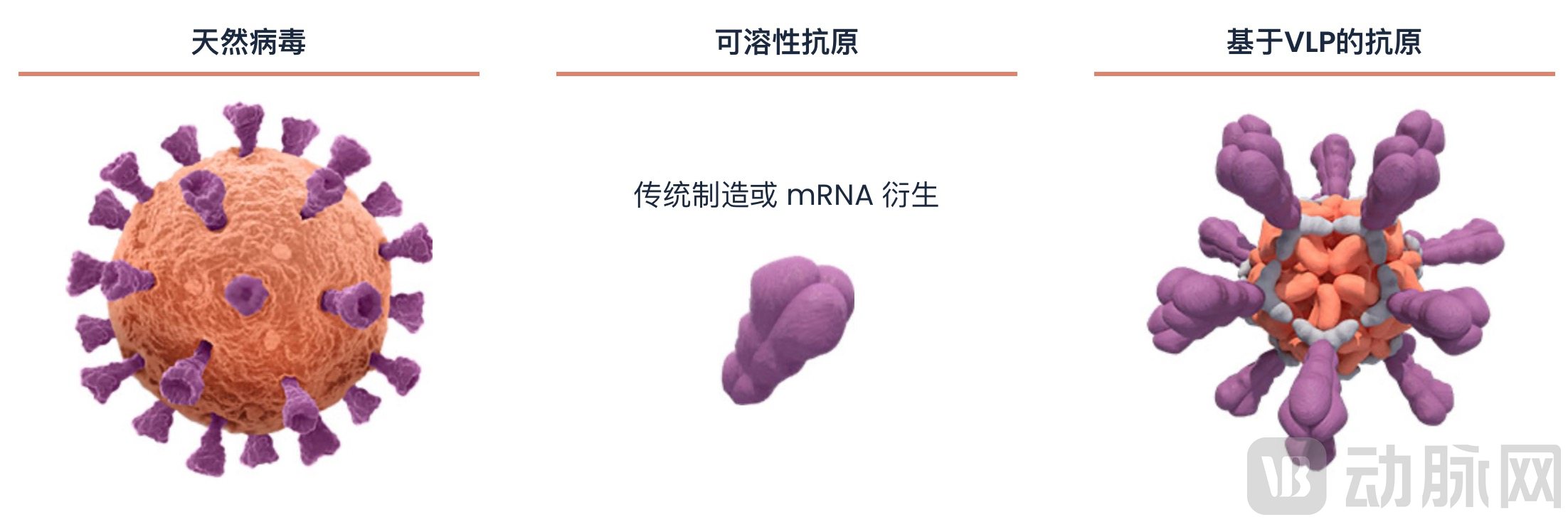
VLP Antigen Comparison (Source: Icosavax)
VLP mimics the structure of real viruses, and its multivalent antigen display can cross-link with B cell receptors in lymph nodes, making the human body recognize VLP as a virus and trigger a stronger and more durable immune response. In terms of product development, VLP adopts a systematic approach involving proprietary proteins and components for self-assembly, computational design, and adaptability to various candidate vaccine pipelines. Additionally, VLP’s high productivity, scalability, process efficiency, and flexible and stable storage conditions are all well-prepared for subsequent commercialization and scale-up.
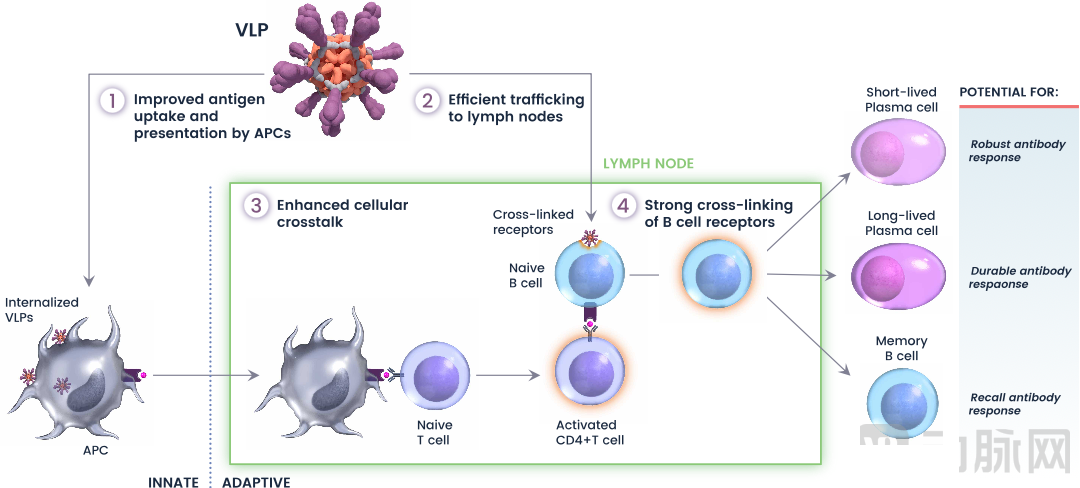 Possible Mechanisms Behind the Potency of VLPs (Source: Icosavax)
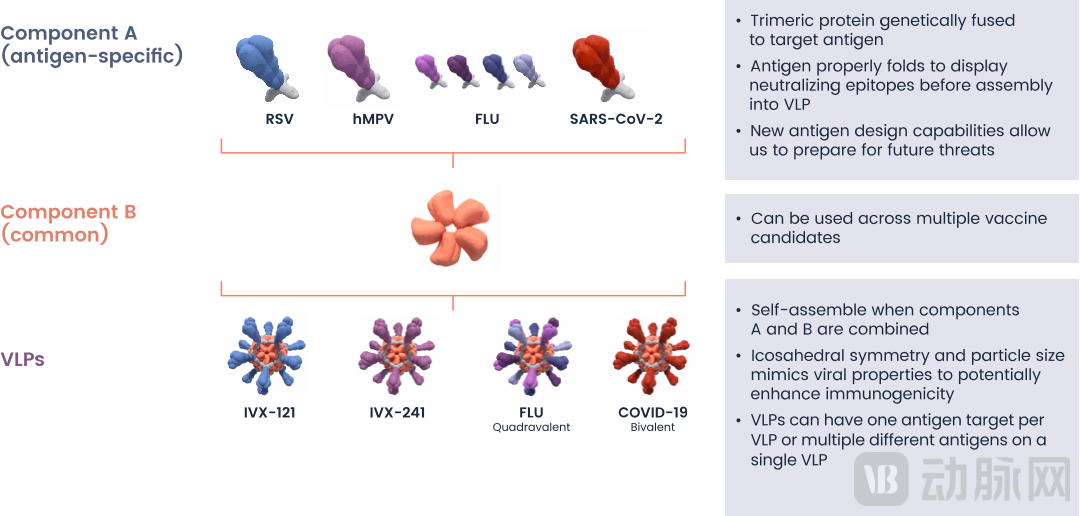 Production and Manufacturing of VLPs (Source: Icosavax)
Based on the VLP platform, Icosavax has three major R&D pipelines in the field of respiratory systems: RSV and hMPV, influenza, and COVID-19. For the influenza indication, a rapid production system to support seasonal flu is planned to enhance pandemic response capabilities, and it is currently in the preclinical development stage; for the COVID-19 indication, the focus is on developing a bivalent strategy vaccine targeting the receptor-binding domain (RBD) antigen of the SARS-CoV-2 spike glycoprotein, aiming to improve subdomain stability and effectiveness against relevant evolutionary variants, including Omicron, and it is also currently in the preclinical development stage.
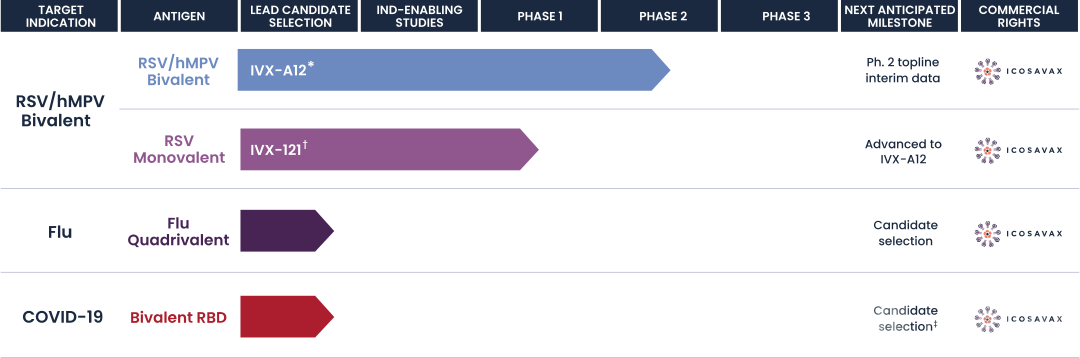 Pipeline Distribution (Source: Icosavax)
Globally, respiratory infectious diseases, especially RSV, have become a billion-dollar track with explosive characteristics in recent years. GSK and Pfizer’s first batch of RSV vaccines have already hit the market, marking the beginning of the "territorial battle." Close behind are competitors — Moderna's RSV mRNA vaccine has submitted marketing applications in multiple countries, and infant vaccines, led by Sanofi's SP0125 pipeline, are still under continuous exploration. In terms of passive immunity, MedImmune's humanized lgG1K monoclonal antibody Synagis, and AstraZeneca/Sanofi’s Nirsevimab (Beyfortus), continue to hold a portion of the market.
According to incomplete statistics, as of now, there are nearly 70 RSV prevention pipelines under development globally. Although China currently has no approved and marketed vaccines or antibody products for preventing RSV infection, there are many domestic players. Those with relatively rapid progress include Tanox BioPharma and Advaccine, which have entered the mid-to-late stages of clinical trials. Meanwhile, companies such as AIM Vaccine, CSPC Pharmaceutical Group, Zhifei Biological Products, AscendGene, Baike Biotechnology, Bluebird Bio/Walvax Biotechnology, and Clover Biopharmaceuticals are also striving to catch up.
RSV Vaccines in Development Must Induce High-Titer Antibodies Against Multiple Neutralizing Epitopes and Minimize the Potential for Inducing Mutant Strains. It Is Still Unclear Whether Optimal Prevention Requires Simultaneous Induction of Serum IgG, Mucosal IgA, and Cellular Immunity — This Is One of the Key Challenges Slowing Research Progress in the Field. After Entering Clinical Trials, Safety and Immunogenicity Remain the Main Challenges for RSV Vaccines.
Based on the data disclosed by Icosavax so far, IVX-A12 has performed well in the above key challenges and has shown a positive effect on neutralizing antibody enhancement. It is expected to become an important piece of AstraZeneca's vaccine portfolio. This also means that another MNC has joined the RSV vaccine battle.