FoundationOne CDx Receives FDA Approval as Companion Diagnostic for AstraZeneca’s Truqap in HR+/HER2- Advanced Breast Cancer
Foundation Medicine
Genomic Sequencing Analysis Service Provider

AstraZeneca
Biopharmaceutical Manufacturer

From "one-size-fits-all" therapy to patient stratification in new drug development, and then to personalized prevention and treatment strategies tailored for individuals, precision medicine offers unprecedented possibilities for the transformation of the pharmaceutical and healthcare industry.Breast cancer is the most common cancer and one of the leading causes of cancer-related deaths globally. In 2020,More than 2 million patientsDiagnosed with breast cancer, 685,000 people die globally.
HR+ (Estrogen and/or Progesterone Positive) Breast Cancer is the Most Common Subtype, with Over 65% of Breast Cancer Tumors Considered HR+ and HER2-. Among These, 50% of Patients Have PIK3CA/AKT1/PTEN Mutations. Under Extensive Endocrine Therapy, Many Patients Develop Resistance to CDK 4/6 Inhibitors and Estrogen Receptor-Targeted Therapies. Recently, AstraZeneca Developed a Combination Therapy Offering Additional Treatment Options for Such Patients.
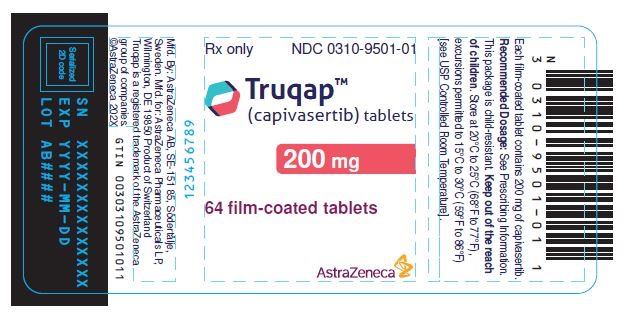
On November 17, AstraZeneca announced the launch of Truqap, a "first-in-class" AKT inhibitor developed by the company, for use in combination with Faslodex to treat adult patients with HR+, HER2- advanced or metastatic breast cancer. These patients have one or more biomarker alterations (PIK3CA/AKT1/PTEN gene mutations), experience disease recurrence within 12 months after completing adjuvant therapy, or have progressed after receiving at least one endocrine therapy regimen for metastatic disease.
Tracing back to June 2023, the FDA granted priority review status to the New Drug Application (NDA) for Capivasertib + fulvestrant. In less than half a year, the FDA's official approval means that Capivasertib has brought a brand-new breakthrough to the clinical practice of treating HR+/HER2- advanced breast cancer. As the world’s first approved AKT pathway inhibitor, this holds significant milestone importance. Truqap is expected to spark a new wave in the treatment of HR+/HER2- advanced breast cancer, providing a powerful new treatment option for patients previously treated with CDK4/6 inhibitors. This also signifies that the AKT pathway, after more than 40 years of arduous exploration, has finally seen the light of day.
01
—
FoundationOne CDx Approved as a Companion Diagnostic
Following this, Foundation Medicine, a subsidiary of Roche, announced that its FoundationOne CDx test has been approved by the U.S. Food and Drug Administration as a companion diagnostic for breast cancer patients receiving combination therapy from AstraZeneca.
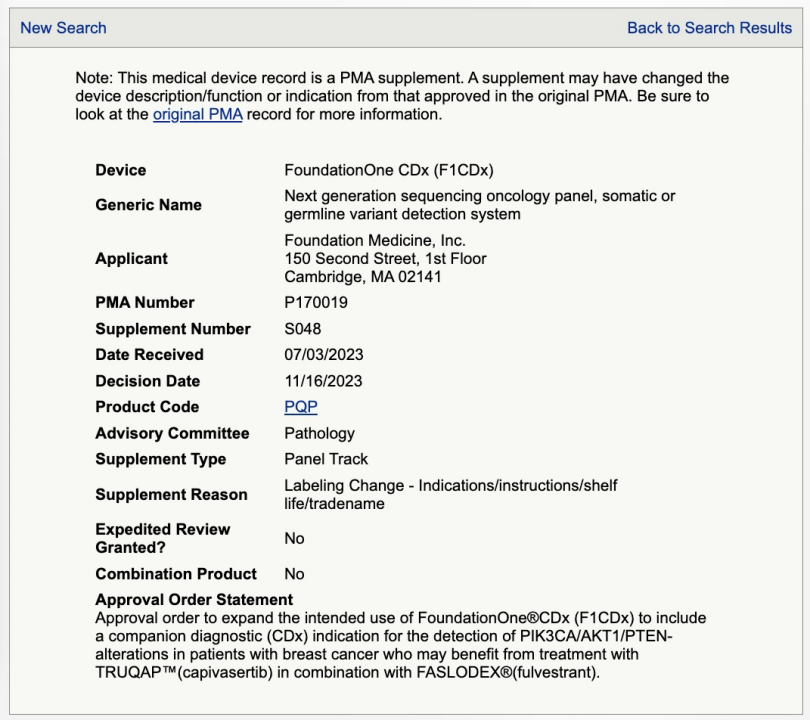
FoundationOne CDx is the first FDA-approved test to identify a subset of breast cancer patients for Truqap treatment. The product sequences and analyzes tissue samples to detect substitutions, insertions, deletions, and copy number alterations in 324 genes, as well as selected gene rearrangements. It also detects genomic signatures such as microsatellite instability and tumor mutational burden.
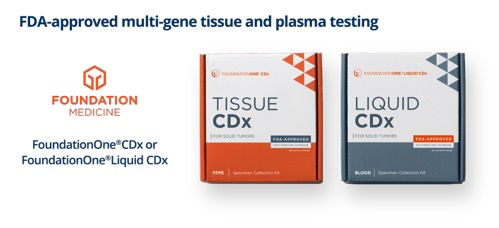
At the same time, FoundationOne®CDx is also the first FDA-approved broad companion diagnostic based on tissue, clinically and analytically validated for use in all solid tumors.
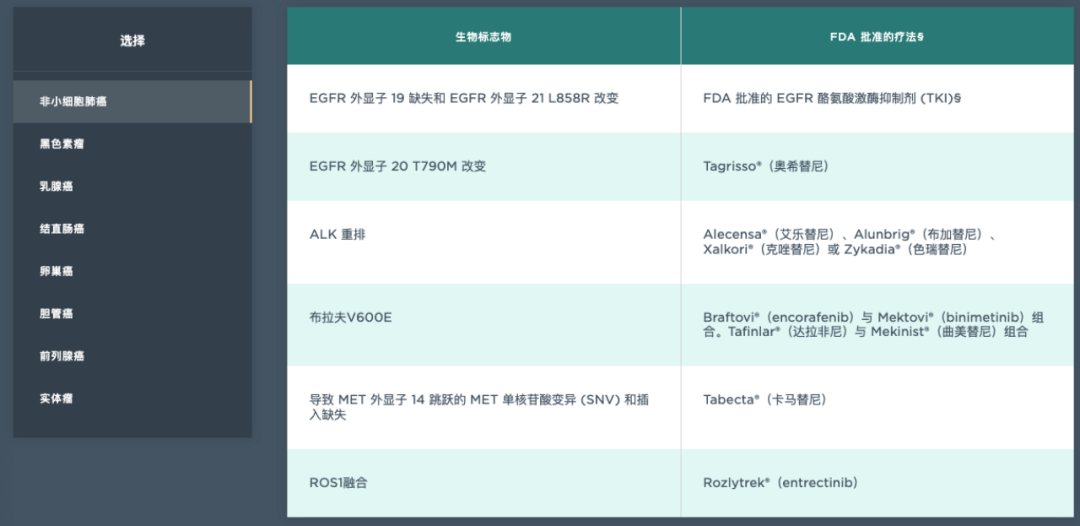
The product has a very broad coverage. FoundationOne CDx provides national medical insurance for eligible Medicare and Medicare Advantage patients in China, covering all solid tumors, and is also covered by more than 80 commercial health plans. According to data from its official website,87% of patients pay $0 for testing.
02
—
What are the requirements of the US FDA for clinical studies of companion diagnostics?
In 1998, the FDA approved the first companion diagnostic product, HercepTest, which is used to detect the expression of HER2 protein in breast cancer patients to determine whether they are suitable for Trastuzumab treatment. In the following years, the FDA successively issued a set of guidance principles for in vitro companion diagnostic reagents, clarifying the concept of drug classification and the necessity of co-development of targeted drugs and registered reagents. Following the United States, Japan's PMDA and the EU's EMA also subsequently released relevant guidelines for companion diagnostics.
Currently, the FDA offers three pathways for the submission of companion diagnostics:Synchronization (Co-development), Bridging (Bridging), Follow-on (Follow-on)。
Bridge TestEfficacy data from the CTA-positive population, including both CDx-positive and CDx-negative patients, are collected during drug clinical enrollment using Clinical Trial Assays (CTA). The key to CDx testing lies in understanding the drug's effect in patients screened via CDx — specifically, those with CDx-positive results. However, some patients who are CDx-positive but have negative CTA results are excluded from the drug clinical trials. Inferring the efficacy in these non-enrolled patients is the core objective of the bridging trial.
One of the main challenges of bridging trials is the reasonable setting of samples, including sample size and source.
Ideally, it is best to pay attention to retaining samples when enrolling participants in drug clinical trials, including positive and negative samples that were not enrolled. Ensure that the unenrolled negative samples have informed consent and can be retested.
FDA Strongly Advocates Companion Diagnostics and Related DrugsSynchronous DevelopmentIn order to use the declared companion diagnostic for sample testing in drug clinical trials. Co-development is considered the best approach, which can ensure that the companion diagnostic reagent and the drug are marketed simultaneously. If the performance validation data of the companion diagnostic is incomplete, the FDA provides a PAS (Post-Approval Study) mechanism for supplementary verification.
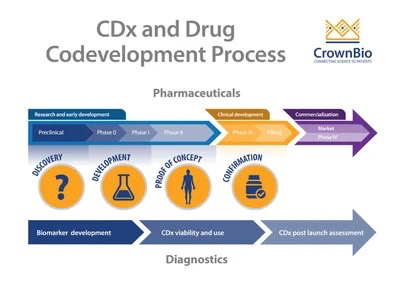
In cases where companion diagnostics lag behind and cannot be approved simultaneously with the drug, whether through bridging trials or synchronized development, the FDA will adopt PMC (Post-Marketing Commitment) and PMR (Post-Marketing Requirement) approaches. These approaches require pharmaceutical companies to ensure the commitment and requirements to complete the development of companion diagnostic reagents within a certain period after the drug is marketed.
03
—
The Road of CDx Going Overseas: Preparing for the Future
When a drug already has an approved companion diagnostic product, it can be adopted.Follow-onin the form of completing the companion diagnostic pathway. Follow-on is the main route for the approval of generic CDx, which has a certain connection with the approved CDx: that is, consistent analytical performance, consistent methodology, and the differences from the approved CDx must be within the allowable range.
Currently, the companion diagnostics market is still in its early stages. With the growth of targeted drug development, the demand for companion diagnostics is also expected to increase annually. According to statistics, the global companion diagnostics market was valued at approximately USD 3.5 billion in 2020 and is estimated to reach a market size of USD 6.8 billion by 2025, with a compound annual growth rate (CAGR) of about 12.9%.


Click to Join the Gene Club Become an Industry Elite
Currently, 600+ industry elites have joined the Gene Club.
Published more than 2,300 industry reports on gene technology