

CD7 CAR-T Avoids 'Fratricide': CRISPR, Base Editing, Dual-Targeting, and Bifunctional Approaches Compete in Clinical Development

Wugen
Cell Therapy Developer

December 14, 2023 / eMedClub News /--2023Year12Month11Day,WugenPublicationOf its ongoingTargeting CD7AllogeneicCAR-TCell TherapyWU-CART-007The1/2Latest Data from the Dose-Escalation Study, for the treatment of relapsed or refractoryTAcute Lymphoblastic Leukemia (ALL)(T-ALL)/Lymphocytic Lymphoma(LBL)Patient.

WU-CART-007 is a CAR-T cell product targeting CD7., using CRISPR/Cas9 technology to delete CD7 and the T cell receptor alpha constant (TRAC) gene to prevent suicide behavior and separately utilizing allogeneic T cells from healthy donors. This plug-and-play allogeneic CAR-T cell product is under development for the treatment of CD7-positive malignancies.
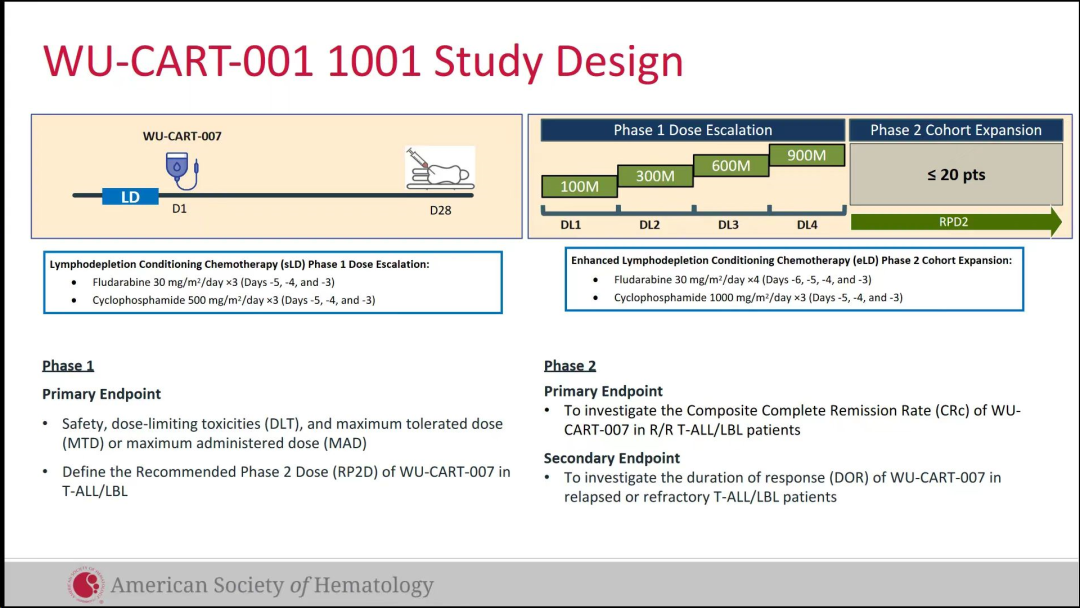
▲ Image Source: Wugen Official Website
As of November 28, 2023, 25 patients have been dosed with WU-CART-007. WU-CART-007 has demonstrated favorable overall efficacy and tolerability, showing dose-dependent antitumor activity. No responses were observed at the 100 million (DL1) cell dose. In evaluable patients (18/22) receiving ≥300 million (DL2≥2) cell doses, the composite complete response rate (CRc) was 67%.At the recommended Phase 2 dose of 900 million cells (DL4/RP2D) in a single infusion, the complete response rate (CRc) was 73%.。
WU-CART-007 also demonstrated manageable safety,No cases of graft-versus-host disease (GvHD), long-term T-cell aplasia, or long-term pancytopenia in the absence of disease were observed.Most deaths were due to disease progression. Only 5 cases experienced adverse reactions of cytokine release syndrome (CRS) ≥ grade 3.
The CD7 CAR-T Field is Flourishing with Diversity,
Dual targets, dual functions, and de-editing emerging endlessly
CD7 is a highly specific target on the surface of T cells, expressed in 95% of T-ALL cases as well as in T and NK cell lineages, and is associated with most T-cell hematological malignancies. Currently, several companies in China have made significant progress in this field.To explore the clinical progress of new targets for CAR-T therapy, the 2024 IBI EXPO Biopharmaceutical Innovation Conference has specially organized the 6th Tumor Immunotherapy and Cell Therapy Technology Symposium, bringing together leading experts in the cell therapy field to jointly seek future development directions!

(Guests for participation and speeches are being recruited simultaneously~)
In April this year, for the adoption ofYake Bio CD7 CAR-TA follow-up of more than two years was conducted on 20 T-cell leukemia patients treated with cell therapy technology.The overall response rate and complete remission rate were 95% (19/20 patients) and 85% (17/20 patients), respectively., of which 35% (7/20) of the patients underwent stem cell transplantation. In September last year,Phase 1 Clinical Trial of RD13-01, a Universal CAR-T Product Targeting CD7 by Beiheng Biotech for Treating T-cell Hematological MalignanciesThe research results are also striking. Data show that among 11 evaluable patients, about 82% (9/11) demonstrated an objective response, with a complete response rate of 63.6% (7/11).
However, the efficacy and safety of CD7 CAR-T cell therapy are based on overcoming a key challenge:"Self-killing and mutual internal consumption." Since both tumor T cells and CAR-T cells express CD7 on their membrane surfaces, CD7 CAR-T not only kills tumor cells with high CD7 expression but also "accidentally kills" CAR-T cells that also express CD7.To address this issue, the common practice is to knock out CD7 and TCR on the surface of CAR-T cells through gene editing, so that they do not express CD7.
Base Editing
eMedClub
In addition to the CRISPR/Cas9 technology knockout adopted by Wugen, gene editing therapy "giant" Beam Therapeutics has also applied its base editing approach to the development of CD7 CAR-T.

BEAM-201 is a cytosine base editing-based CAR-T cell therapy targeting the CD7 antigen developed by Beam Therapeutics. It is the first CAR-T therapy to simultaneously edit four genes and also the most advanced CAR-T cell therapy in Beam's pipeline.Submitted an IND application to the FDA in June 2022 for the treatment of relapsed or refractory T-ALL (acute T lymphoblastic leukemia) and other CD7-positive malignancies. Although the FDA may not have immediately said "Yes" due to safety concerns regarding the multi-base edited T-cell therapy, the clinical hold was lifted by the end of the year.
Dual-Target CAR-T
eMedClub
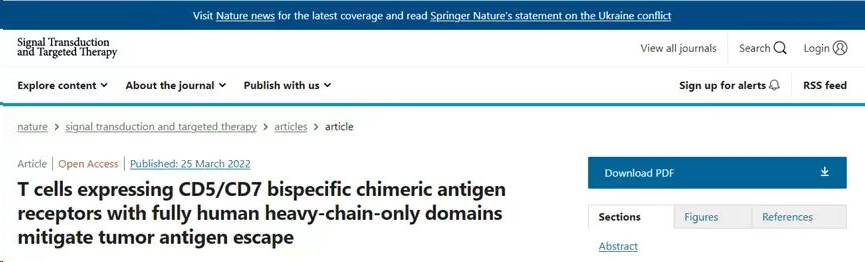
Icarus Bio has further developed a CD5/CD7 dual-target CAR-T, which can enhance efficacy, expand the patient pool, and prevent antigen escape. To address the issue of CAR-T cell fratricide caused by targeting pan-T cell markers,CRISPR/Cas9-based CD5 and CD7 gene knockout was also performed before the lentiviral transduction of bispecific CAR.. In terms of structure,Compared the in vitro and in vivo activities of tandem and parallel structured dual-targeting CAR constructs to identify the optimal candidate molecule suitable for addressing T-cell malignancy antigen escape in clinical settings.. The research results show that,Knocking out CD5 and CD7 prevents fratricide of CD5/CD7 bispecific CAR-T cells, and tandem dual-targeting CARs are more effective than parallel dual-targeting CARs in terms of cytotoxic activity and preventing tumor escape.。
Besides,Gracell Biotechnologies has also developed a CD19 and CD7 dual-targeting CAR-T GC502 for the treatment of B-ALL.Currently, preclinical studies have been conducted and progressed to the early IIT research stage. According to a previous report by Gracell Biotechnologies at the AACR conference, GC502 demonstrated continuously robust tumor clearance and cell expansion capabilities.
Bifunctional CAR-T
eMedClub
Since there is dual-target CAR-T, thenBifunctional CAR Targeting Both T Cells and NK CellsIt is also an excellent and novel design. Gracell Bio'sCD7 Allogeneic CAR-T GC027 is based on the TruUCAR platform, which uses CRISPR/Cas9 to disrupt the T-cell receptor alpha constant (TRAC) site to eliminate surface expression of the TCR complex in TruUCAR candidates.GC027 is in Phase I clinical trials for the treatment of CD7-positive T-cell acute lymphoblastic leukemia (T-ALL), etc.
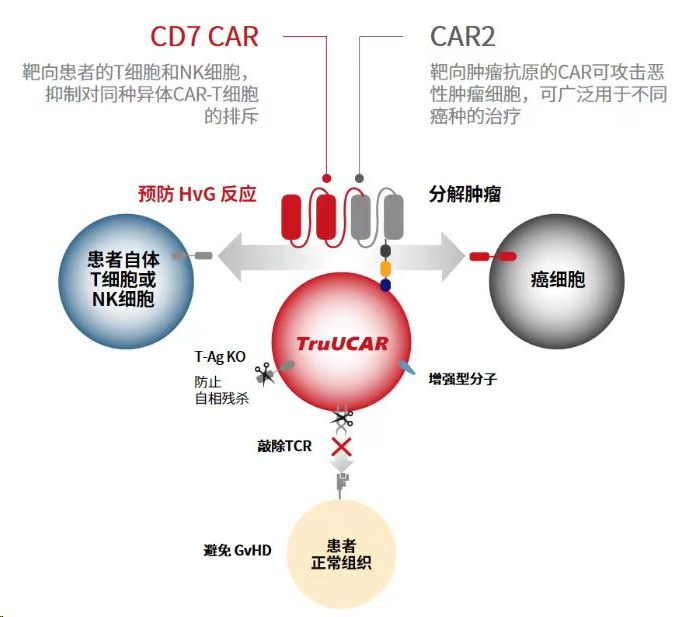
▲ Image Source: Gracell Biotechnologies Official Website
In April 2021, Gracell Biotechnologies presented the latest long-term follow-up data of GC027 for the treatment of adult patients with R/R T-ALL at the American Association for Cancer Research (AACR) Annual Meeting:The ORR of 6 subjects reached 100%, and 5 patients (83%) achieved minimal residual disease-negative complete response (MRD-CR).。
CD7 CAR-T Without Gene Editing
To address the aforementioned challenges, Senlang Bio has developed a "Naturally Selected" CD7 CAR-T cell, NS7CAR, derived from patients or donors, which does not require additional CD7 gene editing or protein expression blocking. Professor Li Jianqiang's team at Senlang Bio achieved this by using7CAR-transduced total T cells are then cultured through a "natural selection" method to obtain NS7CAR, which contains a high percentage of CAR+ cells., although they still express CD7 mRNA and protein, they are immunologically CD7-negative, andThe CD7 molecule of NS7CAR-T cells can be masked by the CD7-targeting CAR or sequestered intracellularly, significantly reducing the surface CD7 antigen on NS7CAR-T and thereby evading the fratricidal cell-killing mechanism.In preclinical studies, Professor Li Jianqiang's team compared the functions of NS7CAR with sorted CD7-negative 7CAR-T cells (Neg7CAR) and CD7 gene-knockout 7CAR-T cells (KO7CAR). The results showed that,A significantly higher proportion of CD8+ central memory CAR-T cells is present in NS7CAR, and this CD8 bias may provide more durable disease control.
In June 2023, Senlang Bio's CAR-T product targeting CD7, "SENL101 Autologous T-cell Injection," was approved to enter clinical trials for the indication of adult T-LBL/ALL.
However, the researchers proposed: compared with Neg7CAR and KO7CAR cells,Whether intracellular CD7CAR-CD7 interactions lead to reduced CAR signaling and lower in vitro expansion of NS7CAR cells remains to be determined.; Secondly,Whether fratricide played a role in the reduced amplification of NS7CAR remains to be further studied.。

PA3-17 is independently developed by BoSenJi CompanyA nanobody-based autologous CD7 CAR-T product, which also does not require TCR knockout through gene editing, avoiding the associated risks of gene editing., Indicated for adult relapsed/refractory CD7-positive hematologic and lymphatic system malignancies. In April 2022, the long-term follow-up data of the latest 8 patients were announced:Among the 8 patients who received PA3-17 infusion, 6 patients (75.0%) achieved remission by Day 30, and the remission rate increased to 87.5% at 3 months.; among them, one patient maintained a complete remission (CR) status for over 12 months; the remaining patients all maintained a CR status for at least more than 3 months.
Conclusion


Dian Dian "Share”、“Like" and "In view",Give me a little recharge~"