

The Rise of Post-90s Founders in China's Healthcare Innovation: Over RMB 10 Billion Raised in Three Years

Robooter
Smart Assistant Mobile Robot Developer

Dessight Biomedical
Developer of Microsurgical Robotics Platform

ECHO BIOTECH
Exosome Technology and Diagnostic Product Developer

METiS TechBio
AI-Driven Drug Formulation Developer

DP Technology
Simulation R&D Platform Developer

TowardPi
High-end Ophthalmic Medical Device Developer

Atantares
Developer of DNA Synthesis Technology

Puncture Robotic
Medical Robot Developer

Fubo Medical
Upper Limb Rehabilitation Exoskeleton Robot Developer and Distributor

Fumeilei Medical
R&D Developer of Medical Aesthetic Devices
Post-90s Generation Takes the Stage in Healthcare Investment and Entrepreneurship
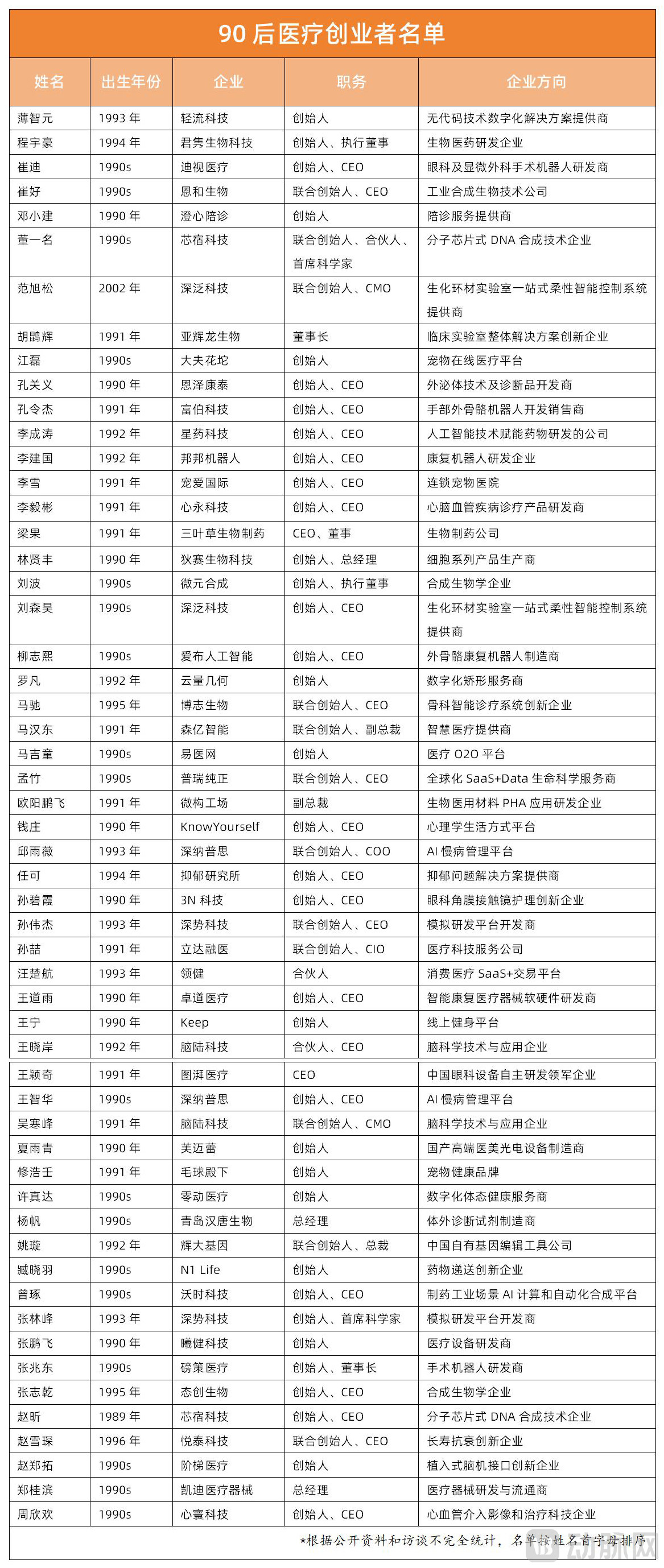
Over the past year, a group of innovative companies including Robooter, Puncture Robotic, Bozhi Bio, Dessight Biomedical, ECHO BIOTECH, Fubo Technology, Fumai Lei, Hui-Gene Therapeutics, METiS TechBio, Pure Control, DP Technology, TowardPi, Xijian Technology, and Shanghai Xinsu Medical Technology have secured tens of millions or even hundreds of millions in new rounds of financing. A common element among these companies is that their founders (including co-founders, chairmen, general managers, and other key positions) were all born after 1990.
Unlike the first batch of post-90s entrepreneurs around 2015 who gathered in the TMT field and enjoyed the limelight,Due to the relatively high barriers and emphasis on experience in the medical industry, the threshold for entry is higher. As a result, post-90s medical entrepreneurs are only now beginning to emerge.
"Many post-90s healthcare entrepreneurs I’ve met possess a global perspective and extremely strong learning abilities. More importantly, they are just as hardworking as their predecessors," Zhefei Qi, Executive Director of Legend Capital, told VCBeat.
In the view of Xue Mingyu, Investment Vice President of Matrix Partners China, the young founders who have grown up in a new generation environment are less likely to set limits for themselves thanks to their excellent educational background and life experience.
"Post-90s entrepreneurs have grown up alongside the internet industry, with sufficient access to information. They conduct thorough research before making decisions and are more rational. At the same time, in the commercial field, they have a strong sense of the web, and are adept at utilizing new channels, new technologies, and new strategies," said Zou Guowen, founding partner of VCBeat Capital. "Their growth curve is extremely steep."
It is precisely due to their solid knowledge accumulation and keen business acumen that post-90s medical entrepreneurs have been able to create one phenomenal company after another., and behind them are a constellation of star institutions such as BAI Capital, Boyuan Capital, DCM China, Hillhouse, Sequoia, Matrix Partners, Legend Capital, Lenovo Ventures, Qiming Venture Partners, Shuimu Ventures, Sherpa Healthcare Partners, Source Code Capital, Yuan Yi Capital, Changling Capital, ZhenFund, as well as tech giants like Baidu, Meituan, and Tencent.
There is no doubt that the post-90s medical entrepreneurs are becoming the backbone of industry innovation.
01
Riding the Wave of Industrialization: Post-90s Medical Entrepreneurs Emerge
On July 12 in Hong Kong, it was the height of summer with outdoor temperatures exceeding 30°C, making the weather extremely hot. Despite the high temperature, many investors, brokers, and businesspeople from all over China gathered at the 17th floor, No. 19 Des Voeux Road Central, Central — the location of the Hong Kong Stock Exchange.
What they were about to witness was the IPO of a star company—Wang Ning, a graduate of Beijing Information Science and Technology University, successfully rang the bell after nine years of entrepreneurship, marking the official listing of his fitness platform Keep. In no time, the media widely reported on Keep's commercial rise, and the label of its founder Wang Ning as a post-90s entrepreneur became a focal point for all parties. Many industry insiders admitted that post-90s entrepreneurs are now taking over from the 70s and 80s generations, truly beginning to step onto the historical stage of new commerce.
VCBeat also observed that,In the vertical field of medical innovation, there are at least 50 post-90s enterprise founders: like Wang Ning, they often plunge into the industry without hesitation once they sniff out opportunities, and continue to lead their companies to success.
For example, Xia Yuqing, born in 1990, keenly observed the fundamental evolution taking place in the medical aesthetics device industry in 2021 and resolutely chose to start a business in this field.
"The medical aesthetics photonics equipment industry is a technology-intensive industry that integrates multiple disciplines, with extremely high technical barriers." Xia Yuqing told VCBeat that at the time, nearly all of the mid-to-high-end medical aesthetic photonics devices used by legitimate medical aesthetic institutions in China were imported, accounting for over 80% of the market, creating a monopolistic situation. "However, in fact, China already has the relevant technology and talent, and policies are supportive. The domestic substitution in the high-end medical aesthetics device field is imminent. Coupled with the cost advantage of domestically produced equipment, this is undoubtedly a blue ocean entrepreneurial opportunity."
Facing the window of opportunity, Xia Yuqing, who dares to think and act, jumped into the fray. He joined hands with Wang Guohe, a Ph.D. from the Department of Biomedical Engineering at Peking University, and established Fumai Le in Suzhou in 2021.
Not long after the company was established, Xia Yuqing discovered,The idea of entrepreneurship is sexy, but the implementation is very bony.Whether it's the progress of R&D, the control of the quality system, or the daily operation and management of the company, as the founder, one has to be personally involved in everything, resulting in an extremely heavy workload.
How busy is entrepreneurship? The day before VCBeat invited Xia Yuqing for an interview, he was meeting with three top-tier industry VCs. After seeing off the investors at around 8 or 9 p.m., he went to the company with the R&D team to debug the equipment system, working until 1 or 2 a.m. After sleeping for just over five hours, he headed to the office undergoing renovation to supervise the work. And this was just a typical day in the life of an entrepreneur.
"Yesterday, I was still talking with investors and top experts, and today I'm here at the 'construction site' as a foreman. The feeling of entrepreneurship is indeed surreal," Xia Yuqing said with a smile.
Despite the mundane nature of the entrepreneurial process, the goal is singular. In Xia Yuqing's view,Many things can be thought about, but whether they can be achieved or not ultimately depends on the results."Once you start a business, there is actually no turning back."
To this end, ForeShine has firmly focused on the high-end medical aesthetics equipment field, prioritizing product development, technological innovation, patent layout, and commercial implementation. Continuous efforts have yielded positive results. In February this year, ForeShine's intelligent hyaluronic acid injection device, ForeShine, successfully obtained Class II medical device registration certification and smoothly initiated commercialization, with over a hundred units sold in Q2 of 2023. In May,The core product of ForePico, the "ForePico Picosecond Laser Treatment Instrument," has completed registration testing. The inspection report shows that the product's performance parameters are fully comparable to imported similar products, and it has recently been officially accepted for NMPA registration.
In terms of future development, Xia Yuqing believesWe must set ambitious goals for the company to go further.In response to this, Fumeilai will make greater investments, conduct more explorations, and truly develop high-end medical beauty products with local characteristics that are not available internationally, thereby promoting industry development and helping more beauty seekers enhance their appearance.
Like Xia Yuqing, Lin Xianfeng, the founder of Disai Bio and a post-90s individual, also has a grand goal — enabling animal cells to obtain energy through photosynthesis, thereby rejuvenating and reversing cellular aging. As a Ph.D. in orthopedics from Zhejiang University School of Medicine and a specially appointed research fellow and orthopedic attending physician at Sir Run Run Shaw Hospital affiliated with Zhejiang University School of Medicine, he co-founded Disai Bio with his mentor, Professor Fan Shunwu, a renowned expert in minimally invasive spinal surgery in China. The company focuses on the research and industrialization of products using decellularized biological materials with reduced immunogenicity for tissue injury and regenerative repair.
This is not easy. The reason behind it is that regenerative medicine is still a very cutting-edge technological field at present, with many technical pathways yet to be validated and requiring starting from scratch. However, Lin Xianfeng believes,To be a technology innovation-driven enterprise, one must have imagination to discover more possibilities.Currently, thanks to the team's continuous breakthroughs, Dessight Biomedical's first bone repair product has been submitted to the National Medical Products Administration (NMPA) for innovative medical device registration.
Ouyang Pengfei, the vice president of Micro构工场 (MicroFactory), who was born in 1991, also keenly sensed that synthetic biology was at a critical moment of industrialization, and thus decided to join the industry's innovation.
"I have been interested in biology since I was a student, and later completed my Ph.D. at the School of Life Sciences of Tsinghua University. I have conducted nearly 10 years of frontline research in the fields of synthetic biology and biochemical engineering, publishing and applying for multiple SCI papers and invention patents," Ouyang Pengfei told VCBeat. His doctoral supervisor was Professor Chen Guoqiang, the director of the Center for Synthetic and Systems Biology at Tsinghua University. The latter has accumulated extensive experience in synthetic biotechnology and PHA production processes throughout his scientific career and has also applied for a series of patents.Unlike model innovation, technological innovation requires more time to沉淀."Thanks to Professor Chen's accumulation, Weconstruct Biotechnology can successfully advance a series of R&D work on the application of PHA in biomedical materials."
Specifically, Wechuang Factory produces biomedical materials PHA through cell factories, which possess good biodegradability and biocompatibility. These materials can be used in the development of medical material applications in fields such as cartilage tissue engineering, oral repair membranes, esophageal tissue engineering, and artificial heart valves. In the 2023 "Biomedical Materials Innovation Task" jointly launched by the Ministry of Industry and Information Technology and the National Medical Products Administration, Wechuang Factory's PHA biomedical materials successfully made the list for this national-level innovation task.
Apart from Xia Yuqing, Lin Xianfeng, and Ouyang Pengfei, among the post-90s entrepreneurs interviewed and profiled by VCBeat, the vast majority of them plunged into the wave of innovation with determination after keenly sensing the potential changes in the industry and developing a grand aspiration to drive the industrialization of technology. They ventured deeply into multiple fields such as biomedicine, medical devices, medical services, digital health, and life sciences. Among these, medical devices and digital health accounted for the highest proportion, together making up nearly 70% of all post-90s entrepreneurial projects.
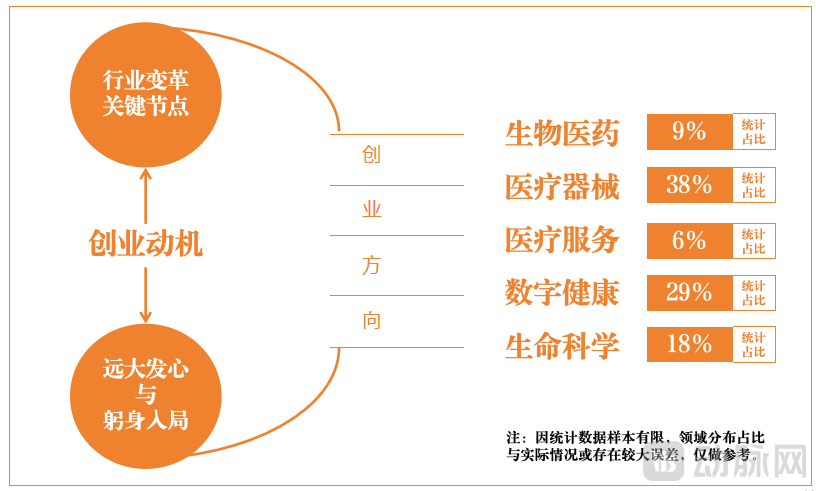
(Entrepreneurial Motivations and Directions of Post-90s Healthcare Entrepreneurs, Chart by VCBeat)
Under the surging tide, the daring and action-oriented post-90s founders have become active in every corner of healthcare innovation.
02
Venturing into the "Uncharted Territory" of Medical Innovation: Confronting and Solving Challenges
The road to innovation and entrepreneurship is often fraught with thorns. For the relatively inexperienced post-90s entrepreneurs, the challenges are even more numerous.
“The biggest challenge in the entrepreneurial process is finding the right people."Qiu Yuwei, the post-90s founder and COO of Beijing Shennapus Artificial Intelligence Technology Co., Ltd., told VCBeat, 'For young entrepreneurs, they haven't been in the industry for a long time and their connections are relatively limited. Finding like-minded partners who are passionate about entrepreneurship is indeed a big challenge.'"
In response to this issue, each company has provided its own solution.
Zhao Xin, the founder of Shanghai Xinsu Medical Technology Co., Ltd., who was born in 1989, told VCBeat that in order to recruit the desired talent, the team always makes every effort to meet candidates offline for in-depth discussions. On one occasion, to have dinner and a chat with a candidate after their work hours, Zhao Xin, along with the other two founders, Dr. Wu Dan and Dr. Dong Yiming (both from the post-90s generation), immediately headed out from Suzhou right after a meeting had ended.Drove over 200 kilometers to Nanjing, had in-depth conversations with the candidates, and then the three of them drove back to Suzhou late at night.
Besides perseverance and emphasis on talent, Kong Lingjie, co-founder and CEO of Fubo Technology, mentioned to VCBeat the importance of sincerity. In 2021, Kong Lingjie was continuously searching for scientists suitable for the company’s development. Given the company's location in Beijing, his top choices were prestigious institutions such as Tsinghua University, Peking University, Beihang University, and Beijing Institute of Technology.
Through a friend's recommendation, Kong Lingjie got to know a professor from Tsinghua University who is engaged in research in a related field. "Because the teacher has many teaching and research tasks, his schedule is extremely tight, and it’s not always possible to arrange a meeting. By coincidence, there was a suitable time, but I had just been hospitalized for three days due to a gastrointestinal illness, and the doctor did not allow me to go out. There was no way,I removed the indwelling needle and signed a voluntary temporary discharge statement to meet my teacher for the first time."In half a day, I exchanged my understanding of this niche market with the teacher and discussed the plan for the company's future development. Eventually, we reached a cooperation agreement, thereby finding a very suitable and excellent scientist for the company."
After recruiting, the harder part lies in retaining employees and talent management—due to the lack of sufficient qualifications and experience among post-90s individuals, how to build team cohesion has become a common短板.
In this regard, Ouyang Pengfei, Vice President of Weigong Field, believes that since the field of synthetic biology often gathers highly knowledgeable talents, compared to traditional strict organizational structures and performance management, innovative synthetic biology companies aiming for efficient development need to use a common vision, goal, and values to build consensus and mobilize the enthusiasm and imagination of every employee. "Putting customers first is the team's greatest consensus," said Ouyang Pengfei. "We must have faith in new technologies and show even more respect for the market."
Qiu Yuwei, founder and COO of Beijing Shennapus Artificial Intelligence Technology Co., Ltd., shares the same sentiment. She stated that from day one of the company's establishment, Dr. Wang Zhihua, another post-90s founder and CEO of Shennapus, has been leading the company.A very large option pool (30%) was established., with the hope that when the company achieves success, it can provide every employee who has contributed to the company with truly visible rewards, and within the companyA good atmosphere of respecting technology has been created.
Moreover, the company's culture and vision are also important factors for attracting and retaining talent. Qiu Yuwei mentioned that as an innovative technology enterprise dedicated to the research and development, manufacturing of AI-empowered medical-grade smart wearable devices and a digital chronic disease management algorithm platform, Deepnapus operates in the intersection of chronic disease management and AI. The company’s vision is to truly improve the quality of life for patients with chronic diseases by providing accessible and effective chronic disease management solutions through technology. Additionally, the founder adheres to the principle of "doing the right thing." Such aA Vision That Resonates with Like-Minded Employees, therefore, Synapse AI is more appealing to young people.
Of course, exploring the "uncharted territory" of medical innovation inevitably comes with research and development challenges.In this regard, Qiu Yuwei told VCBeat, "One advantage that start-ups generally have is that we are not static; we iterate every day. For instance, our team often visits outstanding companies to learn from their experiences and acquire the latest technologies in the market or research fields, integrating them into our product design and development."
An illustrative example is that, during a previous period, the core team of DeepNaps would take day trips in the Yangtze River Delta and the Pearl River Delta. From morning to night, they would drive to visit competitors, suppliers, excellent factories, and others, rapidly learning, extracting knowledge, and building understanding through these exchanges. In Qiu Yuwei's view, technology-focused companies are actually far from the product and lack an understanding of how to transform technology into a manufacturable product, thus requiring extensive observation and learning. "Insufficient understanding may eventually lead the team to work in isolation, detached from reality."
Fu Bo Technology CEO Kong Lingjie also stated that currently, in the field of intelligent rehabilitation exoskeletons they are in, there is no benchmark or learning model to refer to, and they can only rely on themselves to learn and explore. "Therefore,Problems must be solved with small, quick steps; don't always stay at the thinking level., start by doing it. If it fits, maybe you're lucky; if not, it's okay—quickly adjust and keep moving forward. From the start of my entrepreneurial journey until now, I've basically been working 100 hours a week."
After research and development, the subsequent challenge is commercialization."Innovation R&D and commercialization are two completely different logics," Dong Yiming, co-founder and chief scientist of Shanghai Xinsu Medical Technology Co., Ltd., told VCBeat.The most important point is (innovative companies)To benchmark against some mature large companies and create clear differentiation and distinction., which is precisely the issue that customers may be most concerned about."To embark on commercialization, one must have a psychological expectation of the potential difficulties and customer needs. Beyond solving basic problems, it is essential to focus on customers' latent pain points, maintain an open mindset for more communication, and gradually everything will fall into place." After just over two years since its establishment, Xinsu Medical Technology's commercialization journey has begun. The first domestically developed short-chain CMOS chip in China has successfully entered the trial production phase.
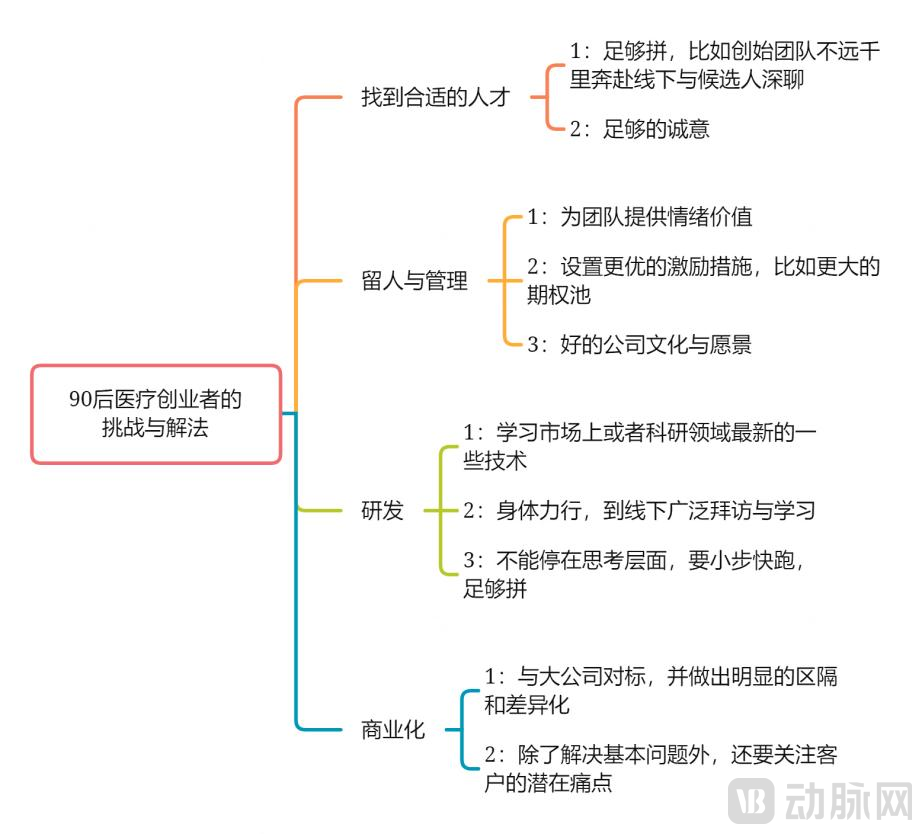
(Challenges and Solutions for Post-90s Healthcare Entrepreneurs - Chart by VCBeat)
It is not difficult to find that, based on extensive learning and rapid iteration, the post-90s entrepreneurs who dare to venture into the "uncharted territory" of medical innovation have gradually resolved challenges in recruitment, management, R&D, and commercialization. They have achieved more success and attracted the attention and investment of capital.
03
Over RMB 10 billion in VC/PE investment support in 3 years, continuously exploring the future
An Increasing Number of Investment Institutions Are Investing in Post-90s Healthcare Projects.
According to incomplete statistics from VCBeat, medical innovation companies founded by post-90s entrepreneurs have received over 80 rounds of VC/PE financing in the past three years, with a total financing amount exceeding 10 billion RMB.
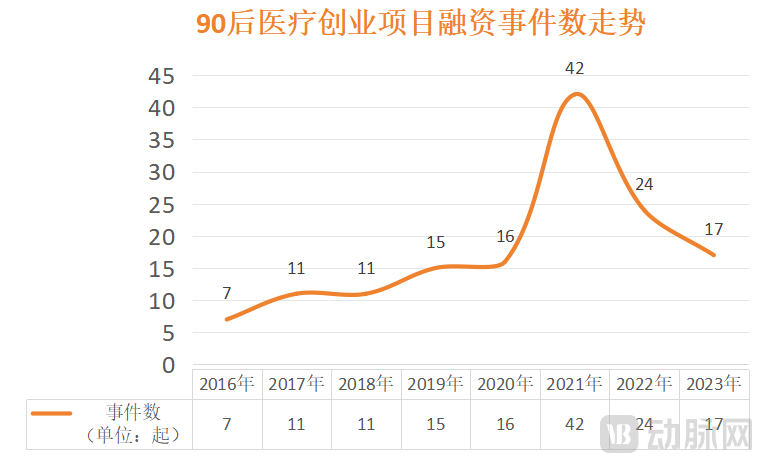
(Trend Chart of Financing Events for Post-90s Medical Entrepreneurship Projects, Chart by VCBeat)
From the investment institutions involved, these medical innovation projects led by post-90s entrepreneurs have garnered support from a range of well-known organizations, including Matrix Partners, Source Code Capital, Tencent, 5Y Capital, BAI Capital, GGV Capital, Sequoia China, Waterwood Ventures, Hillhouse, Sherpa Healthcare Partners, Qiming Venture Partners, Shenzhen Capital Group, Baidu Ventures, Legend Capital, and Longhill Capital.
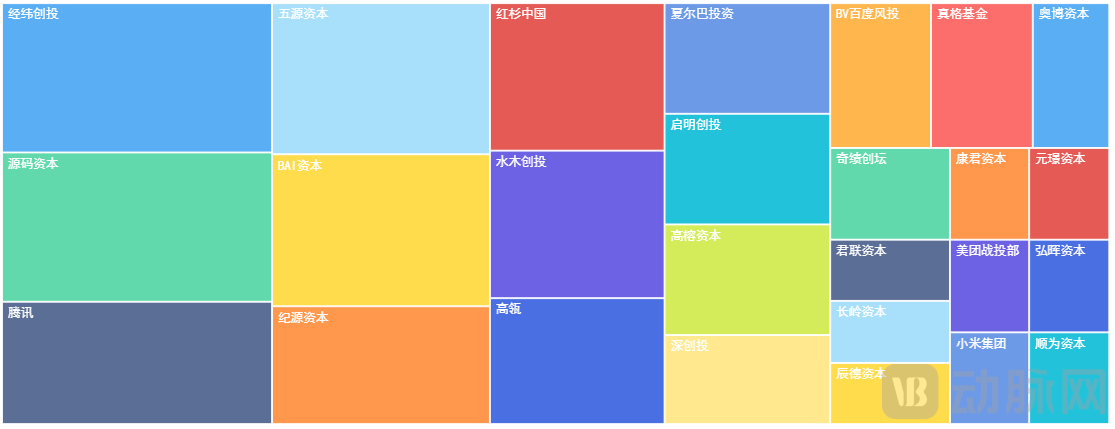
(The distribution of investment institutions' involvement in post-90s healthcare projects, chart by VCBeat)
What Exactly Do Investors Value in Post-90s Medical Entrepreneurs Who Frequently Secure Funding?
"Compared with many predecessors in the medical industry, the post-90s generation lacks some industrial experience; however,Younger individuals tend to be more flexible, imaginative, and daring in their thinking, speaking, and actions. They have stronger iterative abilities, a greater capacity to recover from setbacks, fewer entrenched ideas and burdens, and enhanced interdisciplinary skills."Tianchao Capital's managing partner, Wang Yueyue, told VCBeat, 'This is an important reason why they are favored by capital.'"
In the view of Xue Mingyu, Vice President of Matrix Partners,Simplicity and directness are also important traits for post-90s entrepreneurs to gain investment.He still remembers the scene of his first meeting with Liu Bo, the post-90s founder and CEO of Microelement Synthesis. The two talked for more than four hours at the Hilton Hotel in Shekou, Shenzhen. "He wore a T-shirt and a pair of ordinary long pants. The entire exchange was extremely fast-paced and very to the point, without any flashy elements. It perfectly embodied the boldness and 'all-in' spirit typical of post-90s founders."
After securing financing,Several founders also expressed that VC/PE provided significant support during the growth process of enterprises.
"At that time, choosing Tsinghua Venture Capital played a very important role in bringing Fubo Technology to where it is today," said Kong Lingjie, founder and CEO of Fubo Technology, to VCBeat. "At that point, our company didn’t even have formal employees—just one technology to showcase and a future plan to discuss. But Tsinghua Venture Capital saw the potential in our entrepreneurial direction.They have incubators, a global health industry innovation center, and can also provide us with product managers, legal support, financial support, and help us find experts., enabling us to progress step by step to where we are today. Therefore, the first seed or angel investor must be someone with truly excellent resources, an institution capable of accompanying the project's growth."
“Entrepreneurs born in the 1990s need investors to provide some guidance and support at the early stage. When they encounter issues, such as how much salary to offer when hiring or how much equity to give out, investors can offer advice based on their past experiences."Yan Yi, Managing Director of Tsinghua Venture Capital, told VCBeat."
Taking TowardPi, invested by Waterwood Venture Capital, as an example, Wang Yingqi, a post-90s founder, is a typical entrepreneur who emerged from academia. "Back when Yingqi first presented his pitch to investors, he was somewhat nervous. However, he was extremely serious and meticulous. For instance, regarding financing, he entered a good self-iterative and cyclical mode, reflecting on what aspects needed improvement. Additionally, I interviewed some candidates in their 40s with Yingqi, and after our discussions, everyone felt that this CEO was humble, highly inclusive, and easy to work with."
Zou Guowen, founding partner of WinX Capital, which helped TowardPi secure nearly 300 million yuan in its latest round of financing, also commented, "(Wang Yingqi) left a deep impression on us for several reasons: First, his perseverance and determination—when faced with difficulties, he never gave up, demonstrating mental strength beyond his peers. Second, his professional expertise; during a roadshow with top investors and leading industry organizations, his solid knowledge base allowed him to perfectly address the investors' questions, and the product gained recognition. Third, at critical moments, he can rationally assess the situation, accept professional advice, make decisive decisions, while leaving room for flexibility and alternative plans, showing the potential of a mature entrepreneur."
It is not difficult to see from the above,In closer collaboration, post-90s entrepreneurs and investment institutions achieve mutual success and win-win outcomes, driving projects forward continuously.According to statistics from VCBeat, so far, more than 60% of post-90s medical startups have moved past the seed stage and reached Series A or later. Among them, projects at Series C or later account for approximately 18%.
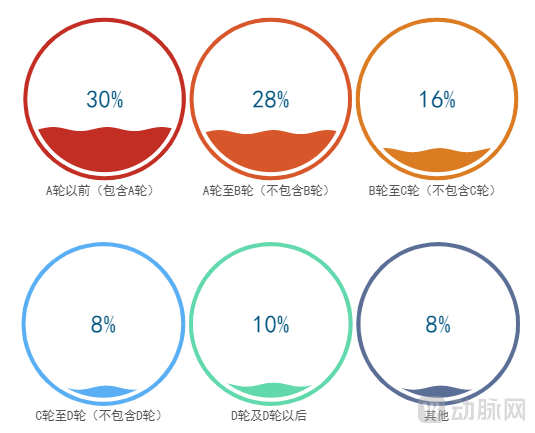
(Distribution of Financing Stages for Post-90s Medical Entrepreneurship Projects, Chart by VCBeat)
With the continuous support of VC/PE, more medical projects led by the post-90s generation are steadily advancing from the growth stage to the maturity stage, and some are even approaching the eve of an IPO.
04
The World Always Belongs to the Young
"In 2002, Elon Musk founded the private aerospace company SpaceX at the age of 31; in 2013, Professor Zhang Feng established the gene-editing company Editas Medicine at the age of 31." Xue Mingyu, Vice President of Matrix Partners China, told VCBeat that in the hardcore technology sector, young talents have never been in short supply.
In Xue Mingyu's view, young founders often possess some excellent entrepreneurial traits.
· First, they do not set limits for themselves, especially founders who have grown up in the new generation environment. Their educational background and life experiences make them more risk-tolerant and adventurous.
· Second, they are extremely eager to learn. Although they may lack experience in some fields, young founders possess a strong willingness and ability to learn, and often have the courage to define a new field.
· Third, humility and leadership are crucial. As a true founder, a key point is the ability to unite a team. Many young entrepreneurs have already started managing small teams of more than ten people during their Ph.D. studies.
· Fourth, young entrepreneurs are on the front lines, very close to the battlefield, able to hear the sound of gunfire, allowing R&D to follow the front line.
“In the future, China's high-tech companies represented by medical innovation will extend along two paths. One type is led by seasoned experts and scientists working alongside equally experienced management teams to create remarkable companies, such as BeiGene. Another type includes companies like Bota Bio and Microsynth, driven by young entrepreneurs who redefine an entirely new field."Xue Mingyu said."
Of course, Qi Fei, Executive Director of Legend Capital, also frankly admitted,Whether they are post-80s entrepreneurs or post-90s entrepreneurs, the industry's evaluation standards for them will not have any differences."Therefore, it is important to note that milestones are extremely significant events in the entrepreneurial process. Although there is no unified standard, they will be compared with the progress of the industry."Just because the founder is a young person, it doesn't mean the company can afford to move slower or allow them to take more detours.”
In addition, post-90s entrepreneurs have rarely experienced societal "hard knocks" and lack social experience, thus requiring a time window period. "During this process, we can observe their learning ability and determination. After a period of observation, if they truly manage to drive the company forward, it is highly likely that the company will become a leading enterprise in its niche market. If not, then consider whether to replace the CEO," an anonymous investor stated, "inIn management, do not be indecisive; instead, be more decisive and resolute."Many entrepreneurs with a technical background coming from universities may be somewhat lacking in this aspect."
“It is hoped that post-90s entrepreneurs maintain humility and an open mindset, become friends with experienced industry leaders, investors, and other senior professionals to gain multi-perspective professional advice, and grasp the rhythm of financing and development."We also look forward to the post-90s entrepreneurs, with their belief in changing lives through technology, standing on the shoulders of their predecessors, bringing a new face to the medical industry." said Zou Guowen, founding partner of VCBeat Capital.
It is undeniable that on the journey of medical innovation, some of these post-90s entrepreneurs who have ventured into uncharted territory may achieve great success, while others may encounter obstacles or even failure. But none of this is actually important—amidst the ups and downs, whether it’s the post-60s, post-70s, or post-80s generations who were or are currently in the spotlight, or today’s post-90s and tomorrow’s post-00s generations, they will all face various challenges. Observing generational differences is merely a facet to glimpse industry transformation—it is not about praising or criticizing any one generation.
Because it is only when the perspective is placed in the grand history of the entire industry's innovation that one can discoverAround the corner of innovation, what remains unchanged is the generation after generation who never give up, bravely chase their dreams, and stay forever young.
This is also the most valuable and sexy footnote in the journey of innovation.
Note:Due to the limited statistical sample (55 enterprises, 158 financing data), there may be significant discrepancies between the data source of the charts and graphs in this article and the actual situation. Therefore, the conclusions drawn from the charts are for reference only.
Acknowledgments:During the writing of this article, we received support from companies/institutions such as Femarelle, Fubotech, Huaxing Capital, Jingwei Venture Capital, Legend Capital, WinCapital, Shennapus, Shuimu Ventures, Tianchao Capital, MicroChain Biotechnology, and Shanghai Xinsu Medical Technology Co., Ltd. (listed in alphabetical order by name), as well as several senior industry experts who wish to remain anonymous. We hereby express our gratitude.