On December 13, 2023, Amgen announced that the FDA had accepted the biologics license application (BLA) for Tarlatamab (AMG757), a bispecific antibody targeting DLL3/CD3, granting it Priority Review. The FDA is expected to provide a final decision by June 12, 2024. If approved, Tarlatamab will be the first T-cell-engaging bispecific antibody truly targeting solid tumors (Tebentafusp is strictly a bifunctional fusion protein) and will break the longstanding belief that T-cell engagers (TCEs) have a low probability of success in solid tumors. The acceptance of Tarlatamab’s BLA is primarily based on data from the Phase II clinical trial named DeLLphi-301. At this year's ESMO conference, Amgen presented the clinical results, which were simultaneously published in the New England Journal of Medicine.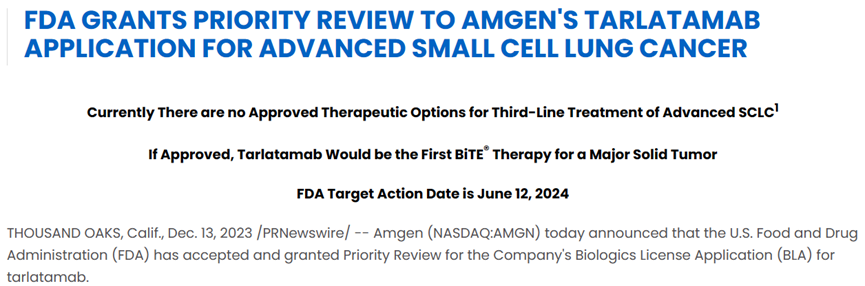
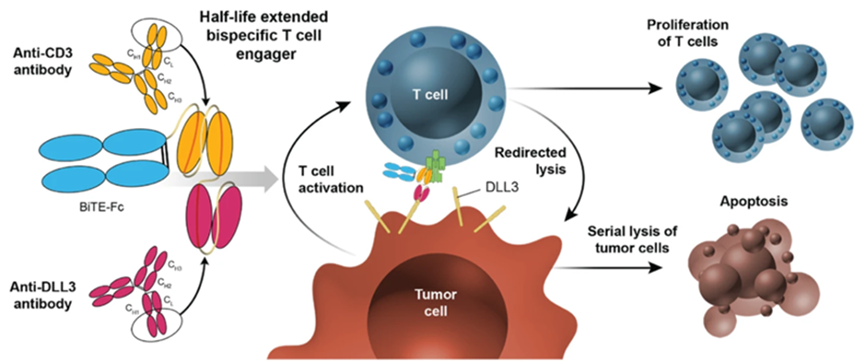
 AMG757 was developed by Amgen. This antibody is based on Amgen's next-generation bispecific antibody platform, HLE BiTE. Compared with the previous generation of the BiTE platform, HLE BiTE molecules contain an Fc region that extends half-life. The molecular structure of AMG757 is shown in the figure below. The antibody targets the DLL3 molecule on the surface of small cell lung cancer cells and the CD3 molecule on the surface of T cells. After binding to the CD3 target on the surface of T cells, it activates the T cells and acts on cancer cells expressing the DLL3 molecule, thereby achieving a therapeutic effect. Phase II clinical results.
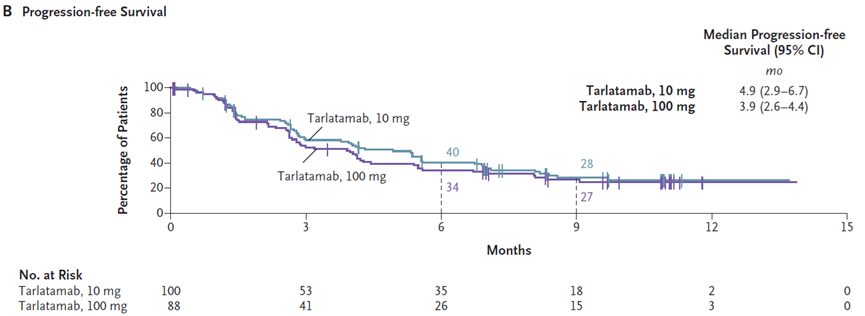
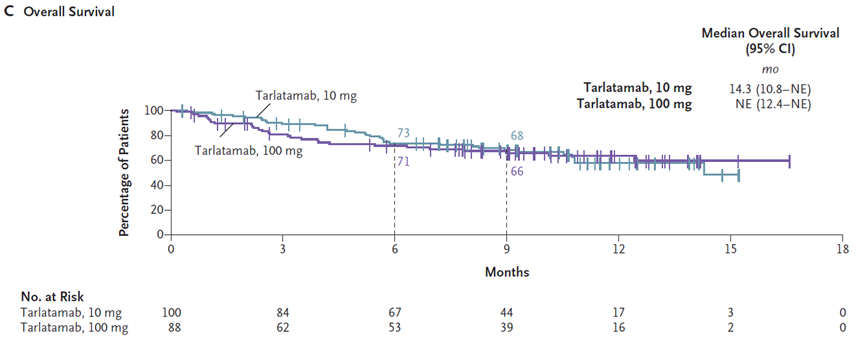
 Phase II Clinical Trial of DeLLphi-301A total of 220 patients received treatment with the bispecific antibody AMG757. The median number of prior treatment lines was 2. Among treated and evaluated patients, the median follow-up time was 10.6 months in the 10 mg group and 10.3 months in the 100 mg group. Objective response rates were 40% (97.5% CI, 29~52) in the 10 mg group and 32% (97.5% CI, 21~44) in the 100 mg group. Of the patients achieving objective responses, 59% (40 out of 68 patients) had a duration of response lasting at least 6 months. At the data cutoff, 22 out of 40 patients (55%) in the 10 mg group and 16 out of 28 patients (57%) in the 100 mg group maintained an objective response. The median progression-free survival was 4.9 months (95% CI, 2.9~6.7) in the 10 mg group and 3.9 months (95% CI, 2.6~4.4) in the 100 mg group. The estimated 9-month overall survival rates were 68% and 66%, respectively.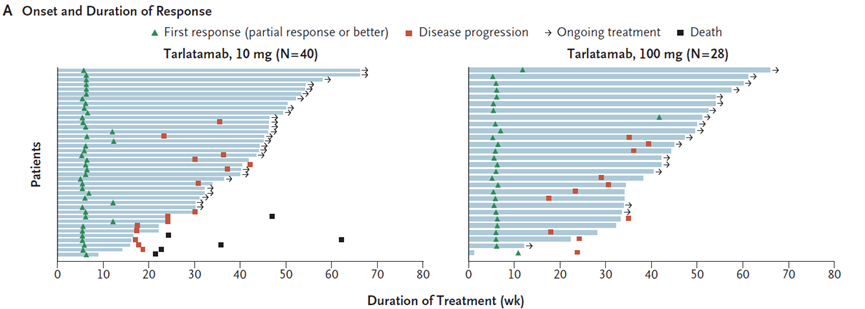
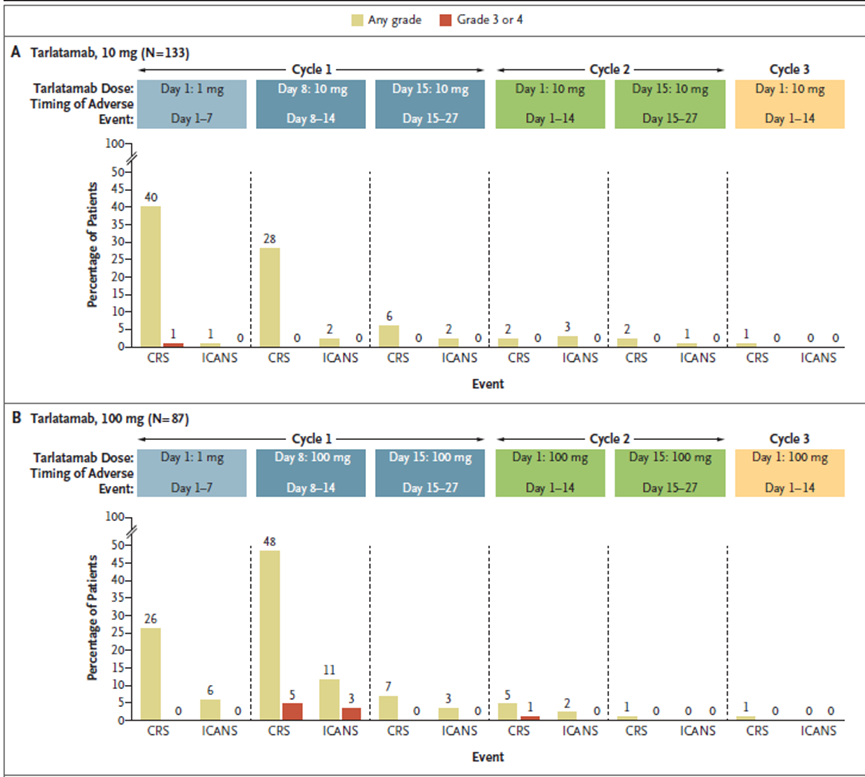
 In terms of safety:The most common adverse events included cytokine release syndrome (51% in the 10 mg group and 61% in the 100 mg group), decreased appetite (29% and 44%), and fever (35% and 33%). CRS was similar to currently marketed TCE bispecific antibodies, primarily occurring during the first two doses of the first treatment cycle, with most patients experiencing severity of grade 1 or 2. The incidence of grade 3 cytokine release syndrome was lower in the 10 mg group (1%) compared to the 100 mg group (6%). The proportion of patients discontinuing tarlatamab due to treatment-related adverse events was low (3%).
 TCE bispecific antibodies have achieved great success in hematological tumors, but in solid tumors, the development of TCE bispecific antibodies has been fraught with difficulties due to related side effects and other reasons. This has even led many to question the druggability of TCE in solid tumors. Therefore,The filing of Tarlatama (AMG757) is not only a success for Amgen, but also provides a significant boost for the development of CD3 in the field of solid tumors.
References:
1. Amgen Official Website
2、M.-J. Ahn, B.C. Cho, E. Felip et al. Tarlatamab for Patients with PreviouslyTreated Small-Cell Lung Cancer.2023 nejm
Scan the WeChat QR code, add the editor of the Antibody Circle, and those who meet the requirements can join the Antibody Circle WeChat group!
Please indicate: Name + Research Direction!All reproduced articles in this official account are intended to convey more information, with the source and author clearly indicated. Media or individuals who do not wish to be reproduced can contact us at cbplib@163.com, and we will immediately delete the content. All articles represent the views of the author and do not represent the position of this website.