Bintie Bio Secures Over RMB 100 Million in Series A Funding to Target 'King of Cancers' with Innovative TCR-T Therapies

Immuxell Biotech
Developer of Immune Cell Therapeutic Drugs
▎Edited by the WuXi AppTec content team

Recently, ImmuXell Biotech announced the completion of an over 100-million-yuan Series A round of financing, led bySDIC Venture CapitalLed by SDIC Venture Capital Co., Ltd., with participation from Guangzhou Huangpu Biomedical Industry Investment Fund Management Co., Ltd., Yuanxi Haihe (Tianjin) Biomedical Industry Fund Partnership (Limited Partnership), and others, the funds raised will be used to advance research targetingKRAS G12VResearch Progress on the Product Pipeline of Novel TCR-T Cell Therapy Products with Mutations. The arrival of this news has also drawn industry attention to this innovative pharmaceutical startup.
ImmuXell Biotech was founded in January 2021.Focus on the R&D and production of breakthrough immune cell therapeutic drugs, with main products being novel immune cell preparations targeting solid tumors.Currently, ImmuXell Biotech has independently developed multiple candidate drugs, including those targetingKRASMutated TCR-T cell therapy products, TCR-NK products as allogeneic cell therapy products, etc.
So, what are the advantages of ImmuXell Biotech's technology and product pipeline? What challenges in current cancer treatment do they have the potential to address? With these questions in mind, the WuXi AppTec content team conducted an exclusive interview with...Dr. Hongming Hu, Founder of ImmuXell BiotechDr. Hu has深耕多年 in the field of tumor immunology and has rich experience in basic and clinical research, translational medicine, and other related areas.
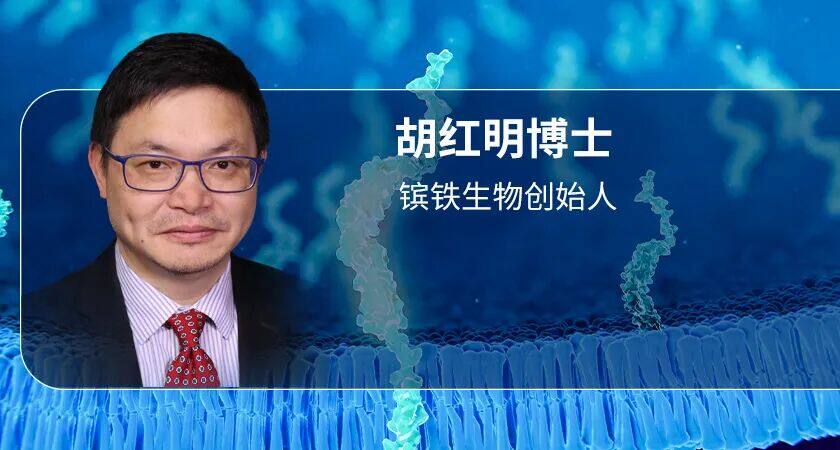 Image source: Provided by ImmuXell Biotech, produced by the WuXi AppTec content team
WuXi AppTec Content Team: In the field of oncology that ImmuXell Biotech is dedicated to, what are the key challenges currently faced by treatment methods or clinical solutions?
Dr. Hongming Hu:The main indication targeted by ImmuXell Biotech's products is pancreatic cancer. As is well known, pancreatic cancer is called the "king of cancers" due to its high mortality rate and difficulty in treatment. Despite the increasing number and variety of innovative therapies each year, treatment options for pancreatic cancer patients remain very limited. For innovative drug development companies, how do we find more effective treatments to change the decades-long situation of no significant breakthroughs in this field? I believe this is the first major challenge.
Looking at the entire field of oncology, I believe another key challenge we face is how to fully achieve early screening and diagnosis of cancer. For difficult-to-treat cancers like pancreatic cancer and liver cancer, early symptoms are hidden, not easily detected, and the disease progresses rapidly, with most patients already in the advanced stage at the time of diagnosis. If they can be detected through early screening, patients would have many more treatment options and much better outcomes.
WuXi AppTec Content Team: What are the unique advantages of the pipeline being developed by ImmuXell Biotech? What pain points in current cancer treatments do they have the potential to address?
Dr. Hongming Hu:In recent years, although significant progress has been made in the development of small-molecule drugs targeting KRAS G12C, however, forKRASThe development of drugs for other high-frequency mutation types still faces significant challenges. The reason is that KRAS is an intracellular target, and developing therapies for such targets is extremely challenging.As a novel therapy, TCR-T can not only recognize surface antigens but also target intracellular antigens that are difficult for antibodies and small molecules to address.As an immunotherapy, TCR-T therapy’s cytotoxic cells have stronger proliferation and persistence in the body as well as enhanced tumor infiltration capabilities, showing potential to improve the survival time and quality of life for patients with solid tumors.Therefore, we believe that the development of targetedKRASMutated TCR-T therapy is expected to bring an effective treatment for intractable solid tumors such as pancreatic cancer.
ImmuXell Biotech's goal is to develop a series of TCR-T products that can treat recurrent/refractory malignant tumors such as pancreatic cancer. The company's product pipeline has two main characteristics.First, we focused on the KRAS target early on.KRASGene mutations are one of the most common oncogenic mutations in cancer patients, expressed in both primary and metastatic cancers. Still taking pancreatic cancer as an example, it is the most dependentKRASTumor types with gene mutations, carried in approximately 95% of pancreatic cancersKRASGene mutations, which provide an entry point for new drug developers to tackle difficult-to-treat tumors such as pancreatic cancer.
The second major characteristic of ImmuXell Biotech's product pipeline isExpected to enhance the accessibility of cell therapy productsThe number of cells required for TCR-T cell therapy in the treatment of solid tumors will far exceed that of CAR-T therapy, making accessibility even more crucial.Our approach is to develop new cell processes that enable patient-derived T cells to expand more within the patient’s body, which can not only shorten the ex vivo expansion time and reduce process costs, but also enhance the effect of T cell tumor infiltration and intratumoral differentiation into effector cells.In addition, we are also exploring new directions, such as non-viral gene targeting integration technology, which can help improve the safety and accessibility of cell therapy.
In addition, our product pipeline also includesTCR-NK Products as Allogeneic Cell Therapeutics`, as well as TCR fusion protein (TCR-ICE) products that can be mass-produced and are available in stock.`NK cells have the natural ability to kill tumor cells and can be applied in allogeneic cell therapy, thus offering more advantages than conventional autologous or allogeneic T-cell therapies. The TCR fusion protein product is independently developed by ImmuXell Biotech, targetingKRASComposed of mutated TCR sequences and anti-CD3 single-chain antibody fragments (scFv),It eliminates the need for blood collection and reinfusion in cell therapy and can be mass-produced for ready supply to hospitals.These strategies enable us to combine personalization with universality in cell therapy products in the future, greatly enhancing the accessibility of cell therapies.
WuXi AppTec Content Team: What are the key challenges to fully realizing the potential of ImmuXell Biotech's products under development? And what are the potential solutions?
Dr. Hongming Hu:TCR-T therapy involves cloning T-cell receptors (TCRs) that can specifically recognize particular HLA-tumor antigen peptide complexes through corresponding experimental techniques, followed by delivering them via retroviral gene transfer.TCRGene coding sequences are delivered to more T cells, endowing these T cells with new antigen recognition specificity. From the specific treatment process, patient-derived T cells are transduced in vitro.TCRGenes, amplified in large quantities, can effectively identify tumor cell-specific antigens. Infusing these T cells back into the patient enables specific killing of tumor cells and exerts anti-tumor activity. Therefore, similar to CAR-T cell therapy,The key challenges of TCR-T therapy lie in the production preparation and hospital reinfusion aspects.As for potential solutions, I believe they lie in the enhancement of processes and the improvement of technologies, enabling us to shorten ex vivo transduction.TCRThe time for gene and amplification processes, to return the cells to the patient's body at the fastest speed, or to achieve direct production and reinfusion at hospitals in the future.。
WuXi AppTec Content Team: In the next few years, what milestone developments are expected in ImmuXell Biotech's R&D pipeline?
Dr. Hongming Hu:Currently, ImmuXell Biotech is targetingKRAS G12VThe novel TCR-T cell therapy product with mutations has completed TCR screening, in vitro functional validation, and in vivo efficacy experiments, and has been tested across multiple clinical centers forAdvanced Pancreatic Ductal AdenocarcinomaThe investigator-initiated clinical trial (IIT) has entered the IND application preparation stage. In the coming years, we hope this product will achieve positive clinical data. Additionally, ImmuXell Biotech is expected to advance its TCR-NK product and TCR fusion protein product into the pivotal clinical research stage.
At the same time,We will also gradually expand the pipeline indications to more.KRASTumor types with mutations, such as colorectal cancer, lung cancer, and will use the current innovative platform to explore new targets, hoping to also provide innovative TCR therapies for patients with liver cancer, brain cancer, and others in the future. In addition, we are exploring non-viral gene delivery vectors that can reduce production costs, which are also expected to yield corresponding results in the coming years.
WuXi AppTec Content Team: How do you view the current innovation trends in the biopharmaceuticals industry? Where are the opportunities for innovation? What is your prediction for the next few years?
Dr. Hongming Hu:Different molecular types and different products can address different issues. For me, I am most optimistic about cell therapy. In terms of mechanism of action, cell therapy can mobilize the patient's own immune capabilities and has immune memory, which is expected to significantly extend the patient’s survival time.
From the perspective of industrial development trends, I believe that whether they are scientists, entrepreneurs, or investors, everyone will become more cautious. Moreover, the professionalism of investment institutions is also increasing, which helps to form a positive cycle of innovation ecosystems and reduce the waste of new drug R&D resources. Everyone can truly start from unmet clinical needs and develop products that can benefit patients.
WuXi AppTec Content Team: In terms of original innovation, what challenges do you think scientific research transformation is currently facing?
Dr. Hongming Hu:Scientific research transformation cannot be achieved by a single institution or company alone. It requires the establishment of an entire system, including enhancing the innovation capability at the source, fostering collaboration between various entities such as medical institutions/research institutes, innovative drug development companies, CROs, and more. At the same time, we must also consider how to bring truly clinically valuable innovative drugs to patients more quickly. Over the past few years, thanks to the efforts of all parties involved, I believe that the ecosystem for scientific research transformation in China has begun to take shape. I am confident that in the future, this system will become increasingly mature, leading to more scientific research achievements being transformed into effective medicines that benefit patients.
WuXi AppTec Content Team: How do you view the role of collaboration in new drug development? Specifically, in the field of cancer immunotherapy, what kind of collaboration is needed to accelerate the emergence of innovative treatments?
Dr. Hongming Hu:As I just mentioned, in order to create a positive and self-reinforcing innovation ecosystem, collaboration is crucial. I believe good collaboration allows all parties to shine, complement each other's strengths, and push things to the extreme, quickly bringing innovative therapies to patients who are eagerly awaiting them. Specifically, in the field of cancer immunotherapy, I think we need to work together, make rational use of limited resources such as funding, patients, medical resources, and new drug R&D talent, and drive original innovation through differentiation and diversification.Create a truly "diverse and thriving" innovation ecosystem.
WuXi AppTec Content Team: If we gather here again 10 years from now, what changes do you foresee in the landscape of cancer treatment? Could you paint a picture of the relevant scenario 10 years from now?
Dr. Hongming Hu:First, I look forward to seeing significant breakthroughs in the treatment of difficult-to-treat cancers like pancreatic cancer, similar to what has been achieved with lung and breast cancer. The emergence of truly safe and effective innovative therapies could enable at least half of the patients to survive for more than five years. Second, cell therapy is expected to become a mainstream treatment for cancer, with a series of cell therapies gaining approval for marketing in the field of solid tumors. Third, thanks to technological innovations and improvements, the accessibility of cell therapies will be greatly enhanced, making them affordable for most patients. Although scientific breakthroughs still involve some degree of chance and are hard to predict, I believe the future holds great promise.
WuXi AppTec Content Team: Looking ahead to the upcoming 2024, can you describe your expectations in one sentence?
Dr. Hongming Hu:In 2024, I believe that the first TIL and TCR-T cell therapies for treating solid tumors are both likely to gain approval from the U.S. FDA for market release. At the same time, the cell therapy field is expected to present more promising R&D data, bringing hope to patients.
If you are interested in the research and development progress of new molecular type drugs,Scan the QR code below, you will have the opportunity to receive the "Rapid New Molecules" White Paper, compiled and produced by the WuXi AppTec content team. The white paper includes global R&D trends for new molecular drugs as well as exclusive insights from over 50 emerging CEOs worldwide.


This article is from the content team of WuXi AppTec. Individuals are welcome to share it on their social media circles, but unauthorized reproduction by media or institutions in any form to other platforms is prohibited. For authorization to reproduce, please contact us via a message on the "MedView" WeChat Official Account. For other cooperation inquiries, please contact wuxi_media@wuxiapptec.com.
Disclaimer: The content team of WuXi AppTec focuses on introducing the research progress in global biopharmaceuticals and health. This article is for information exchange purposes only, and the views expressed in the article do not represent the position of WuXi AppTec, nor does it imply that WuXi AppTec supports or opposes these views. This article is not a recommendation for treatment plans. For guidance on treatment options, please visit a正规 hospital.