

Tides Express | Semaglutide and Three Other GLP-1 Agonists Included in China's 2023 National Reimbursement Drug List
Eli Lilly
Global Pharmaceutical R&D and Production Company
Hansoh Pharma
Innovative Therapeutic Drug Developer
Novo Nordisk
Insulin Developer and Manufacturer
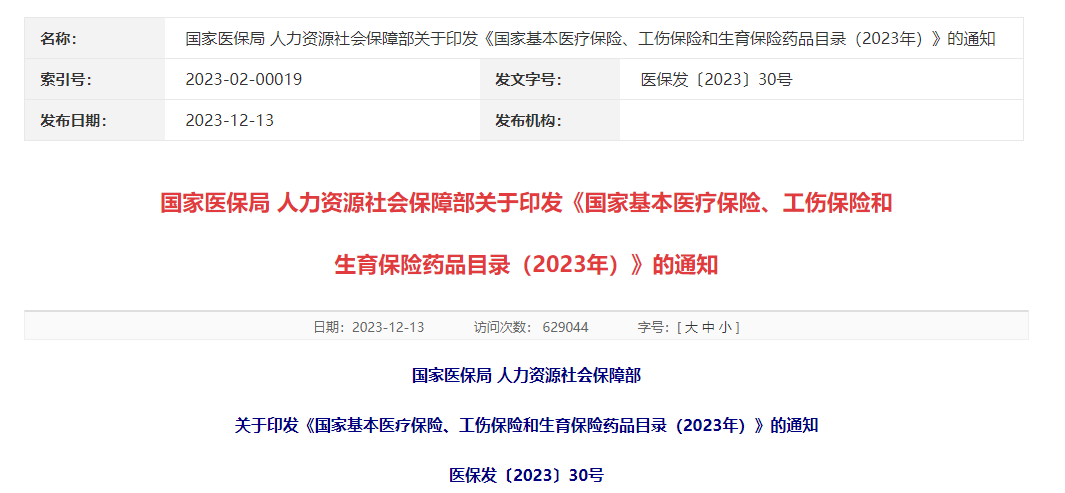
On December 13, 2023, the National Healthcare Security Administration officially announced the adjusted list of the 2023 edition of the National Healthcare Security Drug Catalog. The new round of the healthcare security catalog included four popular GLP-1 class products, includingRenHui BioNovo Nordisk's benralizumab injection, Eli Lilly's dulaglutide injection, and Hansoh Pharma'sPolyethylene Glycol Loosenatide Injection, Novo Nordisk's Semaglutide Injection, etc.
It is reported that the 2023 National Medical Insurance Drug Catalog added 126 drugs, including 21 cancer drugs, 17 drugs for COVID-19 and anti-infective treatment, 15 drugs for chronic diseases such as diabetes, mental illness, and rheumatoid immune disorders, 15 rare disease drugs, and 59 drugs in other fields. At the same time, one drug that is about to be withdrawn from the market has been removed from the new version of the catalog. After the adjustment, the total number of drugs in the catalog will increase to 3,088, including 1,698 Western medicines and 1,390 Chinese patent medicines; the number of Chinese herbal pieces remains at 892.
During the negotiation and bidding process, 143 off-list drugs participated, of which 121 were successfully negotiated or bid, with a success rate of 84.6%. The average price reduction was 61.7%, with both the success rate and price reduction being roughly equivalent to those in 2022. Negotiations were further compounded.Price reductions and medical insurance reimbursements are expected to save patients over 40 billion yuan in the next two years.
Currently, the weight-loss indications of the four drugs have not been approved for inclusion in medical insurance and are only applicable to diabetes.
- "Beinaglutide Injection" is specifically used for patients with type 2 diabetes.
- "Dulaglutide Injection" is suitable for patients with BMI ≥ 25 who have inadequate glycemic control with oral hypoglycemic agents (such as metformin or insulin). The initial prescription must be issued by specialists from secondary-level medical institutions or above.
- "Polyethylene Glycol Lozneseptide Injection" is suitable for patients with BMI ≥ 25 who face challenges in controlling blood glucose levels using oral hypoglycemic drugs such as metformin or insulin. Similarly, the first prescription must be issued by specialists from secondary-level medical institutions or above.
- "Semaglutide Injection" has two indications: 1. Regulating blood sugar in adult patients with type 2 diabetes, especially those who despite receiving metformin and/orSulfonylureasPatients whose blood glucose remains poorly controlled despite treatment. 2. ReductionReduced Risk of Major Adverse Cardiovascular Events (e.g., Cardiovascular Death, Non-Fatal Myocardial Infarction, or Non-Fatal Stroke) in Adults with Type 2 Diabetes and Cardiovascular Disease.
Among them, only "Polyethylene Glycol Lozenatide Injection" has disclosed its pricing, which is 110.00 yuan (0.5ml: 0.1mg/vial) and 187.00 yuan (0.5ml: 0.2mg/vial). The prices of the remaining three products are currently marked with "*".
"Polyethylene Glycol Lozenatide Injection" was approved by the National Medical Products Administration (NMPA) on May 6, 2019, aimed at enhancing glycemic control in adult patients with type 2 diabetes. This is the first long-acting GLP-1 injection produced in China.
According to the regulations of the National Healthcare Security Administration, for drugs marked with "*" in the "2023 Drug Catalogue," local healthcare security and human resources and social security departments are not allowed to disclose their healthcare payment standards through platform announcements, public documents, news releases, or other channels.