

Illumina to Spin Off Grail After $8B Acquisition Battle Ends in Regulatory Defeat
Illumina
Diagnostic Product Developer

GRAIL
Early Cancer Diagnosis Technology Developer
VCBeat learned that, afterAfter three years of intense negotiation, sequencing giant Illumina announced on December 17th, US time: the decision to proceed with the previously acquired liquid biopsy star company for $8 billion.GRAIL Spin-Off, the terms of this spin-off will be finalized by the end of the second quarter of 2023.
In fact, this result was anticipated and welcomed by investors. Previously, Illumina announced its Q3 2023 financial report on November 9, which showed less impressive performance: cumulative revenue for the first three quarters of 2023 was $3.382 billion, a year-over-year decrease of 3.4%, and the financial outlook for 2023 was adjusted from an initial growth of 7%-10% to a decline of 2%-3%.
However,Illumina's stock price has been on a one-month rally.: Starting from $94 per share on November 10 to $127 per share on December 15, a surge of approximately 35%. This is because Illumina disclosed progress regarding the handling of GRAIL in its earnings report: the company established a special committee to expedite decision-making on GRAIL; hired advisors to prepare for sales and capital market transactions; and will reach out to third parties as sources of investment funding or potential buyers.
The decision to spin off Grail has finally put investors' minds at ease. However, how Illumina and Grail should proceed in the future still requires careful consideration.
The story of Illumina and Grail dates back to 2016.
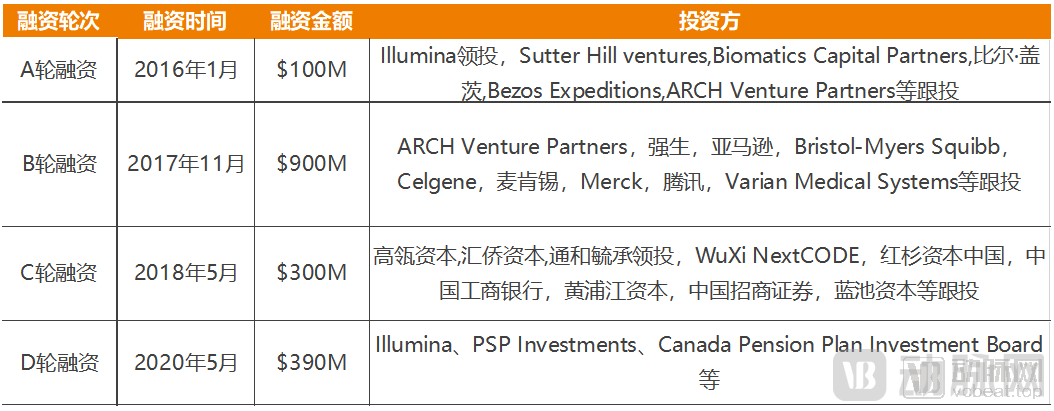
January 2016,Illumina Announces $100 Million Investment to EstablishGRAIL, hoping to base onIllumina’s sequencing technology develops an innovative testing method: screening for a full range of tumors through blood detection. From the day it was created,GRAIL has always been born with a silver spoon in its mouth: backed by sequencing giant Illumina, standing at the forefront of early cancer screening, armed with liquid biopsy technology, and having numerous star investors rushing to invest.
November 2017,GRAIL Completes $900 Million Series B Financing, Investors Include Johnson & Johnson, Amazon, McKinsey, Tencent, and Other Well-Known Enterprises. In May 2018, GRAIL Completed $300 Million Series C Financing, Investors Include Hillhouse, Sequoia, Quan Capital, 6 Dimensions Capital, ICBC, and Others.
During the period,GRAIL fromIllumina Redeems $278 MillionShares, and spun off from Illumina.The independence of GRAIL not only allowsIllumina earned a profit of 144 million, and it doesn't need toGRAIL Invests in R&D Funding and Assumes the Risk of Failure.It can be said that,GrailIndependently, Illumina is the biggest beneficiary.
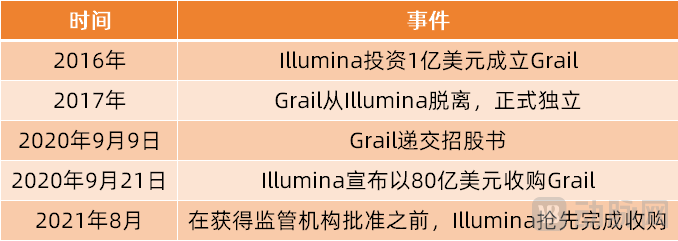
However, Illumina inGRAIL Decides to Acquire Itself Three Years After Spin-off, and the Acquisition is Sudden and Hasty.September 9, 2020GRAIL submitted its prospectus for an IPO application. However, just 12 days later, GRAILIllumina Announces Definitive Agreement: Illumina to Acquire for $8 Billion in TotalCash and Stock Acquisition of GRAIL, Agreement Approved by Both Companies' Boards. GRAIL's Path to IPO Comes to an End.
Illumina at the timeCEO Francis deSouza stated, "The Galleri multi-cancer screening test developed by GRAIL represents an extraordinary breakthrough and is one of the most promising new products in the fight against cancer. We hope this collaboration will lead to the introduction of a routine and widely accessible blood-based screening product, making early cancer detection more effective and less costly."Illumina, Inc.GRAIL's innovative multi-cancer early detection product will achieve broader and faster adoption, enhancing patient accessibility and expanding global coverage.
"The acquisition of GRAIL allows Illumina to provide affordable pan-cancer screening globally, and the innovative Galleri test can help Illumina expand its market share in the global $44 billion cancer screening market."
From this perspective, the acquisition of GRAIL is because of Francis deSouza, etc.Illumina Management Highly Values and ApprovesGRAIL's Multi-Cancer Early Detection Product. They project that by 2035, the cancer detection market will grow at a compound annual growth rate of 27%, reaching $75 billion. Meanwhile, they believe GRAIL will drive transformative changes in the cancer detection market and revolutionize the field of cancer treatment.
It is worth mentioning that this acquisition transaction was originally supposed to gain regulatory approval first. However,Illumina was too hasty, completing the acquisition deal in August 2021 before obtaining regulatory approval. This also set the stage for subsequent troubles.
Like Illumina's management team, including Francis deSouza, regulators and industry players have also expressed optimism about Grail. In September 2022, the European Commission stated: "Grail is developing a blood-based early cancer detection product. If successful, these products will revolutionize our fight against cancer and help save millions of lives."
As a result, the European Commission prohibited Illumina from acquiring Grail. It stated: "The merger of Illumina and Grail will stifle innovation in the field of blood testing for early cancer detection. Illumina is currently the only reliable technology supplier capable of developing and processing these tests. Through this transaction, Illumina would have the incentive to prevent Grail's competitors from accessing its technology or otherwise placing them at a disadvantage."
Illumina, Inc. andGRAIL's M&A deal has been unusual from the very beginning.
In September 2020, 12 days after GRAIL filed its prospectus,IlluminaReached an acquisition agreement with Grail. In other words, from negotiation to signing the agreement, it took both parties a maximum of only 12 days. However, acquisitions have never been easy. For instance, the previously high-profile Twitter acquisition case took about half a year and even led to legal disputes between the two sides.
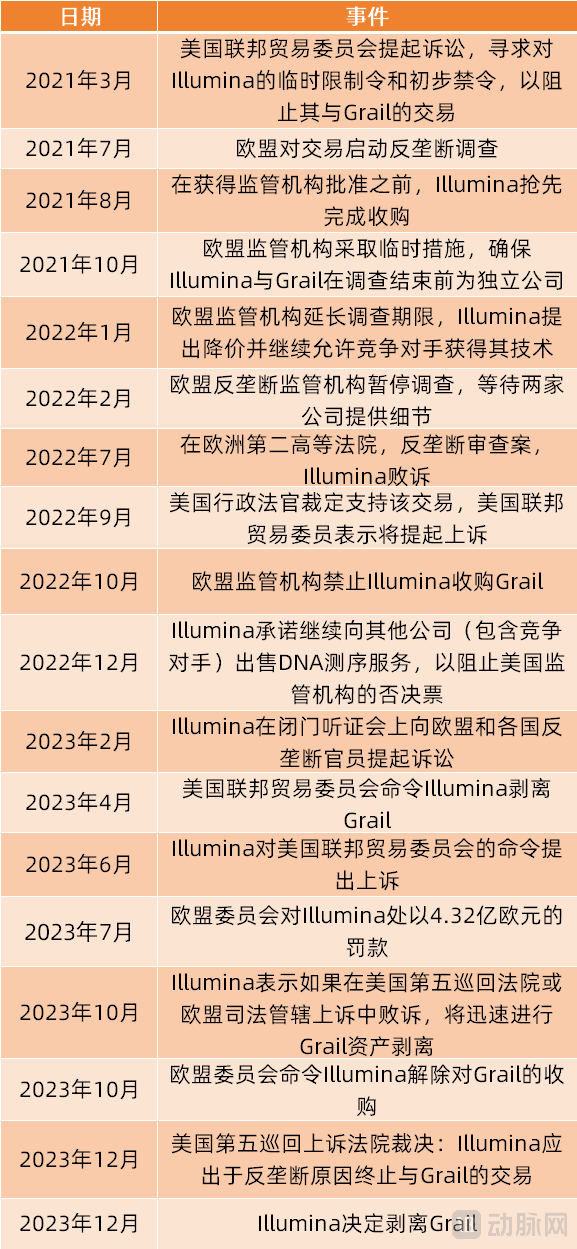
Thereafter, the transaction drew the attention of regulatory agencies in both the United States and the European Union. In March 2021, the U.S. Federal Trade Commission filed a lawsuit with the U.S. District Court for the District of Columbia, seeking to...IlluminaThe temporary restraining order and preliminary injunction to block its transaction with Grail, Inc.
The U.S. Federal Trade Commission (FTC) stated: "The merger of these two companies will harm the development of the early cancer screening market. After the merger,Illumina"May increase product prices by leveraging a monopoly position."
Subsequently, the EU regulatory authority launched an investigation into this merger and acquisition transaction in July 2021. Perhaps out of fear that delays could cause complications,Illumina announced the completion of the acquisition of GRAIL before obtaining regulatory approval.GRAIL'sAcquisitionIt also stated in the announcement: "There are no legal barriers to acquiring Grail in the United States. The company is addressing the administrative review by the U.S. Federal Trade Commission and will comply with the final outcome determined by the U.S. court. Meanwhile, Grail has no operations in the European Union, and the European Commission does not have jurisdiction to review this merger. The merger of the two companies does not exceed the EU’s merger regulations and does not violate any relevant laws and regulations of the EU member states."
Unfortunately, the regulatory authorities did not listen to these arguments. In the case of completing the acquisition in advance, the European Commission decided to take interim measures in October 2021 to ensure that the two companies remained independent until the investigation was concluded. In July 2022, Illumina lost the lawsuit, and the highest court in Europe agreed that the EU antitrust regulator had the authority to take appropriate actions to intervene in mergers and acquisitions.
On the other hand, Illumina won the case in the United States. In September 2022, Illumina prevailed in the antitrust lawsuit initiated by the U.S. Federal Trade Commission, with the administrative law judge ruling in its favor.Conducive toIllumina's ruling rejected the stance of the U.S. Federal Trade Commission. However, the U.S. Federal Trade Commission chose to appeal.
For Illumina, 2023 was a challenging year. In April 2023, the U.S. Federal Trade Commission once again rejected the acquisition deal between Illumina and Grail, overturning a previous judge's ruling that supported the transactions; Illumina appealed. In July 2023, the European Commission decided to fine Illumina €432 million as a warning for its extremely serious violation (acquiring Grail before approval by the competition regulatory authority); Illumina appealed.
By October 2023, Illumina had undergone personnel changes and shifted its strategy: If it loses either the appeal in the U.S. Fifth Circuit Court or the appeal under EU jurisdiction, the company will quickly proceed with the divestiture of Grail assets. On December 15, the U.S. Fifth Circuit Court of Appeals ruled that Illumina must terminate its transaction with Grail for antitrust reasons. On December 17, Illumina announced the divestiture of Grail.
It should be noted that Illumina's final "giving up the struggle" was related to investor intervention.
Since March 2023, billionaire investor Carl Icahn, in his capacity as a shareholder of Illumina, Inc., has written multiple open letters questioning the management's excessive cost for acquiring Grail and the resultant loss of nearly $50 billion in market value over three years. Carl Icahn proposed a leadership restructuring and successfully ousted Chairman John Thompson at the shareholders' meeting held on May 25. Subsequently, Illumina’s former CEO Francis deSouza resigned from his position and board seat in early June. Carl Icahn further advanced his proposal to restructure Illumina’s management. This leadership overhaul also led to a strategic shift in Illumina’s development, steering it away from its persistent pursuit of the Grail acquisition.
Interestingly, although leaving Illumina, Francis deSouza, who led the acquisition of GRAIL, still stated: "My belief in the potential of GRAIL's products and the benefits of merging with Illumina remains unshaken."
Before announcing the acquisition of GRAIL, Illumina's market value once reached as high as 75 billion US dollars. However, after being embroiled in the acquisition crisis, its market value continued to fall, reaching a low of over 10 billion US dollars.
As Illumina announced its intention to divest Grail, its market value began to recover continuously. Currently, its stock price has been rising for a month, with an increase of 35%, and its market value has reached 20.6 billion US dollars.
After the divestiture of Grail, the market has gained more confidence in Illumina, possibly due to the following reasons.
First, one of the reasons for the continuous decline in Illumina's stock price is the regulatory scrutiny of the acquisition and the uncertainty surrounding it. Now, after the divestiture of GRAIL, the market believes that the negative factors have been fully priced in, and Illumina no longer has any concerns. Moreover, investors thinkIllumina's stock price is low, and it is worth investing in after all the negative news has been released.
Second, Illumina's fundamentals remain solid. As the leader in the global gene sequencing industry, Illumina still holds an absolutely monopolistic market share. Previous data has shown that Illumina providesGene sequencers and配套试剂占据全球基因测序市场超8成的份额,处于绝对领先地位。
Third, the gene sequencing industry is still in its early stages of development, with low market penetration and significant growth potential. According to a report by Markets and Markets and VCBeat's "Global and Chinese Life Science Integrated Solutions Industry Report," the global market size for gene sequencers and consumables is expected to reach $24.58 billion by 2030.
Fourth,Illumina's current management team places greater emphasis on shareholder interests, gaining more recognition from investors. To date, multiple research institutions have upgraded Illumina’s rating to "Outperform." The new CEO of Illumina stated: "The company is in the process of divesting..."After GRAIL, it will focus on its core business and control R&D costs."
Fifth,Illumina has advantages in teams, products, marketing networks, brands, patents, etc., and will occupy a dominant position in market competition. For example, Illumina released in September 2022NovaSeq X Plus adopts breakthrough new technologies and can sequence more than 20,000 standard human whole genomes per year, with a sequencing throughput 2.5 times that of the previous generation sequencer.
Overall,After focusing on its core business, the market has high expectations for Illumina's performance.
Although the U.S. secondary market is starting to look optimisticIllumina, but from the perspective of global market competition, Illumina is facing more intense market competition than ever before. Especially Chinese companies represented by MGI Tech, which are aggressively capturing Illumina's market share.
From January to September 2023, MGI Tech's gene sequencing instrument business revenue increased by 31.47% year-on-year. Among them, revenue in China reached 1.083 billion yuan, a year-on-year increase of 21.19%; the Asia-Pacific region achieved revenue of 288 million yuan, a year-on-year increase of 34.12%; the Europe-Africa region achieved revenue of 256 million yuan, a year-on-year increase of 68.76%; and the Americas region achieved revenue of 101 million yuan, a year-on-year increase of 85.83%.
Illumina's core revenue in the first nine months of 2023 decreased by 4.19% year-over-year. Specifically, the revenue in Greater China in the third quarter dropped by 26% year-over-year.Other Asian countries and Africa decreased by 22%, Europe increased by 1%, and the Americas increased by 10%.
In addition, in the first half of 2023, there was a new development in MGI Tech's patent litigation case: the European Patent Office ruled that Illumina's EP3002289 patent is invalid. This result indicates that MGI Tech is no longer restricted by the EP3002289 patent in regions such as Turkey, Portugal, Austria, Romania, Finland, Greece, Hungary, Belgium, and Denmark, which is expected to accelerate the overseas expansion of MGI Tech’s products. This will bring new competitive pressure to Illumina.
In addition to MGI Tech, Chinese companies such as Qitan Tech, Axbio, and Geneseeq have launched innovative gene sequencing products, enriching the gene sequencing industry and intensifying competition within the sector.
For example, Qitan Tech released the mid-throughput nanopore sequencing platform QPursue in August 2023, which includes the portable nanopore sequencer QPursue-6k, the desktop nanopore gene sequencer QPursue-6khex, and the supporting chip QCell-6k. Among them, QPursue-6k supports single-chip sequencing with a designed throughput of 60Gb, while QPursue-6khex can flexibly choose 1 to 6 chips for sequencing, producing up to 360Gb of data, meeting the needs for higher throughput and more flexible sequencing.
Thanks to the significant increase in sequencing throughput, the QPursue mid-throughput nanopore sequencing platform has greatly expanded its range of applications. In fields such as microbiome research, Mendelian genetic disorders, cancer research, species identification, and biodiversity, it further empowers both scientific research and clinical work.
In May 2023, Anxuyuan released its fourth-generation nanopore gene sequencing platform, the AXP100-RS gene sequencer. The product integrates the core advantages of low cost, long read length, high accuracy, small size, and fast detection, making it a powerful "pentagon warrior." For instance, in terms of accuracy, by combining nanopore sequencing, circular correction sequencing, and electrical signal detection technologies, the AXP100-RS gene sequencer offers a read length of up to 100kb, with a single-chip throughput of 100Gb/run, and achieves 99% accuracy through self-correction via circular sequencing.
Overall, although Illumina has successfully extricated itself from the quagmire of mergers and acquisitions, it is very likely to fall into the "encirclement" of domestic companies.