Novartis Submits New NDA in China for CDK4/6 Inhibitor Kisqali as Adjuvant Therapy in HR+/HER2- Early Breast Cancer

Novartis
Drug Development and Manufacturing

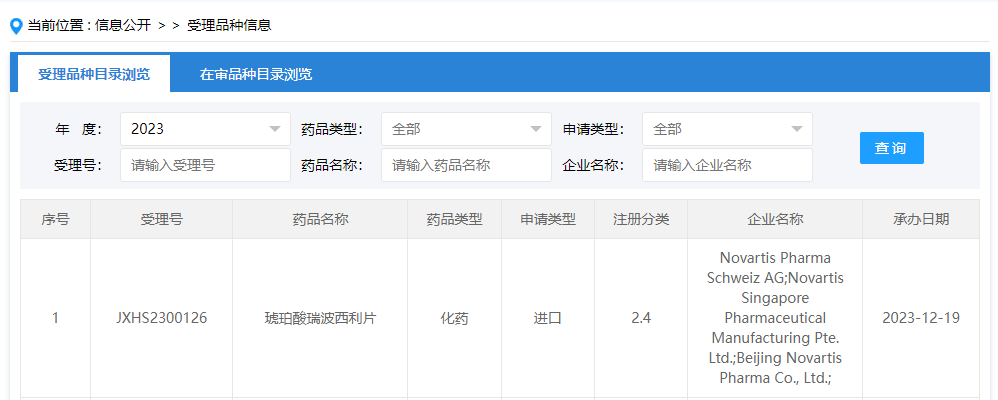
On December 19, the CDE website showed,NovartisCDK4/6 Inhibitor Ribociclib New Indication Marketing Application Accepted by NMPA. The indication for this submission is speculated to be: RibociclibCombination Endocrine Therapy (ET) for Adjuvant Treatment in HR+/HER2- Early Breast Cancer Patients.
Ribociclib also showed consistent data across all secondary efficacy endpoints, including distant disease-free survival (DDFS, with a 25.1% reduction in risk) and recurrence-free survival (RFS, with a 27.3% reduction in risk). The event rates in both treatment groups were less than 4% (3.3% in the ribociclib combination therapy group and 3.4% in the ET-only group), so the overall survival (OS) results will continue to evolve over the long term.
Copyright © 2023 PHARMCUBE. All Rights Reserved.
Welcome to forward, share, and reasonably cite. When citing, please clearly indicate the source of the article.For reprint, please leave a message or send a message to the WeChat Official Account backend, and indicate the name and ID of the official account.
Disclaimer: The information in this WeChat article is for general reference only and should not be directly used as decision-making content. PharmaCube assumes no responsibility for any loss incurred by any party due to the use of the content herein.