Specialty Formulations and Active Pharmaceutical Ingredients (API) Developer

The ophthalmic drug market has always been praised as a "golden track," and now a new market competitor has emerged in the细分领域 of retinal diseases. Recently, the Aflibercept Ophthalmic Injection developed by Qilu Pharmaceutical Co., Ltd. has been officially approved for marketing by the National Medical Products Administration (NMPA) for the treatment of adult patients with neovascular (wet) age-related macular degeneration (nAMD) and diabetic macular edema (DME). Also approved on the same day was Roche's ophthalmic injection bispecific antibody Faricimab, for the treatment of DME. From a global perspective, there are currently five anti-VEGF drugs for fundus diseases approved for marketing. Among them, the monoclonal antibody class includes Roche/Novartis's Ranibizumab and Novartis's Brolucizumab; the fusion protein class includes Bayer/Regeneron's Aflibercept and Kanghong Pharmaceutical's Conbercept; the dual-target drug is Roche's Faricimab. Previously, three drugs—ranibizumab, aflibercept, and conbercept—have been approved for marketing in China. Among them, Novartis' ranibizumab was the earliest to be marketed, receiving approval in China in January 2012. Following this was Kanghong Pharmaceutical's conbercept, which was launched in 2014. Bayer’s aflibercept, which was approved in the United States in 2011, did not officially enter China until 2018. The market generally expects that with the approval and launch of Qilu Pharmaceutical's Aflibercept biosimilar and Roche's new drug Faricimab in China, the landscape of China's VEGF drug market will undergo a new round of reshuffling. Biological Drug Patent ExpirationChinese-produced biosimilars enter the competitive market
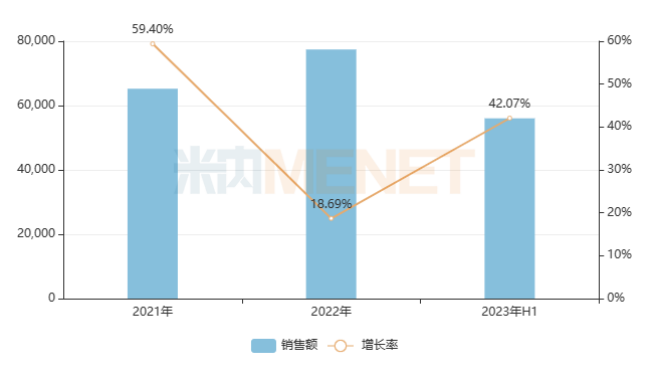
In recent years, due to factors such as the global aging process, the increasing incidence of diabetes, and prolonged use of electronic products, the number of patients with eye diseases worldwide will continue to rise, and the market demand for ophthalmic drugs is also expanding. Data from Menet shows that the ophthalmic drug market exceeded 10 billion yuan in 2019, with sales approaching 12 billion yuan in 2021. Some data predicts that the overall market size of ophthalmic drugs could reach tens of billions in the future. China has a huge demand for the treatment of retinal diseases such as neovascular age-related macular degeneration (nAMD) and diabetic macular edema (DME), with a heavy disease burden. The high expression of vascular endothelial growth factor (VEGF) is closely related to the occurrence and progression of these neovascular retinal diseases, making anti-VEGF drugs the first-line treatment choice for nAMD and DME. Aflibercept Intravitreal Injection Solution is a VEGFR-Fc fusion protein jointly developed by Bayer and Regeneron. It can simultaneously block VEGF-A, VEGF-B, and PIGF, with a broader range of action targets; it can bind VEGF dimers more effectively; meanwhile, it has a longer duration of action and provides more sustained efficacy. With the support of medical insurance, the sales of the original research aflibercept ophthalmic injection solution in Chinese public medical institutions have rapidly increased. Data from Menet shows that the sales of aflibercept ophthalmic injection solution reached 770 million yuan in 2022, with a growth rate of 42.07% in the first half of 2023, and the sales amounted to 560 million yuan, making it one of the top three products in ophthalmic drugs.
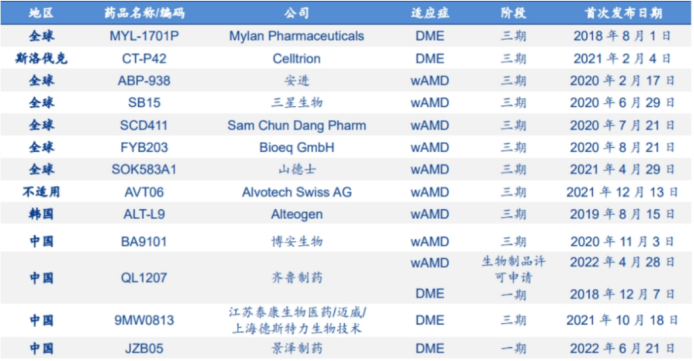
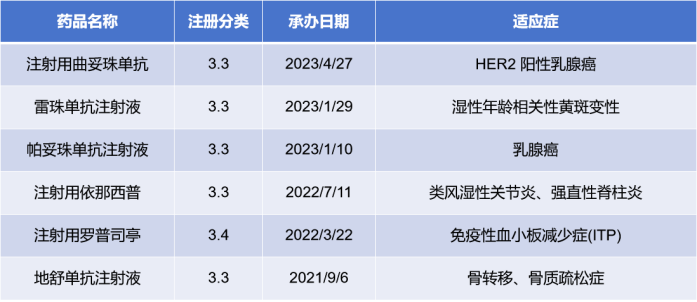
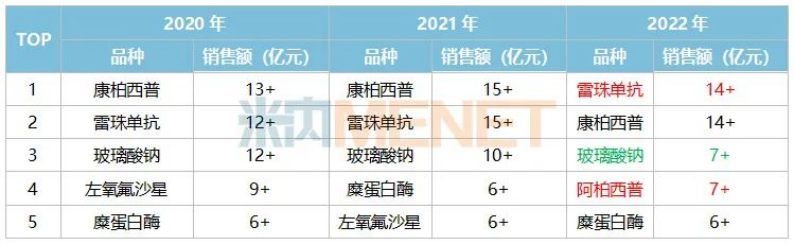
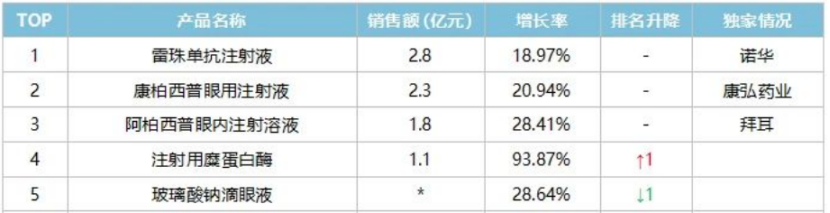
Sales of Intravitreal Aflibercept Injection Solution (Unit: Ten Thousand Yuan) Aflibercept is still in the rapid growth phase in the Chinese market. Recently, Qilu Pharmaceutical Co., Ltd. has become the first domestically produced company to receive approval for Aflibercept Intravitreal Injection Solution, and currently, no other domestic pharmaceutical companies have submitted an application for the drug's market launch. Industry perspectives indicate that, given similar quality, efficacy, and safety, the channel and price advantages of domestically produced drugs may enable Qilu Pharmaceutical's aflibercept biosimilar to compete head-to-head with Bayer's original aflibercept biologic, capturing a portion of the market share in the competition. As more and more original biologic drugs' patents expire, driven by factors such as clinical demand and medical insurance cost control, the development of biosimilars has become a global hotspot. In the field of ophthalmology, with the successive expiration of the patents for Aflibercept and Ranibizumab, the research and development of biosimilars in and outside China have entered a competitive phase. In the development of aflibercept biosimilars, there are nine candidates in clinical stages overseas and four in clinical or later stages in China. Global Competition Landscape for Aflibercept Biosimilars (Anxin Securities) In terms of ranibizumab biosimilars, the FDA approved SB11, a ranibizumab biosimilar jointly developed by Biogen and Samsung Bioepis, in September 2021. In January this year, the marketing application for QL1205, a ranibizumab biosimilar submitted by Qilu Pharmaceutical Co., Ltd., was accepted by the Center for Drug Evaluation of the National Medical Products Administration. In China, Qilu Pharmaceutical is undoubtedly a key player in niche markets. After Qilu Pharmaceutical obtained the first Chinese bevacizumab biosimilar in December 2019, it seemed to have mastered the "通关" code for biosimilars and continued to develop new products. In addition to the recently approved aflibercept biosimilar, Qilu Pharmaceutical has six other biosimilars awaiting approval for market release. Among them, denosumab injection and trastuzumab for injection are striving to become the third domestically produced versions in China. The other five biosimilars—romiplostim for injection, etanercept for injection, pertuzumab injection, and ranibizumab injection—are all first or exclusive filings by Qilu Pharmaceutical, with the potential to be the first generics on the market. Qilu Pharmaceutical's Pending Biosimilar Drugs Ophthalmology Golden TrackThe Growth of New Biologics is Rapid Anti-VEGF drugs are the core driver of ophthalmic drug sales. In addition to biosimilars competing for the original drug market, the growth of novel biologics is even more rapid. In the global market, older anti-VEGF drugs (aflibercept, ranibizumab) are being impacted by a new generation of innovative drugs (bispecific antibodies, etc.). Roche's faricimab has maintained rapid growth since its launch, and its global sales share quickly reached 5% in 2022. On December 18, the NMPA announced that Roche's submission of the Faricimab injection has been officially approved. Previously, on October 28, Faricimab was approved by the U.S. FDA for its third indication to treat retinal vein occlusion (RVO). To date, Faricimab has been approved for marketing in dozens of countries and regions worldwide for the treatment of nAMD, DME, and RVO patients. In addition to the anti-VEGF ophthalmic drugs already marketed in China, on August 2 this year, the CDE website showed that Novartis' Brolucizumab (an upgraded version of Ranibizumab) submitted an application for marketing authorization in China. Brolucizumab is a single-chain antibody against VEGF-A, which was first approved for marketing in the United States in October 2019 for the treatment of wAMD. In March 2022, Brolucizumab expanded its indications to include DME. The advantage of Brolucizumab lies in its injection frequency of once every three months, with a longer dosing interval than Ranibizumab (once a month) and Aflibercept (once every two months). In addition, there are some drugs currently in clinical research, among which IBI302 from Innovent Biologics and RC28-E from RemeGen are worth noting, as they are the fastest-progressing dual-target anti-VEGF products in China. In the field of ophthalmology, Innovent Biologics has a relatively rich pipeline of dual-target candidate drugs, including anti-VEGF and anti-complement dual-target drugs (IBI302), anti-VEGF-A/Ang-2 bispecific antibodies (IBI324), and bispecific fusion proteins targeting VEGF-A and VEGF-C (IBI333). Recently, Innovent Biologics announced Phase 2 clinical data for IBI302 in the treatment of nAMD, as well as Phase 1 clinical data for IBI324 in the treatment of DME, both showing positive efficacy and safety results. RC28-E is a globally pioneering VEGF/FGF dual-target fusion protein drug developed by Rongchang Bio for the treatment of ophthalmic diseases. It can simultaneously block angiogenic factors in the VEGF and FGF families, thereby inhibiting abnormal blood vessel growth more effectively. Currently, RC28-E is undergoing Phase II/III clinical trials for the treatment of wet age-related macular degeneration (wAMD) and diabetic macular edema (DME), while its treatment for diabetic retinopathy (DR) is in Phase II. The competition in the pharmaceutical field is fierce. "Pursued by rivals ahead and followers behind" has made the race for the top position in ophthalmic drugs increasingly intense. According to data from Menet, currently, Ranibizumab, Conbercept, and Aflibercept are the "three giants" of VEGF inhibitors used in China for treating fundus diseases. In the past three years, the competition between Ranibizumab and Conbercept has become increasingly intense, while Aflibercept has shown extremely strong growth. Top 5 Ophthalmic Drug Varieties and Sales in the Past Three Years In the first half of this year, the "Big Three" — Ranibizumab Injection, Conbercept Ophthalmic Injection, and Aflibercept Intravitreal Injection Solution — continued to rank in the top three positions, with a combined market share exceeding 40% in the first half of the year. Top 5 Ophthalmic Drugs in Public Hospitals of Key Provinces and Cities in China (H1 2023) Conbercept is the performance pillar of Kanghong Pharmaceutical. Its approval and launch in the Chinese market not only filled the gap for domestically produced drugs for wet age-related macular degeneration but also broke the monopoly of foreign pharmaceutical giants like Novartis in the Chinese market. In 2017, both Conbercept and Ranibizumab were included in the medical insurance, and the sales of Ranibizumab exceeded 1 billion yuan for the first time in 2018. In 2020 and 2021, the sales of Conbercept surpassed Ranibizumab, which became a classic case of Chinese-produced VEGF innovative drugs achieving market "overtaking" and clinical substitution. As Bayer's Aflibercept entered the medical insurance directory in 2019, the competition in ophthalmic VEGF drugs is intensifying. In terms of pricing, according to a research report by Tebon Securities, the 2023 medical insurance payment prices for Conbercept, Ranibizumab, and Aflibercept are 3,452.8 yuan/vial, 3,950 yuan/vial, and 4,100 yuan/vial, respectively. The first two have four approved indications each, while Aflibercept has two. Nowadays, the biosimilar of Aflibercept and the new biologic Faricimab have quietly entered the stage, while the biosimilar of Ranibizumab and Brolucizumab are waiting in line. After these products hit the market, they will undoubtedly impact the anti-VEGF ophthalmic drug market in China. At that time, which drug will stand out in the fierce competition remains to be seen. The New Media Center of *Pharmaceutical Economy Newspaper* will continue to monitor the situation. Editor: Zheng MiaoHighest Price Difference of 32 Times, Why Does Chinese Medicine "Go Overseas" with High Pricing? Surrounded by Competitors, What Are the Chances of Bio-Thera Solutions, Junshi Biosciences, and Hutchmed in the U.S. Market? Blockbuster Products Worth Over a Billion Are About to Emerge! Can Shiyao, Simcere and Others Shake Sanofi's Dominant Position? Nobel Prize Illuminates Reality: CRISPR Gene Editing Therapy Receives FDA Approval! Market Potential Worth Hundreds of Billions of Dollars, Has Capital Already Begun to Move?
www.yyjjb.com.cn
Insight into Industry Trends

Long press to followPharmaceutical Economy News
"Pharmaceutical Economy News"
Academic Official Account
Focus on the Frontiers of Oncology Academia

Long press to followImmunity Time"Pharmaceutical Economy Newspaper"
Terminal Official Account
Record Major Events in the Pharmaceutical IndustryPress and hold to follow21st Century Pharmacy