

GSK Inks Over $3.2 Billion in Two Months with Hansoh Pharma for B7-H3/B7-H4 Targeted ADCs
Hansoh Pharma
Pharmaceutical Research, Production, and Sales

GSK China
Pharmaceutical Manufacturer
Welcome to follow Asymchem Pharma News
On December 20, 2023, Hansoh Pharma and GSK jointly announced that they had reached an exclusive licensing agreement for HS-20093, an ADC new drug independently developed by Hansoh Pharma. Hansoh Pharma will grant GSK the exclusive global rights (excluding mainland China, Hong Kong, Macao, and Taiwan) to develop, manufacture, and commercialize HS-20093. According to the terms of the agreement,Hansoh Pharma will receive an upfront payment of $185 million and is eligible for up to $1.525 billion in success-based milestone payments.After the commercialization of the product, GSK China will also pay tiered royalties on global net sales outside mainland China, Hong Kong, Macao, and Taiwan.
And just two months ago, Hansoh Pharma had reached an exclusive licensing agreement with GSK China for another ADC new drug, HS-20089; according to the terms of the agreement, Hansoh Pharma...Will receive an upfront payment of $85 million and is eligible to receive up to $1.485 billion in success-based milestone payments.; After the commercialization of the product, GSK China will also pay tiered royalties on global net sales outside of mainland China, Hong Kong, Macao, and Taiwan.
Two New ADC DrugsTransaction Amount Exceeds 3.2 Billion, Targets Focused on B7-H3/H4 Family, What is the charm of this emerging target?
I. Regarding B7-H3/H4
The B7 family is a group of immune regulatory ligands that modulate T-cell activation and differentiation, expressed in acquired immune cells, innate immune cells, and various cancer tissues. More than 10 B7 protein molecules have been discovered so far, including B7-H1 (PD-L1), B7-H3, and B7-H4.
B7-H1, also known as PD-L1, the PD-1/L1 pathway has played a significant role in cancer immunotherapy and has become a cornerstone drug class.
B7-H3 was initially identified as a co-stimulatory receptor that promotes the proliferation of CD4+ and CD8+ T cells, induces cytotoxic T cells, and selectively stimulates interferon γ (IFN-γ) production in the context of T-cell receptor signaling, thereby exerting immunostimulatory functions. However, studies have shown that B7-H3 primarily acts as a co-inhibitory molecule in immune cells, helping tumor cells evade immune surveillance; therefore, B7-H3 overexpression is associated with poor prognosis in cancer patients as well as tumor invasion and metastasis.
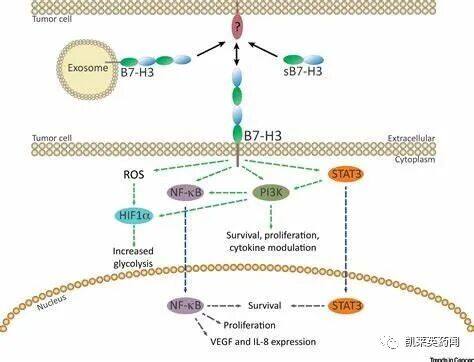
B7-H4 is a negative co-stimulatory molecule that is abnormally highly expressed on various tumor cells, antigen-presenting cells, and tumor-associated macrophages, and participates in tumor immune escape by inhibiting T cell-mediated immune responses. In recent years, studies on the mechanism of B7-H4 have confirmed that B7-H4 can enhance the proliferation, invasion, metastasis, and anti-apoptotic capabilities of tumor cells by participating in multiple cell signal transduction pathways, thereby promoting tumor progression.
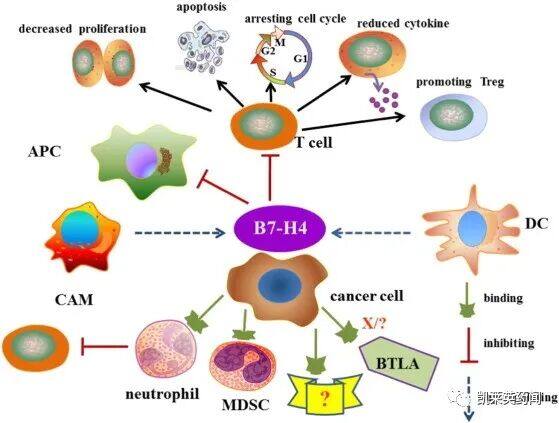
Similar to PD-L1, B7-H3 and B7-H4 are widely expressed in a variety of human malignant tumors. In addition to diseases with significant market potential such as breast cancer, liver cancer, and lung cancer, they are also expressed in endometrial cancer, cholangiocarcinoma, colon cancer, and ovarian cancer, making them emerging targets for immunotherapy.
According to incomplete statistics,More than 20 B7-H3-targeted ADC drugs have entered the clinical stage globally.In China, companies such as Hansoh Pharma, Daiichi Sankyo, and Mabwell are currently conducting Phase II clinical trials. In addition, other companies in the field include Bio-Thera Solutions.
B7-H3 Targeted ADC Pipeline
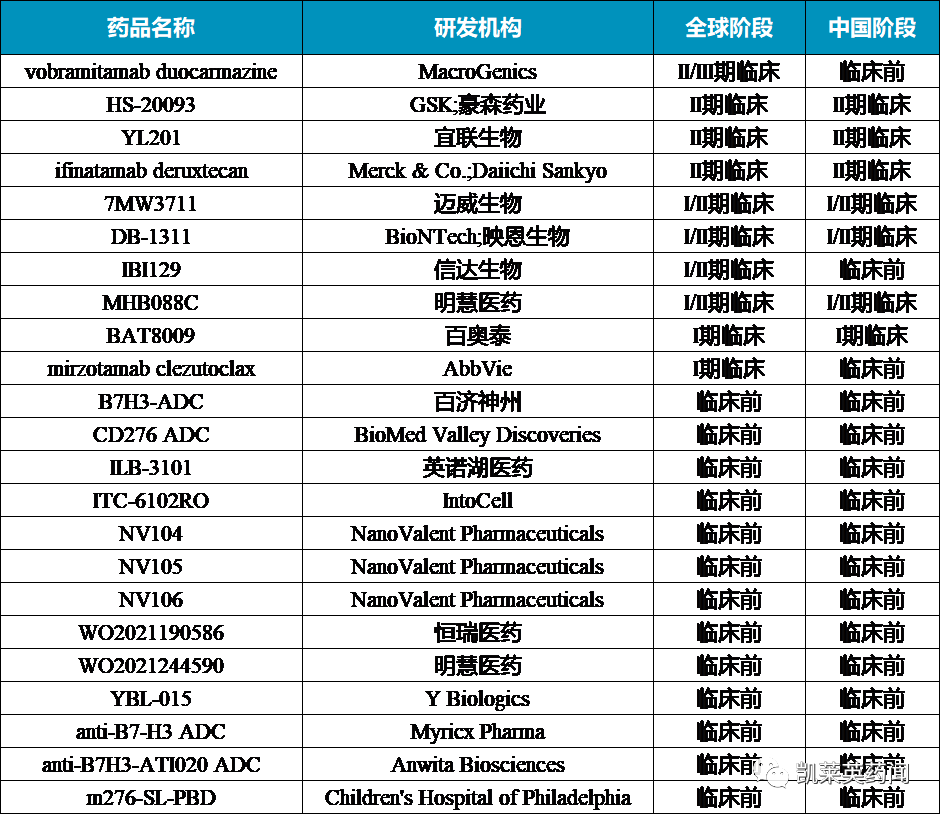
In addition, globally, there are relatively fewer drugs targeting B7-H4 in development compared to B7-H3. In China, the B7-H4 ADC drugs that have entered the clinical stage are Hansoh Pharma's HS-20089 and AstraZeneca's AZD8205.
B7-H4 Targeted ADC Pipeline
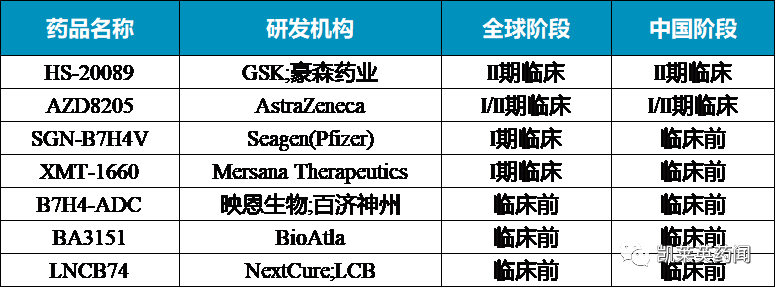
Key Drug Introduction
1、HS-20093
HS-20093, composed of a fully humanized B7-H3 monoclonal antibody covalently linked to a topoisomerase inhibitor (TOPOi) payload, is currently undergoing multiple Phase I and Phase II clinical studies in China for the treatment of lung cancer, sarcoma, head and neck cancer, and other solid tumors.
According to the Phase I study data in advanced solid tumors presented at the 2023 ASCO, the results showed: an objective response rate (ORR) of 30.0%, a disease control rate of 86.0%, and a median progression-free survival (mPFS) of 5.4 months. In subjects with small cell lung cancer, the ORR was 63.6%, with all tumor responses occurring at the first efficacy assessment, an mPFS of 4.7 months, and a 3-month PFS rate of 72.7%. Three subjects experienced dose-limiting toxicity, and the maximum tolerated dose (MTD) was 12.0 mg/kg Q3W.
2、HS-20089
HS-20089 utilizes a clinically validated ADC technology, namely the topoisomerase inhibitor (TOPOi) payload, and is currently undergoing Phase I clinical trials in China for the treatment of gynecological cancers.
According to the first-in-human/Phase I trial data presented at the 2023 ESMO, the results showed that among 33 evaluable patients, 8 achieved partial response (PR), with a response rate (RR) of 24.2%, and a disease control rate (DCR) of 63.6%. Among 16 patients with triple-negative breast cancer (TNBC), 6 achieved PR, with a response rate of 37.5%. At potentially targeted therapeutic doses (4.8 and 5.8 mg/kg), 5 out of 12 patients in the TNBC group achieved PR, with a response rate of 41.7%.
In terms of safety, three dose-limiting toxicities (DLTs, both at 7.2 mg/kg) were observed in two patients. The most common (≥20%) treatment-related adverse events (TEAEs) were leukopenia, neutropenia, nausea, anemia, thrombocytopenia, vomiting, fatigue, elevated alanine aminotransferase, anorexia, elevated aspartate aminotransferase, and hyponatremia. No interstitial lung disease or infusion reactions were reported.
3、Vobramitamab duocarmazine
Vobramitamab duocarmazine (MGC-018) is an ADC drug independently developed by MacroGenics. It consists of a humanized B7-H3 monoclonal antibody, a cleavable linker, and the cytotoxic agent Duocarmycin (DUBA). The drug can disrupt DNA in both dividing and non-dividing cells, leading to cell death, and is intended for the treatment of B7-H3 positive solid tumors.
According to previously published data, in the Phase I/II dose-escalation and cohort-expansion study: In the dose-escalation portion, 5 out of 9 patients with prostate cancer experienced a ≥50% decrease in prostate-specific antigen (PSA) levels during treatment, and 2 patients had a reduction in target lesions (1 patient with a 29% reduction). The recommended Phase II dose (RP2D) was 3 mg/kg, IV, Q3W. In the cohort-expansion portion, 4 out of 16 evaluable patients (25%) had a reduction of more than 30% in target lesions (2 confirmed PRs, 2 unconfirmed PRs), and 21 out of 39 evaluable patients (53.8%) had a PSA decrease of more than 50%.
Among 83 patients (96.5%), at least one treatment-related adverse event occurred. The most common TRAEs (incidence rate ≥20%) were fatigue, neutropenia, palmar-plantar erythrodysesthesia syndrome, pleural effusion, nausea, and asthenia. No febrile neutropenia was reported. Safety was manageable.
4、AZD8205
AZD8205 is an ADC drug targeting B7-H4 developed by AstraZeneca using proprietary Linker technology. It connects the B7-H4 monoclonal antibody INT016 with the novel topoisomerase 1 inhibitor (TOP1i) AZ'0132 via a cleavable Linker. In a triple-negative breast cancer model in mice, a single intravenous dose of AZD8205 achieved a 69% overall response rate, with 36% reaching complete response [2]. In tumor models with high B7-H4 expression and DNA damage repair deficiencies, AZD8205 demonstrated even stronger anti-tumor activity.
According to data presented at the 2023 AACR, the combination of AZD8205 and AZD5305 demonstrated higher anti-tumor activity than monotherapy in PARP inhibitor-resistant or low B7-H4 expressing PDX models; furthermore, the combination of AZD8205 with an anti-PD-L1 antibody also enhanced anti-tumor efficacy.
2. Recent Transactions of Hansoh Pharma
Hansoh Pharma is a leading innovation-driven pharmaceutical enterprise in China, committed to improving human health and quality of life through continuous innovation. The company focuses on key areas such as anti-tumor, anti-infective, central nervous system diseases, metabolic diseases, and autoimmune diseases.
Development History of Hansoh Pharma
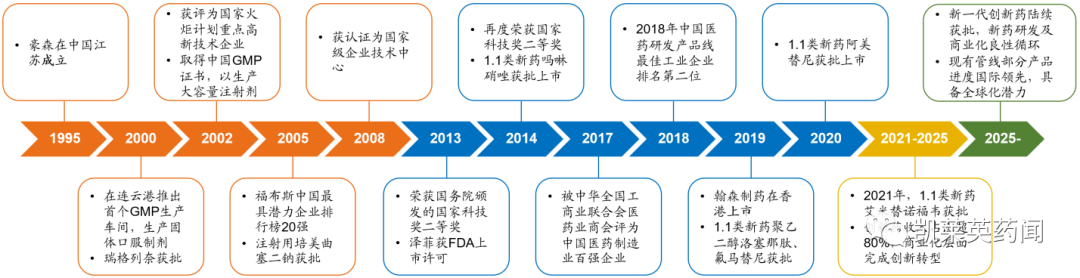
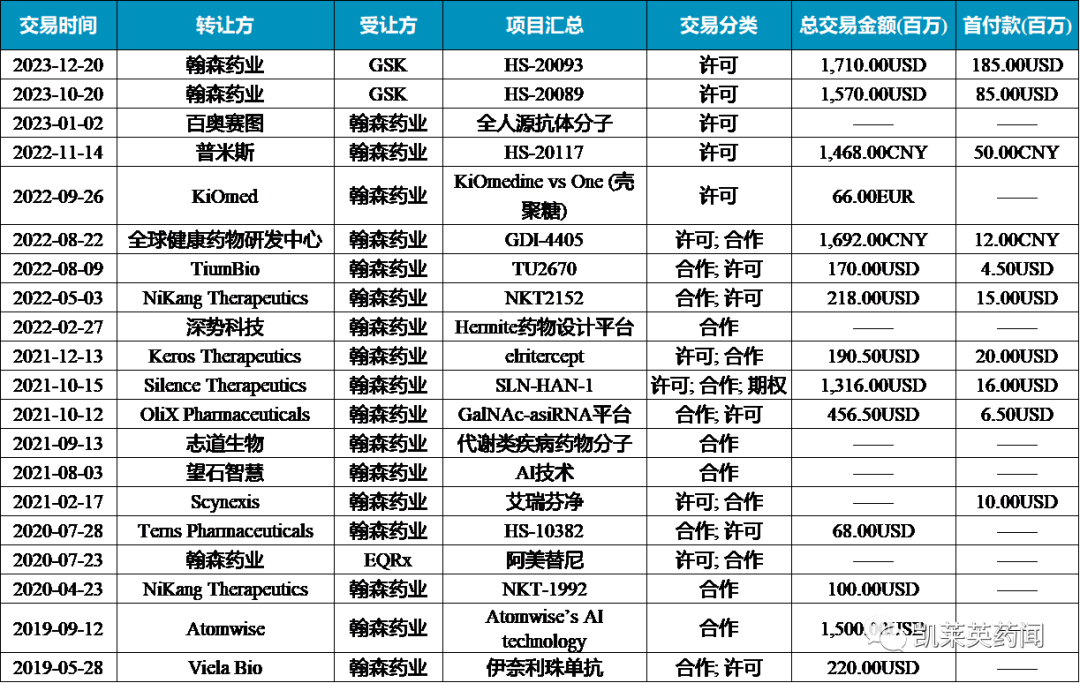
Under the globalization strategic layout, Hansoh Pharma accelerates international BD cooperation, actively explores new targets, expands new directions, introduces new technologies, and simultaneously strives to promote its self-developed achievements to the world.
In terms of License-out, in 2022, Hansoh Pharma's marketing authorization application for Aumolertinib was accepted by the UK MHRA and the European EMA. It is expected to become the first third-generation EGFR-TKI successfully exported from China in its category, steadily advancing to benefit patients worldwide.
In terms of License-in, Hansoh Pharma has reached nearly 20 BD projects in recent years. By introducing differentiated high-value mature innovative products, highly differentiated early-stage projects, and strengthening technology platform cooperation, the company has significantly enhanced its pipeline coverage, reserving "high-value growth space" for its "innovation + internationalization" strategy.
3. Strategic Adjustment of GSK China
Recently, according to industry media reports, GSK China is undergoing a significant organizational restructuring, reorganizing its original operations. Starting from January 1, 2024, three core business departments will be established: specialty medicines, vaccines, and respiratory. The company stated that after the adjustment, it will reshape the product line operations to achieve a more focused and efficient organizational structure; through this adjustment, it aims to build a high-performance, highly executable, and highly productive specialty medicines team to achieve rapid and sustained growth in the specialty medicines field.
In addition to ADC, the connection between Hansoh Pharma and GSK also includes a novel triterpenoid antifungal agent—Ibrexafungerp. This drug was initially developed by the U.S.-based SCYNEXIS. In February 2021, Hansoh Pharma signed a licensing agreement with SCYNEXIS to take charge of the development, regulatory approval, and commercialization of Ibrexafungerp in China (including Hong Kong, Macao, and Taiwan). In March 2023, GSK reached an exclusive licensing agreement with SCYNEXIS to acquire the development and commercial rights for Ibrexafungerp in the U.S., Europe, Japan, and other regions for $593 million. In July 2023, the New Drug Application (NDA) for Ibrexafungerp (Ibrexafungerp Citrate) was accepted by the National Medical Products Administration (NMPA), intended for the treatment of vulvovaginal candidiasis (VVC) in adult and post-menarche females.
How to better manage and develop the Chinese market is a brand-new challenge for all multinational pharmaceutical companies. Rejoining hands with Hansoh Pharma, whose "taste" aligns well, within two months, can this collaboration help GSK China "break into the top ten multinational pharmaceutical companies in China" in 2023? Stay tuned!
References
1. Company Official Website
2. Pacific Securities
3. bioSeedin, PharmCube, Domane Pharma, Tongxieyi


"Views"Click once