Linghuier Technologies Files IPO Prospectus: Pioneering Closed-Loop Mental Health Solutions Through Music-Synchronized Brain-Computer Interfaces

Linghuier
Developer of Wearable Smart Products and Solutions
"Report on the Development of Mental Health of Chinese Citizens (2021-2022)" identifies adolescents as a high-risk group for depression, with a detection rate of depression risk as high as 24.1% in the 18-24 age group and 12.3% in the 25-34 age group. The anxiety risk rate shows a similar trend. In today's fast-paced, high-pressure society, mental health issues are becoming increasingly common and are receiving growing attention.
"Focused on Music-Coordinated Electrical Stimulation, Adding More Melody and Less Anxiety to Life."
Suzhou Linghuier Technology Co., Ltd. (hereinafter referred to as "Linghuier Technology") is a scientific and technological innovation enterprise that researches and develops a series of music-coordinated electrical stimulation products and provides psychological detection and intervention solutions.
The main businesses of Linghuier Technology include the research, development, sales, and technical services of key components in the brain-computer interface field, high-precision EEG modules and related application systems, brain-computer music interface systems, psychological detection and intervention systems, as well as non-invasive electrical stimulation modules.The company provides a new generation of wearable smart products and solutions based on brain-computer interface technology for fields such as educational technology, music therapy, digital healthcare, and overall wellness.
Linghuier Technology was derived and established based on years of technical accumulation in semiconductors and integrated circuit design by its core team, and has received incubation support from the Brain-Machine Fusion Intelligence Technology Research Institute of the Jiangsu Industrial Technology Research Institute. The team focuses on researching and developing a series of products that combine music with electrical stimulation, providing a complete closed-loop solution from psychological detection to intervention.
The core founder of Linghuier Technology is a senior music enthusiast who, while delving into scientific research, also hopes to combine science and art to create innovative products. During their research, the core team discovered that music can serve as an effective, non-invasive, and everyday psychological intervention therapy to help improve people's mental health. Combined with the technical team's previous expertise in non-invasive brain-computer interfaces and transcranial electrical stimulation chips, the "Music-Coordinated Electrical Stimulation Closed-Loop Brain-Computer Interface" project was developed.
The technical team of Linghuier Technology comes from different academic fields, covering semiconductor science, integrated circuit design, psychology, cognitive neuroscience, and music art.This team provides comprehensive, interdisciplinary scientific research support for the music-coordinated electrical stimulation product series and brain-computer interface business. The core members of the team have rich experience and professional knowledge in integrated circuit design, brain-computer interface system development, hardware module R&D, and music production. They work together to promote the development and product enhancement of Linghuier Technology, providing users with innovative psychological intervention solutions.
The treatment of psychological problems such as depression and anxiety first requires a clear understanding of the patient's individual condition in order to "address the specific issue," which necessitates the assessment of their psychological state.
So far, the longest-standing methods for detecting psychological states have been subjective assessments based on interviews and scales. However, both methods have flaws due to their subjective nature. The standardization of interview methods is difficult to achieve, and this approach requires a high level of personal competence from the interviewer. While scale-based assessments are low-cost and require minimal equipment, patients' responses are highly subjective and influenced by their current mood and the tendency to conform to questionnaire expectations.
Facial expression recognition-based detection is an emerging objective detection method, but it is easily affected by environmental factors such as noise and lighting. Overall, current psychological assessment methods have problems such as cumbersome evaluation procedures, lack of standardized criteria, and low accuracy and user-friendliness.Linghuier Technology has developed an AI-assisted evaluation method that combines subjective assessment with objective testing, integrating multi-modal data to enhance evaluation accuracy and speed.
Specifically, the assessment module developed by Linghuier Technology includes three sub-modules.
Electrophysiological Signal Evaluation ModuleAble to collect users' EEG, ECG, GSR and other data, and use the company's specific algorithms for data recognition and classification to determine the user's current state;Brain Function Imaging ModuleBy using near-infrared brain functional imaging technology, the blood oxygen saturation of the user's current brain is detected, thereby identifying the current level of activity in the user's brain regions;Psychological Assessment ModuleIntegrating traditional psychological testing paradigms and psychological assessment scales into software to comprehensively evaluate the user's current individual state.
In terms of regulation, traditional neuromodulation technologies often use fixed parameters set externally, lacking the ability to dynamically adjust stimulation parameters based on an individual's current physiological state through closed-loop control. As a result, the effectiveness of regulation is limited and may even lead to serious side effects. To address this challenge, Linghuier Technology combines assessment testing with neuromodulation, creating a closed-loop system that spans from detection to intervention.
The personalized intervention methods of Linghuier Technology mainly include transcranial electrical stimulation and music intervention.
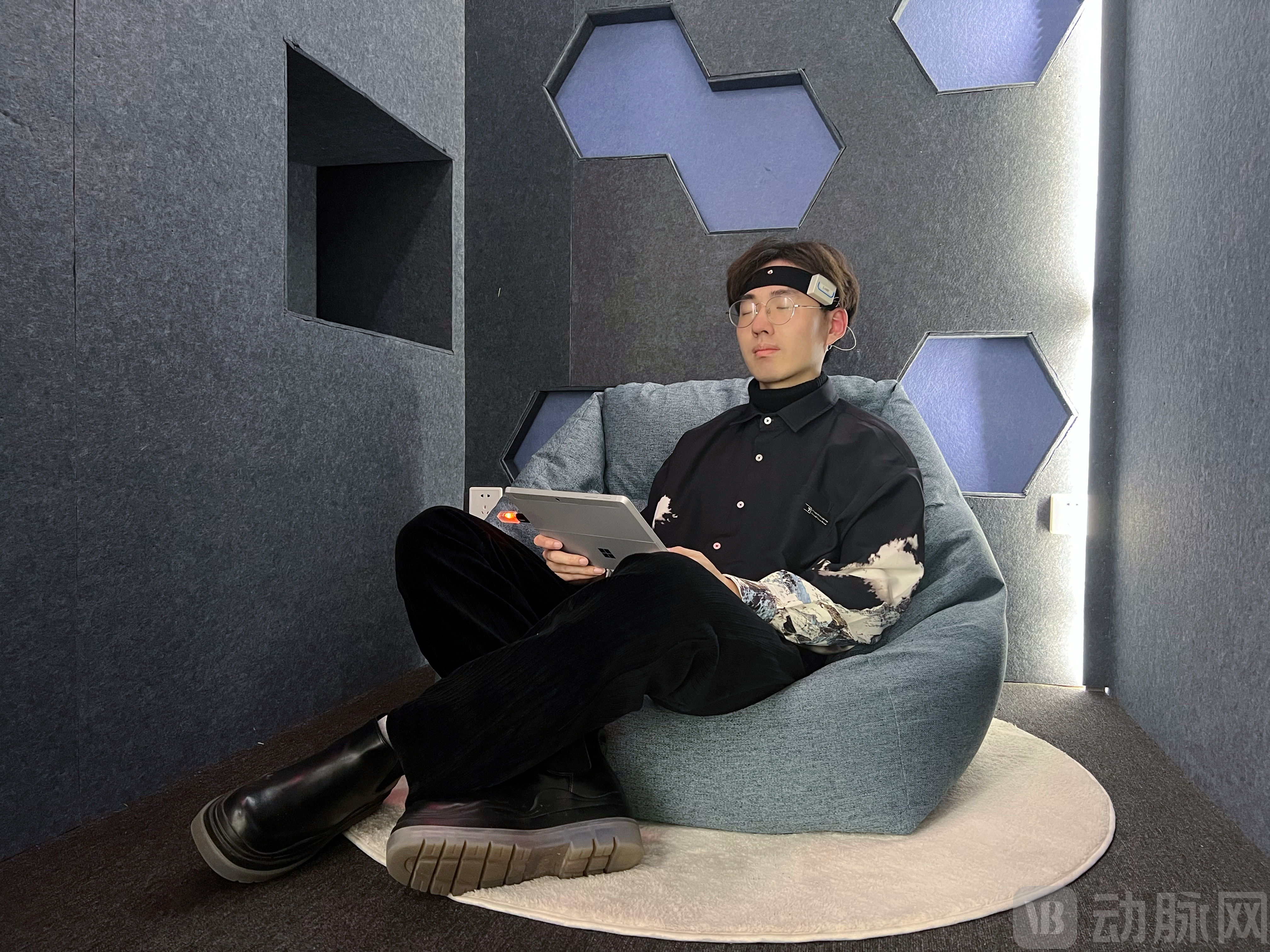
Music Meditation System Product Image
Among them,Transcranial Electrical Stimulation ModuleBy applying weak electrical currents to specific brain regions on the scalp, the neural activity and/or excitability of the cerebral cortex can be modulated. Notably, Linghuier Technology has developed its own electrical stimulation chip, which can be applied in the research, development, and production of transcranial electrical stimulation devices. This allows the company’s products to be independently controlled, ensuring that core technologies are firmly held in their own hands.
Music Intervention ModuleIt is based on traditional music playback devices with an added functional music library, providing personalized functional music interventions according to users' different states and needs. Currently, Linghuier Technology's functional music library has collected 6,000 music emotion questionnaires for 200 musical pieces and, based on the findings from the survey, independently creates functional music. The company aims to produce 50 original musical works within the year.
Specifically, at the business level, Linghuier Technology can provide an integrated solution for EEG and psychological assessment. Currently, there are two core products under this business segment.
Interactive Psychological Cockpit SystemEquipped with an immersive intelligent training cockpit, as well as a matching computer host and monitor. The system offers diverse and personalized cognitive ability training tasks, and is capable of real-time monitoring of users' physiological data, tracking individual training progress, and adjusting the difficulty and methods of training based on changes in users' physiological data to achieve real-time biofeedback. Additionally, the system features data analysis and visualization capabilities, allowing users to view personal training reports and analyses.
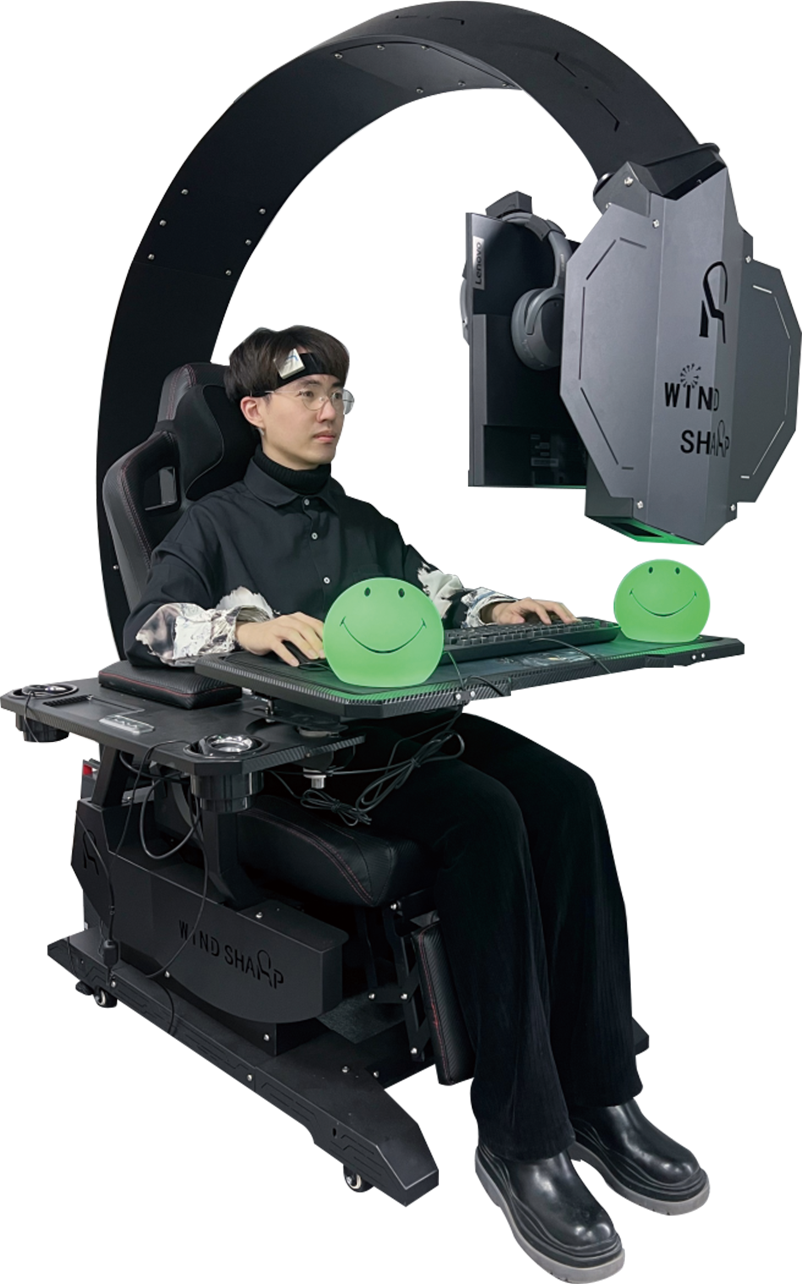
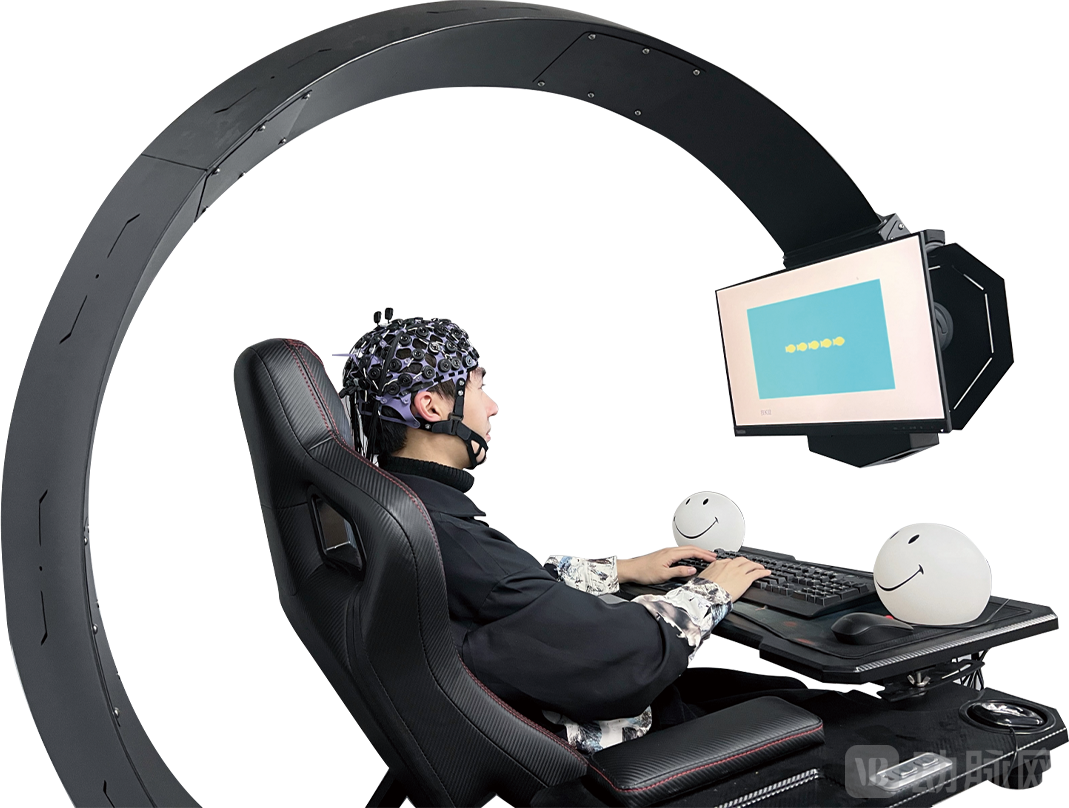
Interactive Decompression Cabin System Product Image
Artificial Intelligence Multimodal Comprehensive TesterEquipped with EEG acquisition module, ECG acquisition module, GSR acquisition module, and transcranial electrical stimulation module, it can collect the user's current physiological data, assess their current state, and then apply personalized transcranial electrical stimulation intervention accordingly.
During the process of conducting in-depth research at some Class III Grade A hospitals, Linghuier Technology discovered that patients undergoing neuromodulation treatment often need to travel long distances to receive treatment at hospitals. "In this lengthy process of intervention and management, the time, energy, and transportation costs spent by patients are relatively high. Therefore, we wanted to develop a portable, home-use electrical stimulation device for neuromodulation to help patients solve this problem," introduced Zhong Hui, the Technical Director, to VCBeat.
Currently, the company is implementing this idea into the research and development of consumer-grade smart wearable products and professional-grade electrical stimulation series. It has completed the development of prototype devices such as EEG smart music headphones, music meditation systems, electrical stimulation music headphones, and instrument-grade electrical stimulation equipment. Taking the EEG smart music headphones as an example, the device can provide users with intelligent recommendations for functional music tailored to sleep aid/relaxation scenarios through EEG data collection and analysis.
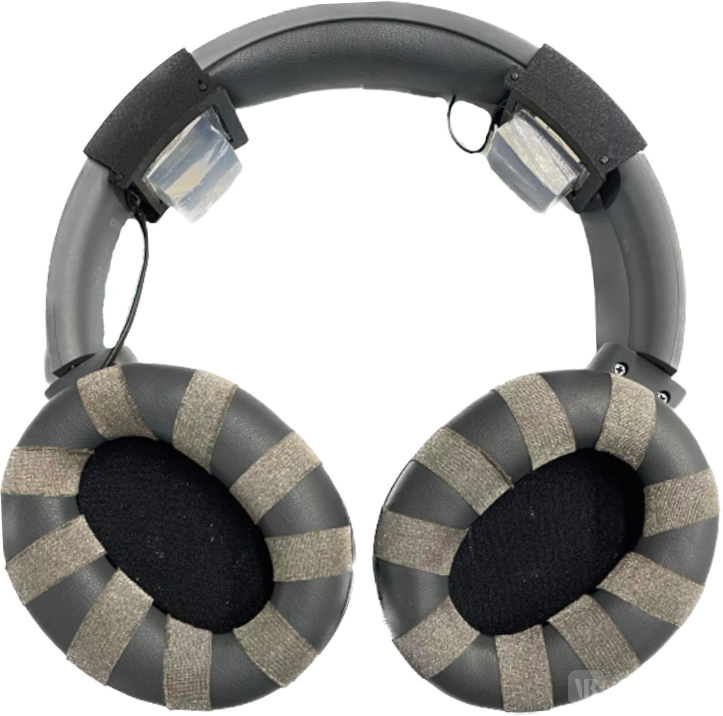
Product Image of Music-Coordinated Electrical Stimulation Headphones
Relying on the core team's technical advantages, Linghuier Technology is more inclined to become a supply chain upstream and midstream enterprise focused on technology development, serving as a supplier of product prototypes, hardware modules, software, and algorithm licenses. Currently, Linghuier Technology has launched contract development services for brain-computer interface application technologies, committing to providing customized brain-computer interface technology development services for scenarios such as education and entertainment, smart living, healthcare, consumer electronics, and national defense. Specifically, these include:
Requirement Research and Analysis: Linghuier Technology can collaborate with customers, industry experts, and researchers to conduct comprehensive demand research and scenario analysis, gaining insights into the differences and characteristics of needs across various fields.
Customized Solution Design: Based on the results of demand research, and Linghuier Technology's accumulation of technical modules available for secondary development—including hardware modules for electrophysiological signal acquisition, electrophysiological signal analysis systems, psychological assessment systems, functional music libraries, and transcranial electrical stimulation modules—customized brain-computer interface solutions can be designed. These solutions provide specific functionalities and customized configurations tailored to different scenarios.
Technical Support and Consulting ServicesThe company can provide technical support and consulting services to customers, helping them understand the potential and applicability of brain-computer interface technology, and tailor technical solutions according to customer needs.
Collaborative Development and Research: Linghuier Technology can collaborate with customers on joint development, research, and design of customized brain-computer interface technology solutions, carrying out customized development according to the needs of specific scenarios.
Currently, Linghuier Technology is preparing for its angel round of financing, with the proceeds to be mainly used for team expansion, R&D investment, application for Class III medical device certification, and market expansion. In the short term, Linghuier Technology will continue to focus on optimizing product performance and advancing technological iteration. In the long term, the company plans to extend its core technology into broader application fields.
VCBeat pointed out in the report "Attention Enhancement, Scenario Implementation, and Technological Iteration—2022 Brain-Computer Interface Industry Research Report" that the global brain-computer interface market size reached 1.46 billion US dollars in 2020 and is expected to reach 3.6 billion US dollars by 2027, with an annual compound growth rate of approximately 14%. The industry boasts a vast market scale. Within this expansive development space, we look forward to seeing what new achievements Suzhou Linghuier Technology Co., Ltd. will attain.
About the 2023 Medical Technology Innovation Challenge
To gather more "high-precision" scientific and technological innovation talents to showcase their innovative achievements and empower innovation in the field of neuroscience, the "2023 Medical Technology Innovation Challenge" jointly hosted by the Changzhou National High-Tech Zone Management Committee and Medtronic Kanghui officially kicked off on July 28. Guided by the Artificial Intelligence Special Committee of the Chinese Computer Association and with academic guidance from the Basic and Clinical Neurosurgery Branch of the Chinese Neuroscience Society, the competition focuses on collecting innovative projects in the fields of medical devices, intelligent equipment, smart healthcare platforms, and medical services related to neuroscience and brain science. It has garnered widespread attention from the medical innovation community, with nearly a hundred projects registered by the September 10 deadline.
After multiple evaluations and screenings by the competition's judging committee, 30 projects stood out and proceeded to the online semi-finals held on October 28 for project roadshows. After successive rounds of selection, 15 outstanding projects successfully advanced to the finals.
The finals of the 2023 Medical Technology Innovation Challenge will be officially held in Changzhou on December 23. As one of the 15 finalists, Linghuier will participate as scheduled. Stay tuned!