

Integration of Digital Therapeutics and Brain Science Showcased at Nandu River Smart Healthcare and Rehabilitation Industry Summit

NeuroXess
Invasive Brain-Computer Interface Developer
In recent years, the continuous intersection and integration of digital therapeutics and brain science have brought many new tools for precise diagnosis and disease treatment. Empowered by cognitive training and intervention methods based on digital technologies such as virtual reality and brain-computer interfaces, solutions have been found for related brain neurological disorders such as sleep disorders, ADHD in children, autism in children, Parkinson's disease, and depression.ManyNew Treatment Plan.
On December 21, the Second Nandu River Smart Healthcare and Rehabilitation Industry High-Level Forum was held in Haikou to further explore and exchange the latest cutting-edge achievements in brain science, digital therapeutics, and more. A large number of leading enterprise representatives from the digital therapeutics field, top companies in the brain-computer interface sector, and leading enterprises in rehabilitation robotics gathered in Haikou to jointly usher in a new era of digital therapeutics, brain-computer interfaces, and rehabilitation robots.
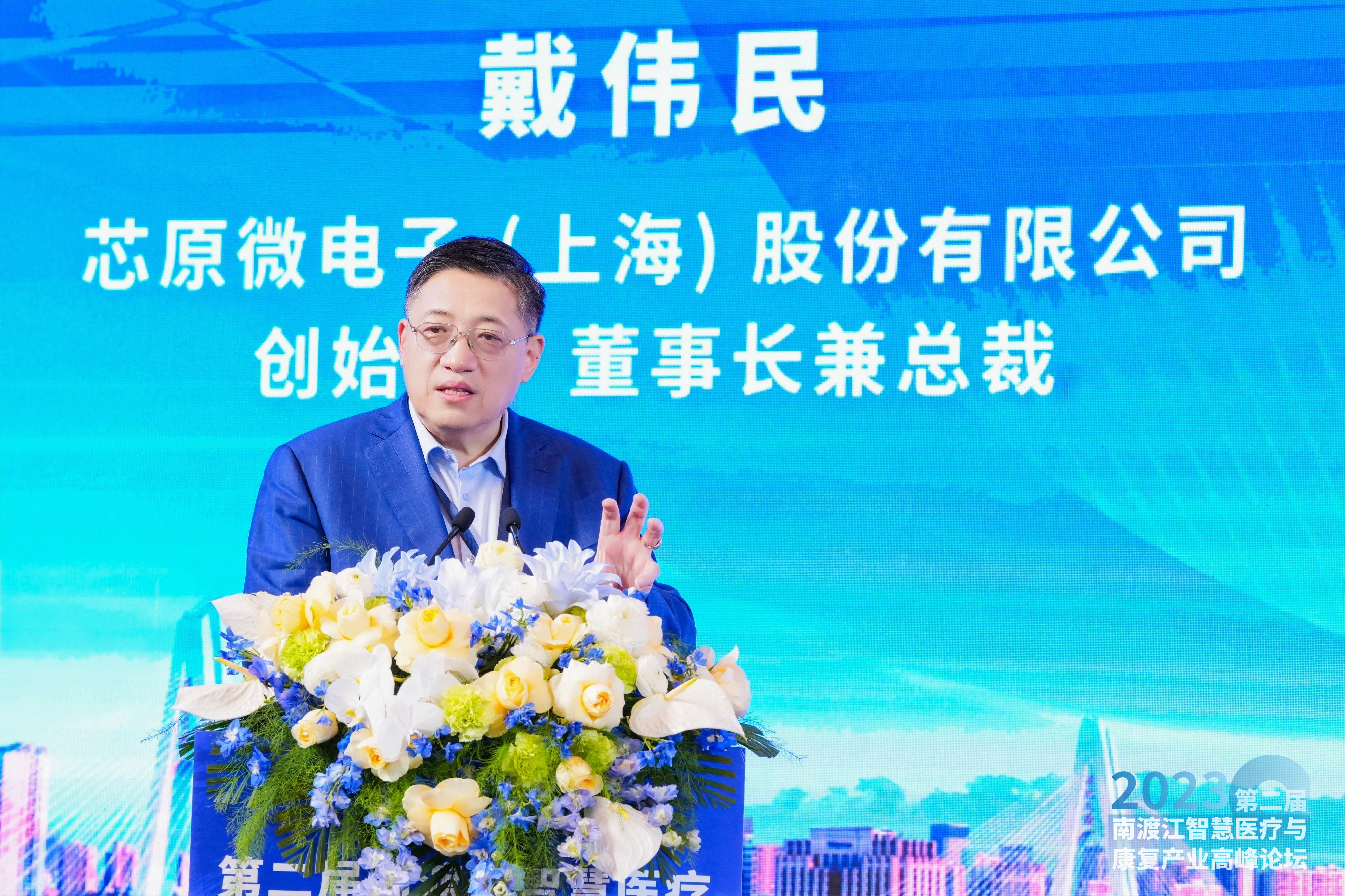
At the conference, Dai Weimin, the founder, chairman, and president of VeriSilicon Holdings Co., Ltd., the organizer of the forum, spoke first, explaining the reasons for hosting the forum in Haikou. He stated: "Digital healthcare, brain-computer interfaces, and rehabilitation robots are all hot topics this year. Particularly, digital therapeutics, as a city in China that supports digital therapeutics, Hainan has abundant human resources to drive its development and integrate it with industries such as brain science and rehabilitation robotics, promoting the development of smart healthcare and rehabilitation industries in Hainan."
Subsequently, Jia Ning, the Secretary of the Party Committee and Director of the Administration of Boao Lecheng International Medical Tourism Pilot Zone in Hainan, also delivered a speech before the meeting. He stated: Hainan has established a special fund for digital therapeutics to provide financial support for digital therapeutics companies in need, complete the digital therapeutics industry chain, introduce overseas digital therapeutics projects, and make Hainan the cornerstone of China's digital therapeutics industry.
Benefiting from the iteration of policies and technologies, the development achievements of digital therapeutics in recent years have been particularly encouraging. In addition to the popular areas such as cognitive disorders, ophthalmology, diabetes, and mental health, diseases like sleep disorders, sports rehabilitation, hypertension, respiratory conditions, oncology, chronic kidney disease, reproductive health, addiction withdrawal, ADHD in children, speech disorders in children, sleep apnea, pain, allergies, and autism in children are also seeing increasing involvement from companies.
SixinYue Education Technology (Shanghai) Co., Ltd., which focuses on digital therapy research related to ADHD in children, had its co-founder and general manager, Jiang Zhongmei, state in a speech: The treatment for children with ADHD in China is primarily medication-based, often neglecting rehabilitation and corrective measures. Therefore, SixinYue has proposed a digital closed-loop medical solution for childhood ADHD, emphasizing personalized screening, assessment, auxiliary diagnosis, and comprehensive intervention training while safeguarding the physical and mental health of children.
In addition, Jiang Zhongmei particularly emphasized the two concepts proposed by Sinyue: "ACCESSIBLE" and "AFFORDABLE," meaning that the solutions should be easy to access and affordable for parents of children. She believes that special groups often face challenges in accessing various services, and Sinyue hopes to help any family in need, ensuring they do not lose the possibility of treatment due to external conditions.
Migraine Digital Intelligence Empowers the Whole-course Management of Migraine" was the title of a speech by Luo Min, founder of Hangzhou BetterCare Technology Co., Ltd. According to her introduction: there are approximately 1 billion migraine patients worldwide, including 130 million patients in China. However, due to missed diagnoses and misdiagnoses, the vast majority of these patients have not received standardized and effective treatment. A paper published in The Lancet provided data showing that the consultation rate for migraines in China is less than 50%, and the correct diagnosis rate outside of tertiary hospitals is less than 14%.
To help migraine patients overcome their pain, Bi'Aifanghao has jointly designed a comprehensive headache management digital intelligence tool called the "PainLove Health" mini-program with world-renowned headache experts and artificial intelligence specialists. This program provides a full-course management solution for headache sufferers, including intelligent evaluation of head and facial pain, headache medical treatment guidelines, expert online consultations, cutting-edge pharmaceutical and device recommendations, professional dietary supplements, digital therapeutics, and electronic headache diaries.
On the other hand, an exclusive strategic cooperation has been achieved with Nerivio, an Israeli wearable device developer, to create a special application that emits low-frequency electrical pulses via a mobile phone app, inhibiting the transmission of pain signals and playing a role in alleviating migraines. Currently, this therapy has been approved by the EU MDR and is expected to land in the Lecheng International Medical Pilot Zone in January next year.
In mid-September this year, Neuralink, the brain-computer interface company founded by Elon Musk, announced that it had officially received approval for human trials, implanting devices in the brains of patients with ALS. This milestone has once again pushed the brain-computer interface sector to the forefront.
Back in China, a large number of startups and researchers are also committed to the development of this technology. They are always thinking about two things: one is how to turn patients back into normal people? The other is exploring the ceiling of brain-computer interfaces?
Regarding the two issues mentioned above, several companies shared their insights during their presentations. According to Peng Lei, founder and CEO of NeuroXess: invasive brain-computer interface technology mainly follows three technical routes – silicon-based rigid electrode systems, vascular electrode systems, and flexible electrode systems. Among them, NeuroXess has chosen a minimally invasive, high-throughput flexible brain-computer interface technology similar to Neuralink, achieving significant results in academic research, scientific studies, and clinical trials.
So far, NeuroXess has completed two animal experiments, one from a Labrador named "Neo" and the other from a rhesus monkey named "Wukong." The results show that both experiments were very successful.
In Neo's electrode implant experiment, NeuroXess achieved high-precision decoding of motion trajectories and has completed multi-modal signal acquisition and complex system modeling, enabling real-time decoding and brainwave control. This technology is expected to be applied in fields such as healthcare and military in the future. Specific data shows that the correlation between NeuroXess' predicted motion trajectory of Neo and its actual motion trajectory exceeded 80%, with a decoding delay rate controlled within 30 milliseconds.
NeuroXess's July experiment on rhesus monkeys revisited. Specifically, NeuroXess successfully implanted high-throughput, high-density cortical electrodes into the brain of a rhesus monkey named "Wukong," enabling it to play games. Peng Lei stated that after 14 consecutive days of decoding, NeuroXess achieved an 85% correlation between the predicted and actual movement trajectories of Wukong, with latency controlled within 30 milliseconds.
Although these issues do not directly answer the question of "how to turn patients back into normal people," they bring this cutting-edge technology closer to clinical application by breaking through the technical limitations of brain-computer interfaces. It is believed that in the near future, carbon-based life and silicon-based life will come together in the way constructed by researchers.