

Domestic Innovator Kerei Medical Revitalizes Oncology Intervention with Breakthrough Product Portfolio

Cardiolink Science
Vascular Interventional Medical Device Developer
From December 21 to 24, 2023, the Annual Conference of the Chinese College of Interventionalists (CCI 2023) was held in Nanjing, Jiangsu Province. The CCI 2023 conference featured rich academic content, covering hot topics such as the research and development of interventional drugs and devices, theoretical and technological innovations, and clinical application transformation.
Interventional medicine is the third major clinical discipline after internal medicine and surgery. Currently, interventional therapy doctors are able to deliver catheters or instruments into almost all vascular branches, the digestive tract, and other specific areas of the human body for disease treatment.
The development of interventional technology has given rise to several billion-dollar industries, including interventional treatment for vascular diseases, endoscopic interventional therapy, and tumor interventional therapy. In tumor intervention, the treatment of advanced liver cancer centered on interventional therapy is currently the main focus.
The current interventional treatment for liver cancer is similar to the state of interventional treatment for coronary artery disease a decade ago, with both products and surgical volumes in a period of explosive growth. However, unlike coronary intervention, where doctors have a wide range of tools to choose from, the core product in the field of liver cancer intervention, drug-eluting beads, has seen its first domestically approved product nearly 10 years ago. There is an urgent clinical need for more innovative products to meet treatment demands.
In this field of extreme supply and demand imbalance, Cardiolink Science has developed a comprehensive solution for the embolization intervention process, introducing several groundbreaking products for tumor interventional treatment that enhance product performance. Its pioneering "biomimetic core-shell" embolic microspheres address issues such as drug-loading speed, effective killing radius, and release duration.
As an innovator, Cardiolink Science independently designs and develops its products, focusing on original innovation without imitation. Based on the concept of therapy reading, Cardiolink Science is committed to reconstructing the local immune ecosystem, establishing targeted therapeutic devices for sequential cell apoptosis and death, as well as drug delivery systems.
Under this concept, Cardiolink Science has already launched several products. How do the innovative products perform clinically? At CCI 2023, multiple experts across China announced research data on several key products from Cardiolink Science, interpreting the clinical value of domestically produced innovations.
China reports approximately 400,000 new cases of primary liver cancer each year, with the incidence still on the rise. For patients with intermediate-stage liver cancer, Transarterial Chemoembolization (TACE) has become a first-line treatment option (Class Ia evidence). Comprehensive treatment strategies based on TACE (combined with surgery, transplantation, ablation, radiotherapy, targeted drugs, immunotherapy, etc.) are gradually being clinically validated. These include preventive use after surgical resection and use as downstaging therapy for advanced patients.
According to different embolic agents, TACE is divided into conventional TACE (cTACE) and drug-eluting bead TACE (D-TACE). According to numerous clinical research papers, D-TACE can significantly reduce the dose of chemotherapeutic drugs required to reach systemic circulation compared with c-TACE, while also significantly reducing adverse events associated with chemotherapeutic drugs. Embolic microspheres can be considered the "bullets" in TACE treatment, and drug-eluting beads can achieve both embolic and drug therapeutic effects.
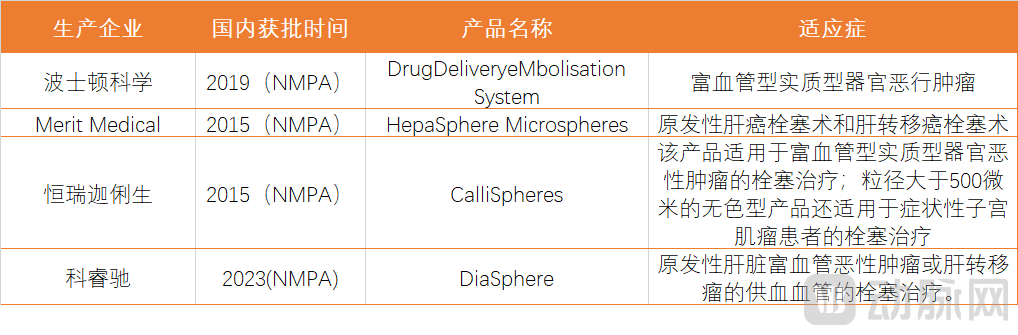
Chart 1: Embolic Microsphere Products Already on the Market in China
Professor Tian Shi Lü from the First Hospital of Peking University stated at the CCI conference: "The ideal drug-loaded microspheres should be mechanically robust, resistant to fragmentation, and possess excellent catheter deliverability. In terms of drug-loading performance, they should have a rapid drug-loading speed to shorten operation time, with a drug-loading capacity that meets therapeutic dosage requirements. In terms of drug-release capability, they should achieve targeted release at low concentrations and maintain long-term efficacy. Additionally, they should offer a variety of particle sizes to meet the needs of different vascular embolizations and demonstrate good biocompatibility."
Currently, four embolic microsphere products have been approved for marketing in China. Except for Cardiolink Science's latest product, all other products have been on the market for many years, with drug-loading times greater than 30 minutes, and some up to an hour. Their elastic compression rates and drug release performance also need improvement.
How to Break Through the Performance Bottleneck of Existing Drug-Loaded Microspheres? Cardiolink Science discovered numerous pain points in conventional homogeneous embolic drug-loaded microspheres, such as susceptibility to breakage during catheter passage, excessively long drug-loading time, tendency for an initial "burst release" of the drug, and short effective drug action duration. The conventional uniform structure introduces design barriers, as different performance aspects have varying structural requirements that often conflict with each other, such as the strength versus the compressive deformation ability of the microspheres. It is not possible to meet multiple performance enhancement design requirements using a conventional homogeneous structure.
In order to address clinical pain points, Cardiolink Science’s embolic microspheres are designed to mimic cellular structures. The outer layer of cells generally has a relatively denser cell wall or membrane, which allows them to maintain structural integrity while undergoing a certain degree of deformation based on environmental conditions. At the same time, during substance exchange between the cell and its surroundings, it can play an excellent regulatory role. Therefore, if a relatively dense structure is designed for the outer layer of the microsphere, creating a distinction from the internal structure, then by adjusting the structures of the core and shell separately, various properties can be coordinated, ultimately achieving simultaneous enhancement of all properties. This gave rise to the concept of "biomimetic core-shell."
Professor Zhang Qi from Zhongda Hospital, Southeast University, commented at the CCI conference: The biomimetic core-shell design is soft inside and rigid outside, balancing strength and flexibility, making it resistant to breakage and highly resilient after compression; its smooth surface allows for easy injection and reduces the risk of clogging. Due to the differing numbers of drug-loading groups in the "core" and "shell," a concentration gradient forms, enhancing drug adsorption, speeding up drug loading, shortening operation time, and improving surgical efficiency. After being injected into the body, the "shell" ensures more uniform and slower drug release, maintaining effective tissue drug concentration over an extended period for better therapeutic outcomes while avoiding toxic side effects on normal tissues caused by rapid release in a short time.
"Bionic Core-Shell" Polyvinyl Alcohol Embolization Microspheres Launched in 2023. In terms of performance, they exhibit the optimal combination of mechanical properties (strength and elasticity), recovering to a spherical shape even after 50% compression, with excellent catheter passage capability. Rapid drug loading is achieved, with a 95% adsorption rate within 5 minutes, 50mg drug loading completed in 10 minutes, and a recommended drug load of 100mg for 2ml microspheres, with a maximum load of 110mg (DOX). Additionally, long-term sustained release is realized, with effective drug concentrations still detectable 3 months post-surgery.
At the CCI 2023 venue, the "Bionic Core-Shell" PATTERN clinical research data and real-world research data were announced.
PATTERN Clinical Study Conducted at Multiple Centers Across China, with 188 Patients Randomized 1:1. The trial results showed excellent microsphere delivery performance, good targeted release, and no catheter blockage or device defects. Due to variations in guidewire and catheter tools used during procedures across different centers, as well as differences in operational habits, the multi-center trial results demonstrated the superior performance of these microspheres.
Disease Control Rate (DCR) of Target Lesions One Month After the First TACE Procedure: The trial group achieved 95.35%, surpassing the control group's 93.02%, but without significant statistical difference (P=0.515); Objective Response Rate (ORR) of Target Lesions One Month After the First TACE Procedure: The trial group reached 63.95%, higher than the control group's 60.46%, but also without significant statistical difference (P=0.637). Real-world study data showed that the tumor Objective Response Rate (ORR) one month after the final TACE procedure was 58.82%. These results are non-inferior, further demonstrating that the clinical efficacy of the product meets expectations.
Chinese Clinical Practice Guidelines for Transarterial Chemoembolization (TACE) in Hepatocellular Carcinoma (2023 Edition) recommend adopting refined TACE to reduce its heterogeneity and improve embolization efficacy. Refined TACE includes: standardized arteriography, super-selective catheterization into the branches of tumor-feeding arteries for embolization, intraoperative CBCT guidance for target vessels and immediate postoperative efficacy evaluation, reasonable selection and combination of embolic materials, and determination of appropriate embolization endpoints.
From the perspective of therapeutic reading, Cardiolink Science not only focuses on the innovation of "bullet" embolic microspheres in TACE but also takes the lead in deploying precision TACE tool products, covering the entire process of tumor embolization intervention.
In the first step of the angiography process, Cardiolink Science provides hydrophilic-coated guidewires and angiographic catheters. The Cardiolink Zhitong® angiographic catheter features a soft tip for enhanced safety, a mid-layer constructed with 16-wire braid for strong pressure resistance and excellent maneuverability, and a wide range of specifications to meet the needs of multi-site vascular angiography. This angiographic catheter has gained widespread clinical recognition and ranked first in the hydrophilic subgroup during the procurement alliance of 19 provinces in Henan.
In the second step of the super-selective process, Cardiolink Science has developed peripheral vascular micro guidewires, peripheral vascular microcatheters, deflectable microcatheters, and balloon microcatheters. Among these, Cardiolink Science offers the most comprehensive and thinnest microcatheters available in the Chinese market. Cardiolink Science is the only company in China capable of providing an integrated solution from tools to products for ss-TACE (super selective TACE), and it offers the thinnest 1.6Fr microcatheter in China.
New tool-type products such as adjustable bend microcatheters and balloon microcatheters are about to hit the market. Adjustable bend microcatheters address the challenge of complex anatomical structures that are difficult to access with conventional microcatheters.
The application of balloon microcatheters can alter hemodynamics, and it is highly significant for resolving reflux and ectopic embolization to achieve precise embolization. The Zhiqiu® Balloon Microcatheter, produced by Cardiolink Science, is the first balloon microcatheter product in China to undergo rigorous clinical trials, with a distal outer diameter of only 1.9F, offering excellent trackability and compliance.
For this heavy-duty tool in TACE treatment, the CCI 2023 conference also announced relevant cases and data from the first-in-human clinical trial (FIM study).Preliminary case results show that B-TACE treatment using balloon microcatheters is safe and effective. After balloon occlusion, blood flow near the lesion area is redistributed, pressure changes, and deposition of embolic agents significantly increases.
The third step of embolization treatment involves not only the approved polyvinyl alcohol embolic microspheres but also includes uniformly sized microspheres, imaging microspheres, biodegradable microspheres, and targeted physical ADC microspheres in Cardiolink Science's research pipeline. Among these, the multi-center confirmatory clinical trial for imaging embolic microspheres has been initiated across China.
The embolic microspheres have the disadvantage of being unable to image themselves, making it impossible to track and locate them in the body. As a result, it is difficult to accurately determine the distribution of microspheres in blood vessels and the embolization site, and the exact location of embolic microspheres cannot be confirmed after surgery. At the same time, the drug-loaded microspheres that have been marketed in China lack imaging capabilities, which limits the precise guidance, monitoring, and efficacy evaluation by various imaging devices (such as MR, CT, ultrasound, etc.).
But the development of imaging microspheres is more challenging, requiring higher standards for materials, and achieving both imaging and drug-loading functions is difficult. Cardiolink Science has taken the lead in this field and has made breakthrough progress so far. Professor Jianfei Tu from Lishui Central Hospital shared a clinical study verifying the safety and efficacy of imaging embolic microspheres for transarterial chemoembolization in liver cancer.The above research results show that the imaging microspheres developed by Cardiolink Science have good immediate and long-term imaging performance, good maneuverability, satisfactory embolization effects during surgery, and no device-related adverse events occurred. These results preliminarily demonstrate the safety and effectiveness of Cardiolink Science's imaging embolic microspheres for transarterial chemoembolization in liver cancer.
In addition to drug-loaded microspheres and imaging microspheres, Cardiolink Science has also developed a range of embolic products including uniform-sized microspheres, biodegradable microspheres, and targeted physical ADC microspheres. The uniform-sized microspheres distribute more evenly during TACE, resulting in more uniform drug distribution and reducing the risk of microsphere redistribution. Biodegradable microspheres optimize treatment by minimizing long-term side effects caused by permanent embolization, making them especially suitable for treating gastrointestinal bleeding and uterine fibroids.
Notably, the targeted physical ADC microspheres are an innovative product that Cardiolink Science has pioneered on a global scale. ADC drugs represent a popular research direction in the field of precise cancer treatment. This next-generation embolic microsphere can not only load platinum-based chemotherapy drugs but also large-molecule monoclonal antibody drugs and small-molecule drugs such as sorafenib. This allows cancer treatment to evolve from a systemic approach to a localized one, achieving more precise therapy.
As multiple products have been launched, Cardiolink Science's product portfolio has become more comprehensive. In the past, even though some products entered the market earlier, China's TACE market still maintained rapid growth, and interventional embolization surgeries centered on TACE therapy have become increasingly popular. As an innovative leader, Cardiolink Science has injected new vitality into the development of liver cancer interventional treatment, driving industry progress with innovative technology and capturing doctors' needs early on through its deep understanding of therapies. The company’s commitment to "reconstructing the local immune ecosystem, establishing targeted therapeutic devices for sequential cell apoptosis and death, and developing drug delivery systems" has been increasingly accepted and recognized by experts and scholars. From its product iteration path, it can be foreseen that the future of interventional medicine will continue to evolve towards reconstructing the immune ecosystem, combining pharmaceuticals and devices, and reshaping disease treatment.