

Molecular Devices Launches CellXpress.ai, an AI-Powered Integrated Organoid Workstation, Marking a Milestone in Automated 3D Cell Culture

Molecular Devices
Provider of Analytical Testing Systems

Danaher
Product Design and Manufacturer
ShanghaiDecember 25, 2023/PR Newswire/ -- In recent years, research in the organoid field has entered a new stage of development, with its application value gradually being realized, providing efficient and precise support for life science research. On December 18, Molecular Devices, a subsidiary of Fortune 500 company Danaher Corporation, held a grand launch event for its new product, the CellXpress.ai Fully Automated Integrated Organoid Workstation. As an innovative cell culture center driven by artificial intelligence, the CellXpress.ai workstation enhances workflows through machine learning-assisted monitoring, culturing, imaging, and scheduling. It achieves automation in 3D biology, making assays more reliable and reproducible, and offers a new data-driven approach to cell culture.
Mr. Lei Li, President of Danaher China Life Sciences Platform, Ms. MeiYu Zhang, General Manager of Molecular Devices (Shanghai) Co., Ltd., Mr. Lin Wang, Secretary General of the National Medical Device Industry Technology Innovation Alliance, Professor Dongqi Tang from the Second Affiliated Hospital of Shandong University, Professor Bing Zhao from the School of Life Sciences at Fudan University, Jeffery McMillan, Global Product Manager at Molecular Devices Headquarters, Oksana Sirenko, Global Senior Technical Development Manager, along with professionals from renowned universities, hospitals, and enterprises in China, as well as numerous partners of Molecular Devices, jointly witnessed the launch of CellXpress.ai.
Mr. Li Lei said, "Under the dual requirements of drug development and policy regulation, organoids bring hope for more efficient and precise life science research. However, there are still bottlenecks in the cultivation of organoids, such as how to achieve standardization and repeatability, and how to use automation to improve cultivation efficiency. To address these challenges, Molecular Devices has launched the CellXpress.ai Fully Automated Integrated Organoid Workstation, hoping to help scientists break through limitations and reshape the future."
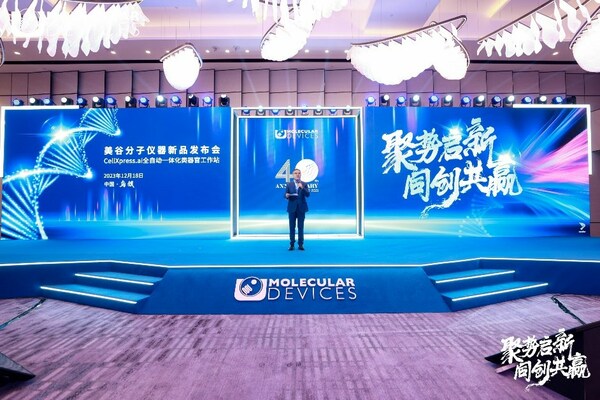
Mr. Li Lei, President of Danaher China Life Sciences Platform
Facing the future of cell culture, CellXpress.ai Fully Automated All-in-One Organoid Workstation is a complete integrated system and an innovative system with functions such as scaling complex cell culture workflows, early evaluation and decision-making, reducing human error, tracking complete cellular processes over time, standardized experimental protocols, and transforming data into decisions.
Scientists utilize the CellXpress.ai fully automated all-in-one organoid workstation to achieve complete automation and precise control over demanding culture and passaging schedules, reducing manual laboratory operation time. Operating 24/7, the workstation significantly enhances the growth and expansion efficiency of various stem cell lines, spheroids, or organoids, improving screening workflows. Additionally, its machine learning-assisted solutions standardize the cell model development process, enabling large-scale production of highly consistent and physiologically relevant results, supporting scientists in developing reliable and reproducible testing methods.
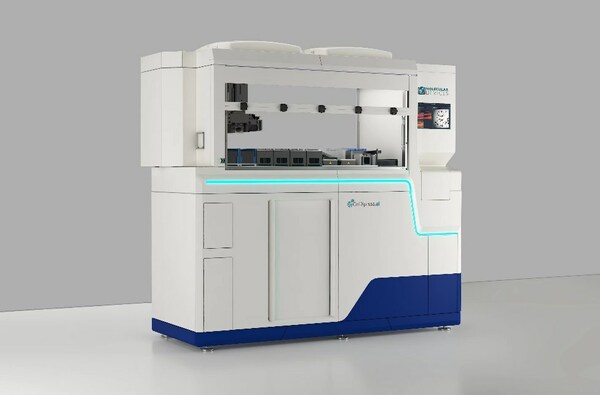
CellXpress.ai Fully Automated All-in-One Organoid Workstation
To jointly build an organoid ecosystem and establish standardized processes for organoid culture, Molecular Devices, LLC. signed strategic cooperation agreements with Bergeon Biotechnology (Suzhou) Co., Ltd., Shanghai Baicheng Biotechnology Co., Ltd., and Yaosu Technology during this press conference, achieving a strong alliance with leading players in the industry.
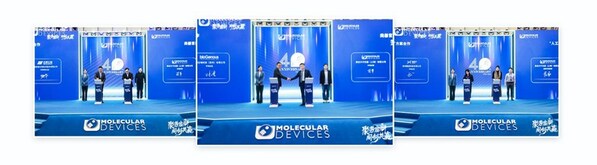
Signing Ceremony
At the event, Secretary General Wang Lin of the National Medical Device Industry Technology Innovation Alliance, Professor Tang Dongqi from the Second Affiliated Hospital of Shandong University, and Professor Zhao Bing from the School of Life Sciences at Fudan University gave thematic presentations on the latest development trends and cutting-edge technologies in the organoid field, providing new ideas and guidance for promoting the advancement of organoid technology.

Left: Professor Tang Dongqi from the Second Affiliated Hospital of Shandong University, Upper Right: Secretary General Wang Lin from the National Medical Device Industry Technology Innovation Alliance, Lower Right: Professor Zhao Bing from the School of Life Sciences, Fudan University
Molecular Devices was founded in 1983 by Professor Harden, an outstanding chemist of the 20th century. The release of the CellXpress.ai fully automated all-in-one organoid workstation coincides with the 40th anniversary of Molecular Devices. During the launch event, all guests watched a video to revisit Molecular Devices' brand story, innovation journey, and its development in China.
Ms. Zhang Meiyou stated: "Since its establishment 40 years ago, Molecular Devices has continuously expanded and updated its product lines. In the life science instrumentation industry, we have consistently adhered to the concept of innovation and served scientists worldwide. In recent years, we have accelerated our efforts in the organoid application field. Today, the release of the CellXpress.ai Fully Automated Integrated Organoid Workstation demonstrates our confidence and determination in the development of the organoid application market. Molecular Devices also looks forward to collaborating with more research institutions, hospitals, and biotech companies to advance the development of organoid technology, achieving scaled production and translational applications of organoids. We firmly believe that only by perfectly integrating innovative technologies, tools, and cutting-edge research can we empower scientists to move forward and usher in a new era of future life sciences."
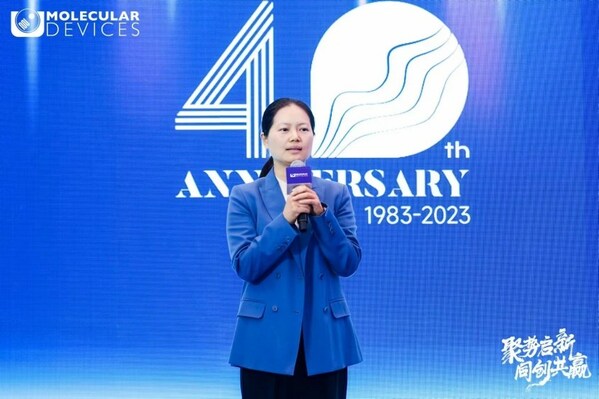
Ms. Zhang Meiying, General Manager of Molecular Devices (Shanghai) Co., Ltd.