

Domestic Biotech Secures Over $1 Billion Licensing Deal for iPSC-Derived Therapy CLS001 with Direct Differentiation and Scalable Manufacturing Capabilities

Cellusion
Corneal Endothelial Regenerative Medicine Product Developer

December 26, 2023 / eMedClub News /--Recently, regenerative medicine enterprisesCellusion Announces Its Research"iPSC-Derived Corneal Endothelial Cell Replacement Therapy (CLS001)"Granted by the U.S. FDAOrphan Drug Designation (ODD), for the treatment of bullous keratopathy. This designation will further accelerate the global development of CLS001.

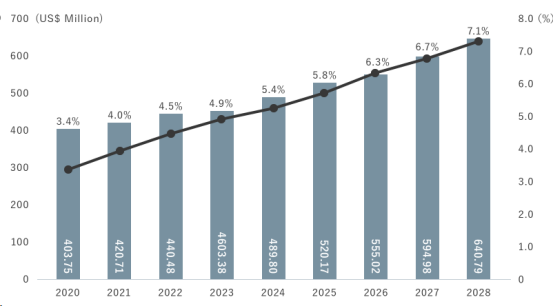
Bullous Keratopathy: A Progressive Disease Leading to BlindnessBullous keratopathy is a condition characterized by corneal blisters and vision impairment caused by the reduction of corneal endothelial cells due to cataracts, ophthalmic surgeries, or genetic factors. If left untreated, this progressive disease may lead to blindness. The current standard treatment involves corneal transplantation to replace the dysfunctional corneal endothelial cells with healthy ones. Public data indicates that approximately 13 million people worldwide are awaiting corneal transplant surgery, yet only around 180,000 such procedures are performed annually. It is predicted that...The global corneal transplant market is expected to grow from US$421 million in 2021 to US$641 million in 2028, with a compound annual growth rate (CAGR) estimated at 6.2%.。
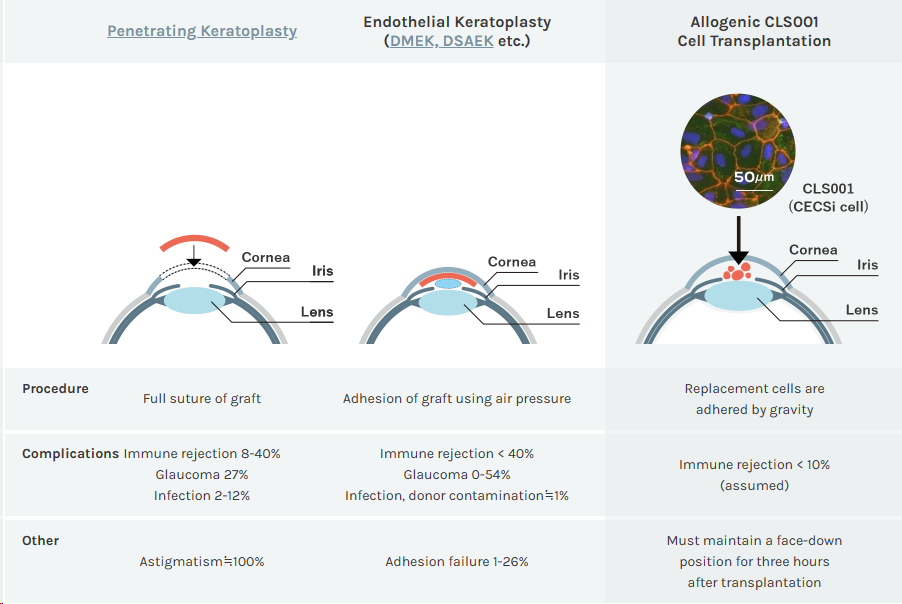
CLS001 is a CECSi cell developed based on Cellusion's proprietary technology for corneal endothelial regeneration. It is expected to change the current global shortage of corneal donors by combining "CECSi cells made from iPS cells with excellent proliferation characteristics" and "a simple injection cell delivery procedure that does not require specialized knowledge." Unlike traditional corneal transplantation, which relies on pneumatic adhesion,CLS001 therapy utilizes gravity adhesion and requires patients to remain in a face-down position for three hours post-transplantation. It results in smaller wounds and significantly reduces complications.。
Moreover, this candidate product addresses a current limitation in generating corneal endothelial-like cells from ESCs or iPSCs. Previous studies have indicated that the process of generating corneal endothelial-like cells from ESCs or iPSCs requires passing through a developmental stage involving neural crest cells (NCCs) as intermediates, which may lead to the production of various cell types including chondrocytes, adipocytes, and neuronal cells, thus hindering large-scale manufacturing.Cellusion's proprietary technology can directly differentiate iPS cells into corneal endothelial-like cells without intermediates, which effectively ensures stable cell quality and facilitates rapid large-scale production.Furthermore, CLS001 can be cryopreserved, which means that the corneal endothelial replacement cells required for transplant therapy can be mass-produced and stored in advance, allowing them to be transported to various locations for use when patients need them.
Previously, Cellusion announced that it had completed the first patient transplant of CLS001. In the review conducted by the Independent Data Monitoring Committee in January 2023,No adverse events were observed within 3 months after CLS001 transplantation, and the patient's vision, central corneal thickness, and minimal corneal thickness have shown signs of improvement.Currently, Cellusion is planning to conduct research in multiple regions around the world.
Cellusion was born in 2015 in the Department of Ophthalmology at Keio University School of Medicine, with a unique differentiation induction method from iPSC to CECSi cells. In January 2022, Cellusion announced the completion of 1.1 billion yen in financing; in June this year, Cellusion completed a 2.83 billion yen Series C financing.As of the completion of the C-round financing, Cellusion has raised a total of 4.5 billion yen (approximately 226 million RMB)., mainly used to promote the Phase 1/2 clinical trials of CLS001 in Japan and overseas.
September 2022,Cellusion Reaches Exclusive Licensing Agreement with Hangzhou XingSaiRuiZhen Bio, the exclusive rights to develop, manufacture, and commercialize CLS001 in Greater China, including mainland China, Hong Kong, Macao, and Taiwan, have been licensed out to Starseedgen Bio, with the potential to receive over 100 million US dollars in funds, including upfront payments, development milestones, sales milestones, and tiered royalty fees.
Cellusion, Inc. was founded in July 2022 as a platform company focused on innovative drug development in the fields of cell therapy and regenerative medicine. The company is dedicated to the research and clinical translation of stem cell-related technologies and has completed a seed round of financing worth 45 million yuan.The investor is Fosun Pharma's incubation fund, Fosun Health Capital's New Drug Innovation Fund.According to publicly disclosed information, Starseed Real Biotechnology primarily focuses on the fields of tissue regeneration and cancer treatment. Its candidate products in the tissue regeneration field include corneal endothelial cell therapy introduced from Cellusion, Inc. In the field of cancer treatment, the company is collaborating with top scientists in the U.S. cellular therapy sector to jointly develop stem cell-derived CAR-NK.
The 5th International Stem Cell Industry Transformation Leadership Summit
Opportunities and Challenges in the Clinical Translation of Stem Cells
Regulatory Focus and Trends in Stem Cell Research in China
Regulatory Requirements for Stem Cell Drugs in Different Countries
Frontier Advances in Clinical Research of Human Mesenchymal Stem Cells
Difficulties and Breakthroughs in Clinical Treatment with Mesenchymal Stem Cells
Clinical Development and Application of Precursor Cells and Progenitor Cells
Innovative Applications of Stem Cell Technology
Advances in the Clinical Development of Stem Cell-Derived Exosomes
Genetic Engineering Technology Renovation and Upgrade of MSCs
Challenges and Strategies in CMC Development of Stem Cell Drugs
Quality Research and Control of MSCs
Stability Study Strategy for MSCs Formulations
Construction, Storage, and Testing of Stem Cell Banks
Large-Scale Culture of Allogeneic Stem Cells
Development Opportunities in the Stem Cell Industry Chain

Make an appointment now,
Enjoy the "Early Bird" benefits!
Collaboration, Speeches, Synchronous Recruitment Ongoing
Recent Progress in the iPSC Field in China
eMedClub
iPSC is a highly promising field, applied in areas such as regenerative medicine, oncology, and rare diseases. Recently, the iPSC field has seen significant progress.
CellusionAt the 65th American Society of Hematology (ASH) Annual Meeting, preclinical data related to its iPSC-derived GPRC5D-targeted CAR-iNK product was presented. The purity of its iPSC-derived CAR-NK cells exceeds 99%, with the expression of NK cell activation receptors (NKG2D, NKp30) and co-stimulatory factors (CD226, CD244) reaching over 96%. In in vitro experiments, a single dose of CAR-iNK after recovery significantly reduced tumor burden in Xenograft mouse models and improved survival rates. Based on this project, Sanqi Biotech has further developed CIB-315, the first iPSC-derived fourth-generation CAR-NK product targeting MM by leveraging its own gene-editing platform advantages, with plans to file an IND application in 2024.
December,CellusionCellusion's "Human-derived Dopaminergic Precursor Cell Injection" has received tacit approval for clinical trials, with indications for early-onset Parkinson's disease with an age of onset earlier than 50 years. Thus far, Cellusion has implemented a strategic layout that fully covers the life cycle and treatment cycle in the Parkinson's field.
November,CellusionGlobally First Clinical-Grade iPSC-Derived Subtype Neural Progenitor Cell Product for ALS Treatment Receives FDA Orphan Drug Designation, Marking the World’s First iPSC-Derived Cell Therapy for ALS with Orphan Drug Status.
In the same month,CellusionThe allogeneic endothelial progenitor cell (EPCs) injection (ALF202) has received clinical trial implied permission for the treatment of severe lower limb ischemia. It is an allogeneic endothelial progenitor cell (EPCs) injection derived from iPSC directional induction. Another iPSC-derived cell candidate product by Cellusion, ALF201 injection for the treatment of acute ischemic stroke, has already completed the first patient dosing.
November,Cellusion"NCR300 Injection" Approved for Clinical Use to Prevent Relapse After Allogeneic Hematopoietic Stem Cell Transplantation in Acute Myeloid Leukemia. This marks the second IND approval for Cellusion's iNK cell therapy this year, further expanding the company’s clinical registration pipeline for oncology products.Test.
Summary
eMedClub
Globally, the advancement of iPSC is extremely rapid, especially in recent years, which can be considered a critical juncture for the clinical translation of research outcomes. Meanwhile, China has also risen very quickly, with numerous companies advancing their candidate pipelines to clinical trials this year. Despite challenges such as tumorigenicity, heterogeneity, and immunogenicity in the iPSC field, current disclosed data and research trends show that companies are prioritizing safety, striving to develop technologies that minimize the proportion of undifferentiated iPSCs while enhancing efficacy. In the future, as iPSC candidate products increasingly demonstrate potential in clinical settings, more players will be attracted to enter the field, and the industry chain will further improve.


DianDian "Share”、“Like" and "In view", give me a little recharge~"