
Recently, Moderna and Merck & Co., Inc. announced the follow-up data from the Phase IIb randomized KEYNOTE-942/MRNA-4157-p201 study, which evaluated the efficacy of their collaboratively developed personalized cancer vaccine mRNA-4157 (V940) in combination with Keytruda® (pembrolizumab) in patients with high-risk melanoma (Stage III/IV) following complete resection.
The study results showed that, compared to Keytruda monotherapy, mRNA-4157 (V940) in combination with Keytruda continued to demonstrate clinically meaningful improvements in recurrence-free survival (RFS) and distant metastasis-free survival (DMFS), reducing the risk of recurrence or death by 49% and the risk of distant metastasis or death by 62%, with a median follow-up period of approximately 3 years.
mRNA vaccines are vaccines that utilize antigen-encoding messenger RNA, which is taken up by cells and expressed as the encoded antigen through a specific delivery system, thereby triggering humoral and cell-mediated immune responses. They are characterized by safety, high efficiency, rapid preparation, and suitability for personalized treatment. In recent years, with the rapid development of materials science and biology, the clinical application scope of mRNA vaccines has been continuously expanding, making them one of the most popular research directions today.
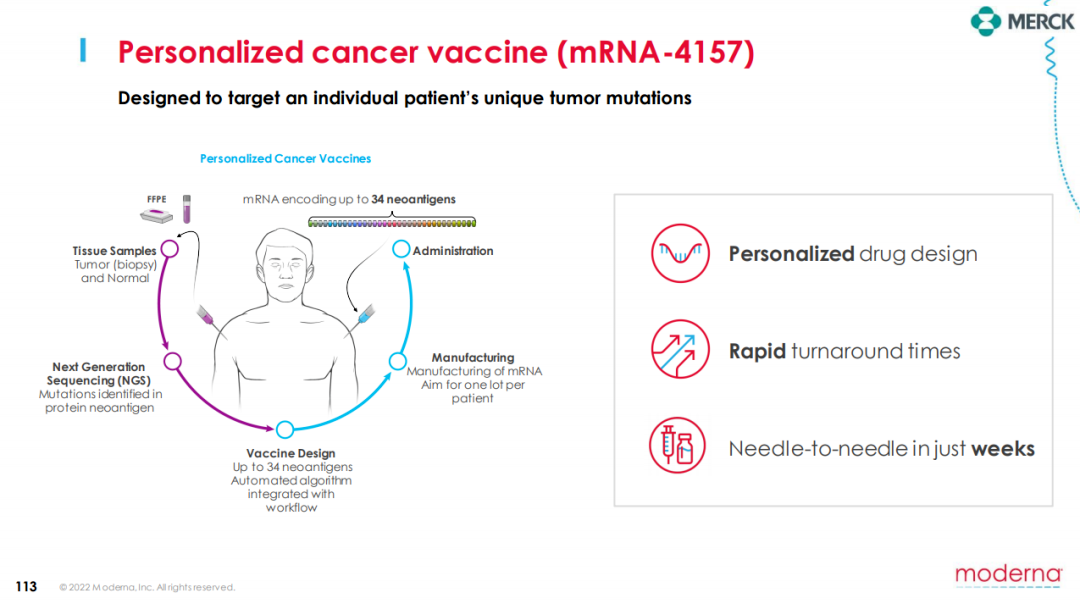
mRNA-4157 is a personalized neoantigen therapy (INT) based on mRNA, containing a single synthetic mRNA molecule encoding up to 34 neoantigens. It is designed through an algorithm based on the unique DNA mutation profile of each patient's tumor. When mRNA-4157 is injected into the body, the neoantigen sequences derived from algorithmic inference and RNA coding are translated into proteins, triggering specific T-cell anti-tumor responses in patients. Keytruda is an anti-PD-1 monoclonal antibody developed by MSD, used for treating metastatic melanoma, non-small cell lung cancer, cervical cancer, and other types of cancers. It is currently one of the highest-selling drugs worldwide. When mRNA-4157 is used in combination with Keytruda, it further enhances the ability of the patient’s immune system to detect and combat tumor cells.
To evaluate the adjuvant treatment efficacy of mRNA-4157 in combination with Keytruda, Moderna, Inc. and Merck & Co., Inc. (MSD) initiated a global, randomized, open-label Phase IIb clinical trial, "KEYNOTE-942." The study enrolled 157 high-risk Stage III/IV melanoma patients who, after complete surgical resection, were randomly assigned to receive either mRNA-4157 (1 mg every 3 weeks for a total of 9 doses) in combination with Keytruda (200 mg every 3 weeks for up to 18 cycles), or Keytruda monotherapy until disease recurrence or the development of unacceptable toxicity. The primary endpoint of this trial is RFS, defined as the time from the first dose of Keytruda to the first recurrence (local, regional, or distant metastasis), the appearance of a new primary melanoma, or death from any cause; secondary endpoints include DMFS and safety.
The experimental results were first announced in December 2022. Within a median follow-up time of two years, compared to monotherapy, patients treated with mRNA-4157 in combination with Keytruda for nine months showed statistically significant and clinically meaningful improvements in the primary endpoint RFS, reducing the risk of recurrence or death by 44%. In terms of safety, the combination therapy was similar to Keytruda alone and superior to previously used immune stimulants in combination; about 14% of patients on the combination regimen experienced serious adverse events, compared to 10% in the Keytruda monotherapy group.
In view of this positive result, in February 2023, the combination adjuvant therapy received Breakthrough Therapy Designation from the U.S. Food and Drug Administration (FDA); mRNA-4157 is the world’s first mRNA cancer vaccine to receive this designation; the European Medicines Agency (EMA) also granted the combination therapy Priority Medicines (PRIME) status.
At the 2023 AACR and ASCO meetings, KEYNOTE-942 announced the results of one of the key secondary endpoints, DMFS: compared with Keytruda alone, this combination adjuvant therapy significantly improved patients' DMFS and reduced the risk of distant metastasis or death by 65%.
Recently, based on the initial analysis results, the subsequent outcomes of the KEYNOTE-942 study were announced. The data shows that within a median follow-up time of three years, the combination of mRNA-4157 and Keytruda continues to demonstrate significant clinical improvements in RFS and DMFS, reducing the risk of recurrence or death by 44% and decreasing the risk of distant metastasis or death by 65% in high-risk stage III/IV melanoma patients. In terms of safety, the adverse events associated with mRNA-4157 observed this time were consistent with previous reports; the number of patients experiencing treatment-related ≥Grade 3 adverse events was similar between the combination therapy group and the monotherapy group. The most common adverse events of any grade attributed to mRNA-4157 were fatigue (60.6%), injection site pain (56.7%), and chills (49%).
"Kyle Holen, M.D., Senior Vice President and Head of Therapeutics and Oncology Development at Moderna, stated, 'By tracking the participants in the KEYNOTE-942 study, we are pleased to see the strong clinical benefit of mRNA-4157 in combination with Keytruda as adjuvant treatment for high-risk melanoma patients post-resection. KEYNOTE-942 is the first study to demonstrate the efficacy of an mRNA cancer therapy in a randomized clinical trial and represents the first combination therapy in the adjuvant melanoma setting to show superior efficacy compared to Keytruda alone. We look forward to sharing these data with those affected by this disease and the broader scientific community.'"
Marjorie Green, Ph.D., Senior Vice President and Head of Late-Stage Oncology, Global Clinical Development at Merck Research Laboratories, stated: "We are committed to advancing research on innovative therapies for early-stage cancer. By combining Merck's expertise in immuno-oncology with Moderna's innovative mRNA technology, we are excited to see the recurrence-free survival analysis results for mRNA-4157 and look forward to collaborating with Moderna to expand the clinical development program for personalized neoantigen therapy."
It was reported that in July 2023, Moderna and Merck & Co., Inc. announced the launch of the pivotal Phase III randomized INTerpath-001 (V940-001) clinical trial to further evaluate the combination of mRNA-4157 and Keytruda as adjuvant treatment for patients with resected stage IIB-IV melanoma. On December 11, 2023, the two companies also initiated a Phase III INTerpath-002 trial aimed at assessing the efficacy and safety of this combination therapy as adjuvant treatment for patients with completely surgically resected stage II, IIIA, or IIIB non-small cell lung cancer (NSCLC). Global recruitment for INTerpath-002 has already begun, with the first group of patients receiving treatment in Australia. Additionally, the two companies plan to continue expanding the comprehensive clinical development program for mRNA-4157 to other types of tumors.
In addition to mRNA-4157, other mRNA vaccines for the treatment of different cancer types are also under development or in clinical trials. For example, Autogene cevumeran (BNT122), a personalized mRNA neoantigen vaccine jointly developed by BioNTech and Genentech, a subsidiary of Roche, which expresses up to 20 neoantigens, is delivered using lipid nanoparticles (LNP) and administered via intravenous injection.
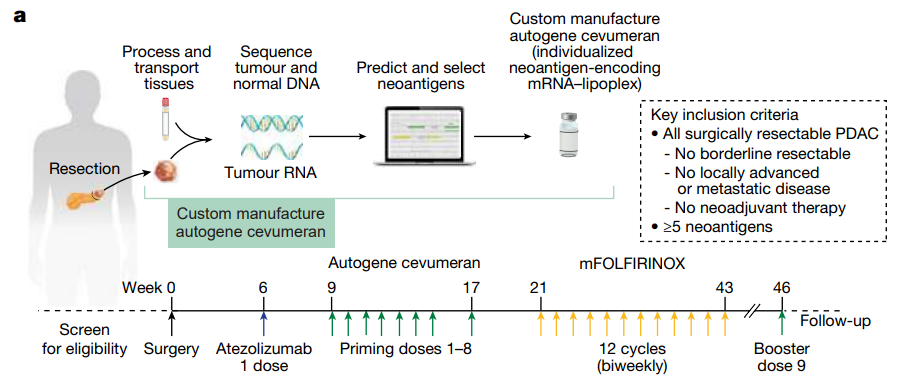
In May 2023, preliminary clinical trial results of Autogene cevumeran were published in Nature. When used in combination with Atezolizumab (anti-PD-L1 monoclonal antibody) and chemotherapy, it induced significant T-cell activity in patients with surgically resected pancreatic cancer and substantially delayed the recurrence time. Currently, the vaccine is in Phase II clinical trials for the treatment of melanoma and colorectal cancer, and Phase II clinical trials for solid tumors are about to commence.
References:
1.https://investors.modernatx.com/news/news-details/2023/Moderna-And-Merck-Announce-mRNA-4157-V940-In-Combination-with-KeytrudaR-Pembrolizumab-Demonstrated-Continued-Improvement-in-Recurrence-Free-Survival-and-Distant-Metastasis-Free-Survival-in-Patients-with-High-Risk-Stage-IIIIV-Melanoma-Following-Comple/default.aspx
2.https://dailynews.ascopubs.org/do/personalized-mrna-vaccine-feasible-and-immunogenic-pancreatic-ductal-adenocarcinoma