

From Scientist to CEO: Making Gene Therapy Affordable — JWKBio Submits IPO Prospectus

Jinweike Biotechnology
AAV Gene Therapy New Drug Developer

and Researcher at the National Key Laboratory of Biotherapy, Sichuan University, and Co-founder of Chengdu Jinweike Biotechnology Co., Ltd. (hereinafter referred to as: Jinweike)Yang YangDiscussing the transformation of scientific research results will never disappoint you.
Any curiosity I threw out about entrepreneurship, he could explain it immediately.. For example, when I asked him about the opportunity for starting his business, he frankly said, "It was under the guidance of a teacher that I started my business." But without much probing, he would add, "Gene therapy has a great application scenario."
For instance, when I wanted to discuss team building with him, he generously shared his experience: finding core members through personal networks and rapidly expanding the team via public recruitment. He believes that the key factor in hiring talent for a startup is matching. "I communicate directly with candidates and comprehensively evaluate them based on professional skills, work experience, personal aspirations, and other aspects."
During the interview, the sound of pages being flipped sporadically came through the network line, a trace of Yang Yang's prior preparation. As a technology entrepreneur, Yang Yang consistently maintains a rigorous attitude, whether in scientific research, product development, or media interviews.
Doing experiments requires continuous attempts and innovation, and so does entrepreneurship.In Yang Yang, you can witness the transformation of a grown entrepreneur from a scientist to a CEO, as well as his perspective on the commercialization of scientific research.
Underlying Logic
Breaking down Jinweike, you’ll find that this company is a bit "greedy" —Its product pipeline covers both common and rare diseases, as well as local and systemic drug delivery.This is not common in the biopharmaceutical industry. Often, the "failure" of the rare disease drug market and the lack of awareness about rare disease drugs discourage many companies, leaving only a few that can develop pipelines for rare disease products or simultaneously focus on both common and rare diseases.
As an entrepreneur, Yang Yang needs to consider the long-term development of the enterprise. "In the future, this pipeline can bring us a stable cash flow" is the most important reason for the layout of common disease drugs. As a scientist, he also hopes that the enterprise can play its due social value. "Not neglecting the treatment of rare diseases, fully utilizing gene therapy, meeting clinical needs, and benefiting more patients" is his commitment to the social responsibility of the enterprise.
As of now, Jinweike Biotechnology's product pipeline "JWK001," targeting the common condition of neovascular age-related macular degeneration (nAMD), completed its first administration at Huaxi Hospital this June. Patients reported good postoperative recovery with a significant improvement in best-corrected visual acuity (BCVA). The JWK001 pipeline submitted an Investigational New Drug (IND) application at the end of November this year, which has been accepted by the Center for Drug Evaluation (CDE) under the National Medical Products Administration (NMPA).
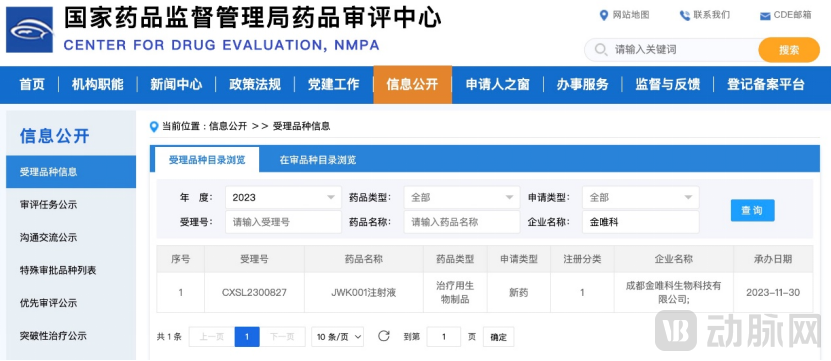 Image Source: CDE Official Website
In the field of rare disease treatment, Jinweike Biotechnology has laid out pipelines for indications such as hereditary ophthalmic diseases, inherited metabolic disorders, and neuromuscular diseases, all of which are currently in the preclinical research stage.
Multiple product pipelines advancing simultaneously test the R&D strength of enterprises.Regarding the star vector in gene therapy - recombinant adeno-associated virus (AAV), Jinweike Biotechnology has established a complete technical chain for AAV gene therapy research and development based on four core original technologies: "AAV gene expression cassette design technology, gene editing technology, large gene delivery technology, and AAV capsid modification technology."
Among them, AAV gene expression cassette design technology enhances efficacy and safety; large gene delivery technology overcomes the challenge of gene capacity limitations; AAV-CRISPR/Cas9 gene editing technology achieves targeted gene editing and integration, expanding indications; AAV capsid modification technology improves tissue targeting.
In the specific production process of AAV vectors, Yang Yang prefers to keep core technologies in his own hands rather than relying on CDMO or CRO companies. In his view,Although R&D speed is an important criterion for evaluating enterprise development, product quality and controllable costs are the fundamental driving forces for a company's long-term progress.。
"If we blindly rely on CDMOs and CROs to accelerate drug development, our product quality may not meet the standards, and the production costs could be uncontrollable," Yang Yang explained. "Controlling the cost of viral vector production is crucial for reasonable pricing of terminal products during the commercialization phase. Scaling up and upgrading the AAV production process is not only to meet the demand for usage volume but also to ensure product quality and cost control."
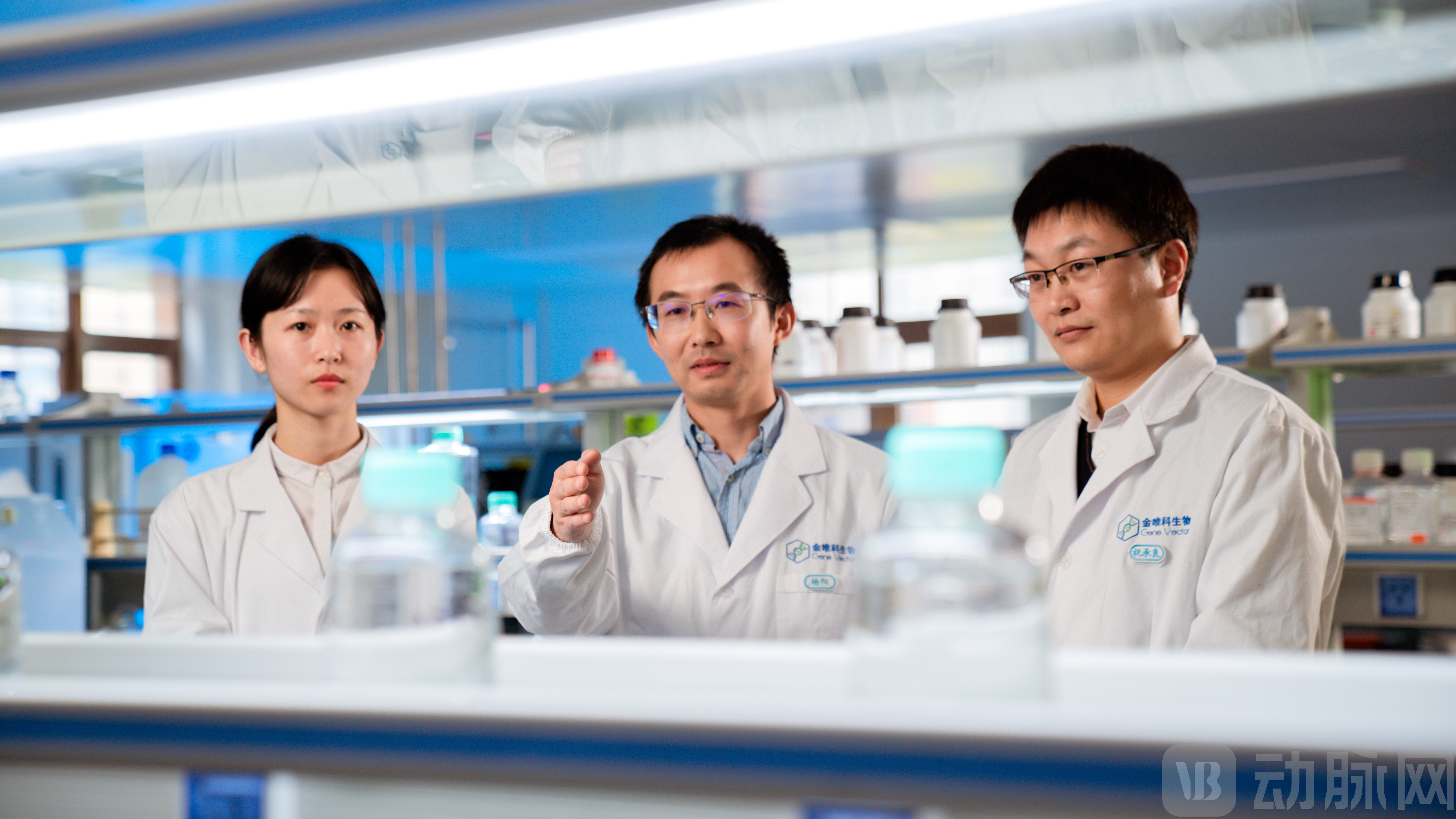
Yang Yang and Jinweike Biotechnology colleagues at work, photo provided by the interviewee.
As of now, the Jinweike team has a total of 55 members, covering professionals in AAV new drug research and development, CMC process preparation, and quality research, supporting the company’s pipeline work across the entire chain "from early-stage research to IND application, and then to clinical trials."
With professional talent, Jinweike Biotechnology continuously refines and optimizes its AAV production and preparation process system in the subsequent production processes. From the research of plasmid packaging systems and production processes, the screening of suspension cell lines and fermentation processes, to the key process parameters of virus packaging and purification, it has developed a fully autonomous innovation design for the entire process.
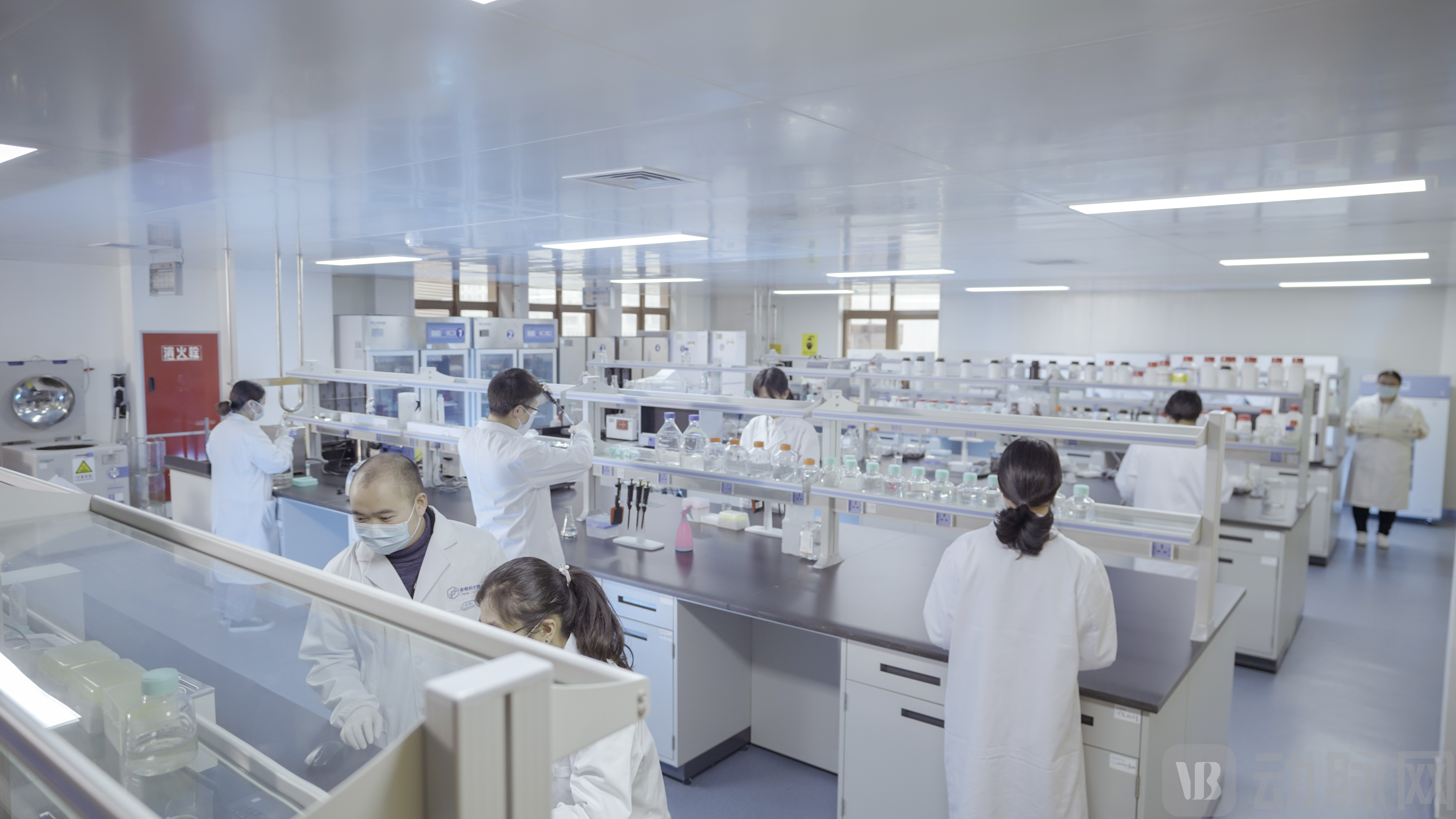
Jinweike Biotechnology Corporate Laboratory, photo provided by the interviewee
In September 2020, Jinweike Biotechnology's 3,000-square-meter AAV new drug R&D platform was put into operation, including a GMP-level AAV production workshop, plasmid production workshop, quality research platform, and drug development platform, which can efficiently bridge the early product development IIT research and clinical research.
For any science and technology innovation enterprise, the technology platform is the foundation of survival. Mastering core and original technologies can even make them fearless in the face of any cycle. But for Jinweike Biotechnology at this moment, the real challenge is how to secure continuous funding to advance drug research and development.
Securing investment is not just about fate.
The biopharmaceutical industry has long been known for the "double ten" rule — it takes ten years and costs one billion US dollars to develop a new drug. An investor once calculated for VCBeat: if a pharmaceutical company is simultaneously advancing eight pipelines, and each pipeline requires 50 million yuan to file an IND application, then with eight pipelines, 400 million yuan would be spent.
In this industry where money flows like water, the absence of a stable cash flow is always a critical issue for early-stage biopharmaceutical companies. This means that in order to continue research and development, these companies need to keep raising funds.
As for this information-interwoven and highly uncertain primary market, Yang Yang casually remarked, "I believe more in fate.""Whether the investors pay attention to the gene therapy track and whether they agree with the company's development philosophy" are important criteria for Yang Yang to judge whether the investment institutions fit the company.。
Yang Yang also believes that investors highly value the potential of a startup company—whether it has unique, core technological advantages to ensure it can stand out in this fiercely competitive environment and become one of China's leading gene therapy companies. Especially in a bleak macro-environment where capital is pushing aside industry bubbles, the key question is once again directed at companies—how to achieve "self-strengthening" and how to make investors see and understand them.
"The first thing is that our company needs to do very solid R&D work and demonstrate our unique competitive advantages. For example, the drugs we design are safer, have lower production costs, and are protected by independent intellectual property rights," said Yang Yang.
Recalling the first financing experience, Yang Yang admitted that it was a hard story.
In 2021, Jinweike's angel investors were unable to continue funding due to certain reasons. However, by that time, the AAV new drug development platform had already been put into operation and urgently needed a large amount of funds to advance the pipeline progress, "The team faced tremendous financial pressure."
Yang Yang was relieved that the financing environment at that time was still relatively optimistic. "We reached out to various channels ourselves to let investors know that there is a gene therapy company in Chengdu, and this company has significant advantages." During that period, Yang Yang and the team members participated in numerous roadshow events, no longer filtering whether the events were organized by the government or private entities.They just want to seize every opportunity to "show their face."
In March 2022, Jinweike Biotechnology announced the completion of a Pre-A round of financing worth tens of millions of RMB, which was jointly invested by Ruijing Investment, Yingke Capital, East Lake High-tech, Xiaoming Investment, Sichuan Hui Su, and others. Just eight months later, Jinweike Biotechnology again announced the completion of a Pre-A+ round of financing worth tens of millions of RMB.
Having experienced a financial crisis, Jinweike Biotechnology began to raise funds in anticipation of future needs.Currently, Jinweike Biotechnology has initiated a new round of financing to advance the clinical progress of the company's research pipeline. Yang Yang told VCBeat that he interfaces with investors every week to facilitate the company’s financing efforts.
Treading Pitfalls, Reviewing, and Moving Forward
Actually, as early as 2014-2016, Yang Yang, who was then studying at the University of Pennsylvania, sensed the entrepreneurial wave in gene therapy. "My mentor at the time, Professor James M. Wilson, founded several gene therapy R&D companies, including Passage Bio and iECURE." Yang recalled that the development of the U.S. gene therapy industry also had a significant impact on him:
In the academic community, there is a continuous increase in funding for the field of gene therapy: In June 2014, the NIH funded $25 million for gene therapy research on infectious diseases (malaria and influenza); by the end of 2015, the White House of the United States released the "National Strategic Plan for Advanced Innovation," explicitly identifying precision medicine, including gene therapy, as a future development strategy, with an investment of $4.8 billion over the next decade.
In the industry, pharmaceutical giants have invested heavily in the gene therapy field: In December 2014, Pfizer partnered with Spark Therapeutics, an American gene therapy company specializing in rare diseases, to develop a gene therapy product for Hemophilia B; In April 2015, Bristol-Myers Squibb collaborated with uniQure, a gene therapy company, to develop cardiovascular gene therapy drugs using AAV expression vectors; In 2016, Biogen announced a $2 billion investment to collaborate with the University of Pennsylvania and REGENEXBIO to develop AAV vector-based gene therapy drugs.
All of this seemed to be telling Yang Yang:"Gene therapy has shown promising application prospects in the treatment of many diseases."
In 2016, Yang Yang returned to China after completing his postdoctoral research and established the AAV gene therapy technology platform at the State Key Laboratory of Biotherapy at Sichuan University. In the same year, Sichuan University introduced a series of policies to encourage researchers to promote the transformation of scientific and technological achievements.The open environment and optimism towards the gene therapy industry have sparked Yang Yang's entrepreneurial aspirations., but he, with no entrepreneurial experience, conservatively chose to wait and see for a while.
The one who truly gave Yang Yang a push was Academician Wei Yuquan, who "greatly encourages the transformation of scientific research results." Yang Yang told VCBeat that he decided to start a business under the guidance of his teacher. Following his teacher's advice, Yang Yang first secured the intellectual property rights for the lab’s AAV gene therapy technology, then had it evaluated by a third-party institution. Using intangible assets as capital contribution, he established Chengdu Jinweike Biotechnology Co., Ltd. and took on the role of CEO.
At this time, everything about the business was still very unfamiliar to Yang Yang. Yang Yang realized that the biggest problem he faced was,How to Break Out of the Scientist's Mindset and Transform into a Mature Business Manager.
In the past few years, Yang Yang has been mostly feeling his way forward. In the process of exploration, he naturally encountered quite a few pitfalls. For instance, due to the influence of a scientific research mindset, the team conducted very detailed laboratory validation work.
Later, Yang Yang began to learn how to review his journey, and all the pitfalls he encountered eventually turned into his experience. Looking back on his 7-year entrepreneurial journey, Yang Yang admitted that his biggest gain after starting a business was the positive feedback from patients on the product pipeline, which verified the safety and efficacy of the drugs. He also became more familiar with the rules of company operations.
"Now, he has found a balance between scientific research and entrepreneurship. 'Scientific research and entrepreneurship each play their own roles. Research institutions transfer technologies with market value to enterprises, which in turn maximize the commercialization of these technologies.' He believes,To promote enterprise product development based on scientific research is an extremely correct direction.At the same time, he hopes that Jinweike Biotechnology will successfully commercialize 1-2 products in the next 5-10 years, becoming an influential gene therapy Biotech company, enabling more patients to use gene-based medicines.