GE Healthcare Customer Services Launches Standardization Initiative to Empower High-Quality Nuclear Medicine Development

GE Healthcare
Digital Solution Provider


Nuclear medicine, as an emerging discipline in modern medicine, is also a discipline that integrates diagnosis and treatment. It can utilize different therapeutic radionuclide probes to combine imaging diagnosis with internal irradiation, achieving the goal of visualized diagnosis and precise treatment, while providing patients with quantitative and accurate evaluation and medication.
Nuclear medicine plays a crucial role in the field of precision medicine. It not only provides insights into molecular-level information of diseases at an early stage, such as the significant importance of nuclear medicine for Alzheimer's disease mentioned in previous series of articles, but also plays a key role in assisting clinical research to tackle severe conditions in neurology, oncology, and cardiology.。

With the rapid development of nuclear medicine, standardized operations are crucial for the quality and efficiency of clinical diagnosis, as well as the safety and patient experience during examinations. Currently, hospitals commonly face the following major issues in the standardization of operations in the construction of nuclear medicine disciplines:
Data shows that, as of October 2023, the installed base of GE Healthcare's nuclear medicine equipment has reached over 1,000 units, mainly distributed in hospitals at or above the secondary level, becoming one of the main devices for hospitals to perform nuclear medicine diagnostics.
To address the shortage of talent in nuclear medicine services, in January 2022, GE Healthcare's Customer Service Department collaborated with Tongji Medical College of Huazhong University of Science and Technology to establish the Xiehe Hospital Molecular Imaging Training Base. Through a dual-phase training model in China and abroad: comprehensive technical training on the full range of molecular imaging products is conducted in China, while advanced courses are completed at training centers in the United States and Sweden, helping to enhance the technical proficiency of nuclear medicine professionals.
At the same time, to further assist hospitals in achieving high-quality clinical diagnosis and treatment, the GE Healthcare Customer Service team has also launched standardized clinical application courses for hospitals, helping hospital partners jointly improve their nuclear medicine clinical capabilities.
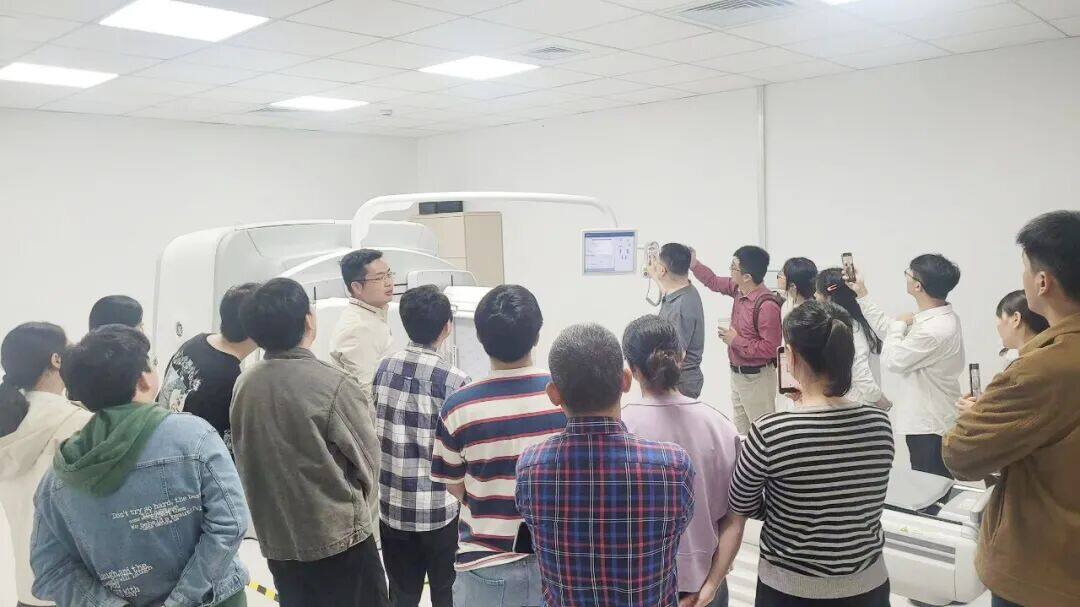
In response to the challenge of numerous operational difficulties with nuclear medicine equipment, and to ensure its standardized operation, GE Healthcare's Customer Service Department provides technical support services for nuclear medicine equipment across multiple provinces in China. They also launched a year-long campaign called "'Zhì Tóng Dào Hé' Nuclear Medicine Equipment Care Initiative." During the inspection tours for nuclear medicine equipment in some provinces and cities, it was found that 45% of the equipment not maintained by the original manufacturer suffered from image quality issues due to unprofessional repair techniques, inadequate tools, and insufficient clinical expertise, posing risks of misdiagnosis and missed diagnosis.
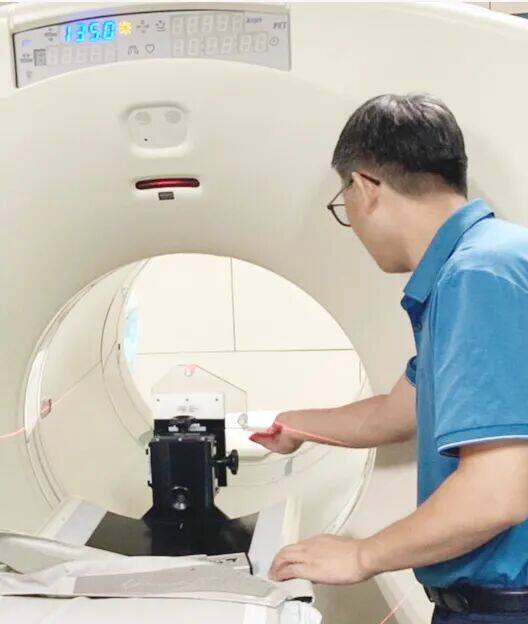
*Data source: GE Healthcare Customer Service Department

In the application of imaging examinations in nuclear medicine, whole-body bone scintigraphy is currently the most common SPECT/CT examination item. Due to its advantages such as being non-invasive, enabling full-body imaging in one session, and high detection sensitivity, it is widely used in clinical practice. By injecting a tracer intravenously, the tracer accumulates in certain areas of the bone (a nuclear medicine indicator for determining whether there are cancer cells in the bone), which can then be detected to identify bone lesions. This examination is particularly advantageous in the diagnosis and post-treatment evaluation of bone metastases, the diagnosis and staging of primary bone tumors, and the diagnosis of occult fractures. However, many factors can affect the imaging quality during the operation of whole-body bone scintigraphy, making standardized operating procedures especially important.
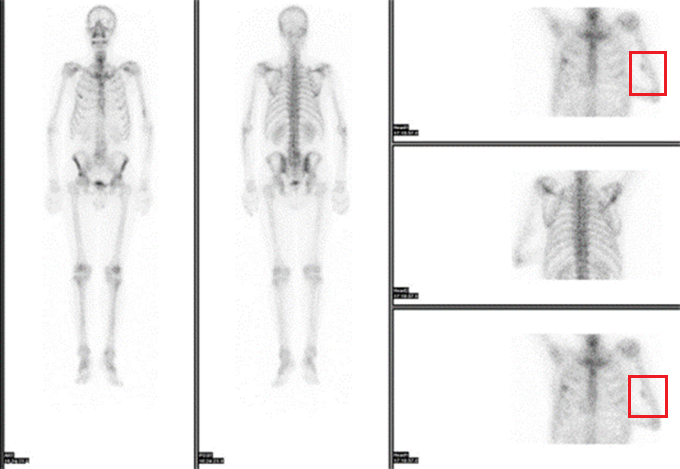
For example, a male patient was diagnosed with lung cancer and underwent a whole-body bone scan. During the examination, it was found that there was an aggregation of tracer in the lower segment of his left humerus, suspected to be a skeletal lesion. If this patient is diagnosed with metastatic humeral tumor, it will change the staging and treatment plan of his cancer.
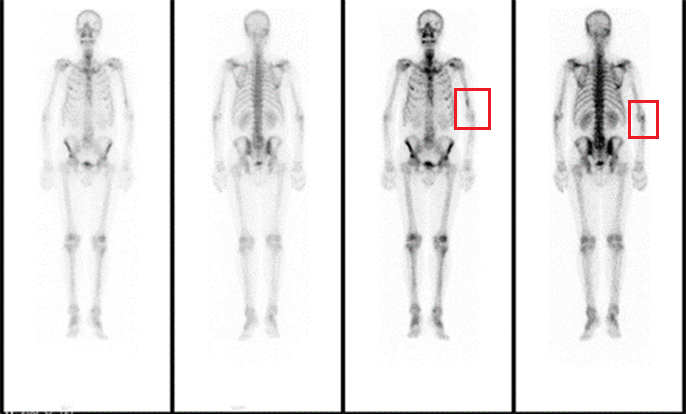
The on-duty technician followed the standardized procedure, performed humeral rotation for the patient, and then captured static images. They found that the focal concentration was separated from the humerus, indicating it was not a lesion on the humerus. This assisted the clinician in making an accurate diagnosis, ruling out the possibility of humeral metastatic tumors, and selecting the most appropriate treatment method to help the patient recover as soon as possible.
*The case has been authorized for use by the hospital and the patient.

In order to better advance the development of nuclear medicine disciplines and standardize the use of nuclear medicine equipment, in November this year, GE Healthcare's Customer Service Department, in collaboration with industry associations and several leading hospitals in the field of nuclear medicine across China, officially launched the "Standardized Operation Project for the Entire Process of Nuclear Medicine." This project willCovering the full-process operation standards for nuclear medicine equipment, combined with the key points of full-process quality control for nuclear medicine equipment use, to help nuclear medicine professionals improve clinical operation standards and application levels, establish high-standard quality control for nuclear medicine equipment, and empower more precise clinical diagnosis and treatment.。
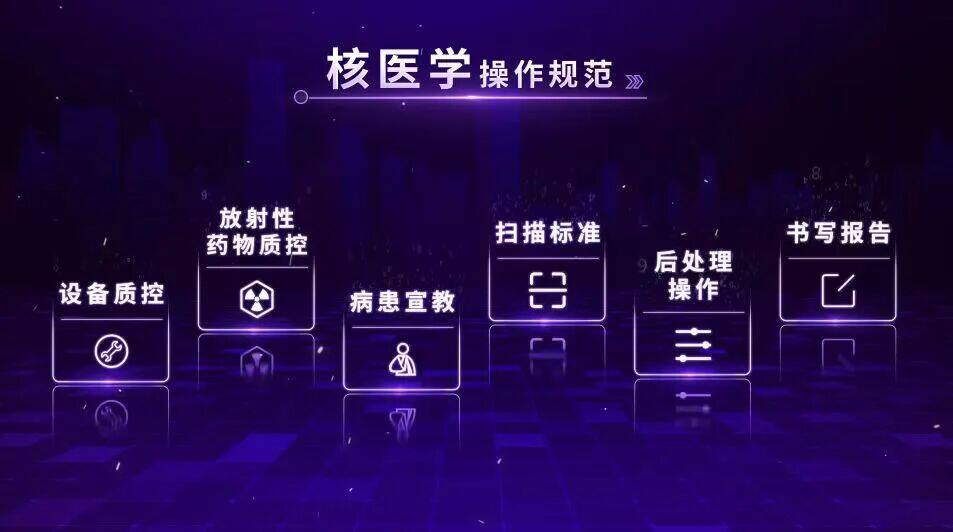
In order to empower nuclear medicine clinical applications with more systematic talent support, GE Healthcare's Customer Service Department willBased on equipment quality control and starting from clinical projects, a chain is formed from radiopharmaceutical quality control — patient preparation — scanning standards — post-processing operations — report writing, with the plan to release the "Standardized Operation Projects for Nuclear Medicine" Blue Book., providing standardized reference for the operation of nuclear medicine equipment and enabling full-process operational support for the construction of nuclear medicine departments.
In the future, GE Healthcare's Customer Service Department will further assist in the standardization and规范化使用 of nuclear medicine equipment by helping hospitals enhance their equipment quality control levels. On the basis of ensuring high-quality equipment imaging, it will improve the imaging homogenization capabilities and standardized operations of hospitals at all levels, promote the high-quality development of nuclear medicine disciplines, and jointly create boundless medical care.