

Immune-Competent Organoids Enable Assessment of Off-Tumor Toxicities in T Cell-Engaging Bispecific Antibody Therapies

Roche
Oncology Drug Research, Development, and Manufacturing

By recruiting immune cells to target tumors, cancer immunotherapy has become one of the most promising strategies in the current fight against cancer. Despite showing good clinical efficacy, tumor immunotherapy is only effective for a small number of patients and tumor subgroups due to factors such as low expression of neoantigens in cancer cells and the immunosuppressive tumor environment. Additionally, immunotoxicity is also a major obstacle to the clinical application of anti-cancer immunotherapies. Almost all drugs targeting T cells, such as immune checkpoint inhibitors, CAR T cells, and T-cell-engaging bispecific antibodies (TCBs), can cause severe adverse reactions in healthy tissues, limiting the widespread use of immunotherapy. However, these issues with immunotherapy are often unforeseen by traditional preclinical toxicology models. Whether cellular or animal, traditional disease models cannot capture the complexity of natural organs on the one hand, and lack human-specific tissue characteristics and immune responses on the other.
Patient-derived organoids, which can preserve the morphological, genetic, and functional characteristics of the parent tissue, are gradually becoming a powerful preclinical model. Numerous studies have demonstrated that organoids can accurately predict a patient's response to anticancer drugs, highlighting their value in oncology research and personalized medicine. Although organoids themselves lack an immune system, co-culture with immune cells allows them to be used for preclinical testing of chemotherapy, targeted therapy, and immunotherapy. Relevant studies have shown that organoids can be utilized to test and enhance the efficacy of cancer immunotherapy drugs and adjust treatment strategies for patients showing favorable in vitro drug responses. However, current tumor immunology models based on organoids largely overlook the toxicity of cancer immunotherapies in healthy tissues, which is a major obstacle to the effective clinical translation of related drugs.
In recent years, Roche has increased its investment in the organoid field. In 2022, it appointed Hans Clevers, the pioneer of organoids, as the head of Roche's Pharma Research and Early Development (pRED) department. In May 2023, Roche announced the establishment of the Institute of Human Biology (IHB). As part of the Pharma Research and Early Development department, the IHB focuses on researching human disease models, including organoids, to accelerate drug development.
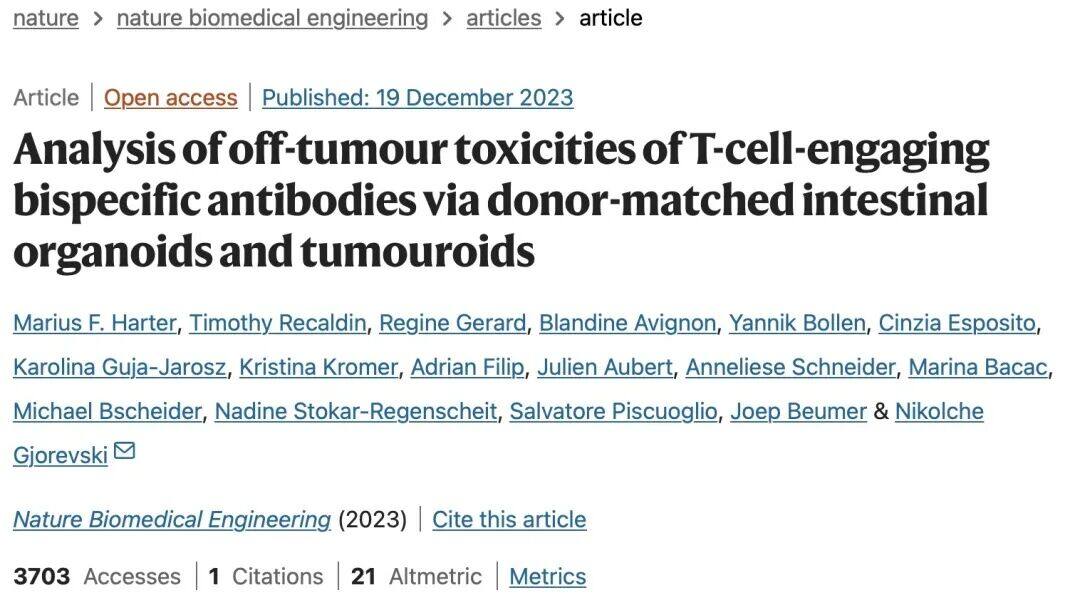
Roche, Paris-Saclay University, and the University of Basel collaborated to discover that patient-derived gut organoids and tumor organoids with immune systems can be used to study the off-target effects of T-cell bispecific antibodies in cancer immunotherapy, providing insights into clinical toxicity and inter-patient drug response variability that cannot be predicted by traditional disease models. The relevant findings were published in “Analysis of off-tumour toxicities of T-cell-engaging bispecific antibodies via donor-matched intestinal organoids and tumouroids" as the title, published on December 19, 2023, inNature Biomedical EngineeringIn the journal, the corresponding author of this article is Nikolche Gjorevski from Roche's Pharmaceutical Research and Early Development department.
For evaluating the efficacy of T-cell bispecific antibodies (TCBs)Organoid Model Construction
The research team cultured intestinal organoids using surgically resected small intestine and colorectal tissues, evaluating the expression of two target proteins of TCB, CEA (carcino-embryonic antigen) and EpCAM (epithelial cell-adhesion molecule), in the organoids, and compared them with the expression in the parental intestinal samples. Histological assessment revealed that both EpCAM and CEA are present in healthy intestinal tissues. The two target proteins were expressed in the corresponding organoids in a morphological pattern similar to that in vivo: EpCAM was localized at cell junctions, while CEA showed apical localization.
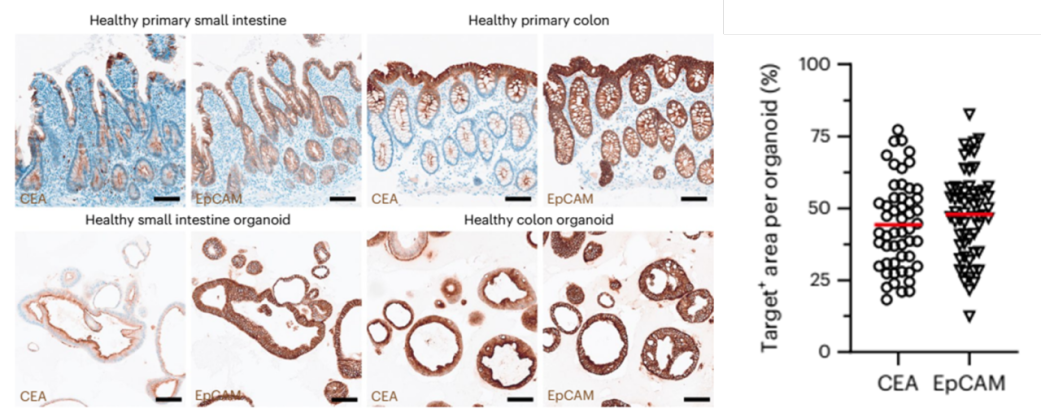
Expression Profiles of CEA and EpCAM in Intestinal Tissues and Organoids
doi: 10.1038/s41551-023-01156-5
What are the characteristics of the co-culture model in this article?
In traditional organoid co-culture models, organoids and immune cells coexist in suspension culture medium or at the bottom of culture plates. The research team in this article encapsulated patient-derived intestinal organoids and peripheral blood mononuclear cells (PBMC) within a solid 3D hydrogel (a mixture of collagen I and Matrigel) for co-culture. The resulting solid extracellular matrix effectively recapitulates the mechanical characteristics of intestinal tissue, thereby simulating key immune processes beyond contact-dependent targeting in vitro, including bystander signaling, immune cell migration, and immune cell infiltration.
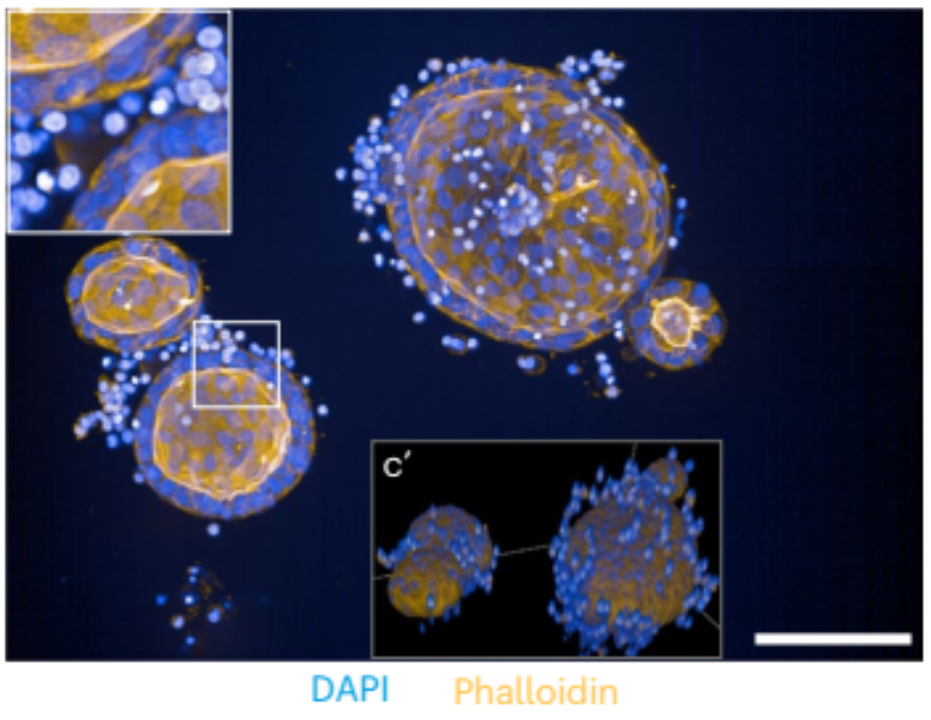
Immunostaining Results of Co-culture Model
(Blue: Nucleus, Orange: Cytoskeleton)
doi: 10.1038/s41551-023-01156-5
Based on Co-culture ModelStudy on the Pharmacodynamic Mechanism of T-Cell Bispecific Antibodies
To investigate the mechanism of immune cell activation and off-target toxicity mediated by T-cell bispecific antibodies, the research team used flow cytometry and multiplex immunofluorescence to reveal a cascade reaction: ① Infiltration of CD4+ helper T cells and CD8+ cytotoxic T cells into organoids, ② T-cell activation, ③ Release of inflammatory cytokines (particularly interferon-γ, interleukin-6, interleukin-8, and tumor necrosis factor), ④ Apoptosis.
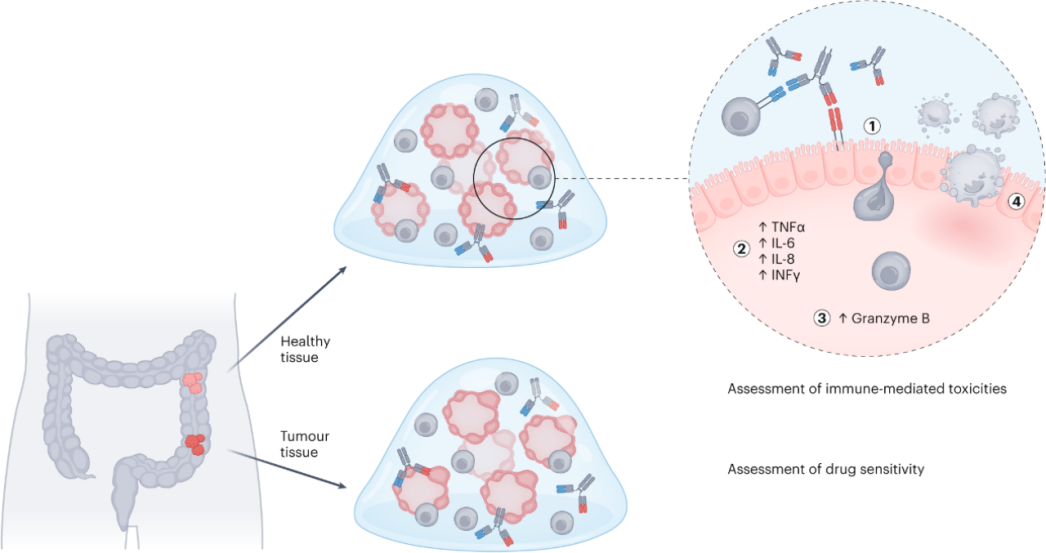
Schematic Diagram of T-Cell Bispecific Antibody-Mediated Immune Response
doi: 10.1038/s41551-023-01163-6
Prospect: Clinical Application of Organoids in Drug Development and Efficacy Evaluation
Due to insufficient understanding of tumor immunology and the tumor microenvironment, scarcity of tumor-restricted antigens, deficiencies in preclinical models, and lack of guidance for clinical application, cancer immunotherapy has yet to fully realize its potential, particularly evident in the treatment of solid tumors.
This study led by Roche shows that the use of organoid-based efficacy evaluation tools can expand the application capabilities of cancer immunotherapy drugs in the following three aspects:
(1) More accurate preclinical evaluation of drug efficacy and safety
(2) At the cellular and molecular levels, elucidate the killing mechanisms of immune-mediated tumors and healthy cells.
(3) Guide personalized precision medication
References:
1.https://www.roche.com/about/leadership/hans-clevers
2.https://www.roche.com/media/releases/med-cor-2023-05-04
3.https://www.nature.com/articles/s41551-023-01156-5
4.https://www.nature.com/articles/s41551-023-01163-6

This ArticleFor academic sharing only, please indicate the source when reprinting.If there is any infringement, please contact WeChat:bioonSirDelete or modify!