

Beyfortus® (Nirsevimab) Approved in China as the First RSV Preventive for All Infants

Sanofi
Pharmaceutical R&D Developer
BeijingJanuary 2, 2024PR Newswire -- Good news comes for the prevention of Respiratory Syncytial Virus (RSV, hereinafter referred to as RSV) in infants.。The First One for All Infants*Respiratory Syncytial Virus Prevention Method Le Wei Chu®(Nirsevimab Injection) has been approved for marketing by the China National Medical Products Administration. For newborns and infants about to enter or born in their first RSV infection season, there is finally an innovative method to prevent lower respiratory tract infections caused by RSV. Levecur®Jointly developed by Sanofi and AstraZeneca, it will be co-promoted by the two companies in China.
China is one of the countries with high prevalence of Respiratory Syncytial Virus (RSV) globally.[1]Respiratory syncytial virus (RSV) is a common and highly contagious respiratory virus. It is the leading cause of hospitalization for pulmonary infections (such as bronchiolitis and pneumonia) in infants under 1 year of age.[2],[3],[4],[5]. Due to a weaker immune system and narrower respiratory airways in the lungs[6],[7]Infants within 1 year of age have a higher risk of developing severe disease from RSV infection compared to other age groups.[8],[9]Infants severely infected with respiratory syncytial virus may experience recurrent wheezing or asthma.[10],[11],[12],[13], which are manifestations of impaired lung function and may have long-term effects on children.[14]**In China, 85% of infants hospitalized due to RSV infection are healthy full-term babies.[15], which means all infants need to be protected against RSV.
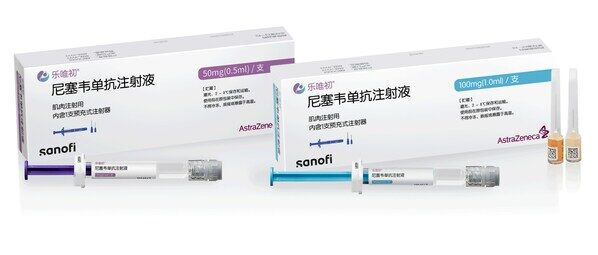
Levichu® Product and Packaging Illustration
Le Wei Chu®The approval fills the gap in China's respiratory syncytial virus prevention field. A single injection can provide timely, rapid, and direct immune protection for all infants (healthy/special health conditions, full-term/preterm, born during or outside the infection season), effectively reducing the rates of outpatient visits and hospitalizations caused by RSV infections. Beyfortus®(Beyfortus®) Since its global launch in multiple countries in the autumn of 2023, there has been a peak in vaccinations. This approval in China not only provides protection for Chinese babies but also is expected to help reduce the burden on China's healthcare system during the high-incidence season of respiratory diseases caused by RSV infections.
Professor Zeng Guang, an expert in public health and epidemiology, stated:"China is one of the countries with a high prevalence of RSV. RSV is the leading pathogen causing acute lower respiratory tract infections in children, with a contagion rate nearly four times that of the influenza virus, posing a serious threat to the health of infants under one year old. 85% of infants hospitalized for RSV-induced lower respiratory tract infections are full-term and healthy, and severe RSV infections can also lead to long-term lung function damage; therefore, prevention is crucial. Currently, China does not have specific treatments or preventive measures for RSV. We are pleased to see the first preventive measure against RSV for all infants approved and launched in China, which will positively alleviate the public health pressure caused by RSV infections and contribute to the healthy growth of babies in China."
Advisor of the National Clinical Research Center for Respiratory Diseases, Professor Kunling Shen from Beijing Children's Hospital, Capital Medical University, and Shenzhen Children's HospitalIndicates:"RSV is especially dangerous for infants under 1 year old because their lungs are not yet fully developed, and their airways are as delicate as the tip of a pencil, making them more prone to blockages due to swelling, congestion, and cell shedding. Some severely infected infants may develop recurrent wheezing or asthma, which indicates impaired lung function, and the effects can last for years. Data shows that most infants hospitalized due to RSV are full-term and healthy at birth, so all babies need protection. Beyfortus"®"Is a major breakthrough in the development of preventive measures against the respiratory syncytial virus over the sixty years since its discovery by humanity, and will bring new hope for the immunization and prevention of babies in China."
Zhang Heping, Head of Sanofi Vaccines in Greater China, said:"Very pleased to see Le Wei Chu®"Approved for marketing in China, this is a crucial step in protecting infants through their first RSV (Respiratory Syncytial Virus) season. This milestone breakthrough is expected to completely change the threat of RSV to the most vulnerable infant population. Going forward, we will continue to work with multiple parties to accelerate the implementation of this innovative preventive measure, providing 'immune protection' for Chinese babies."
Wang Shi, President of Sanofi Greater ChinaIndicates:"Levichu"®Since Sanofi introduced the pentavalent vaccine for Chinese babies, it has broughtAnother Innovation. As an important goal in Sanofi's development strategy in China, the company plans to introduce 25 innovative products and indications to China from 2020 to 2025. With the advent of Lewei Chu®"Having been approved, we have achieved our goal two years ahead of schedule. In the future, we will continue to accelerate the launch of innovative drugs and vaccines in China by relying on a rich global R&D pipeline, contributing to the realization of the Healthy China 2030 goals."
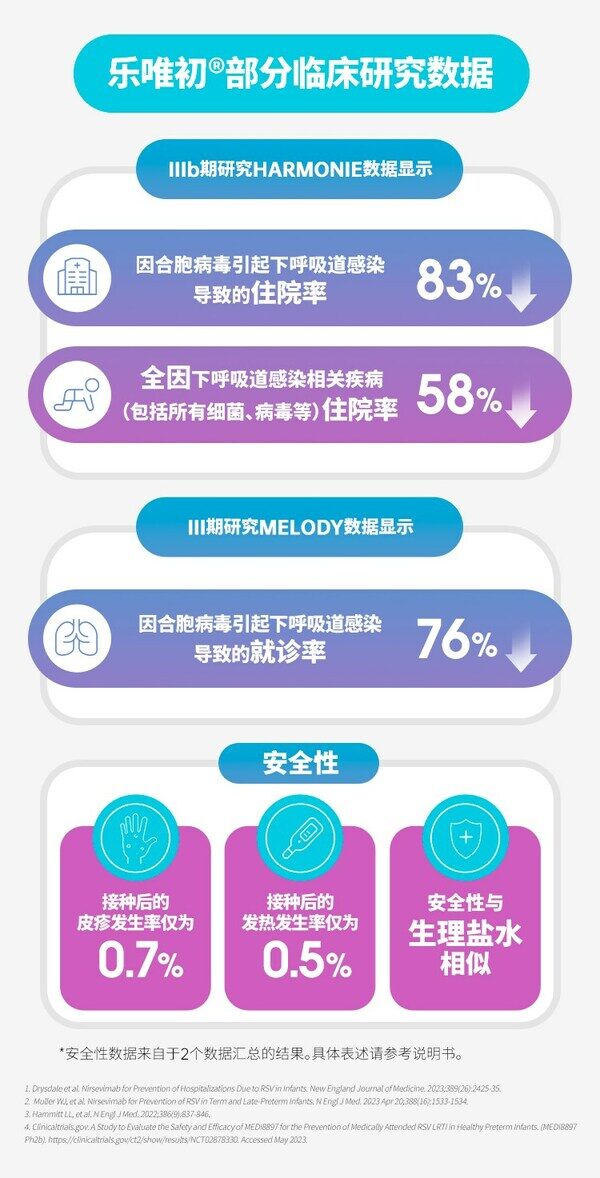
Le Wei Chu®Approved in China based on multiple clinical trial results, including the Phase III CHIMES study in China, the Phase I study in healthy Chinese adults, and the global Phase III MELODY/MEDLEY studies. Data from the Phase III MELODY study showed that, compared with placebo, Lavechu...®Significantly reduced the medical visit rate by 76% due to lower respiratory tract infections caused by respiratory syncytial virus.[16]. In addition, the Phase IIIb HARMONIE study data shows that, compared with the non-intervention group, Lecanemab®Reduced the hospitalization rate due to lower respiratory tract infections caused by RSV by 83%, Beyfortus®The hospitalization rate for all-cause lower respiratory tract infections (including all bacteria, viruses, etc.) in the group of infants decreased by 58%.[4]In terms of safety, the incidence of rash as an adverse reaction after vaccination is 0.7%, and the incidence of fever is 0.5%. The safety is similar to that of normal saline.[16],[17]。
*Health/Special health status, full term/Preterm infants born during or outside the infection season
**Most children with respiratory syncytial virus infection can fully recover without leaving any sequelae.
Note: The term "dangerous period" in the title refers to the RSV infection season.
About Respiratory Syncytial Virus
Respiratory syncytial virus (RSV) is a common and highly contagious respiratory virus, and it is the leading cause of hospitalization for infant lung infections such as bronchiolitis and pneumonia.[2],[3],[4],[5]Respiratory syncytial virus (RSV) can easily spread through coughing, sneezing, and close physical contact such as hugging and kissing. Its contagiousness is approximately 2.5 times that of the rotavirus.[18]RSV infection often starts with upper respiratory tract infections, such as sneezing, nasal congestion, and fever. RSV can also progress to lower respiratory tract infections, with symptoms including hypoxia and wheezing, and severe cases may lead to breathing difficulties. This is due to a weaker immune system and narrower airways in the lungs.[6],[7], the risk of developing a severe disease from RSV infection is higher. Most infants infected with RSV can recover, but we cannot predict which children will be hospitalized or become severely ill due to RSV. Infants with severe RSV infections may experience recurrent wheezing or asthma.[10],[11],[12],[13], which are manifestations of impaired lung function and may have long-term effects on children.[14]。
In 2019, there were approximately 33 million RSV-related acute lower respiratory infection cases among children under 5 years old globally, leading to over 3 million hospitalizations and about 26,300 in-hospital pediatric deaths.[8]。
The typical RSV season lasts for five months.[17] ,[19]In China, the peak prevalence of respiratory syncytial virus (RSV) mainly occurs in winter and spring. The high-incidence season starts in November and lasts for 24 weeks, ending in April of the following year.[20]。
About Le Wei Chu®
In China, Lovewill Initial®Is the first long-acting monoclonal antibody approved for the prevention of RSV-caused lower respiratory tract infections in newborns and infants entering or born during their first respiratory syncytial virus (RSV) infection season.
Le Wei Chu®Is a long-acting antibody used to provide RSV protection for all newborns and infants*. It offers rapid RSV protection through a single injection to help prevent lower respiratory tract infections caused by RSV. Beyfortus can be administered just before the start of the RSV season.®。
Le Wei Chu®Phase IIb trial is a randomized, placebo-controlled trial designed to evaluate the injection of Levech in healthy preterm infants with a gestational age between 29 and 34 weeks.®Protective efficacy against RSV LRTI within 150 days. Infants were randomly assigned to receive a single injection of Beyfortus.®or placebo. The primary endpoint results showed that, compared with placebo, Lewei Chu®Significantly reduced RSV LRTI outpatient visits by 70.1% while demonstrating good safety.[18]。
Le Wei Chu®The Phase III MELODY trial is a randomized, double-blind, placebo-controlled trial conducted across 21 countries, aiming to demonstrate the efficacy of Levetiracetam.®Safety and Efficacy of Preventing RSV LRTI in Healthy Full-Term and Late Preterm Infants (Gestational Age ≥35 Weeks) Entering Their First RSV Season. The primary endpoint of the trial showed that, compared with placebo, Beyfortus®Significantly reduced the RSV LRTI outpatient visit rate by 76.4% while demonstrating good safety.[16]。
The MEDLEY trial is a randomized, double-blind, palivizumab-controlled study designed to evaluate Levetiracetam.®Safety and Tolerance of Palivizumab in Preterm Infants with a Gestational Age ≤35 Weeks and in Infants with Congenital Heart Disease (CHD) and/or Chronic Lung Disease (CLD) Eligible for Palivizumab Treatment. The trial demonstrated that, in the population eligible for palivizumab, Levecur...®The safety is similar to that of Palivizumab.[19]。
Results from the Phase III MELODY, Phase II/III MEDLEY, and Phase 2b trials indicate that a single injection of Leqvio®Helps protect infants from RSV disease during their first RSV season. These trials cover all infant populations, including healthy full-term infants, healthy late preterm infants (gestational age ≥35 weeks), preterm infants (gestational age 29-34 weeks), and infants with specific health conditions that make them susceptible to severe RSV disease.[21]。
[1] https://mp.weixin.qq.com/s/Jiq3M_ETKz1HksQJkAxRHw
[2] Supplementary to Jain S, et al. N Engl J Med. 2015;372(9):835-845.
[3] Kenmoe S, et al. PLoS ONE,2020, 15(11): e0242302.
[4] Simon B. Drysdale, Ph.D., F.R.C.P.C.H., Katrina Cathie, M.D., F.R.C.P.C.H., et al. Nirsevimab for Prevention of Hospitalizations Due to RSV in Infants. N Engl J Med. 2023 Dec 28; 389:2425-2435DOI: 10.1056/NEJMoa2309189
[5] Sun YP, et al. Infect Dis Ther. 2021 Sep.
[6] https://healthjade.net/bronchiolitis/
[7] Yang Nan, Shang Yunxiao, et al. The Relationship between Bronchiolitis and Asthma. DOI: 10.19538/j.ek2019090604.
[8] You Li,et al.Lancet.2022 May 28;399(10340):2047-2064.
[9] Ren SHL, et al. Influenza Other Respi Viruses. 2022;1–11. DOI: 10.1111/irv.12958
[10] Jartti T, Smits HH, Bønnelykke K, et al. Bronchiolitis needs a revisit: Distinguishing between virus entities and their treatments. Allergy. 2019;74(1):40-52. doi:10.1111/all.13624
[11] Am J Perinatol. 2020 Sep;37(S 02):S26-S30. doi: 10.1055/s-0040-1714345. Epub 2020 Aug 9.
[12] 2020 Oct 7;222(Suppl 7):S628-S633. doi: 10.1093/infdis/jiz311.
[13] Rosas-Salazar C, et al. Lancet. 2023;S0140-6736(23)00811-5.
[14] National Clinical Research Center for Respiratory Diseases, Respiratory Group of Pediatric Society of Chinese Medical Association, Pediatric Respiratory Working Committee of Respiratory Physicians Branch of Chinese Medical Doctor Association, et al. Expert consensus on diagnosis, treatment and prevention of respiratory syncytial virus infection in children [J]. Chinese Journal of Practical Pediatrics, 2020, 35(04): 241-250. DOI: 10.3760/cma.j.cn101070-20200225-00243
[15] Ren L, et al. ESPID 2021. Poster 1298.
[16] Muller WJ, et al. Nirsevimab for Prevention of RSV in Term and Late-Preterm Infants. N Engl J Med. 2023 Apr 20;388(16):1533-1534.
[17] Griffin MP, Yuan Y, Takas T, et al. Single-Dose Nirsevimab for Prevention of RSV in Preterm Infants [published correction appears in N Engl J Med. 2020 Aug 13;383(7):698]. N Engl J Med. 2020;383(5):415-425. doi:10.1056/NEJMoa1913556.
[18] Van Effelterre T et al. Epidemiol Infect. 2010 Jun;138(6):884-97.
[19] Domachowske J, MD et al. Safety of Nirsevimab for RSV in Infants with Heart or Lung Disease or Prematurity. N Engl J Med. 2022; 386 (9).
[20] Obando-Pacheco P, Justicia-Grande AJ, Rivero-Calle I, et al. Respiratory Syncytial Virus Seasonality: A Global Overview. J Infect Dis. 2018;217(9):1356-1364. doi:10.1093/infdis/jiy056
[21] Zhengde Xie, Kunling Shen, et al. Latest Advances in Clinical Research on Humanized Monoclonal Antibodies for the Prevention of Infant Respiratory Syncytial Virus Infection. Chin J Appl Clin Pediatr, April 2022, Vol.37, No.7