

AstraZeneca Strikes First Deal of 2026 with Allorion Therapeutics to License Novel EGFR L858R Allosteric Inhibitor for Advanced NSCLC

AstraZeneca
Biopharmaceutical Manufacturer
On January 2, Allorion Therapeutics announced an exclusive option and global licensing agreement with AstraZeneca to develop and commercialize a novel allosteric inhibitor targeting the epidermal growth factor receptor (EGFR) L858R mutation for the treatment of advanced EGFR-mutated non-small cell lung cancer (NSCLC).
According to the terms of the agreement, AstraZeneca will obtain exclusive global development and commercialization rights for a novel EGFR L858R allosteric inhibitor. Allorion Therapeutics will be entitled to receive up to $40 million in upfront and near-term payments, over $500 million in research and development and commercialization milestone payments, as well as tiered royalties on global net sales.
This transaction marks AstraZeneca's first introduction of a China-produced new drug this year. As a multinational corporation (MNC) deeply rooted in the Chinese market, AstraZeneca has increasingly engaged in acquiring domestically developed innovative drugs with significant potential. According to incomplete statistics from VCBeat, in 2023, AstraZeneca reached six collaboration agreements with domestic companies, making multi-faceted investments in ADC pipelines, metabolic disease treatments, and cell therapy fields.
Allorion Therapeutics, founded in 2020, is a biotechnology company focused on the research and development of novel small-molecule drugs for cancer and autoimmune diseases. The company has established research and development centers in both Boston, USA, and Guangzhou, China. Allorion boasts an experienced team dedicated to drug discovery and development. Its founding team consists of multiple scientists and entrepreneurs with an average of 15 years of experience in top international pharmaceutical companies or Biotech R&D and management.
In terms of technology platforms, Allorion Therapeutics has established a unique early discovery platform, including an allosteric inhibitor screening platform and a synthetic lethal molecule discovery platform based on phenotypic screening combined with CRISPR technology. Additionally, it has built a compound library containing nearly 200,000 high-quality small molecules.
The focus of this collaboration is a novel EGFR L858R allosteric inhibitor, a new pipeline introduced by Allorion Therapeutics in the oncology field, aimed at addressing resistance issues associated with current EGFR inhibitors. According to the company's press release, this EGFR L858R allosteric inhibitor has the potential to enhance efficacy when used in combination therapy. This partnership with AstraZeneca will accelerate its entry into clinical trials and explore potential therapeutic combinations with other EGFR-targeted molecules such as Osimertinib (Tagrisso).
In addition, Allorion Therapeutics has laid out multiple differentiated small-molecule innovative drug R&D pipelines over more than three years. The two products with faster progress have entered Phase Ⅰ/Ⅱ clinical trials — TYK2 inhibitor and CDK2 inhibitor. Among them, the approved clinical indication for the TYK2 inhibitor is moderate to severe plaque psoriasis in adults, while the CDK2 inhibitor is used for treating solid tumors such as ovarian cancer, endometrial cancer, and breast cancer.
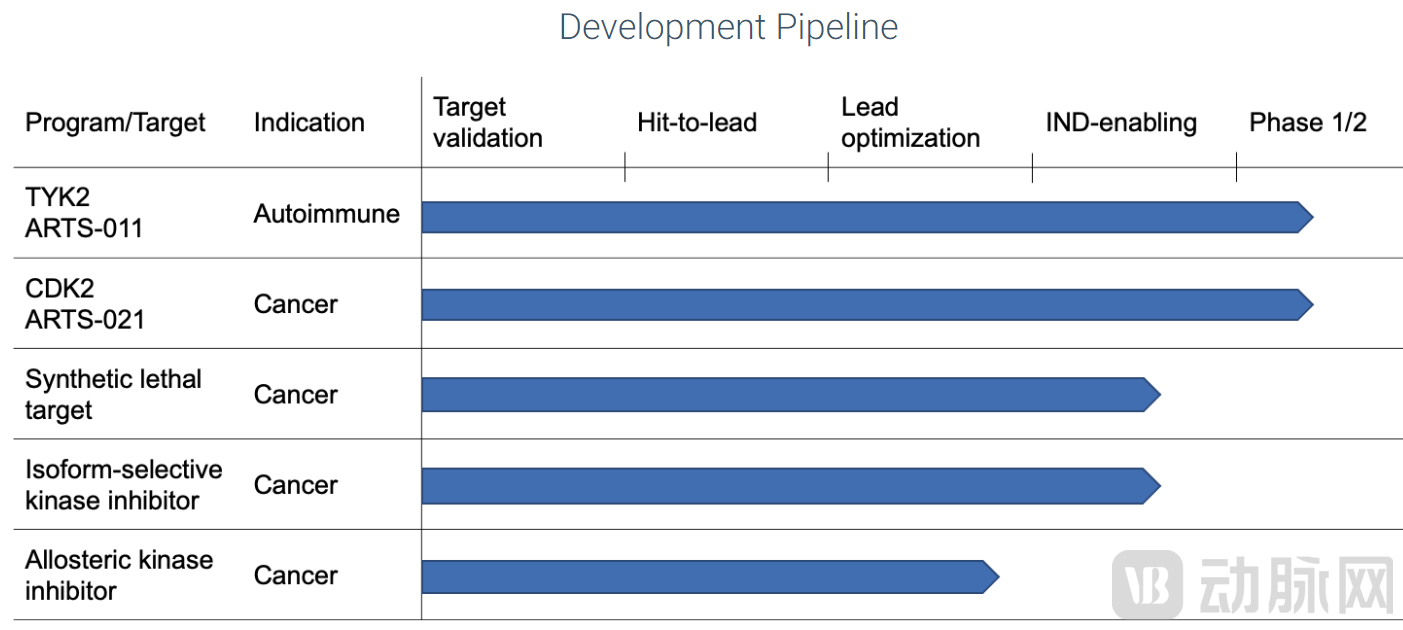 Allorion Therapeutics' R&D Pipeline
Source: Allorion Therapeutics official website
Osimertinib is a third-generation oral, irreversible, selective EGFR mutation inhibitor developed by AstraZeneca. It was the first to be marketed globally and is also the first tumor drug approved in China for EGFR T790M mutation-positive locally advanced or metastatic NSCLC. It is currently the standard treatment for first-line therapy of EGFRm NSCLC.
Osimertinib is AstraZeneca's flagship drug and the best-selling product among current EGFR small molecule drugs. In 2022, its sales reached $5.44 billion, increasing by 8.5% year-on-year, ranking at the top of AstraZeneca’s product sales and becoming the world’s sixth largest anti-tumor drug. In the first three quarters of 2023, osimertinib sales reached $4.38 billion, with the potential to exceed $6 billion for the full year.
However, the best-selling Osimertinib has also become a "prime target." The issue of resistance that emerges after Osimertinib treatment remains unresolved, and there is currently no targeted therapy approved for use post-Osimertinib resistance. As a result, major pharmaceutical companies have seized this opportunity to enter the EGFR drug market, initiating head-to-head trials with Osimertinib.
Johnson & Johnson is one of the strong competitors.
Johnson & Johnson's EGFR MET bispecific antibody Amivantamab (Rybrevant) was approved for marketing by the U.S. FDA in May 2021 for the treatment of metastatic NSCLC patients with EGFR exon 20 insertion mutations who have progressed after platinum-based chemotherapy. In 2021, Johnson & Johnson collaborated with South Korean biopharmaceutical company Yuhan Pharmaceutical to introduce the third-generation EGFR inhibitor Lazertinib (LECLAZA).
At the 2023 ESMO Congress, Johnson & Johnson presented a head-to-head Phase III clinical trial targeting Osimertinib. The data showed that the combination of Amivantamab and Lazertinib reduced the risk of disease progression or death by 30% compared to Osimertinib; the median progression-free survival (PFS) reached 23.7 months, which is 7.1 months longer than Osimertinib; overall survival (OS) data are not yet mature but have shown a positive trend.
In addition, in NSCLC, HER3 expression is associated with advanced disease, shortened metastasis time, and reduced survival rates. High HER3 expression is also related to EGFR TKI resistance. Based on this, Daiichi Sankyo developed the world's first next-generation ADC drug targeting HER3—Patritumab deruxtecan (HER3-DXd, U3-1402)—aiming to address the issue of osimertinib resistance.
Results from the Phase I clinical trial of HER3-DXd showed that in heavily pretreated patients, the objective response rate was 39%, the median duration of response was 6.9 months, and the median PFS was 8.2 months. It demonstrated sustained antitumor activity in EGFRm NSCLC patients resistant to EGFR TKI.
In 2021, Daiichi Sankyo initiated a global, multicenter, open-label Phase II trial to evaluate the efficacy and safety of HER3-DXd in patients with metastatic or locally advanced NSCLC harboring EGFR-activating mutations whose disease had become resistant to osimertinib, a third-generation EGFR TKI, and ≥1 platinum-based chemotherapy regimen or thereafter.
The trial results showed that HER3-DXd administered once every three weeks demonstrated clinically meaningful efficacy and durable intracranial responses, with a manageable safety profile in previously treated patients with EGFR-mutated NSCLC. It also showed clinical benefits across subgroups in subgroup analyses characterized by the presence or absence of brain metastases, tumor HER3 expression, mechanisms of resistance to EGFR TKI therapy, and the presence or absence of brain metastases.
In addition, although the compound patent for Osimertinib does not expire until July 2032, a generic version has already been approved for marketing in China. In October 2023, Jiangsu Wanbang Biochemical Pharmaceutical Group ("Wanbang Pharmaceutical") received approval for its Category 4 generic drug, Osimertinib Mesylate Tablets, marking the first approved generic version of Osimertinib in China.
However, before the original patent expires or the patent is successfully challenged, Wanbang Pharmaceutical's generic drug cannot be marketed temporarily, and Osimertinib is currently not under threat from generics. However, three Me-too third-generation EGFR-TKIs have already been approved for marketing in China, namely Almonertinib (Hansoh Pharma), Furmonertinib (Allist Pharmaceuticals), and Befotertinib (Beta Pharma).
Facing the "encirclement" by numerous competitors, AstraZeneca did not sit idly by but resolved the "besieged situation" of osimertinib through introducing new drugs, combination therapies, and expanding indications.
In September 2023, the marketing application for a new indication of Osimertinib tablets was accepted in China. Also in September, at the 2023 World Conference on Lung Cancer (WCLC), AstraZeneca announced the Phase III clinical trial results of Osimertinib. The data showed that, compared with Osimertinib as a first-line monotherapy, the combination with chemotherapy extended the median PFS by 8.8 months and reduced the risk of disease progression by 38%. Although the OS data is not yet mature, it has already shown a favorable trend.
AstraZeneca has laid out multiple clinical studies targeting drug resistance issues with various combination therapies involving Osimertinib, including ADAURA and ADAURA2 for adjuvant treatment, NeoADAURA for neoadjuvant treatment, and FLAURA for first-line treatment. The results of Phase III clinical trial FLAURA, the NeoADAURA study, and the Phase II clinical trial SAVANNAH are expected to be released successively in 2024.
The introduction of Allorion Therapeutics' novel EGFR L858R allosteric inhibitor this time, combined with Osimertinib, may bring better therapeutic effects.
In addition, in the aspect of new drug development, AstraZeneca has developed a new EGFR/c-MET dual-target ADC drug, AZD9592. Preclinical study results show that AZD9592 has considerable efficacy and safety, representing different opportunities in various clinical settings.
In May 2023, the clinical trial of AZD9592 received implied permission from the Center for Drug Evaluation (CDE) of the National Medical Products Administration, intended for monotherapy and combination with anticancer drugs to treat advanced solid tumors. If proceeding smoothly, AZD9592 as a single agent or in combination with Osimertinib will become an important solution to address Osimertinib resistance.