

2023 FDA Drug Approvals: 69 New Drugs Mark a Five-Year High with Strong Small Molecule Pipeline and Rise of Collaborative Development
Pfizer
Pharmaceutical R&D Developer
The year 2023 has just passed, ushering in a brand new 2024.
Over the past year, despite the numerous changes and challenges faced by the biopharmaceutical industry, the industry's commitment to bringing innovative therapies to patients worldwide has consistently moved forward.
Despite the ongoing chill in the capital market, the FDA approved a record number of new drugs in 2023, the highest in five years. This comes as a strong boost for the currently cold pharmaceuticals industry, bringing significant hope to drug development, the healthcare sector, and patients.
FDA-approved innovative drugs serve as a benchmark for global innovation in drug development, guiding the direction for innovative pharmaceutical companies. Based on this, this article reviews and organizes the new drugs approved by the FDA in 2023.
69 New Drugs Approved, Number of Small Molecule Drugs Remarkable
As of December 28, 2023, the FDA approved a total of 69 new drugs in 2023, the highest number in five years.
Of these, the FDA's Center for Drug Evaluation and Research (CDER) approved 55 innovative drugs, with therapies featuring novel mechanisms accounting for over 60%. Among them were 17 biologics, 9 of which received orphan drug designation; and 38 new molecular entities, 20 of which received priority review, with 16 receiving orphan drug designation.
The Center for Biologics Evaluation and Research (CBER) approved 14 biologic products (excluding blood products and screening reagents), including 5 vaccines, 5 gene therapy products (among which is the world's first approved CRISPR gene-editing therapy, Casgevy), 2 cell therapy products, and the first oral fecal microbiota product, Vowst.
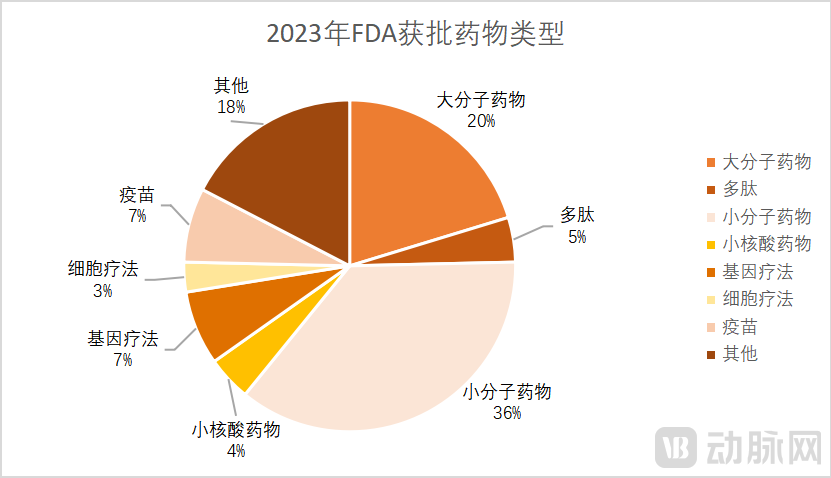
Analysis of FDA-Approved New Drug Types in 2023: The Number of Small Molecule Drugs is Remarkable. As one of the mainstays in the pharmaceutical field, small molecule drugs ranked first among all drug types in terms of approval numbers, with a total of 25 small molecule drugs approved, accounting for 36%.
Next are large-molecule drugs, with 14 approved, ranking second in number, accounting for 20%.
Notably, new molecular therapies based on peptides and nucleic acids account for nearly 10%, becoming an important source of novel drugs.
Rare Diseases Top the List, Oncology Remains a Key Focus
An analysis of the disease areas for drugs approved by the FDA in 2023 shows a flourishing trend in the indications of newly approved drugs, with rare diseases and oncology remaining key focus areas.
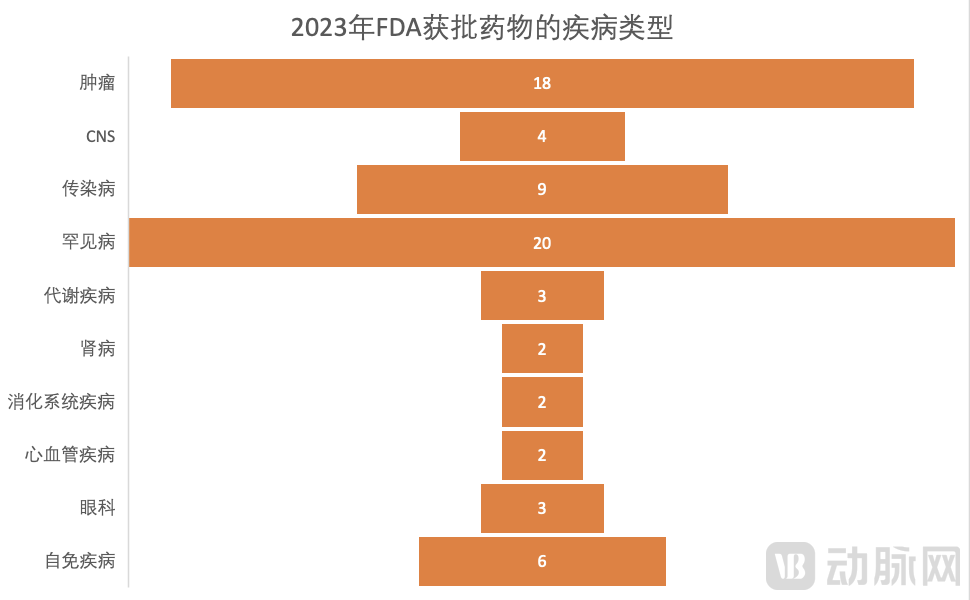
Notably, 2023 was a fruitful year for rare diseases, with 20 new orphan drugs approved for marketing, topping the list of new drug approvals by the FDA in 2023.
Many patients with hereditary immunodeficiency diseases have welcomed new treatment options, such as alpha-mannosidosis, Fabry disease, Friedreich's ataxia, Rett syndrome, menopausal hot flashes, adult myelofibrosis with anemia, late-onset Pompe disease in adults, type 1 primary hyperoxaluria, epidermolysis bullosa, and so on.
It is reported that among the 37 new drugs approved by CDER in 2022, only five were orphan drugs. The increase in this number in 2023 also indicates that the FDA's attention to the rare disease field is gradually rising.
In the disease areas of FDA-approved drugs, there are 18 products in the oncology field, ranking second. Subfields include mantle cell lymphoma, breast cancer, Merkel cell carcinoma, diffuse large B-cell lymphoma, multiple myeloma, nasopharyngeal cancer, ROS1-positive non-small cell lung cancer, HR+/HER2- breast cancer, and aggressive fibromatosis, among others.
Not only that, but there are also several blockbuster products launched in the fields of infectious diseases, autoimmune diseases, CNS, and metabolic diseases.
MNCs Account for Nearly Half, Pfizer Snatches 9 Deals, Joint Applications Become the Norm
Looking at the types of companies behind the approved drugs. Among the innovative therapies approved by CDER and CBER this year, MNCs and publicly listed biopharmas are the main applicants. Of these, 31 new drugs originated from MNCs, ranking first, while 18 new drugs came from publicly listed biopharmas, ranking second.
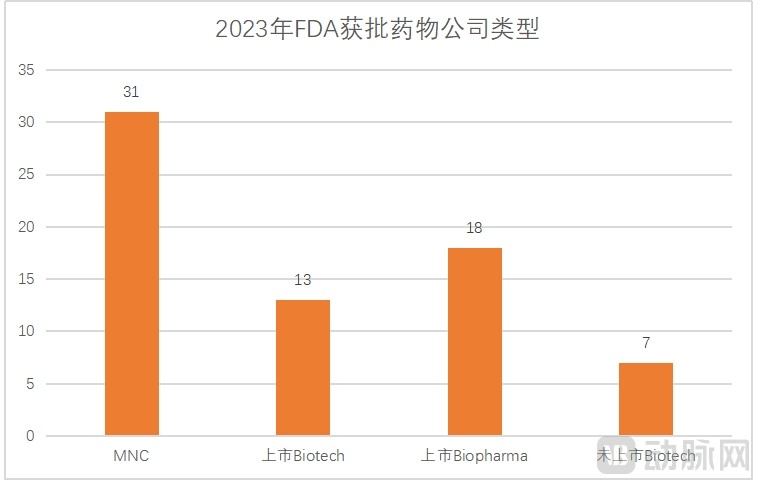
More notably, among the applying companies of the approved drugs, the presence of Biotech is more frequent, and more than half of the new molecular therapies originate from small biotechnology companies. It can be said that emerging biopharmaceutical companies have become an important source of innovation.
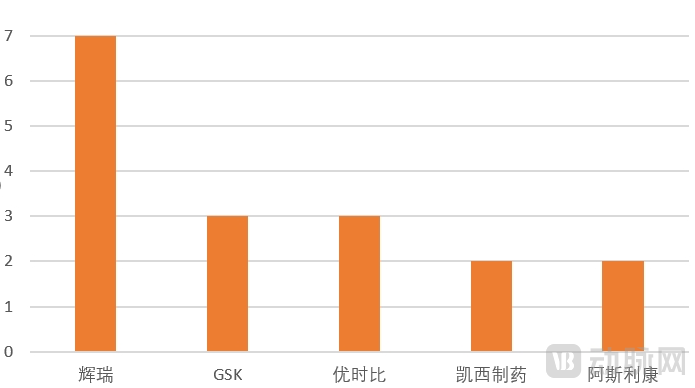
Looking further at the companies that received approvals, the biggest winner in new drug applications from the FDA in 2023 was Pfizer, with a total of 9 new drugs approved, including 4 NMEs, 1 bispecific antibody, 1 growth hormone, and 3 vaccines.
Next are UCB and GSK, with three new drugs approved respectively. Chiesi and AstraZeneca each received approval for two new drugs.
Out of the 69 new drugs approved by the FDA in 2023, 11 were jointly filed or co-developed by two companies. This also indicates that joint development and joint filing of new drugs will become the new norm in the future.
2023 FDA Heavyweight New Drugs: Multiple FIC Therapies, 3 China-Produced Approved
In 2023, the FDA approvals included several "first-in-class" therapies, such as Lecanemab, the first new Alzheimer's disease drug to receive full FDA approval in 20 years, pcoritamab, the FDA's first bispecific antibody for diffuse large B-cell lymphoma (DLBCL), and Zuranolone, the first oral medication approved by the FDA for the treatment of postpartum depression (PPD), among others.
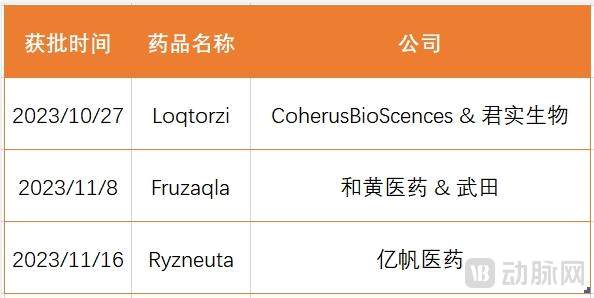
At the same time, observing China's innovative pharmaceutical companies, in 2023, three Chinese pharmaceutical companies had their innovative drugs approved by the FDA: Ryzneuta from Yifan Pharmaceutical, Fruzaqla from Hutchmed, and Loqtorzi from Junshi Biosciences.
As of now, five domestically produced innovative drug products have been approved in the U.S., mainly including BeiGene's Zanubrutinib (which received its first global approval in the U.S. on November 14, 2019), Legend Biotech's Carvykti (approved in March 2022), Hutchmed's Fruquintinib, Yifan Pharmaceutical's Efgartigimod Alfa Injection, and Junshi Biosciences' Toripalimab.
The following are the top ten blockbuster drugs of the 2023 FDA listed in this article:
First FDA Fully Approved AD New Drug in 20 Years: Leqembi
On January 6, the anti-β-amyloid (Aβ) monoclonal antibody Leqembi (lecanemab) developed by Biogen/Eisai received accelerated FDA approval for the treatment of Alzheimer's disease (AD). On July 6, the FDA agreed to convert the accelerated approval into full approval. This means that lecanemab has become the first new AD therapy to receive full FDA approval in 20 years. Lecanemab can selectively bind to neutralize and eliminate soluble, toxic Aβ aggregates (protofibrils), which are believed to contribute to neurodegenerative processes in AD. Phase III pivotal studies have shown that lecanemab not only reduces amyloid plaques but also significantly improves clinical dementia symptoms in patients.
The First Non-Covalent BTK Inhibitor: Jaypirca
On January 27, Eli Lilly's Jaypirca (pirtobrutinib, 100mg and 50mg tablets) received accelerated FDA approval for marketing. It is indicated for adult patients with relapsed or refractory mantle cell lymphoma (MCL) who have received at least two prior lines of systemic therapy, including Bruton's tyrosine kinase (BTK) inhibitors. This is the first and only non-covalent (reversible) BTK inhibitor approved by the FDA. Jaypirca can inhibit both wild-type and C481S mutant BTK, restoring BTK inhibition in MCL patients previously treated with covalent BTK inhibitors (including ibrutinib, acalabrutinib, or zanubrutinib) and extending the benefits of targeting the BTK pathway.
The First Drug for FA Treatment: Skyclarys
On February 28, the FDA approved Reata Pharmaceuticals' Skyclarys (omaveloxolone) for marketing in the United States to treat Friedreich's Ataxia (FA) in adolescents aged 16 years and older and adults. This is the first and only drug approved in the U.S. for the treatment of FA. At the end of July this year, Biogen acquired Reata for $172.5 per share in cash, with a total transaction value of approximately $7.3 billion. Omaveloxolone is an Nrf2 activator taken orally once daily. Nrf2 is a transcription factor that promotes the resolution of inflammation by restoring mitochondrial function, reducing oxidative stress, and inhibiting pro-inflammatory signaling.
The First Gene-Targeted Therapy for ALS: Qalsody
On April 25, the antisense oligonucleotide therapy Qalsody (tofersen), jointly launched by Biogen/Ionis, received accelerated FDA approval for marketing to treat amyotrophic lateral sclerosis (ALS) caused by superoxide dismutase 1 (SOD1) mutations. This is the first gene-targeting therapy for ALS. Tofersen is an antisense oligonucleotide drug for treating SOD1-ALS that binds to the mRNA encoding SOD1, causing it to be degraded by ribonuclease, thereby reducing the production of the SOD1 protein.
The World's First Oral Fecal Microbiota Therapy: Vowst
On April 26, Seres Therapeutics' oral microbiome therapy Vowst (SER-109) was approved by the FDA for marketing to prevent recurrent Clostridioides difficile infection (rCDI). This is the first FDA-approved oral fecal microbiota therapy. SER-109 is a spore-based oral microbiome therapy derived from purified healthy donor stool, containing an average of about 50 types of bacteria, which prevents the growth of Clostridioides difficile by reconstructing the gut flora. The purification process of SER-109 aims to remove unwanted microorganisms, thereby reducing the risk of pathogen transmission. Previously, the FDA had granted SER-109 Breakthrough Therapy Designation and Orphan Drug Designation.
World's First RSV Vaccine: Arexvy
On May 3, the FDA approved GSK's respiratory syncytial virus (RSV) vaccine Arexvy for marketing, intended to prevent lower respiratory tract diseases caused by RSV infection in adults aged 60 and above. This is the world’s first approved RSV vaccine. On May 31, Pfizer's RSV vaccine Abrysvo for elderly populations was also approved for marketing by the FDA. On August 21, the indication for Abrysvo was expanded by the FDA to include: prevention of RSV-related lower respiratory tract disease in infants from birth to six months of age through active immunization of pregnant women.
First Gene Therapy for Hemophilia A: Roctavian
On June 29, BioMarin's gene therapy Roctavian was approved for marketing by the FDA. It is the first gene therapy for hemophilia A approved by the FDA. Roctavian is a gene therapy that uses an AAV5 viral vector to deliver a transgene expressing clotting factor VIII (FVIII). The advantage of this therapy is that it may require only a single treatment to acquire the gene expressing FVIII, eliminating the need for patients to undergo long-term prophylactic clotting factor injections.
World's First GPRC5D/CD3 Bispecific Antibody: Talvey
On August 9, the FDA granted accelerated approval to Johnson & Johnson's GPRC5D/CD3 bispecific antibody Talvey (talquetamab) for the treatment of adult patients with relapsed or refractory multiple myeloma (MM) who have previously received at least four prior lines of therapy, including proteasome inhibitors, immunomodulatory agents, and CD38 antibodies. Talquetamab is a first-in-class, off-the-shelf bispecific T-cell engager antibody that simultaneously targets GPRC5D on MM cells and CD3 on T cells, activating CD3-positive T cells to induce T-cell-mediated killing of GPRC5D-positive MM cells.
First Oral Monotherapy for PNH: Fabhalta
On December 5, the FDA approved Novartis' Fabhalta (iptacopan) for marketing, indicated for the treatment of adult patients with paroxysmal nocturnal hemoglobinuria (PNH). This is the first FDA-approved oral monotherapy for adult PNH. Iptacopan is a first-in-class, orally administered inhibitor targeting factor B of the alternative complement pathway developed by Novartis. The product acts upstream of the terminal C5 pathway, simultaneously controlling both intravascular and extravascular hemolysis, addressing the limitations of anti-C5 antibodies while providing patients with an oral monotherapy option.
First CRISPR Gene Editing: Casgevy
On December 8, Casgevy, the CRISPR/Cas9 gene-editing therapy jointly developed by Vertex and CRISPR, was approved by the FDA for marketing. It is indicated for patients aged 12 years and older with transfusion-dependent beta-thalassemia or sickle cell disease with recurrent vaso-occlusive crises who do not have a matched human leukocyte antigen hematopoietic stem cell donor. This marks the world's first approved CRISPR gene-editing drug. On the same day, the FDA also approved Lyfgenia, a gene therapy from Bluebird Bio, for the treatment of patients aged 12 years and older with sickle cell disease and recurrent vaso-occlusive crises. This is Bluebird Bio’s third gene therapy product. The therapy is priced at $3.1 million, while its previous gene therapies, eli-cel for cerebral adrenoleukodystrophy and beti-cel for beta-thalassemia, were priced at $3 million and $2.8 million, respectively.
2024, we wait and see.