Over $6 Billion in Deals! From Ribo to Borna, the Small Nucleic Acid Drug Boom Has Arrived
Ribo Life Science
Small Nucleic Acid Drug Developer
Argo
RNAi Drug Developer

In 2024, China-produced small nucleic acid drugs got off to a good start on January 3.Suzhou Ribo Life Science Co., Ltd. and Ribo International Research and Development Center Collaborate with Boehringer Ingelheim on Innovative Small Nucleic Acid Therapy for Nonalcoholic Steatohepatitis (NASH)/Metabolic Dysfunction-Associated Steatotic Liver Disease (MASH), reaching a cooperation agreement with a total transaction amount exceeding 2 billion US dollars.
January 7,Argo Biopharma announced that it has entered into two exclusive license cooperation agreements with Novartis regarding RNAi therapies.Argo to Receive $185 Million Upfront Payment from Novartis, Eligible for Potential Option and Milestone Payments, as well as Tiered Royalties on Commercial Sales. The Total Potential Value of the Two Deals Could Reach $4.165 Billion.
The era of small nucleic acid drugs is coming.
PART.
01
Market Prospects of Small Nucleic Acid Drugs and
Approval and Market Launch Status
Nucleic acid drugs can be divided intomRNA DrugsAndSmall Nucleic Acid DrugsTwo categories. Small nucleic acid drugs refer to drugs that can use small interfering RNA (siRNA), microRNA (miRNA), and antisense nucleic acids to specifically silence the expression of disease genes to cure specific diseases.
Internationally, according to differences in small nucleic acid structure, drug mechanisms, and target actions, the main types of small nucleic acid drugs are divided into five categories, including antisense oligonucleotides (ASO), siRNA, miRNA, aptamers, and CpG oligonucleotides.Among them, the three main types of small nucleic acid drugs currently under the most intensive research are ASO, siRNA, and Aptamer.
Compared with drugs targeting other proteins, small nucleic acid drugs have the advantages of high specificity, high efficiency, and long duration.
According to incomplete statistics, as of now, a total of 17 small nucleic acid drugs have been approved for marketing worldwide (including two ASO drugs and one aptamer drug that have been withdrawn). Over 80% were approved after 2016 (Table 1). Among them, the best-selling drug is Nusinersen, developed by Ionis for the treatment of Spinal Muscular Atrophy (SMA), with cumulative sales exceeding 10 billion US dollars since its market launch in 2016.
Table 1. Small nucleic acid drugs that have been approved for marketing
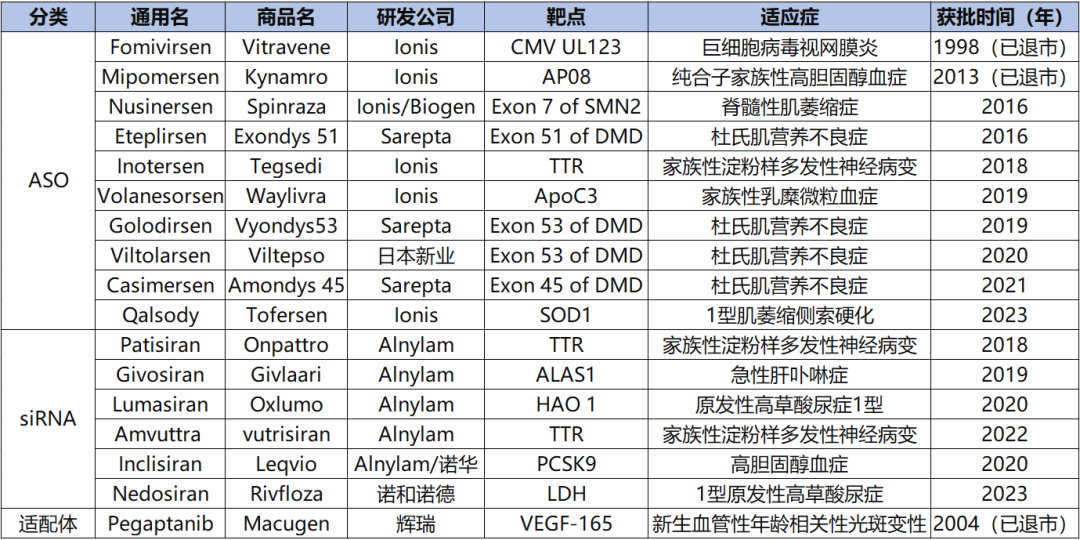
The indications for small nucleic acid drugs cover a wide range, with most applications in the field of rare diseases, such as amyotrophic lateral sclerosis, Duchenne muscular dystrophy, spinal muscular atrophy, viral diseases, kidney diseases, cardiovascular diseases, etc., and the prospects for drug use are very broad.
In terms of market prospects, according to Frost & Sullivan statistics, the global market size of small nucleic acid drugs has grown from US$0.01 billion in 2016 to nearly US$3.8 billion in 2022, with a compound annual growth rate of 295%, showing explosive growth.
According to statistics and analysis by Evaluate Pharma and BCG, the global small nucleic acid drug market is expected to reach $8.6 billion in 2024.
In the future, with the continuous launch of clinical-stage products, the continuous development of modification and delivery technologies, and the expansion of indications from small indications such as genetic diseases to broader population-based indications, the overall market will continue to maintain rapid growth.
PART.
02
Small nucleic acid drugs under clinical research
Among the approved small nucleic acid drugs,Inclisiran, jointly developed by Alnylam and Novartis, is the first and currently the only small interfering RNA (siRNA) drug used to reduce low-density lipoprotein cholesterol (LDL-C)., successively launched in the United States and China in 2021 and 2023,Breaking through the limitations of small nucleic acid drugs applied to rare diseases, successfully entering the field of chronic diseases for the first time, which is a milestone.
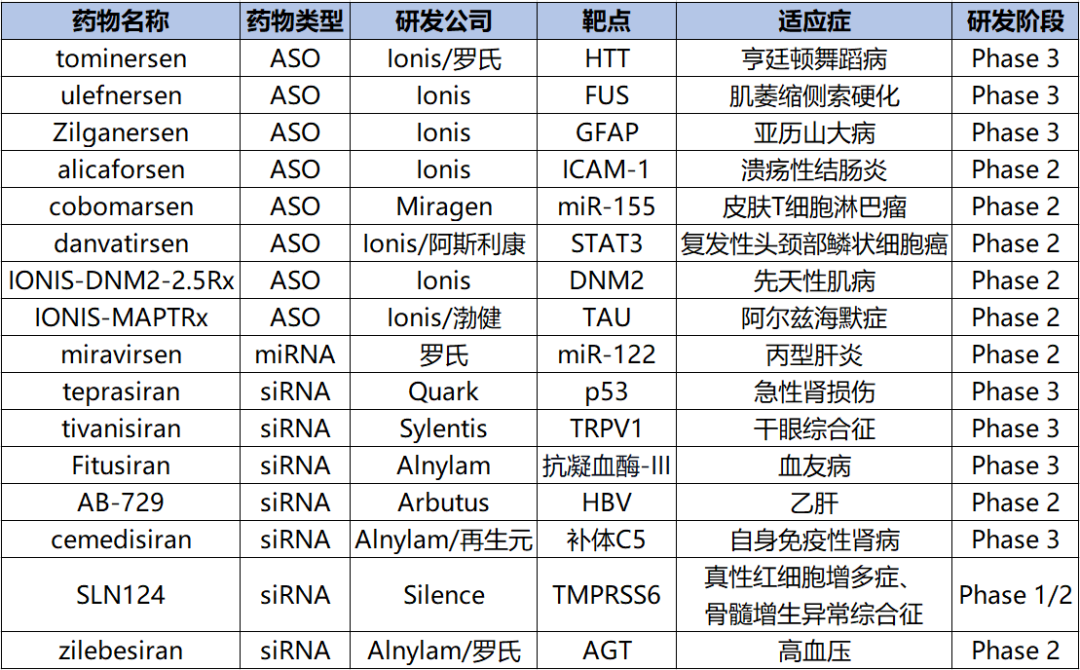
According to incomplete statistics, there are approximately 200 small nucleic acid drugs in global clinical pipelines, mainly ASO and siRNA drugs, which are being developed for the following common disease areas, such as chronic diseases, viral infections, cancer, and hepatitis B, etc. (Table 2).
Head and neck cancer is the sixth most common cancer globally, with its main histological phenotype being head and neck squamous cell carcinoma (HNSCC).Despite aggressive combination therapy, a significant proportion of patients will experience recurrent or metastatic disease, which is no longer amenable to curative treatment.
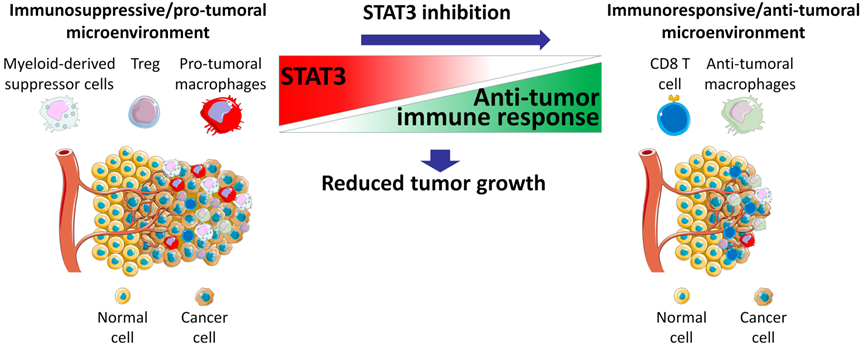
Signal Transducer and Activator of Transcription 3 (STAT3)It is a protein composed of 770 amino acids, with six functionally conserved domains, involved in various biological processes such as cell proliferation, survival, differentiation, and angiogenesis.Plays an important role in promoting the immunosuppressive tumor microenvironment and tumor cell survival. Inhibiting STAT3 can effectively suppress the occurrence and development of tumors (Figure 1).[1]。
Danvatirsen is an ASO drug targeting STAT3, co-developed by Flaming and Ionis. It selectively binds to STAT3 mRNA, inhibiting the translation of the transcript, and is used for the treatment of HNSCC.
To date, more than 500 patients with solid tumors or hematologic malignancies have received Danvatirsen as monotherapy or in combination therapy. The results show that Danvatirsen is well-tolerated with manageable toxicity.
Previously, the results of a SCORES study on Danvatirsen showed that: in patients with recurrent/refractory HNSCC who had not received prior PD-1/PD-L1 treatment,Compared with the durvalumab group, Danvatirsen combined with durvalumab improved the objective response rate (ORR), with several patients achieving complete response (CR, 9.4%).
At the 2023 EMSO conference, Flaming announced the design of a Phase II trial for Danvatirsen, which will evaluate the efficacy of Danvatirsen in combination with pembrolizumab versus pembrolizumab monotherapy as a first-line treatment for patients with recurrent/refractory HNSCC. The primary objective of the study is to increase the ORR in the combination group to approximately 43%.
Specifically as follows:
1. The trial enrolled approximately 81 patients with recurrent/refractory HNSCC who had a combined positive score (CPS) of ≥20 in the first-line setting;
2. Patients will be randomly assigned in a 2:1 ratio to the following groups: Danvatirsen (Week 1: 3 mg/kg, intravenous injection, on Days 1, 3, and 5; Week ≥2: 3 mg/kg...Intravenous InjectionWeekly) and pembrolizumab (200mg intravenously every 3 weeks) or pembrolizumab alone (every 3200 mg intravenously per week) (Figure 2)[1]。
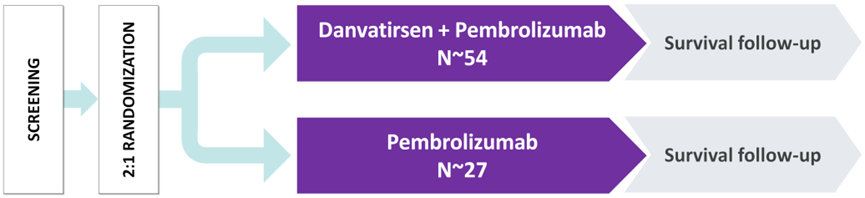
Figure 2. Design of a Phase II Trial for Danvatirsen
The stability and replication of the hepatitis C virus (HCV) depend on the functional interaction between the HCV genome and microRNA-122 (miR-122) expressed in the liver.
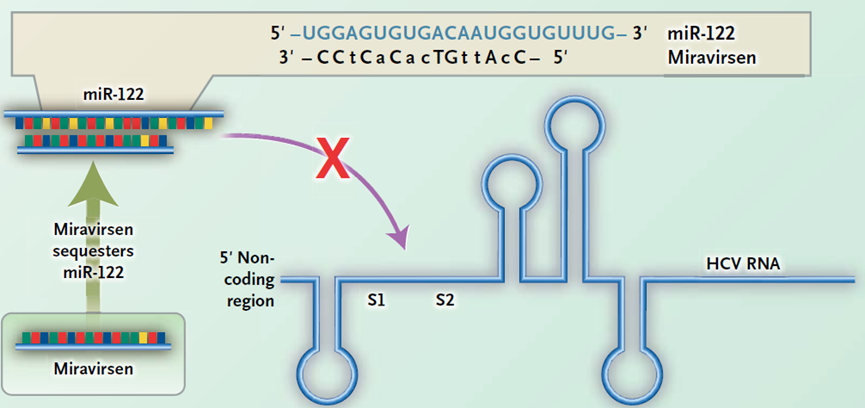
Miravirsen, initially developed by Santaris (which was acquired by Roche in 2014), was the first miRNA drug to enter clinical research. It is a 15-nucleotide antisense RNA strand utilizing locked nucleic acid (LNA) technology, complementary to the 5′ region of mature miR-122 with high affinity and specificity, for the treatment of HCV infection (Figure 3).[2]。
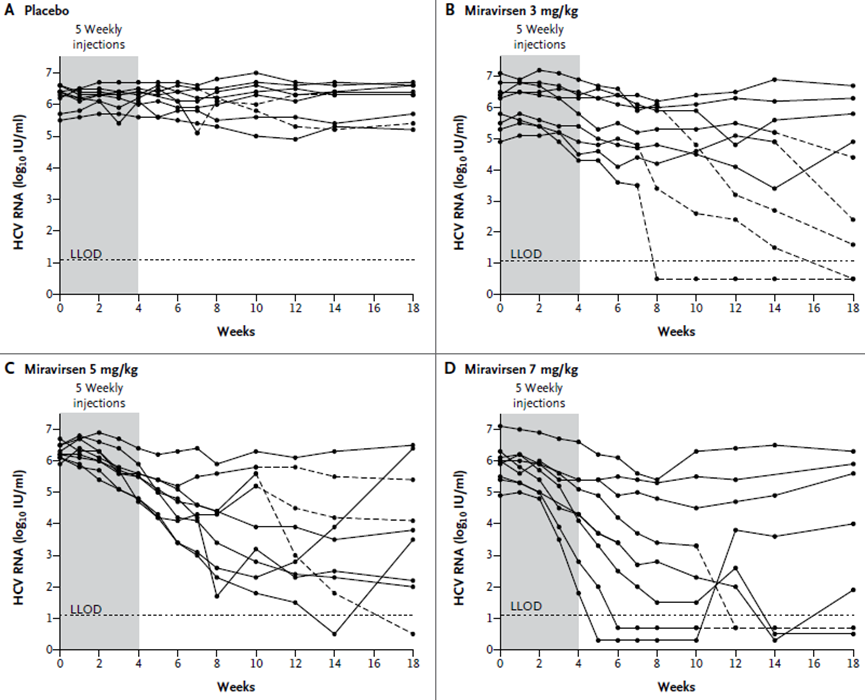
Janssen et al. published the Phase II clinical results of Miravirsen in the New England Journal of Medicine: Miravirsen led to a dose-dependent reduction in HCV RNA levels, and this reduction persisted beyond the end of active treatment.
In the Miravirsen group, the mean maximum reduction in HCV RNA levels (log10 IU/mL) from baseline was 1.2 (P = 0.01) for patients receiving 3 mg/kg, 2.9 (P = 0.003) for those receiving 5 mg/kg, and 3.0 (P = 0.002) for those receiving 7 mg/kg, compared to 0.4 in the placebo group (Figure 4).
Fitusiran, jointly developed by Sanofi and Alnylam, is a subcutaneously injectable siRNA therapy targeting antithrombin III (ATIII). It is used for the prophylactic treatment of hemophilia A and hemophilia B in adults and adolescents, regardless of whether patients have developed inhibitors against coagulation factors.
In April 2023, Young et al. reported the Phase III trial results of fitusiran prophylaxis for hemophilia A or hemophilia B with inhibitors in The Lancet.
The research results show:Compared with the placebo group, the bleeding rate in the fitusiran group was significantly reduced, equivalent to a 90.8% reduction in the annualized bleeding rate (95% CI 80.8-95.6). Twenty-five subjects (66%) in the fitusiran group had zero treated bleeds, compared with one subject (5%) in the control group.(Figure 5)[3]。
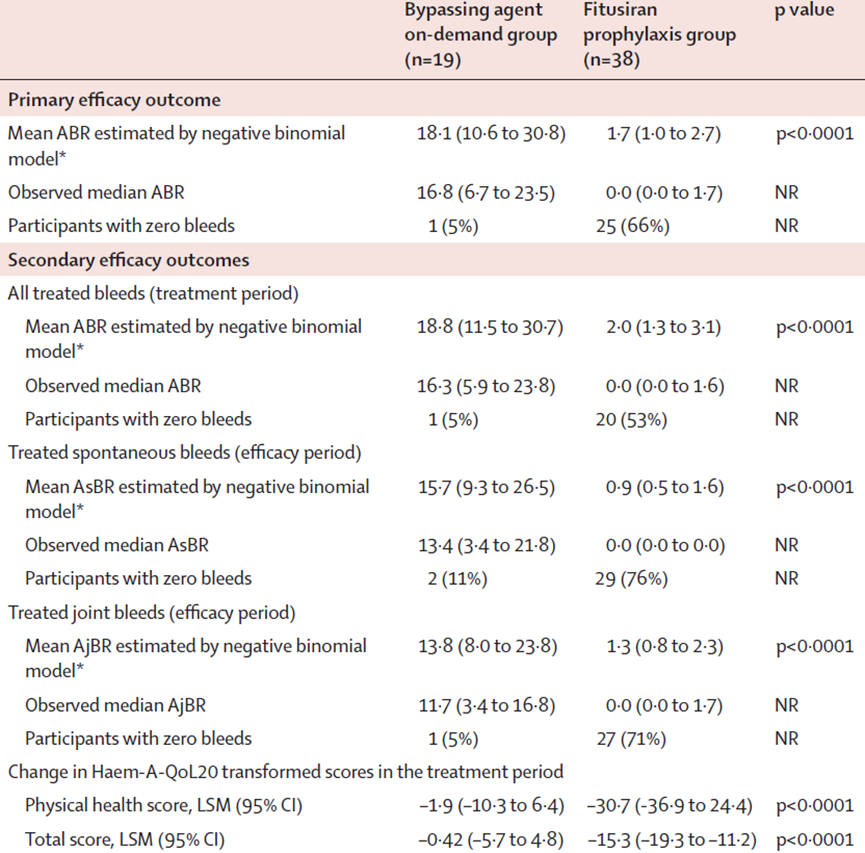
Figure 5. Clinical outcomes of Fitusiran
For Hemophilia, Preventive Treatment More Effectively Prevents Disability Than On-Demand Treatment. Fitusiran is a preventive treatment option available for all types of hemophilia patients, effective for both Type A and Type B hemophilia patients with or without inhibitors. By reducing the level of antithrombin III, it can decrease the annualized bleeding rate by up to 90%. With only a minimum of 6 subcutaneous injections required per year, compared to the current standard treatment of 3-4 intravenous injections per week, it significantly reduces the treatment burden on patients.[4]。
ZilebEsiran is a subcutaneously injectable RNAi therapy targeting angiotensinogen (AGT) developed by Alnylam using the Enhanced Stabilization Chemistry Plus (ESC+) GalNAc-conjugate technology., which is currently in the clinical Phase II stage of development for the treatment of hypertension (Figure 6).[5]。
AGT is the most upstream precursor of the renin-angiotensin-aldosterone system (RAAS). The role of this cascade in blood pressure (BP) regulation has been confirmed, and inhibiting AGT has recognized antihypertensive effects.
On July 24, 2023, Alnylam announced a strategic agreement with Roche, with a potential transaction value of up to $2.8 billion, to jointly develop and commercialize zilebesiran.
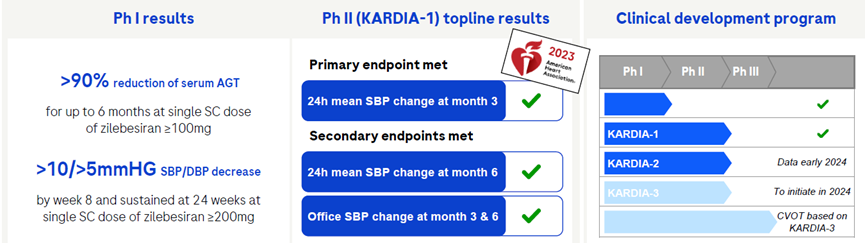
Figure 6. Zilebesiran Clinical Trial Results and Plans
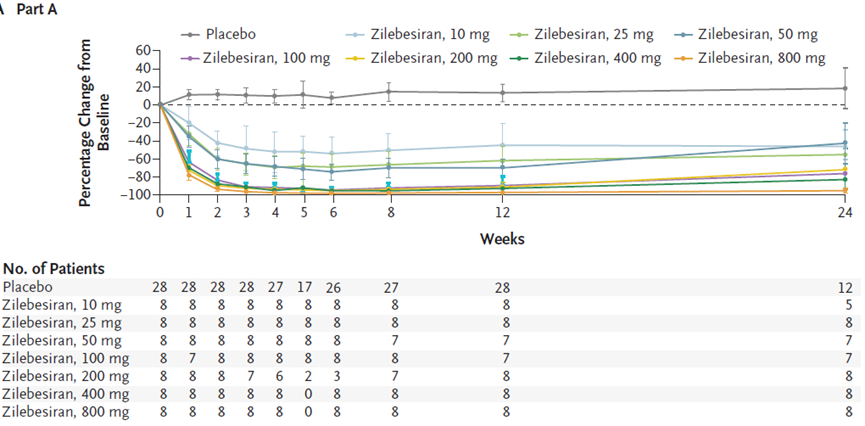
On July 19, 2023, the Phase I study results of Zilebesiran for the treatment of hypertension were officially published in the NEJM.
The research results showed that: In Part A, at Week 8, a single dose of Zilebesiran (≥200 mg) was associated with reductions in systolic blood pressure (>10 mm Hg) and diastolic blood pressure (>5 mm Hg). These changes remained consistent throughout the circadian cycle and persisted at Week 24. The results from Parts B and E were consistent with the attenuation of the impact of a high-salt diet on blood pressure and the enhanced effect of co-administration with Irbesartan, respectively.[6]。
November 11, 2023Alnylam Pharmaceuticals announced positive results from the KARDIA-1 Phase II study of Zilebesiran at the AHA conference: Zilebesiran met the primary endpoint, with a placebo-adjusted reduction in 24-hour mean systolic blood pressure of up to 16.7 mmHg at three months of treatment; the study also achieved key secondary endpoints.Showing a sustained reduction in systolic blood pressure and continuous control of tonic blood pressure over six months; data supports dosing once every quarter or half a year. Zilebesiran demonstrates encouraging safety and tolerability in adult patients with mild to moderate hypertension.[7]。
PART.
03
Summary
Small nucleic acid drugs have entered a period of explosive growth, breaking through the limitations of rare diseases, with an increasingly wider range of applications in areas such as cancer and chronic diseases, where clinical trials have yielded positive results. With technological breakthroughs, more small nucleic acid drugs are bound to be approved for marketing in the future. PharmaDJ will keep you updated.
Scan the WeChat QR code, add the editor of the Antibody Circle, and those who meet the requirements can join the Antibody Circle WeChat group!


All reproduced articles in this official account are intended to convey more information, with the source and author clearly stated. Media or individuals who do not wish to be reproduced can contact us (cbplib@163.com), and we will immediately delete the content. All articles represent the views of the author and do not represent the position of this site.