J.P. Morgan Healthcare Conference Highlights: Daiichi Sankyo Reports 20% Revenue Growth, Showcases Five Leading ADCs
Daiichi-Sankyo
Pharmaceutical R&D Developer

January 8, 2024, the 42nd J.P. Morgan Healthcare Conference (J.P. Morgan Healthcare Conference, hereinafter referred to asJPM Conference) officially opened, which has always been one of the most anticipated conferences in the industry. Daiichi Sankyo, which has drawn significant attention due to its HER2 antibody-drug conjugate (ADC) DS-8201, also started the new year with a series of positive news. Its developed DS-8201 was granted Breakthrough Therapy Designation by the CDE for the treatment of HER2-mutated, unresectable or metastatic non-small cell lung cancer patients who have previously received at least one systemic therapy.
In addition, the CDH6 ADC DS-6000 developed by the company has been approved for clinical use in China, for the treatment of platinum-resistant high-grade ovarian cancer, primary peritoneal cancer, or fallopian tube cancer in patients who have previously received at least one line of systemic anticancer therapy. Below, let's follow the JPM conference to explore the 2023 achievements and future R&D plans of Daiichi Sankyo, the leader in the ADC field.
According to the information disclosed by Daiichi Sankyo at the JPM conference[1], itsTotal revenue for 2023 is expected to reach 1,550 billion yen, representing a 21.2 percentage point increase compared to 2022.Among them, the income in Japan is the highest, accounting for 36.9%, followed by North America at 28.9%. In terms of product contribution, there are currently two main products, which areHER2 ADC DS-8201AndFactor Xa Inhibitor Edoxaban。
According to the latest 2023 financial report results disclosed by Daiichi Sankyo[2]In the second quarter of 2023, the sales of DS-8201 (trade name: ENHERTU) reached 173.4 billion yen, with an estimated total sales of 381.7 billion yen for 2023, including sales in the United States amounting to 105.9 billion yen. Meanwhile, Edoxaban (trade name: LIXIANA) achieved sales of 137.7 billion yen in the second quarter of 2023, with an expected total of 277.3 billion yen for 2023, and its highest sales were recorded in Japan.
Besides, it is worth mentioning that,On October 20, 2023, Daiichi Sankyo and Merck reached a global development and commercialization agreement for three ADC candidates, with a potential total deal value of up to 22 billion US dollars.[3]。It can be seen that Daiichi Sankyo has achieved considerable "results" in both financial and BD expansion aspects.
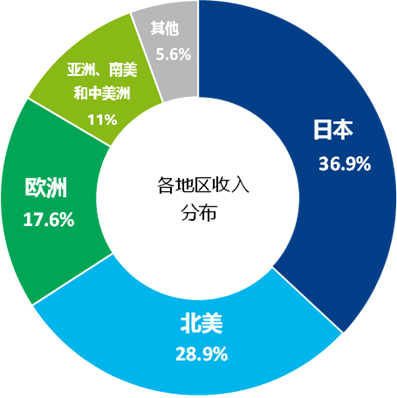
Figure 1. Daiichi-Sankyo Around the WorldEachRegional 2023 Projected Revenue Distribution
Daiichi Sankyo has designed multiple ADCs through its Dxd ADC technology platform, targeting cancer cells expressing specific cell surface antigens and delivering payloads to specific targets. Currently,Daiichi Sankyo is mainly focused on the development of five ADCs, abbreviated as 5Dxd ADCs.These are HER2 ADC DS-8201, which has been approved for marketing and is still expanding to other indications, TROP2 ADC Datopotamab, HER3 ADC Patritumab, the relatively early-stage B7-H3 ADC DS-7300, and CDH6 ADC DS-6000. Among them, DS-8201 and Datopotamab were co-developed by Daiichi Sankyo and AstraZeneca, while the latter three ADCs are in collaboration with Merck to accelerate the development process and explore more possibilities.
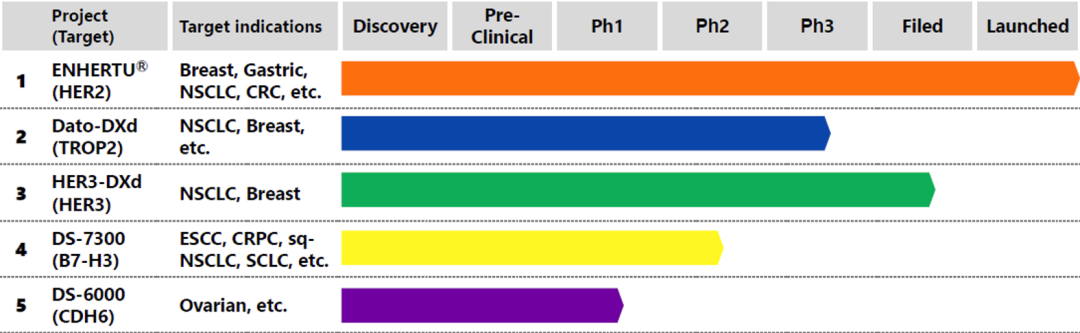
Figure 2. Daiichi-Sankyo ADC Pipeline[1]Note: NSCLC: Non-Small Cell Lung Cancer; CRC: Colorectal Cancer; ESCC: Esophageal Squamous Cell Carcinoma; CRPC: Castration-Resistant Prostate Cancer; SCLC: Small Cell Lung Cancer
In addition, besides the breast cancer layout, DS-8201 for later-line HER2+ solid tumors and advanced colorectal cancer received FDA Breakthrough Therapy Designation in September 2023. Whether DS-8201 will expand to front-line use in other indications in the future remains to be seen.
According to publicly available information,TROP2 ADC DatopotamabCurrently, the main focus is on 1L, neoadjuvant/adjuvant triple-negative breast cancer, HR+/HER2-low or negative breast cancer, and 1L and 2L advanced lung cancer treatment.Compared to DS-8201's global leading position, Datopotamab is slightly inferior.
Sacituzumab, the TROP2 ADC co-developed by Gilead and Immunomedics, was approved for later-line triple-negative breast cancer in 2020, prior to Datopotamab. It was subsequently approved for the treatment of urothelial carcinoma and received approval for later-line HR+/HER2- advanced breast cancer in February 2023.In addition, the drug is also undergoing clinical research related to non-small cell lung cancer, with Datopotamab and Sacituzumab having highly overlapping indications under development.
Patritumab is the world's first ADC drug targeting HER3.On December 22, 2023, the FDA accepted its Biologics License Application and granted Priority Review for the treatment of patients who have previously received two or moreTwo typesThe above systemic treatment for locally advanced or metastatic EGFR-mutated non-small cell lung cancer.This also means that Patritumab will become the first approved HER3 ADC drug to be launched.In addition, Daiichi SankyoTotalis also actively exploring the potential of Patritumab in the treatment of breast cancer.
DS-7300 is a novel B7-H3 ADC, and the indication in which its development is progressing the fastest is small cell lung cancer.Currently in the critical Phase II clinical stage (IDeate-1).According to the data disclosed at the 2023 WCLC[5]DS-7300 shows significant efficacy in the pretreated small cell lung cancer population, with an ORR of 52.4% and a median PFS of 5.6 months.
In addition, DS-7300 has shown initial efficacy in the research of esophageal squamous cell carcinoma, castration-resistant prostate cancer, and non-small cell lung cancer.As for B7-H3 ADC, a wave of collaboration and partnership activities has surged.On December 20, 2023, GSK acquired HS-20093, a B7-H3 ADC developed by Hansoh, for $1.71 billion.ButOverall, Daiichi-Sankyo's DS-7300 is currently the fastest-progressing B7-H3 ADC.
DS-6000It is a CDH6 ADC still in Phase I clinical trials.According to the data disclosed at this year's ESMO conferenceShowIndication[6]D-S6000 demonstrated a favorable clinical response in platinum-resistant ovarian cancer, with an ORR of 46%, a median DOR of 11.2 months, and a median PFS of 7.9 months.
As is known to all, the first CDH6 ADC to enter clinical trials was HKT288, developed by Novartis, but during its clinical research process, three cases of grade 2 neurological adverse reactions possibly related to the drug occurred, leading to the termination of the study.But from the currently disclosed safety results of DS-6000, no related adverse reactions seem to have been observed.In summary, based on the current information, DS-6000 may primarily focus on the development of indications for ovarian cancer.
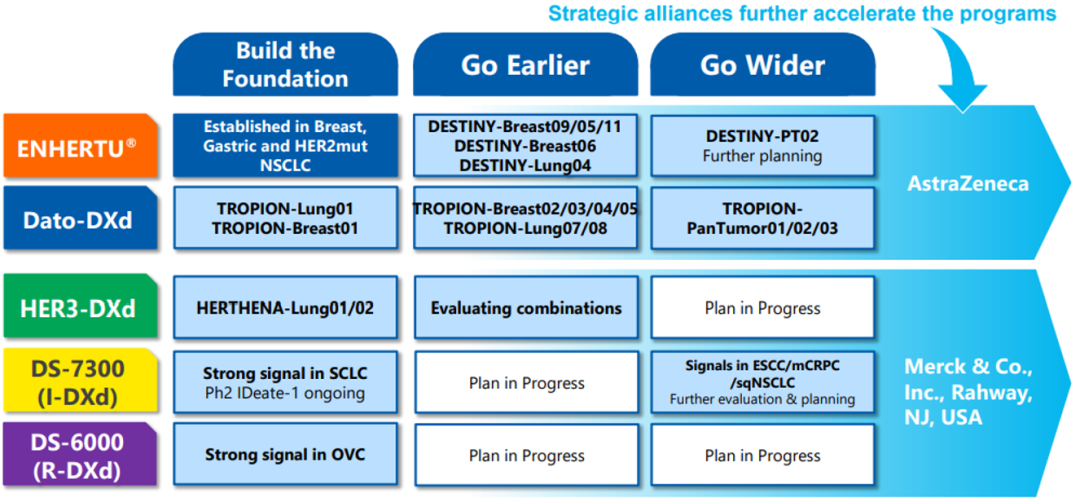
Figure 3.5Dxd ADCs Development Strategy[4]
It can be seen that Daiichi-Sankyo...Number of Longitudinal Treatment LinesAndLateral IndicationsExpand in two areas to comprehensively advance ADC development. In addition, apart from the top five ADCs, Daiichi Sankyo is also actively developing new ADCs, such as DS-9606 with undisclosed targets, TA-MUC1 ADC DS-3939, which Daiichi Sankyo refers to as the next wave.
Daiichi Sankyo's Next Wave Theme Updated at the 2023 R&D Day[4], mainly including three aspects. Except forThe development of the aforementioned novel ADCIn addition, it also involvesCombination therapy with small molecules or monoclonal antibodies in the R&D pipeline(Figure 4). Ongoing clinical studies include the combination of EZH1/2 inhibitor Valemetostat with DS-8201, exploring its efficacy and safety in the treatment of HER2 low/negative advanced breast cancer, with subsequent plans to explore its potential in combination with other ADCs. Another combination being explored is the synergy between SIRPα antibody DS-1103 and DS-8201, currently in the first-in-human clinical study for HER2-expressing solid tumors.
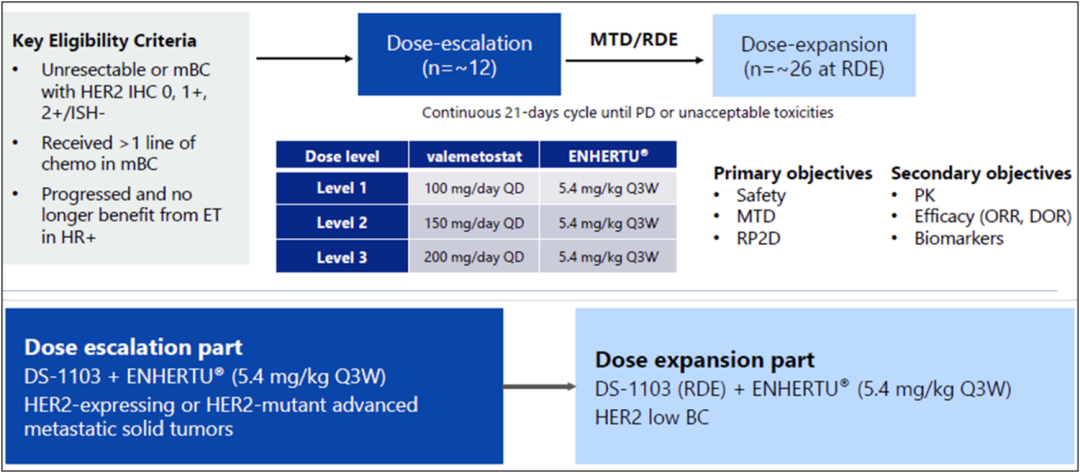
Figure 4. Trial design of EZH1/2 inhibitor Valemetostat with DS-8201 (top) and trial design of SIRPα antibody DS-1103 with DS-8201 (bottom)
The third aspect isIts unique and innovative R&D products, including EZH1/2 inhibitor Valemetostat, FLT3 inhibitor Quizartinib, and CD47 antibody DS-1471. Among them, Valemetostat monotherapy demonstrated significant clinical efficacy in the treatment of peripheral T-cell lymphoma (PTCL). The 2023 ASH conference disclosed the latest data from its pivotal Phase II clinical trial.[7],ORR was as high as 43.7%, with a median DOR of 11.9 months. In addition, Quizartinib has become the first FLT3 inhibitor approved in combination with chemotherapy for the treatment of newly diagnosed FLT3-ITD (+) acute myeloid leukemia (AML) across all stages (induction, consolidation, and maintenance).
References:
Scan the WeChat QR code, add the editor of the Antibody Circle, and those who meet the requirements can join the Antibody Circle WeChat group!


All reproduced articles in this official account are intended to convey more information, with clear attribution of sources and authors. Media or individuals who do not wish to be reproduced can contact us (cbplib@163.com), and we will immediately proceed with deletion. All articles represent the views of the author and do not represent the position of this website.