

Aiolos Bio: From In-Licensing SHR-1905 for $21.5M to $1.4B Acquisition by GSK Within Months

Hengrui Pharma
Innovative and High-Quality Pharmaceutical Developer

GSK
Pharmaceutical R&D Manufacturer

Welcome to follow Asymchem Pharma News
On January 9, 2024, GlaxoSmithKline ("GSK") and Aiolos Bio ("Aiolos") jointly announced that they had reached an agreement. According to the agreement,GSK to Acquire Aiolos,Pay $1 billion upfront, plus potential regulatory milestone payments of up to $400 million。
This acquisition enables GSK to obtain Aiolos'sCore Product AIO-001, a Potential Best-in-Class Long-Acting Anti-Thymic Stromal Lymphopoietin (TSLP) Monoclonal Antibody。
AIO-001(SHR-1905)Developed by Hengrui Pharma, August 2023,Aiolos reached an agreement with Hengrui Pharma, prepaying $21.5 million (and over $1 billion in potential milestones) to obtain exclusive global development and commercialization rights for the drug outside of Greater China., while Hengrui Pharma retains the commercialization rights in the Greater China market.Following the successful transaction, GSK will be responsible for continuing to pay Hengrui Pharma milestone payments and tiered royalties.
According to rough estimates, over a period of five months, the pipeline has only been calculated based on the upfront payment.Value increased nearly 40 times。
About AIO-001
AIO-001 is a humanized anti-TSLP monoclonal antibody, known for its high potency and long half-life.Only requires twice-yearly dosing. This drug can block the release of inflammatory cytokines, inhibit downstream inflammatory signaling pathways, thereby alleviating inflammatory conditions and controlling disease progression; since TSLP acts on the early upstream of the inflammatory cascade, SHR-1905 has the potential to be applicable to a wide range of severe asthma cases, without limitations based on phenotype (such as eosinophilic or allergic) or biomarkers.Thus, it has greater market potential compared to drugs targeting other sites.。
In clinical research, the AIO-001 drug has demonstrated good safety, tolerability, pharmacokinetics, and bioactivity in both healthy volunteers and asthma patients, with low immunogenicity. In May 2021, the drug was approved by the National Medical Products Administration to conduct clinical trials for asthma treatment, and in May this year, it was also approved to conduct clinical trials for chronic rhinosinusitis with nasal polyps. Both studies are currently in Phase 2 clinical trials.
In addition, the company is also developing it for other immune indications, such as chronic obstructive pulmonary disease (COPD) and chronic spontaneous urticaria (CSU).
About TSLP Drugs
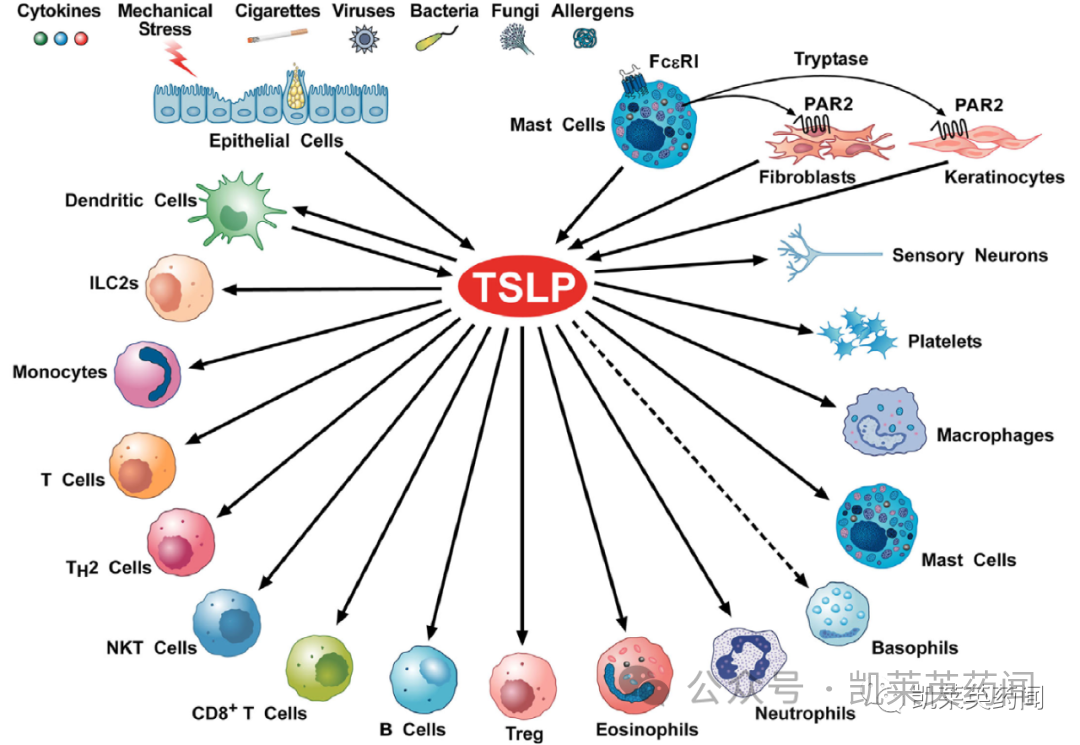
TSLP is a cytokine primarily expressed by airway epithelium, released upon environmental injury, triggering a series of downstream inflammatory processes. It is a short-chain four α-helix bundle type Ⅰ interleukin-2 (IL-2) family cytokine, homologous to IL-7, first discovered in 1994, and initially identified as a cytokine produced by thymic stromal cells.
Similar to IL-25 and IL-33, TSLP is primarily secreted by epithelial cells, airway smooth muscle cells, keratinocytes, stromal cells, fibroblasts, mast cells, macrophages/monocytes, granulocytes, and dendritic cells (DCs). There is substantial evidence indicating its ability to differentiate naive CD4+ T lymphocytes in type 2 cells, leading to the production of IL-4, IL-5, and IL-13, while reducing the expression of interferon-gamma (IFN-γ) associated with type 1 cells, thereby affecting various cell types.
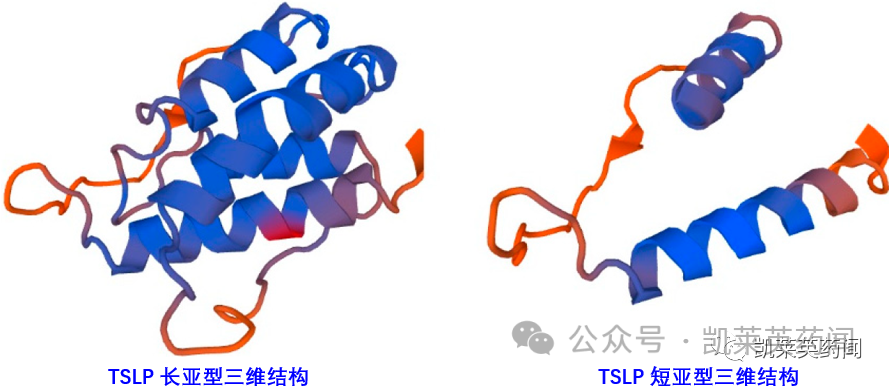
TSLP is divided into short and long subtypes, consisting of 60 amino acids and 159 amino acids, respectively. They are controlled by different gene promoters and respond to different external stimuli. The short subtype is expressed in various tissues and is associated with TSLP homeostatic functions, but its role has not yet been fully elucidated. The expression of the long subtype is inducible, exerting inflammatory effects, and appears to be related to pathologies such as asthma, atopic dermatitis, or psoriasis.
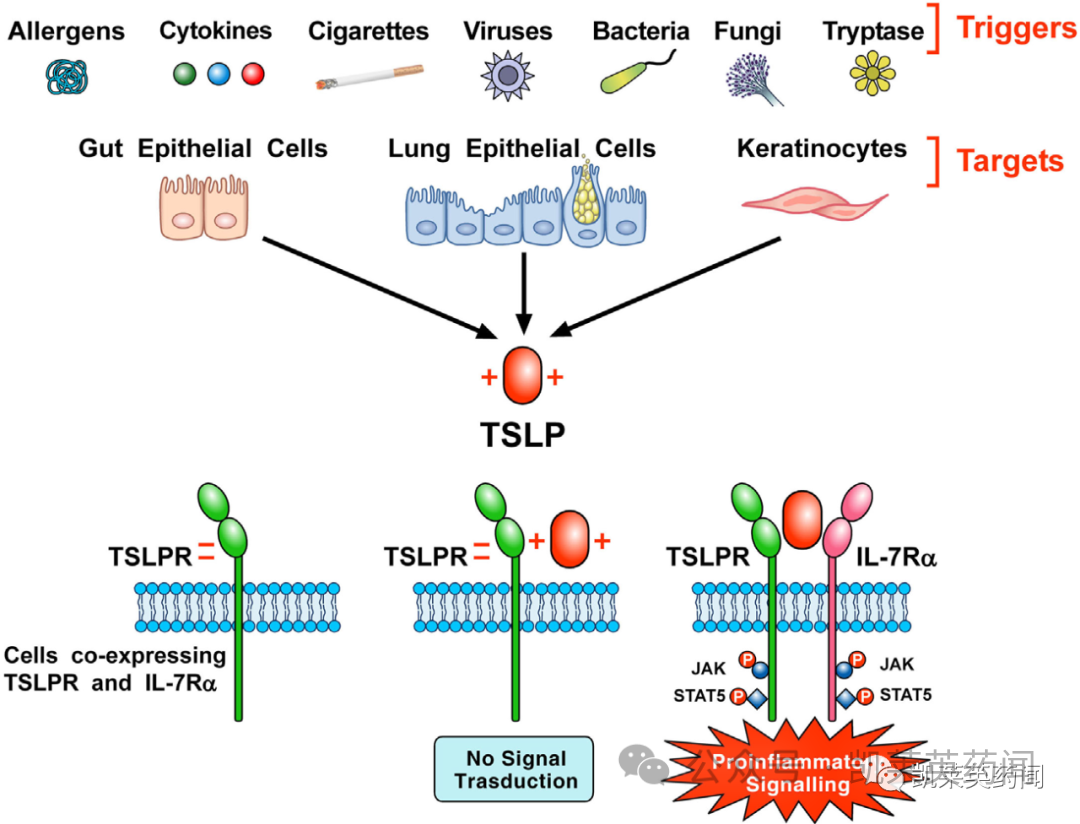
TSLP is overexpressed in the airways of asthma patients and correlates with the expression of type 2 chemokines and disease severity; moreover, studies indicate that abnormal TSLP signaling is closely associated with other inflammatory allergic diseases, including atopic dermatitis, eosinophilic esophagitis, chronic obstructive pulmonary disease, and idiopathic pulmonary fibrosis. Additionally, its expression can be triggered by infections with viral, bacterial, and parasitic pathogens.
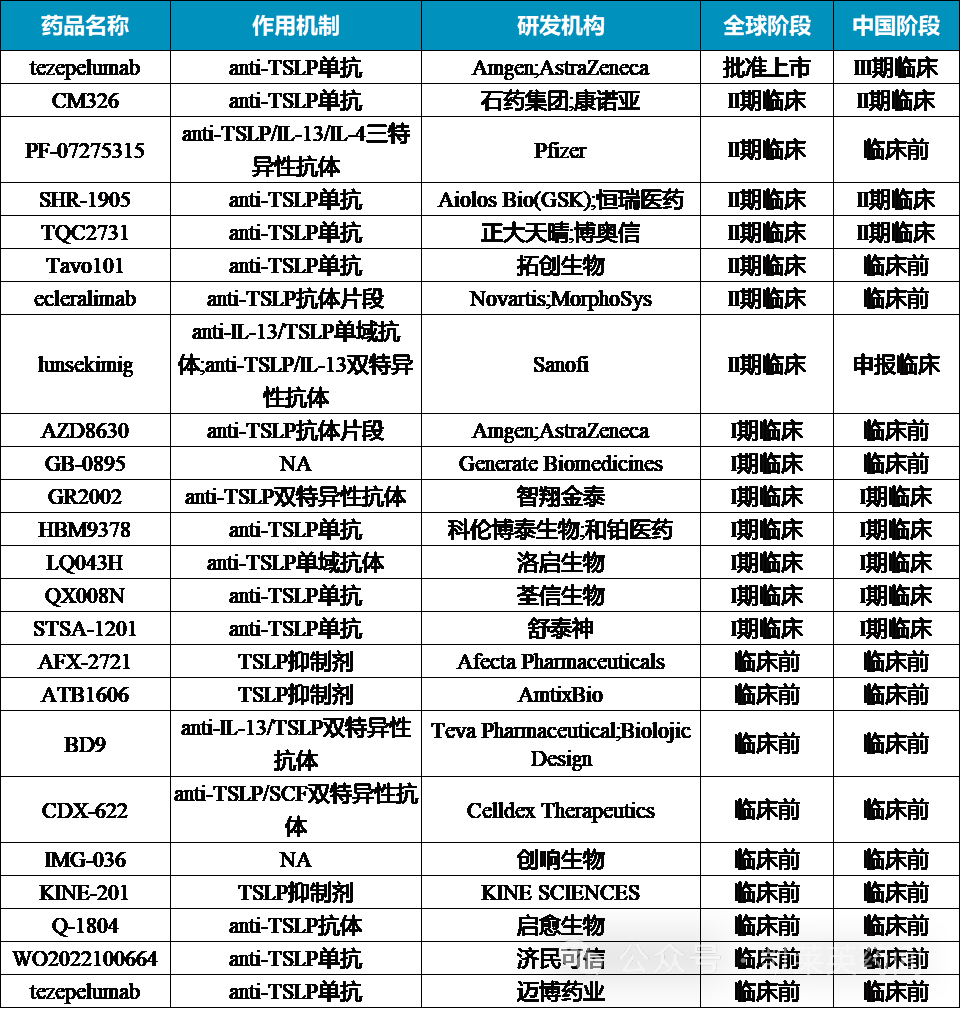
According to incomplete statistics,Currently, there are approximately 24 TSLP drugs under research.Currently, only tezepelumab (brand name: Tezspire), co-developed by AstraZeneca and Amgen, was approved for marketing by the FDA in December 2021., for the maintenance treatment of severe asthma in adolescent and adult patients aged 12 years and above.
About Asthma
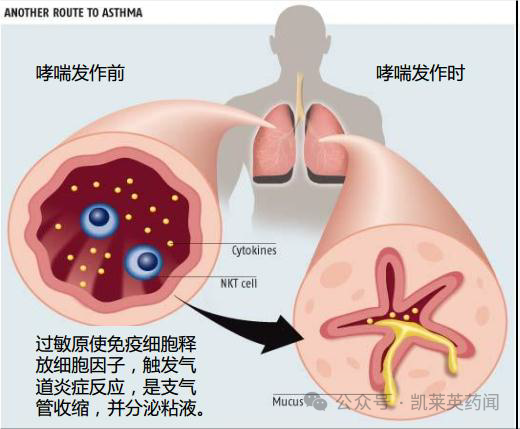
Asthma, also known as bronchial asthma, is a very common chronic respiratory disease. Bronchial asthma is a chronic airway inflammation involving multiple cells and cellular components. This inflammation often leads to increased airway reactivity, causing recurring symptoms such as wheezing, shortness of breath, chest tightness, and/or coughing, which mostly occur at night and/or in the early morning. These symptoms are usually accompanied by widespread and variable airflow obstruction, which can be reversed spontaneously or through treatment. The pathogenesis of asthma is not fully understood but can be summarized as the interaction of immune-inflammatory responses, neural mechanisms, and airway hyperresponsiveness.
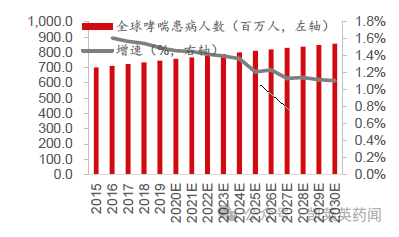
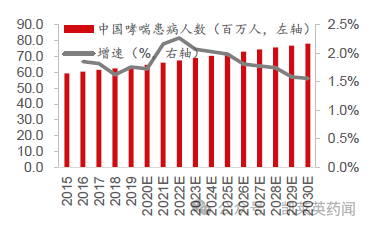
The global prevalence of asthma is approximately 4.5%, with varying rates across countries, and higher rates in developed countries compared to developing ones. According to statistics and forecasts by Frost & Sullivan, the global number of asthma patients reached 746 million in 2019, and is expected to reach 801 million by 2024; in China, the number of asthma patients reached 64 million in 2019, and is expected to reach 70 million by 2024.
Global Asthma Prevalence
Number of Asthma Patients in China
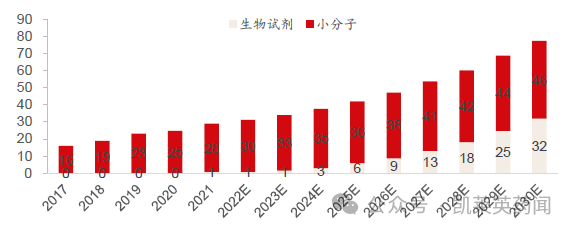
According to Frost & Sullivan data, China's asthma drug market reached 29 billion yuan in 2021 and is expected to reach 78 billion yuan by 2030, with a compound annual growth rate of 11.6%. In 2021, small-molecule drugs dominated the asthma drug market, with biologics accounting for 1.8% of the market share. This figure is expected to rise to 41.4% by 2030.
Estimated Scale of China's Asthma Market (Billion Yuan)
According to the 2020 Edition of the Guidelines for the Prevention and Treatment of Bronchial Asthma, the long-term treatment plan for asthma patients is divided into 5 levels. In cases of severe symptoms (severe asthma), additional biotargeted drugs are required (including anti-IgE antibodies, anti-IL-5 antibodies, anti-IL-5 receptor antibodies, anti-IL-4 receptor antibodies, etc.).TSLP Monoclonal Antibody Included in the 2022 Global Initiative for Asthma). Biologics are recommended for use in severe asthma.
Positioning of Biologics in Asthma Treatment
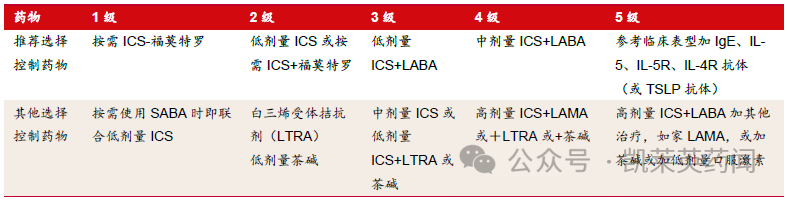
(Note: ICS: Inhaled Corticosteroids; LABA: Long-Acting Beta-2 Agonists; SABA: Short-Acting Beta-2 Agonists; LAMA: Long-Acting Muscarinic Antagonists)
About Aiolos
In early 2022, Tony Adamis and Khurem Farooq planned to establish a biotech company, which led to the creation ofAiolos Bio (also known as One Bio).AiolosA clinical-stage biopharmaceutical company in the United States dedicated to addressing unmet treatment needs for patients with certain respiratory and inflammatory diseases. Unlike other startups seeking to bring entirely new technologies to market, the company focuses on identifying well-known drug targets for diseases.
The founding team is a typical combination of commercial giants and scientists. Khurem Farooq, the co-founder and CEO, has over 25 years of experience in drug development and operational leadership. He previously served as the CEO of Gyrograph Therapeutics, a gene therapy company acquired by Novartis for $1.5 billion, and held senior leadership positions at Genentech. Additionally, several core members are standard biopharmaceutical scientists with years of experience working for major overseas companies and a track record of success.
Aiolos, two months after receiving authorization from Hengrui Pharma, announced in October 2023 the completion of a $245 million Series A financing round led by Atlas Venture, Bain Capital Life Sciences, Forbion, and Sofinnova Investments, with RA Capital Management participating as a follow-up investor.
References
1. Official Websites of Various Companies
2. Cailian She, Sheng Hui, Wall Street Journal
3. Guolian Securities, Southwest Securities


"Views"Click once