

Hengrui Pharma's Pipeline 'Resold' at 45x Markup: Aiolos Bio Flips SHR-1905 to GSK for $1B Just Months After $25M Deal
Hengrui Pharma
Innovative and High-Quality Pharmaceutical Developer

GSK
Pharmaceutical R&D Manufacturer

Aiolos Bio
Developer of Respiratory and Inflammatory Disease Treatments
The 2024 JPM conference was bustling with activity, and business development (BD) deals in the biopharmaceutical industry picked up momentum. Among the transaction information from numerous pharmaceutical giants, one acquisition by GlaxoSmithKline (GSK) caught attention.
On January 9, GSK announced that it would acquire Aiolos Bio, a clinical-stage biopharmaceutical company focused on addressing unmet therapeutic needs of patients with certain respiratory and inflammatory diseases. GSK will pay $1 billion upfront and up to $400 million in milestone payments for this acquisition.
This biopharmaceutical company, which has made GSK willing to invest heavily, currently has only one core pipeline, AIO-001, a potential best-in-class long-acting anti-thymic stromal lymphopoietin (TSLP) monoclonal antibody that can block the release of inflammatory cytokines, inhibit downstream inflammatory signaling, and ultimately improve inflammatory status and control disease progression. It is about to enter Phase II clinical trials for the treatment of adult asthma patients and can also be used for other indications, including chronic rhinosinusitis with nasal polyps.
The acquisition deal with a total transaction value of approximately $1.4 billion does not stand out among the recent wave of "BD frenzies" that often involve tens of billions of dollars. The real reason why GSK's acquisition of Aiolos Bio has sparked heated discussions is that its core pipeline, AIO-001, was a project in-licensed from Hengrui Pharma. At that time, the upfront payment and recent milestone payments for the deal were only $25 million. The upfront payment for Aiolos Bio’s resale was 40 times that price.
The new drug pipeline of China's "Big Brother of Pharmaceuticals" has eventually landed in the hands of international pharmaceutical giants. Is this an exciting recognition for China's innovative drugs, or a case of being "taken advantage of"?
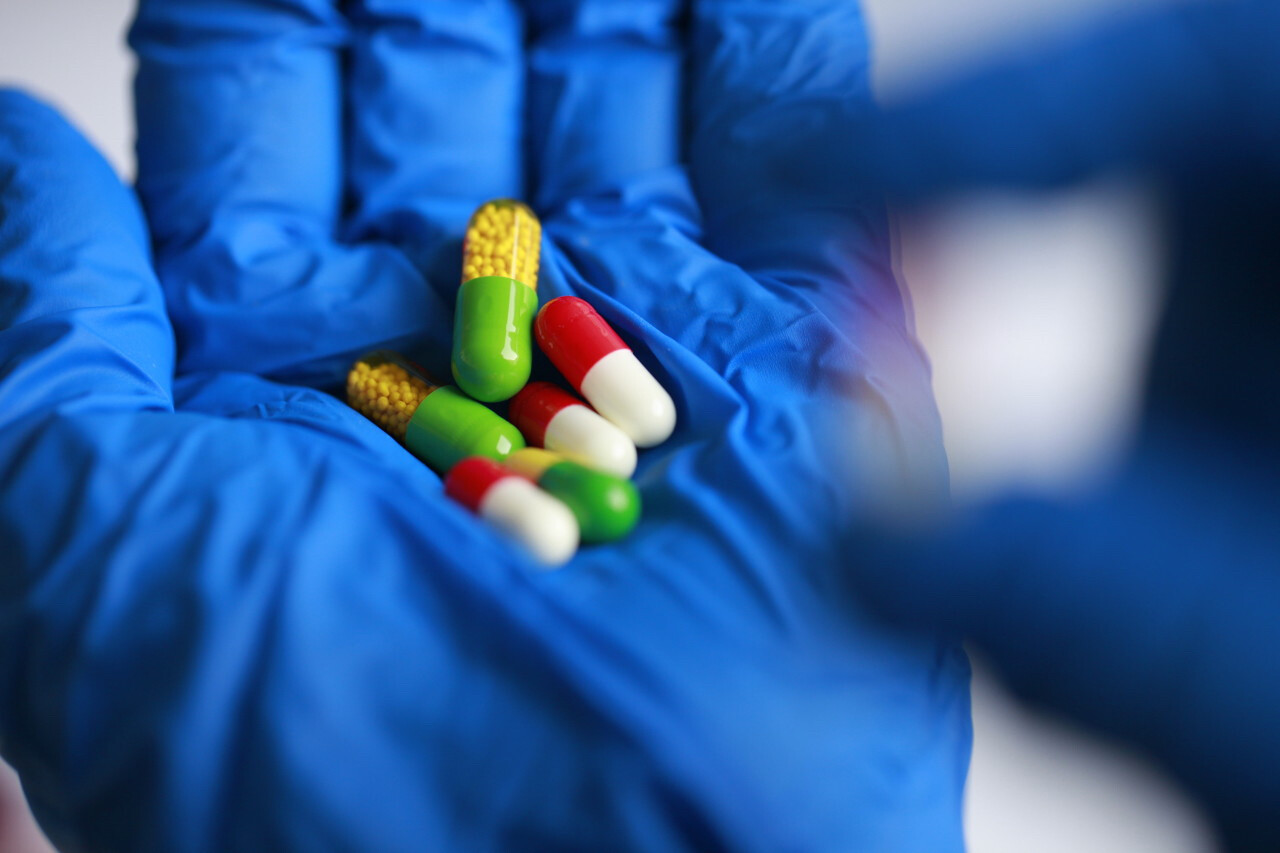 Image Source: Tuchong
Did Hengrui Pharma "Sell at a Loss"?
Aiolos Bio is a relatively young company, founded in 2023.
Aiolos Bio's CEO, Khurem Farooq, has over 20 years of experience in drug development and operations. He previously served as the Senior Vice President of the Immunology and Ophthalmology Business Unit at Genentech (now a subsidiary of Roche), leading the research, development, and commercialization of multiple drugs in the immunology and ophthalmology fields.
Before founding Aiolos Bio, Khurem Farooq also served as the CEO of Gyroscope Therapeutics. In February 2022, Novartis announced the acquisition of the company, with an upfront payment of approximately $800 million and up to $700 million in potential milestone payments. At the time, Gyroscope's core product, GT005, was a one-time gene therapy based on the AAV2 vector intended for treating geographic atrophy secondary to age-related macular degeneration (AMD). However, in September 2023, Novartis halted the development of GT005 based on recommendations from the data monitoring committee.
Tapan Manier, Chief Business Officer of Aiolos Bio, has previously worked at Bain Capital Life Sciences, Genentech, and McKinsey & Company, with extensive experience in corporate business development (BD), investment, commercial strategy, and operations. According to information on Aiolos Bio's official website, it was Tapan who led the transaction with Hengrui Pharma.
In August 2023, Hengrui Pharma announced an agreement with the U.S.-based company One Bio (the predecessor of Aiolos Bio). Under the agreement, One Bio will obtain exclusive rights to develop, manufacture, and commercialize SHR-1905 injection, a new drug, outside of Greater China. At this time, it had been less than a year since the establishment of Aiolos Bio.
According to the agreement, Hengrui Pharma can receive an upfront payment and near-term milestone payments totaling $25 million, as well as up to $1.025 billion in development and sales milestone payments. Aiolos Bio will pay Hengrui Pharma royalties in the double-digit percentage of actual annual net sales.
The $25 million payment includes a $21.5 million upfront payment and a $3.5 million near-term milestone payment upon providing a certain number of samples for the first overseas Phase II clinical trial of SHR-1905.
Two months after reaching a deal with Hengrui Pharma, in October 2023, Aiolos Bio announced the completion of a $245 million Series A financing round led by Atlas Venture, Bain Capital Life Sciences, Forbion, and Sofinnova Investments, with RA Capital Management participating as a follow-up investor. Adding to the $1 billion upfront payment from "selling" to GSK, Aiolos Bio has already earned over $1.2 billion through the pipeline acquired from Hengrui Pharma, nearly 50 times the initial payment received by Hengrui Pharma at that time. Calculating only by the upfront payment, "middleman" Aiolos Bio has made more than 45 times the price difference within five months.
Therefore, some argue that Hengrui Pharma's SHR-1905 was "sold at a loss." However, Wang Heng, General Manager of Beijing Bestrategy Marketing Planning Co., Ltd., believes that this is actually a win-win transaction for all parties involved.
"First, from Hengrui's perspective, although the difference in upfront payments is significant, Hengrui has retained the rights to SHR-1905 in the Chinese market, which is its most advantageous market. It also enjoys ongoing royalties from overseas markets and has achieved rapid capital recovery, allowing it to reinvest funds into the development of other products. Secondly, this event serves as a strong boost for domestic new drug research and development. An increasing number of multinational companies are paying attention to and recognizing R&D projects from Chinese companies, which is a positive incentive for the entire industry. Finally, the transaction value of over a billion US dollars is not expensive for GSK, as it gains a high-quality asset while saving substantial R&D costs and time." Wang Heng pointed out to Times Finance.
The "Going Global Wave" of China's New Drugs
In the pharmaceutical industry, the patent protection period for original new drugs is generally 20 years. After the patent protection expires, generic drugs with similar efficacy flood the market, causing a sharp decline in the sales of the original drug — this is the so-called "patent cliff." In the industry, products with annual sales reaching $1 billion are usually referred to as "blockbusters," and one "blockbuster" can make a pharmaceutical company. Before 2030, the key patents for several "blockbusters" will have expired or are about to expire, such as AbbVie's Adalimumab and Merck's Pembrolizumab. To escape the "patent cliff," pharmaceutical giants have launched a "buy-buy-buy" mode, investing heavily to discover the next batch of "blockbusters."
After years of accumulation, China's innovative drug industry has now entered an era of rapid growth, attracting many multinational pharmaceutical companies to "seek treasures" within it.
According to incomplete statistics from Times Finance, at least 10 China-made new drug out-licensing deals occurred between January 1 and January 10, 2024, four of which had potential transaction sizes exceeding $1 billion.
On January 7, Bowang Pharmaceutical announced that it had entered into two exclusive license cooperation agreements with Novartis for RNAi therapies. Bowang Pharmaceutical can receive an upfront payment of $185 million from Novartis and is eligible for potential option fees, milestone payments, and tiered royalties on commercial sales. The total potential value of the two deals could reach up to $4.165 billion.
On January 2, Yilian Biotech and Roche reached a collaboration on an ADC drug, with a potential total transaction value exceeding $1 billion; on January 3, Ribo Biotech and Boehringer Ingelheim reached an agreement to jointly develop a small nucleic acid therapy, with a potential total transaction value exceeding $2 billion; on January 4, Anrui Biotech and Avenzo Therapeutics reached a transfer agreement, with a potential total transaction amount also exceeding $1 billion.
Wang Heng pointed out that for Chinese pharmaceutical companies entering overseas markets, finding suitable partners is crucial. Both parties need to establish mutual trust and effective communication, jointly develop products, and share benefits. During the cooperation process, instead of focusing solely on one-off deals, attention should be given to the product's growth and shared profits in overseas markets. Moreover, as the product grows in overseas markets, companies can gain greater returns. In the second phase, both parties can consider forming joint ventures to expand into overseas markets together. This will allow the company to grow into a global enterprise, accumulate more experience, and achieve richer rewards.
The content on this website (including but not limited to text, images, and audio/video), except for reprints, is copyrighted by Time Online. Without written agreement authorization, reproduction, linking, reposting, or use in other ways is prohibited. Those who violate the above statement will be held legally responsible by this website. For reprinting by other media, websites, or individuals, please contact Mr. Ding of this website: news@time-weekly.com