

MNCs Rush to Acquire Early-Stage Chinese Biotech Assets: Bayer, Novartis, AstraZeneca, and Roche Lead the Charge
MediLink
Antibody-Drug Conjugates Developer
Roche
Oncology Drug Research, Development, and Manufacturing

Novartis
Drug Development and Manufacturing
Bayer
Pharmaceutical Product R&D Developer
RTW Investments
Biopharmaceutical Investment Institutions

Johnson & Johnson
Healthcare Product Manufacturers, Health Service Providers

Ambrx Biopharma
Biologics Developer
At the start of 2024, multinational pharmaceutical companies (MNCs) are accelerating their acquisitions of innovative drugs in China.
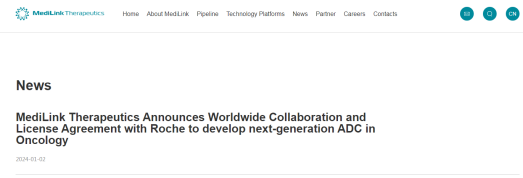
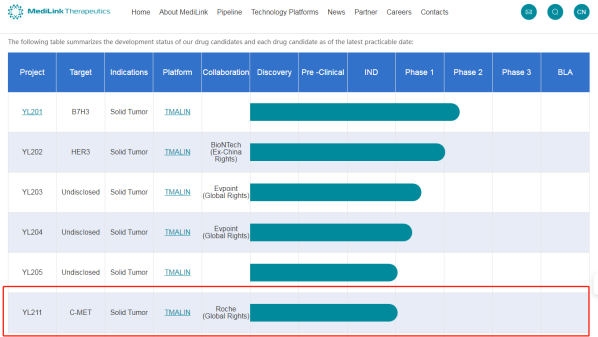
On January 2, MediLink announced that it had reached a global collaboration and licensing agreement with Roche. The two parties will collaborate to develop YL211, a next-generation antibody-drug conjugate candidate targeting c-MET (mesenchymal-epithelial transition factor).
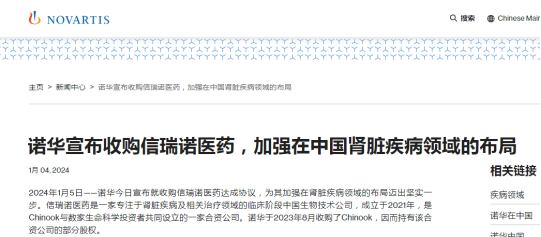
On January 5, Novartis announced the agreement to acquire Xinruinuo Pharmaceutical (Shanghai) Co., Ltd., which will be fully integrated into Novartis China. This marks the first formal acquisition by Novartis of a Chinese biotechnology company.
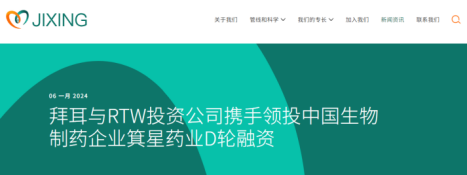
On January 6, Bayer and RTW Investments announced equity investments of $35 million and $127 million, respectively, in Jixing Pharmaceuticals. Jixing Pharmaceuticals is a clinical-stage biopharmaceutical company founded by RTW. At the same time, Zhou Xiaolan, Global Executive Vice President of Bayer AG's Pharmaceuticals Division and President of Bayer China, as well as President of Bayer Greater China, will join the board of directors of Jixing Pharmaceuticals.
On January 8, Johnson & Johnson announced that it would acquire Ambrx Biopharma for $2 billion (approximately 14.3 billion yuan), a clinical-stage biopharmaceutical company with a proprietary synthetic biology platform used to design and develop next-generation antibody-drug conjugates (ADCs).
After AstraZeneca's acquisition of Gracell Biotechnologies at the end of 2023 fired the first shot, in just half a month, MNCs began opening their shopping carts and generously "snapping up" China's Biotech assets.
Since December 2023, Roche has made four deals, BMS and AstraZeneca three each, Novartis and AbbVie two each, while Johnson & Johnson, GSK, Lilly, and BI have also reached M&A or BD deals for new drugs. Meanwhile, multinational corporations (MNCs) are shifting their "gold prospecting" focus earlier, entering the early-stage R&D innovation ecosystem at the preclinical or Phase I clinical stage.Notably, at the start of the year, this wave of BD and M&A "bottom-fishing" in China's Biotech sector seems to have been rather low-key for large domestic pharmaceutical companies.
In 2024, will MNCs continue to push the "ceiling" of domestic asset transactions in China? Will leading local pharmaceutical companies also spark a wave of domestic pharmaceutical mergers and acquisitions (M&A)?
"Gold Rush" Port Forwarding
MNCs Place密集 Bets on China's Biotech
MNC Investment in Chinese Biotech Takes on a New Form.
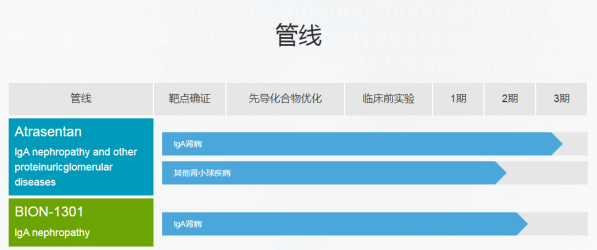
Novartis Acquires Xinruinuo Pharmaceutical, a Clinical-Stage Chinese Biotechnology Company Focused on Kidney Diseases and Related Therapeutic Areas. Xinruinuo holds exclusive rights in China and Singapore for two innovative drug programs targeting Immunoglobulin A Nephropathy (IgAN): Atrasentan and Zigakibart, both of which are currently in clinical development.
Atrasentan, an orally administered selective endothelin receptor (ETA) antagonist, is currently in Phase III clinical development. It demonstrated a statistically and clinically significant reduction in proteinuria in a 36-week analysis, successfully meeting the primary endpoint of its Phase III study. Another drug, Zigakibart (BION-1301), a subcutaneously administered anti-APRIL (a proliferation-inducing ligand) monoclonal antibody, has received approval from China's Center for Drug Evaluation and began Phase III clinical trials in October 2023.
MediLink's YL211 project, Roche's first foray into the ADC field, is currently in the clinical application stage. Next, Roche China Innovation Center (CICoR) will collaborate with MediLink to advance the YL211 project into Phase I clinical trials, after which Roche will take charge of further global development and commercialization. Roche will pay MediLink an upfront payment and near-term milestone payment totaling $50 million, along with potential development, registration, and commercialization milestone payments of up to nearly $1 billion, as well as tiered royalties based on future global annual net sales. Considering 2023’s ADC overseas deals, it is quite commendable for an early-stage product to secure a short-term payout of $50 million.
In fact, the pipelines of two biotechs that collaborated with AstraZeneca in 2023 are also at a very early stage. ECC5004 from Chime Biologics is still in Phase 1 clinical trials, with only preliminary data available; ECC5004, a new oral small-molecule GLP-1 drug developed by Chime Biologics, is currently undergoing Phase I clinical trials in the United States involving healthy volunteers and patients with type 2 diabetes. As for UA022 from YouSen Health, it is still just a preclinical molecule.
Whether it is Eternity Bio or Yousen Jianheng, both are very small-scale next-generation biotech companies. In June this year, Eternity Bio just completed its Series B financing round; while Yousen Jianheng is earlier in its development and has only completed its Series A financing round.
The ability to tap into the early R&D pipelines of such small-scale companies is enough to demonstrate the current emphasis MNCs place on the Chinese market and domestic pharmaceutical enterprises. This approach differs from the previous "gold rush" mindset some MNCs had in China. In the past, these early-stage pipelines in China might have needed to unveil relatively impressive preliminary data at top international conferences before attracting collaboration interest from large pharmaceutical companies.
In the industry's view, early-stage projects have less clinical data compared to Phase II/III projects or are still in the preclinical stage, thus posing greater future risks. Of course, they also hold greater potential to a certain extent, but whether the project value can truly be realized needs to be assessed. Collaborating at an early stage represents a balance of risk and reward for both parties. Leveraging the partner’s capabilities in late-stage development to accelerate the product’s rapid market entry could be a truly complementary collaboration and a powerful alliance for both sides.
Early Project Collaboration
Why Are Major Chinese Pharmaceutical Companies Hard to Find?
Reviewing 2023, License out transactions became the highlight of the year. Public data shows that as of December 28, the total amount of China's pharmaceutical BD transactions in 2023 was $50.59 billion, with a total of 124 transaction events. Compared with the BD transaction data of Chinese pharmaceutical companies in 2022, the total transaction volume in 2023 increased by $14.73 billion, a year-on-year increase of 41%. There were 53 License out events, with a transaction amount as high as $42.59 billion, accounting for 84.2%. The proportion of License in transactions in China's pharmaceutical deals began to decrease, with only 21 events and a transaction amount of $4.28 billion.
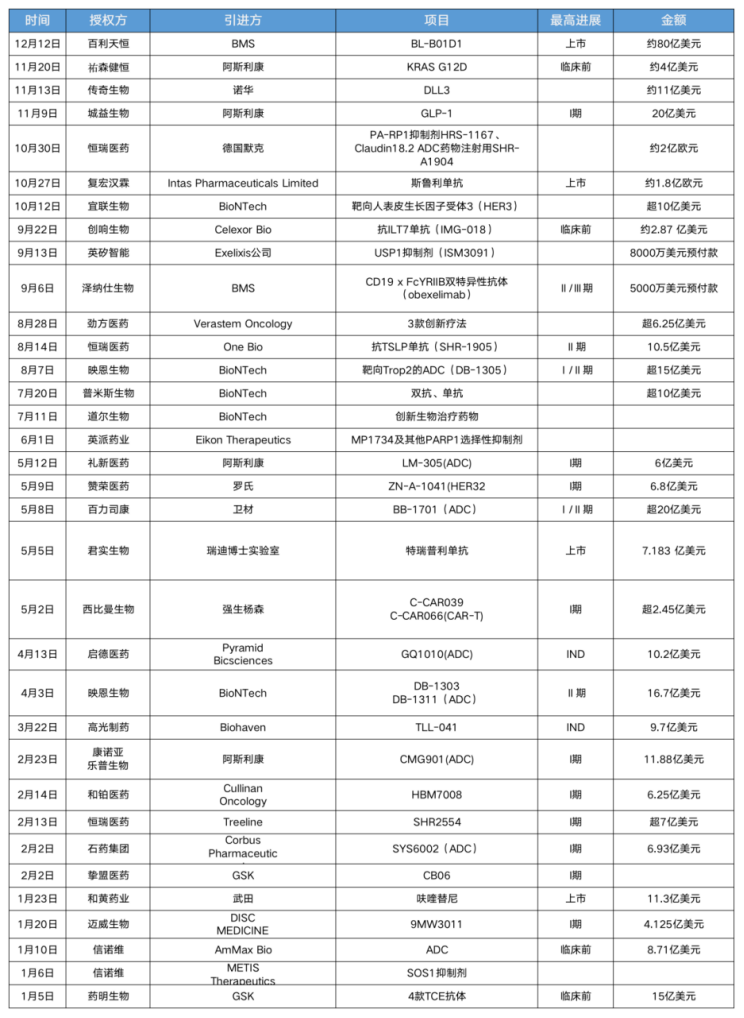
2023 China Innovative Drug License-out Projects
(Data compiled by the New Media Center of the Pharmaceutical Economy Newspaper; corrections and additions are welcome.)
Overall, the biggest characteristic of Chinese innovative pharmaceutical companies' overseas licensing is that most of them are newly established small companies. In addition to AstraZeneca and Roche, Pfizer and Eli Lilly have also started to show great interest in early-stage innovative drug projects and potential technology platforms in China.
In March 2023, Biohaven, a subsidiary of Pfizer, and Highlightll Pharma jointly announced that the global rights (excluding China) for Highlightll's BHV-8000 (also known as TLL-041) were granted to Biohaven. According to the agreement terms: Highlightll will receive $10 million in upfront cash and $10 million in equity investment, with the potential to obtain $950 million in development and commercial milestone payments, as well as tiered royalties. The drug is expected to enter Phase I clinical trials in 2023.
In May this year, Eli Lilly partnered with XtalPi, an AI-driven pharmaceutical company, signing a collaboration for the discovery of novel small molecule drugs using AI. Targeting an undisclosed innovative target, XtalPi will utilize its proprietary small molecule drug discovery platform, ID4Inno™, to develop first-in-class drugs to address unmet clinical medication needs. The agreement includes upfront payments and milestone-based earnings totaling up to $250 million. Founded in 2015, XtalPi completed a $319 million Series C financing round in 2020 and a $400 million Series D financing round in 2021.
Compared with multinational pharmaceutical companies purchasing early-stage products from domestic Biotech firms or engaging in deep cooperation involving equity and organizational structure, large local pharmaceutical enterprises are currently focusing on product-level cooperation.Some industry insiders pointed out that, at the acquisition level, the global market competitiveness of large pharmaceutical companies in China remains relatively weak. Particularly for innovative drugs, if competition is limited to the domestic market, their commercial value cannot be fully realized. Moreover, once these companies attempt to enter overseas markets, their global capabilities still need further improvement.
In addition, during the process of pharmaceutical BD transactions, both parties will more or less provide the other party with confidential information and research materials related to pharmaceutical R&D products. "In the past, some pharmaceutical companies in China did not perform well in terms of BD integrity, and it was easy to see behaviors such as 'extracting commercial information'; on the other hand, the early-stage new drug R&D faces enormous financial and risk pressures, which also made domestic pharmaceutical companies hesitate." The above-mentioned industry insider pointed out.
It is worth noting that the return and risk of investment often coexist.
In one Chinese innovation project License out deal after another, there are both successful cases like Junshi Biosciences and Coherus joining hands to bring domestically produced PD-1 to the U.S. market, achieving a win-win outcome; and controversies such as Hengrui and Wanchun Pharmaceutical's core products facing obstacles in "going overseas," leading to disputes over the transaction...
In fact, introducing products in the late clinical stage or those already approved in China offers certainty for multinational corporations (MNCs) looking to enrich their product pipelines. On the other hand, the earlier the projects are, the more they are affected by factors such as the speed of clinical development, clinical efficacy data, adjustments in external collaborations, and changes in the market environment—all of which could increase the risks associated with business development (BD) transactions.


www.yyjjb.com.cn
Insight into Industry Trends

"Pharmaceutical Economy Newspaper"
Academic Official Account
Focus on the Frontier of Oncology Academia
Terminal Official Account