

SynBio Weekly Digest (Jan 11–17, 2024): Industry Advances in PHA, Collagen, Microbial Consortia, and Global Partnerships

Illumina
Diagnostic Product Developer

Warm Reminder
Peptide Research Society Builds Reader Communication Group~
Industry Exchange, Business Cooperation, Report Consultation
Please add the editor's WeChat for further group joining information.

Policy Tracking
01
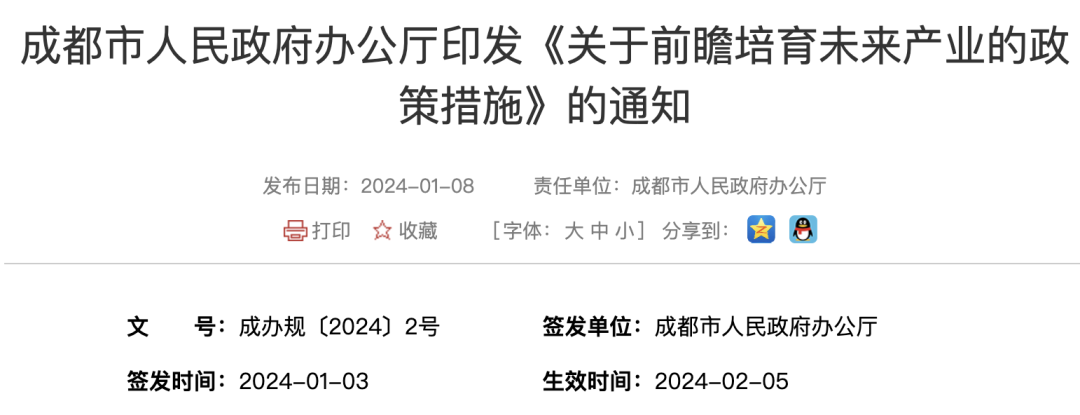
ChengduWill focus on cultivating future industries such as synthetic biology,Involving 6 major fields and 24细分 tracks
On January 8, Chengdu issued the "Implementation Opinions on Foresightively Cultivating Future Industries to Build New Drivers for High-Quality Development" and the "Policy Measures for Foresightively Cultivating Future Industries," making forward-looking and systematic arrangements for the cultivation of future industries.
Chengdu will focus on six key areas: frontier biotechnology, advanced energy, future transportation, digital intelligence, ubiquitous networks, and new materials, across 24 specific tracks. It will adopt 14 policy measures in five aspects to proactively cultivate future industries. The 24 specific tracks include gene and cell therapy, green hydrogen energy,Synthetic Biology, brain-inspired intelligence, advanced carbon materials, high-performance fibers and composite materials, etc.
In the forward-looking cultivation of frontier biology directions, the focus is on nurturing sub-sectors such as gene and cell therapy, digital diagnostics, and nuclear medicine, while tackling core technologies like immune cell therapy, gene editing, and structured disease databases. Efforts will also accelerate research and industrialization in protein design screening, AI-driven diagnostics, and radionuclide conjugate therapy. In the medium to long term, priority will be given to cultivating sub-sectors such as bio-breeding and synthetic biology, developing integrated technology systems that combine gene-editing breeding, mutagenesis breeding, and traditional breeding techniques, and promoting their advancement.Synthetic Biotechnology and Green Food, Large Health IndustryDisruptive innovations and industrial applications in fields such as...
Enterprise R&D & Business Progress
01

Ginkgo:Collaborate with Illumina to Deploy Bio-Monitoring Technology Globally, Expanding the Scale and Scope of Pathogen Genomic Surveillance
On January 15, local time in the United States, Concentric, the biosafety and public health division of synthetic biology company Ginkgo Bioworks, announced that it had signed a cooperation agreement with genomics company Illumina. The two parties will use Illumina's technology to build pathogen monitoring capabilities within Concentric’s "BioRadar" global network to expand global biosafety capabilities.
As a business unit of Ginkgo, Concentric focuses on leveraging Ginkgo's core technology to address public health issues and provide services related to biosafety and monitoring. Relying on Ginkgo's synthetic biology technology platform, it offers comprehensive monitoring solutions to help enterprises, schools, medical institutions, and government agencies better understand and respond to infectious diseases and potential threats. Currently, Concentric is building a global pathogen surveillance network system called "BioRadar" in multiple countries worldwide. This network system can detect, characterize, and rapidly respond to biological threats, helping to drive decision-making to support global health goals and enhance national security and early warning capabilities. At this stage, more than ten countries around the world are using Concentric’s integrated service platform to explore and guide biosafety projects.
Illumina is a global leader in gene sequencing and chip array technology, developing integrated systems for researchers, clinical institutions, pharmaceutical companies, and the genetic sequencing market. These systems are widely used in studies of disease-related genetic variations, cancer genomics, agricultural biotechnology, precision medicine, and personalized healthcare, enabling rapid, accurate, and relatively low-cost acquisition of extensive genetic information.
This collaboration mainly focuses on integrating Illumina products with Concentric’s BioRadar Network System to accelerate the expansion of pathogen surveillance networks and broaden the scale and scope of global pathogen genomic monitoring. Moving forward, both parties will collaborate to promote their solutions, enhance early warning for emerging and novel pathogens, and address gaps in global bio-surveillance infrastructure.
02

Givaudan: Launches Small-Molecule Hyaluronic Acid Ingredient Directly Produced by Fermentation
On January 10, Givaudan Active Beauty, a subsidiary of the spice giant Givaudan, announced the launch of PrimalHyal™ 50 Life, a small-molecule hyaluronic acid ingredient (with a molecular weight of 20,000 to 50,000). Unlike the mainstream method of fermentation followed by enzymatic cleavage, Givaudan directly uses strains to ferment and produce hyaluronic acid ingredients of the desired molecular weight.
Romain Reynaud, R&D Director of Givaudan Active Beauty, stated: "Thanks to the outstanding work of our scientists in strain engineering, we have completely revolutionized the production method of low molecular weight HA. By directly obtaining the target molecular weight during the fermentation stage, we have significantly reduced the global footprint. This is a breakthrough achievement for the entire beauty industry."
For over three decades, researchers at Givaudan Active Beauty have been dedicated to the study of biofermentation processes, enhancing the sustainability of hyaluronic acid molecules and their production. Through strain engineering and precision fermentation, Givaudan Active Beauty’s production methods have undergone a revolutionary transformation, becoming more environmentally friendly and significantly reducing environmental impact by 91%.
Givaudan Active Beauty Center of Excellence, located in the Champagne region of France, develops active cosmetic ingredients based on its expertise in white biotechnology. This approach involves the precise fermentation of microorganisms, primarily utilizing local carbon sources such as sugars derived from wheat or sugar beets, and incorporates a circular economy model within the context of biorefineries.
03

Cannabinol Star Company Willow Biosciences:
Annual revenue increases by 60%, and the manufacturing cost of corticosteroids can be reduced by 30%.
On January 10, Willow Biosciences (TSX: WLLW, "Willow"), a Canadian synthetic biology company focused on precision fermentation technology, announced in a press release record revenue growth in 2023 and outlined its ambitions and plans for further growth in 2024. Preliminary estimates indicate that Willow's revenue for 2023 reached approximately $1.3 million, marking a 60% increase from prior annual revenue, primarily driven by the development and implementation of the BioOxi technology platform. In 2024, full-year R&D revenue is projected to grow by 100% or more compared to 2023, with multiple projects expected to enter the commercialization phase.
Willow, founded in 2019, aims to produce a variety of functional ingredients through precision fermentation technology, replacing traditional extraction or chemical synthesis processes with sustainable, safe, and more cost-effective manufacturing methods. The company's products mainly involveConsumer Care, Food and Beverage, and PharmaceuticalsIndustry. Willow once relied on key productsCannabigerol (CBG)Gains Industry Attention. CBG is one of the most expensive cannabinoids to extract, requiring thousands of pounds of biomass to produce even small amounts. Willow has developed a scalable production process for cannabigerol based on synthetic biology, with a product purity exceeding 99% and no detectable levels of the contaminant tetrahydrocannabinol (THC).
In 2023, Willow successively established partnerships with Kalsec and an undisclosed publicly traded biopharmaceutical company, among others. The collaboration with Kalsec focuses on the development of novel enzymes for producing advanced beverage ingredients and new natural functional components for savory foods. Other partnerships involve aspects related to the production of active pharmaceutical ingredients (APIs).Enzymes, Ursodeoxycholic Acid (UDCA)Such projects. Among them, the UDCA project has been successfully transferred to the CDMO expansion phase. In addition, Willow has developed its proprietary high-value corticosteroid project. Compared with other technologies in the market, Willow significantly reduces the manufacturing steps for corticosteroids and cuts related costs to two-thirds.
Technologically, the company launched an artificial intelligence-powered solution in April 2023.BioOxi Platform, which complements the company's existing strain engineering and precision fermentation technology platform, FutureGrown. It enhances the efficiency and cost-effectiveness of the manufacturing process by eliminating multiple chemical steps and significantly reducing chemical components.
In 2024, Willow plans to further advance its existing R&D programs, pushing at least one project into the commercial production stage and promoting at least two new products to generate commercial revenue, with a focus on the corticosteroid project (Hydrocortisone, Prednisolone, Budesonide, etc.) commercialization process. In addition to product collaborations, the company will continue to advance the updates of its technology platform by developing generative artificial intelligence-driven enzyme discovery and design capabilities, supplemented by proprietary HTP gene editing tools, to achieve the rapid development of industrially relevant enzymes and organisms.
04

NVIDIA Launches Generative AI Drug Discovery Platform
NVIDIA Launches Generative AI Drug Discovery Platform BioNeMo. NVIDIA plans to launch a cloud API interface on the BioNeMo platform this month and has released the foundational model MolMIM. The company has partnered with deCODE, a subsidiary of Amgen. deCODE will leverage NVIDIA’s supercomputers and the BioNeMo generative AI platform to support its new foundational genomics model. Meanwhile, Recursion has joined NVIDIA's generative AI-based drug discovery platform BioNeMo, becoming the first third-party company on the BioNeMo platform.
On January 10, Recursion and NVIDIA launched and demonstrated Recursion's AI drug discovery software, LOWE. LOWE is a new software based on large language models (LLMs) that can perform complex drug discovery tasks and use a natural language interface to coordinate wet lab and dry lab experiments. Therefore, regardless of formal training in machine learning, users can access state-of-the-art AI algorithms and computational tools. Additionally, LOWE offers extensive data visualization.
05

Blue Crystal Microorganisms: Strategic Cooperation Reached with Jiangxi Heers
Recently, Bluepha and Jiangxi H尔斯 Environmental Protection Technology Co., Ltd. signed an agreement and established a strategic partnership. Both parties will integrate resources and jointly promotePolyhydroxyalkanoates (PHA)The application development in the thermoforming direction further accelerates the marketization of PHA thermoformed products.
As a high-tech enterprise deeply engaged in the research and development of biodegradable modified materials and products in China, Jiangxi Hels Company is committed to providing customers with innovative technologies and product solutions. It has extensive experience in R&D and delivery in the modification formulas and production processes of new biodegradable materials. Currently, the company has developed a complete set of solutions and process technologies for biodegradable modified materials such as PLA/PHA/PBAT/PBS, as well as disposable and durable degradable material products, and possesses leading technology in the high-speed forming of PLA transparent heat-resistant blister packaging.
As a pioneer in the PHA industry, Bluepha boasts extensive technical expertise and intellectual property布局, and has already established a PHA super factory in Yancheng with an annual production capacity of 5,000 tons, ensuring a stable supply of raw materials. Compared to conventional PHA materials, Bluepha™ PHA demonstrates significant advantages in crystallization speed and transparency, which can greatly enhance customer production efficiency and broaden the range of material applications. It has already received positive feedback from clients worldwide.
06

Tengine Biotech and Microstructure Factory Reach Strategic Cooperation, Establish Joint Venture Micro Ning Biotech
On January 12, 2024, Beijing MicroConstruct Biotechnology Co., Ltd. ("MicroConstruct") and Yili Chuan Ning Biotechnology Co., Ltd. ("Chuan Ning Bio") announced the signing of a strategic cooperation agreement. The two parties will jointly invest in establishing a joint venture to accelerate the industrialization of biomanufacturing and serve the "Belt and Road" initiative.
Micro构工场 and 川宁生物 will focus on promoting the industrialization of PHA, deepening the "PHAdustry" industrialization path. They will develop and produce PHA materials with 100% bio-based, low-carbon, environmentally friendly, naturally degradable, and high biocompatibility advantages through China's proprietary intellectual property "Next-Generation Industrial Biotechnology (NGIB)," comprehensively introducing them into people’s daily lives and jointly advancing the industrialization process of PHA materials.
Moreover, with the increasing demand for innovative biomedical materials in China, both parties will also focus on the medical field. In 2023, Weigong Factory was selected for the MIIT's "Challenge Leader" innovation task in biomedical materials, becoming the only PHA enterprise chosen. Relying on Topharvest Bio's extensive experience in the biopharmaceutical field and Weigong Factory and its founding team's innovative exploration in biomedical materials, both parties will jointly plan the layout.Medical-grade PHA MaterialAnd the development of related applications, achieving new breakthroughs for PHA in the field of biomedical materials, and promoting the integration of PHA into the global biopharmaceutical innovation system.
According to the agreement, the two parties plan to establish a joint venture named "Yili Weinan Biotechnology Co., Ltd.," focusing on the production and R&D of PHA: Based on their globally leading technologies in the field of biomanufacturing and extensive experience in engineering construction, as well as leveraging the resource endowment, geographical advantages, and industrial foundation of the project's location in the core area of the "Belt and Road," the two parties will initiate PHA capacity cooperation in 2024. They will utilize Chuan Ning Bio's existing production lines for PHA manufacturing, providing global customers with no less than 2,000 tons of PHA raw materials annually to meet market demand. The two parties intend to plan the establishment of a degradable materials production base project in Xinjiang.
07
Meiliu Biotech: Breakthrough in Mass Production of Recombinant Human Type III Collagen, Achieving Only 10,000 RMB/kg
Recently, Hangzhou Meiliu Biotechnology Co., Ltd. successfully completed "trial production" of multiple human type III collagen proteins (16 kDa to 120 kDa) in 5-ton tanks, achieving target collagen secretion expression of 12-16 g/L using a Pichia pastoris engineered strain. Based on the remodeling of the Pichia pastoris cell wall, and using the surface charge of the N-terminal domain of collagen as the main parameter, the company implemented "self-evolution" of multiple secretory signal peptides and "coupling optimization" of signal peptides with collagen codons through machine learning strategies. This ultimately increased the secretory expression of the target collagen in Pichia pastoris by 4 to 9 times compared to the original engineered strain, achieving a cost of only 10,000 RMB per kilogram (current market price is 80,000 RMB/kg). According to process calculations, the future market price of the company’s human type III collagen is expected to drop significantly, promoting Chinese ingredients to reach global markets.
In addition to the mass-produced human-derived Type III collagen, the company's second-generation "super-functional human-like collagen," which combines skin wound repair and medical aesthetics, has completed pilot-scale trials. Animal experiments will be carried out soon, and it is believed that mass production will be achieved in the near future.
Meiliu Biotech is a synthetic biology platform company focused on development and equipped with mass production capabilities. The team consists of scientific research talents from Zhejiang University and has rich entrepreneurial experience. Adhering to the spirit of technological innovation, the company is committed to developing bioproducts with large-scale production capabilities. It has successfully synthesized more than 50 diversified products, covering five major fields: consumer goods, materials, pharmaceuticals, agriculture, and industry. In addition, the company has developed several product series, spanning medical aesthetics and skincare, food and beverages, biopharmaceuticals, basic materials, feed, agrochemicals, alternative proteins, and pet food.
08

Yuan Yu Bio: Signs Strategic Cooperation Agreement with Heilongjiang Provincial Agricultural Investment Bio for Microalgae Protein Project
To support the construction of Heilongjiang Province's bioeconomy industrial park projects and the scientific innovation and industrial application of microalgae protein biotechnology, on January 8th, at the "2024 Biotechnology and Industry Project Seminar and Signing Ceremony" held by Heilongjiang Agricultural Investment Bio-Industry Investment Co., Ltd., Zhuhai Yuan Yu Biotechnology Co., Ltd. signed a strategic cooperation framework agreement for the microalgae protein project with Heilongjiang Agricultural Investment Bio.
As a rare microalgae synthetic biology enterprise in China, Yuanyu Biotech relies on the scientific research strength of Tsinghua University. It consistently emphasizes the autonomy of key core technologies and firmly integrates them into the company’s strategic development philosophy. The company has built a microalgae synthetic biology R&D platform and a pilot platform, successfully advancing several algae strains into the large-scale production stage. In addition, the company is actively promoting the registration of more microalgae materials as novel food ingredients. After two years of dedicated efforts, apart from technology and process R&D, bridging the gap from biobased to application end and expanding incremental markets have become crucial tasks for Yuanyu. Yuanyu Biotech is committed to leveraging microalgae cell factories to address bottlenecks in biobased raw materials and achieve the localization of key raw materials, providing stable and high-quality new options for the food industry, the broader health industry, and the pharmaceutical sector.
The signing of this strategic cooperation agreement focuses on the work deployment of the Heilongjiang Provincial Party Committee and Provincial Government. Driven by the development of the bioeconomy, it will fully leverage the synergistic resource advantages, the brand strengths of Heilongjiang Nongtou Bio as a state-owned enterprise, and the technical and market advantages of Zhuhai Yuan Yu Biotechnology. The collaboration aims to strengthen strategic alignment, resource sharing, and the integration of strengths, further promoting the upgrading of Heilongjiang Province's agricultural industrial structure and supporting the development of modern agriculture.
09

Yanwei Technology: Rhodococcus Technology Platform Construction Project Launch
Recently, under the support of Beijing Science and Technology Plan, the project "Construction and Application Demonstration of a Rhodococcus-based Biocatalysis and Protein Manufacturing Technology Platform," led by Yanwei Technology in collaboration with Tsinghua University, has officially kicked off. This marks that the company will build a more systematic technical platform in the fields of biocatalysis and protein manufacturing.
Enzymatic Synthesis of Functional Compounds and Green Advanced Manufacturing of Proteins/Antibodies: A Critical Need in Pharmaceuticals, Agriculture, Food, Daily Chemicals, and Medical Cosmetics. This project aims to address key bottlenecks faced by current manufacturing technologies, such as poor tolerance, lack of expression, and low screening efficiency. By fully leveraging the high stress resistance, high expression efficiency, and unique intracellular environment of Rhodococcus, the project will overcome 15 critical technologies. Building on an independently developed industrial Rhodococcus synthetic biotechnology platform, it will further advance a highly resilient whole-cell catalytic technology platform, a high-expression heterologous protein manufacturing technology platform, and a novel cell-free expression technology platform. The project will establish a full-chain advanced biocatalysis and protein manufacturing technology platform based on Rhodococcus and complete application demonstrations for over 20 high-value key products.
Yanwei Technology was founded in 2022, relying on Tsinghua University's patented technology. It is committed to achieving green biomanufacturing of specialty chemicals for applications in agriculture, oilfields, daily chemicals, pharmaceuticals, and other fields. Its business covers highly resistant biocatalysts, nano and single-atom metal catalysts based on biological templates, as well as high value-added specialty chemicals.
Capital Dynamics
01

Lallemand Subsidiary Acquires Evolva to Expand Biofermentation Pipeline
Recently, French company Lallemand acquired Swiss bio-fermentation firm Evolva for 20 million Swiss francs through its Swiss subsidiary Danstar Ferment. Lallemand hopes to gain Evolva's precision fermentation capabilities through the acquisition.
Evolva and Lallemand have a strong strategic alignment based on their yeast technology platforms. Evolva's proprietary precision fermentation technology and R&D capabilities can expand Lallemand’s product offerings, primarily in health ingredients (such as Veri-teTM Resveratrol), flavor and fragrance components (such as Valencene), and natural Nootkatone, Vanillin, and others. Evolva focuses on the research, development, and commercialization of yeast-derived natural ingredients for use in flavors and fragrances, health ingredients, cosmetics, and health protection.
02

Microbial Product Developer FA Bio Secures €6.1 Million in Funding
UK Microbial Products Developer FA Bio Secures €6.1 Million in Funding, Led by Clean Growth Fund and Pymwymic, with Participation from Ship2B Ventures, Existing Shareholders, and New Private Investors; Funds to Support Research and Commercialization of Company’s Technology and Team Expansion.
FA Bio is dedicated to the discovery and development of microbial products, including biocontrol agents, biostimulants, and biofertilizers, as alternatives to chemical inputs in agriculture. The company utilizes its innovative SporSenZ technology—a unique targeted microbial sampling strategy—to collect data and microbial isolates from agricultural fields, developing the most promising microorganisms into agricultural biological products for the most critical crops in the global food system.
03

Natural Product Biosynthesis Company Vidacon Biotech Completes Series A Financing
Recently, Hebei Vidacon Biotechnology Co., Ltd. ("Vidacon" for short) has completed a nearly 100-million-yuan Series A financing round. This round was led by Yida Capital, with Huachuang Yida participating as a follower. The proceeds will be used for continuous innovation of Vidacon's technology platform in the field of natural product biomanufacturing, pipeline R&D implementation, and global commercial expansion.
Vidakang, located in Baoding City, Hebei Province, is a high-tech enterprise specializing in the research, production, and sales of bio-health products. The company's main business focuses on the biomanufacturing of natural products, using synthetic biology technology as the foundation to produce valuable natural active substances through microbial cell factories. As a global pioneer in the industrialization of natural product biosynthesis, the company has achieved the world's first...5-Hydroxytryptophan, Melatonin, Resveratrol, SclareolLarge-scale biological manufacturing of natural products such as .
04

Probiotics R&D and manufacturing company Bioada completes a new round of financing worth several hundred million yuan
On January 11, Biaoda Bio (Xinshen Ao Bio), a leading company in the research and production of probiotics, received a new round of investment from CMB International and GF Xinde. Fuyuan Investment continued to increase its investment. This is Biaoda's second financing in half a year, with a total financing amount reaching hundreds of millions of yuan.
Bioada is a high-tech enterprise focusing on the research, development, production, and sales of the entire industrial chain of microbial probiotics. The company possesses patented strains, core production equipment, and commercial mass production capabilities, providing solutions for industries such as healthcare, pharmaceuticals, dairy products, food, and modern agriculture. Its product range includes probiotic powder, ODM probiotic products, dairy compound formulations, and livestock fermentation agents. Moreover, the company exports its products to over 20 countries and regions, including the Americas, Europe, and Australia, holding nearly a hundred patents.
Research Trends
01
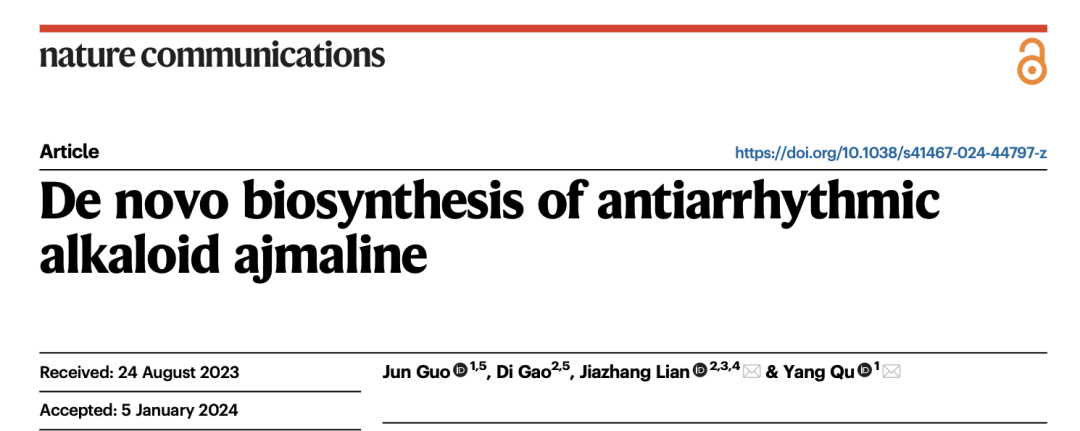
Nature Commun | De Novo Biosynthesis of the Antiarrhythmic Drug Ajmaline
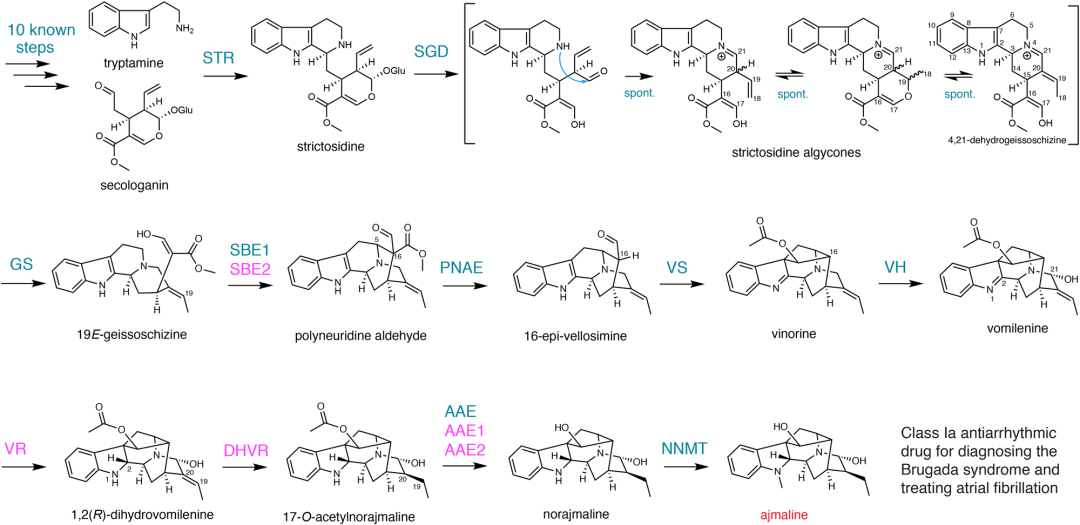
The antiarrhythmic drug ajmaline, a monoterpene indole alkaloid (MIA) derived from Rauvolfia tetraphylla, is used as a diagnostic agent for the rare arrhythmia Brugada syndrome.
In recent decades, critical advances in the biosynthesis of ajmaline and another prominent MIA chemotherapeutic drug, vinblastine, have been achieved in the field of plant specialized metabolism and engineering. While most of the biosynthesis of vinblastine has been elucidated, the exploration to understand ajmaline biosynthesis remains incomplete, characterized by the absence of two key enzymes.
On January 11, 2024, researchers from the University of New Brunswick, Canada, published a research paper titled "De novo biosynthesis of antiarrhythmic alkaloid ajmaline" in the journal Nature Communications, decrypting the de novo biosynthesis of ajmaline.
02
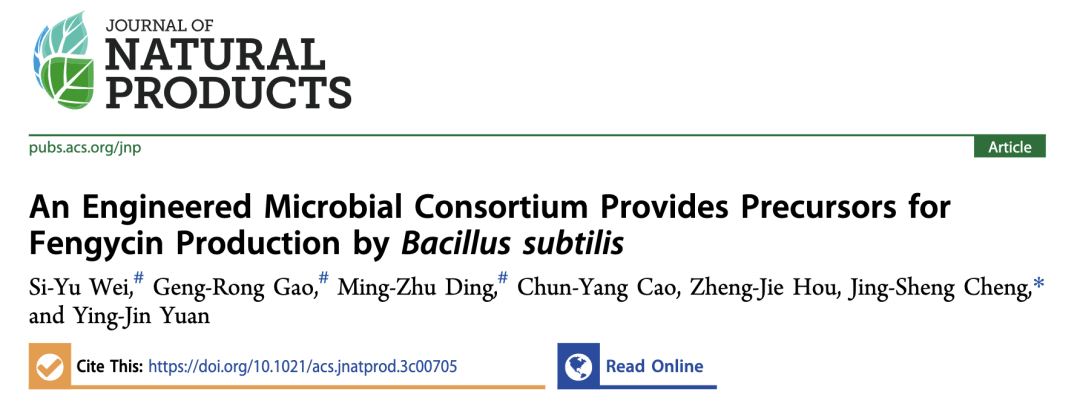
Academician Yuan Yingjin's Team Develops Consortium of Engineered Strains, Achieving Basal Production of 3290mg/L
Fengycin, a cyclic lipopeptide commonly used as an agricultural fungicide, is a natural bio-origin antibiotic. Fengycin exhibits excellent biosafety and biodegradability, and compared to traditional chemical antibiotics, it is more environmentally friendly and sustainable, showing broad application prospects in biological control.
At present, Fengyuan Su is usually produced through microbial fermentation (such as Bacillus), but the production efficiency and cost during the fermentation process are limited by fermentation conditions and strain productivity. The high cost and low yield are bottlenecks hindering the further industrialization of Fengyuan Su.
An Engineered Microbial Consortium Provides Precursors for Fengycin Production by Bacillus subtilis
Fengyuan Su is a substance produced by Bacillus.Cyclic Lipopeptide Molecules (Natural Cyclic Lipopeptide Antibiotics), possessing a variety of biological activities, has been widely used in food, medicine, biological control, and many other fields. For instance, Fengyuan素 (Fengyuan factor) can inhibit the growth of pathogenic bacteria and fungi, exerting its antifungal infection efficacy by damaging the cell membrane of target cells. It is applied to prevent and control plant diseases, suppress soil-borne diseases, and also serves as a natural preservative (significantly inhibiting the growth of filamentous fungi) in the food industry.
03

Nature | Cambridge Team Develops Novel tRNA Display Technology with Potential to Synthesize Various New Materials
Recently, the Medical Research Council Laboratory of Molecular Biology (MRC LMB) in the UK proposed a method to break the evolutionary deadlock in engineered microorganisms by reprogramming bacterial cells into "micro-factories" that synthesize new substances using chemical building blocks not found in the organisms' genetic code.
In the study, the research team developed a new tRNA display technology capable of directly, rapidly, and scalably selecting orthogonal synthetases. These enzymes can selectively acylate their cognate orthogonal tRNAs with non-canonical monomers (ncM) in *E. coli*, regardless of whether the ncMs are ribosomal substrates. Based on these advancements, the team demonstratedβ-Amino AcidAndα,α-Disubstituted Amino AcidsCan be genetically encoded and site-specifically integrated into proteins, expanding the chemical scope of intracellular synthesis of polymers and proteins.
"All natural proteins are polymers formed by the connection of α-L-amino acids. The team's breakthrough involves modifying common E. coli gut microbes to make their genes produce other 'non-natural' modules, such as β-amino acids and β-hydroxy acids, thereby facilitating the development of a variety of new polymers."
Definition and Explanation:
The synthetic biology in this series of weekly newsletters mainly focuses on the broad concept.
Criteria for evaluating synthetic biology companies: Product-based companies whose production processes utilize synthetic biology technology;Platform companies and their R&DThe technical path is based on the concepts and technologies of synthetic biology; technology-empowered companies have their technology as one of the core components of synthetic biology.
Flagship Report
Column Recommendation






Peptide Research Society

Biopharmaceuticals · Beauty & Personal Care · Nutrition & Health
Animal Health · Green Agriculture · Biomaterials
Professional Focus | Achieving Customer Success | Growing Together