▲ Click on the blue above"Med Valley"Follow UsCurrently, central nervous system diseases are one of the leading causes of disability worldwide. The death and loss of neurons are significant factors contributing to these diseases, and for a long time, scientists have been seeking effective strategies to replenish functional neurons. In recent years, a new generation of cell reprogramming technology—known as in situ transdifferentiation—has emerged as a novel approach to address this challenge. This technology, which evolved from advancements in iPSC techniques, can convert proliferative glial cells within the brain into functional neurons in situ, achieving the regeneration of endogenous neurons. Since its introduction, this technology has been repeatedly validated by numerous research teams globally, offering a new strategy and pathway for treating central nervous system diseases.Founded in December 2021, NEUREGEN is dedicated to the research and application of in situ transdifferentiation technology. Dr. Zhang Xiaohui, the scientific founder, and Dr. Liu Yueguang, the core technology inventor, published the first in vivo in situ transdifferentiation paper in China during their time at the Institute of Neuroscience, Chinese Academy of Sciences. They were also one of the earliest pioneering teams globally in the field of neuronal in situ transdifferentiation and regeneration. Currently, NEUREGEN has developed multiple pipelines involving gene therapies for diseases related to the nervous system and ophthalmology. Despite the dual challenges of the COVID-19 pandemic and a tough investment climate, the company successfully completed its Angel Round and Pre-A financing rounds in 2022 and 2023, respectively. Recently, Dr. Liu Yueguang was interviewed by Medg.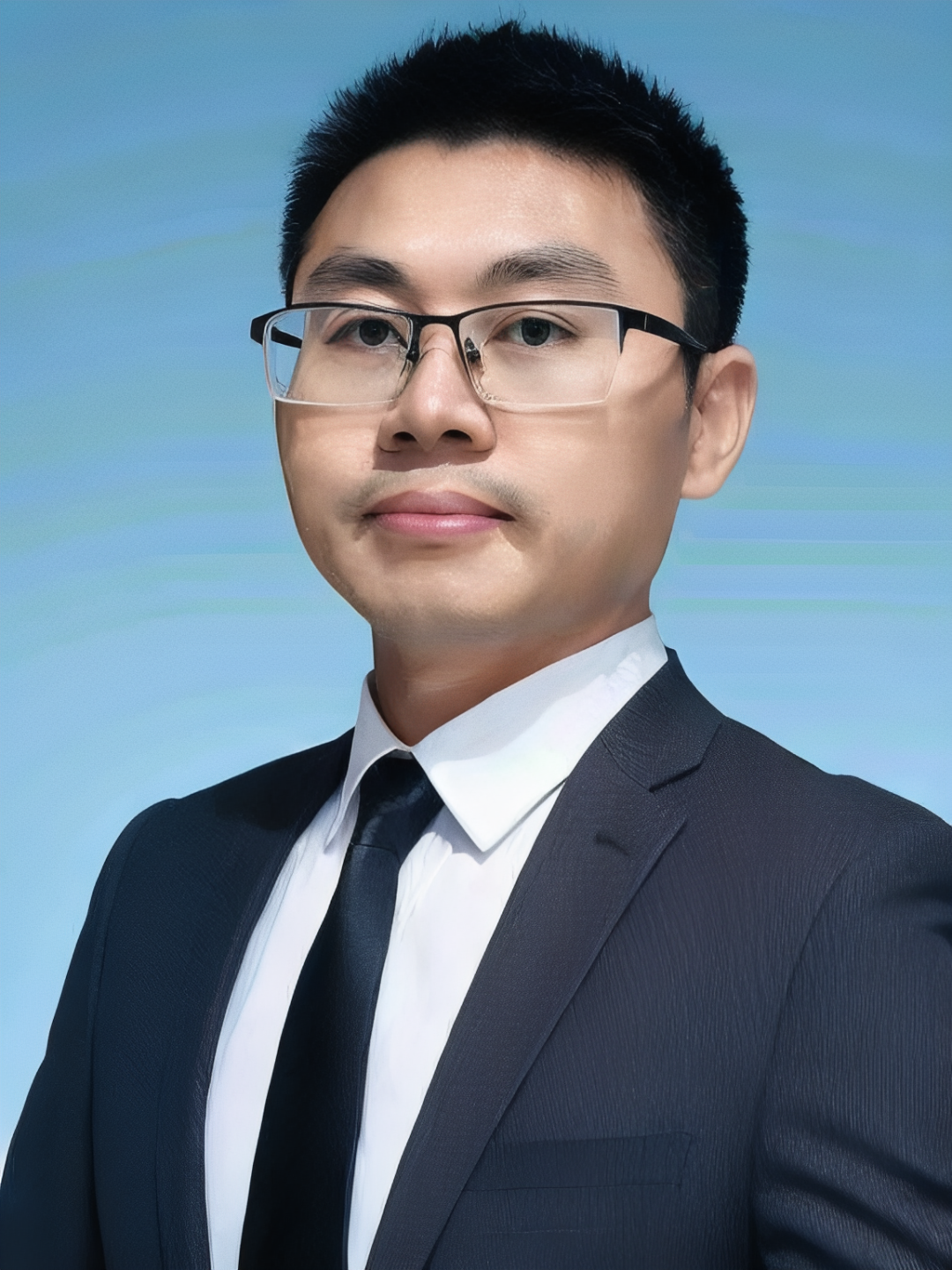
Dr. Yueguang Liu
Q1: Could you briefly introduce the background of your company's team and the opportunity that led to the founding of NEUREGEN?Liu Yueguang:I am a Ph.D. from the Institute of Neuroscience at the Chinese Academy of Sciences, and I have been engaged in research on the in-situ transdifferentiation technology platform; Professor Zhang Xiaohui is a researcher at the Institute of Neuroscience at the Chinese Academy of Sciences and is currently a second-level professor at the State Key Laboratory of Cognitive Neuroscience and Learning at Beijing Normal University, as well as a Jingshi Distinguished Scholar. During our time at the Institute of Neuroscience, we conducted extensive basic scientific research on in-situ transdifferentiation technology within the nervous system, and our team was among the early pioneers globally in this field. Building on this foundation, we held discussions with two other alumni from the Institute of Physiology/Institute of Neuroscience—Dr. Zhu Chao and another founding shareholder—as well as Professor Zhao Congjian, a senior ophthalmology expert, and Dr. Li Zhaohong, a seasoned gene therapy CMC expert. Dr. Zhu Chao holds a Ph.D. in Neurobiology from the Institute of Physiology at the Chinese Academy of Sciences and completed postdoctoral work at UCSF and the Smith-Kettlewell Eye Research Institute. He has served as Vice President and Chief Medical Officer of Wanbang Biopharmaceuticals Technology Co., Ltd. under Fosun Pharma, and as Executive Vice President and Chief Medical Officer of Wanrong Biomedical Technology Co., Ltd. Professor Zhao Congjian previously served as the Deputy Director of the Aier Ophthalmology Research Institute and is currently a member of the National Drug Evaluation Center's Gene Therapy Expert Group. Dr. Li Zhaohong completed his postdoctoral studies at the University of Florida, served as the head of CMC development at several gene therapy companies in the U.S., and was the former CTO of Huayi Lejian.All of us have a background in neuroscience and recognize the promising future of in-situ transdifferentiation technology. With shared aspirations, we co-founded NEUREGEN. The core team of the company includes not only the pioneering technical team in the field of in-situ transdifferentiation but also a professional team in industrialization. Everyone has extensive experience in critical R&D or management positions in the industry, as well as invaluable experience in the successful full-cycle development of drugs. Although NEUREGEN is a start-up, it places great emphasis on future industrial implementation even in its early stages, so everything from team building to pipeline design is guided by the end goal in mind.
Q2: The core technology of NEUREGEN is in-situ transdifferentiation, which can directly induce one type of somatic cell to differentiate into another type of somatic cell without going through the stem cell stage. Could you give us a detailed introduction to the specific principles, technical advantages, and application scenarios of this technology? What is the status of NEUREGEN's patent layout?Liu Yueguang:In situ transdifferentiation technology is a new generation of cell reprogramming technology iteratively developed from the Nobel Prize-winning iPSC technology, marking an important milestone breakthrough in the field of regenerative medicine. This technology directly converts specific somatic cells into another type of somatic cell (target cell) by introducing reprogramming transformation factors, bypassing the pluripotent stem cell stage. Compared with iPSC technology, in situ transdifferentiation avoids tumorigenic risks as it does not involve the stem cell phase. Moreover, it achieves endogenous regeneration, eliminating immune rejection and the need for in vitro cell culture and screening. With mature processes and controllable production costs, it effectively addresses commercial implementation and drug accessibility issues. Additionally, gene therapy drugs developed based on in situ transdifferentiation are off-the-shelf products with relatively low production costs.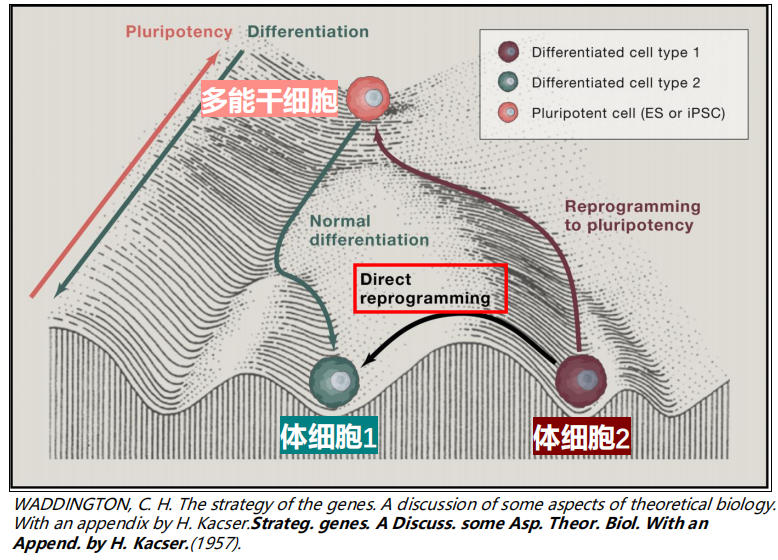 Schematic Diagram of In Situ Transdifferentiation TechnologyThe application scope of in-situ transdifferentiation technology is very broad. Many diseases are characterized by the degenerative lesions or death of functional cells, and the body itself lacks the corresponding natural regenerative ability. Using cellular in-situ transdifferentiation technology, these non-regenerative cells under natural conditions can be generated from other specific cells, offering new pathways for the treatment of corresponding diseases. For example, enabling neuron regeneration in central nervous system diseases, islet cell regeneration in diabetes treatment, cardiomyocyte regeneration in heart diseases, and photoreceptor cell regeneration in retinal degenerative diseases.Currently, NEUREGEN has carried out key patent layouts in major global markets for its in-situ transdifferentiation technology, filed 4 PCT patents, and one of them has already been granted.Q3: NEUREGEN is currently focusing on gene therapy for neurological and ophthalmic diseases. Why were these two fields chosen? What are the advantages of the company's corresponding R&D projects in treatment, and what difficulties can be overcome?Liu Yueguang:Neurological and ophthalmic diseases represent a significant unmet clinical need globally. In the field of neural regeneration, current gene therapies are unable to effectively reverse the progression and deterioration of central nervous system injuries, with one key factor being the inability to address neuronal regeneration.Taking glioma, the most common type of nervous system tumor currently, as an example, its 5-year survival rate is very low, less than 10%. The biggest clinical pain point is that it recurs in 100% of cases within 6 months after standard treatment. The first-line treatment for glioma is surgery, but since the tumor has no capsule and unclear boundaries, it is theoretically very difficult to completely remove, leading to a high probability of recurrence. After recurrence, conventional small-molecule drugs used in chemotherapy and radiotherapy have very weak blood-brain barrier penetration capabilities, resulting in suboptimal effects. This is even more true for large-molecule immunotherapy and antibody drugs. Additionally, the side effects of chemoradiotherapy are significant. However, by utilizing in-situ transdifferentiation technology to efficiently transdifferentiate tumor cells within the brain into non-proliferating cells, better therapeutic outcomes can be achieved. I believe this represents a relatively groundbreaking breakthrough in the field of glioma.
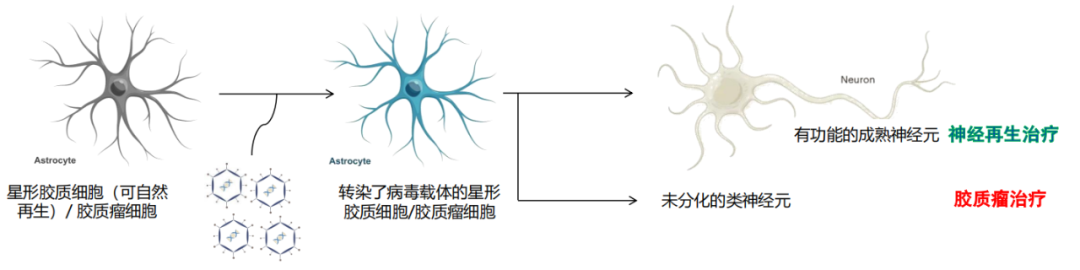 Application of In Situ Transdifferentiation Technology in Neurological DiseasesIn the field of ophthalmology, numerous AAV gene therapies currently being developed both in China and internationally mainly focus on repairing single-gene mutations. However, one characteristic of ophthalmic diseases is the presence of numerous related gene mutation sites. For example, in retinitis pigmentosa (RP), mutations in more than a hundred gene sites can cause the disease. Current strategies for repairing single-gene mutations are only effective for specific site mutations, thus targeting a relatively small population. In contrast, in situ transdifferentiation technology does not merely aim to repair mutated cells at specific gene sites; instead, it regenerates and rebuilds a new set of cells to replace the diseased ones. Therefore, it can overcome the limitations imposed by specific gene mutation sites, offering "broad-spectrum" therapeutic effects for patients with similar diseases caused by different gene mutation sites. It is also applicable to patients in the middle to late stages, for whom gene repair is difficult.
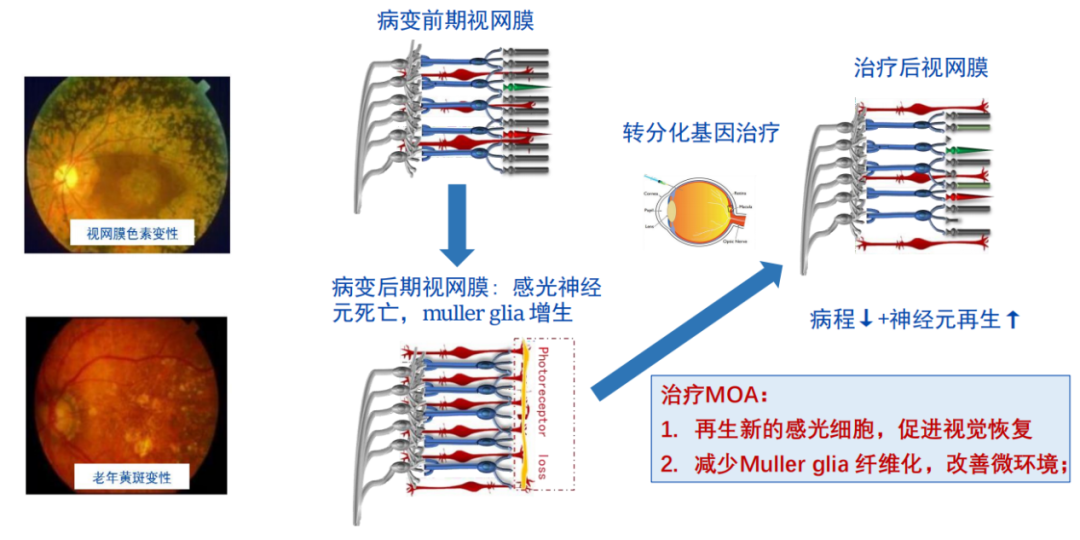 Application of In Situ Transdifferentiation Technology in Ophthalmic DiseasesTaking retinal degenerative diseases and age-related macular degeneration as examples, both have relatively clear pathogenic mechanisms. These conditions result from genetic mutations or external factors that cause the gradual loss and death of photoreceptor cells in the retina. However, the next layer of the neural circuit remains intact. Therefore, NEUREGEN’s strategy is to use in-situ transdifferentiation technology to achieve endogenous regeneration of photoreceptor cells, thereby restoring vision. Additionally, in the field of ophthalmology, the FDA has approved numerous gene therapy drugs, and the corresponding industrialization and regulatory pathways are already quite mature, which is conducive to the company's subsequent commercialization plans.Based on the above considerations, NEUREGEN has chosen the fields of neurological and ophthalmic diseases as breakthrough directions.Q4: What is the key project that NEUREGEN is currently advancing? Which stage has it reached?Liu Yueguang:Currently, the projects with the fastest progress at NEUREGEN are gene therapy for glioblastoma and ophthalmology. The glioblastoma project has completed preclinical Proof of Concept (POC) in animals, demonstrating significant tumor suppression effects across various animal models and substantially prolonging animal survival, outperforming current first-line treatment drugs. CMC process research is underway, with plans to enter IIT studies this year and move to the IND application phase next year. In ophthalmology, efficacy experiments on different animal models have been completed, showing a significant improvement in the recovery of visual function in animals, and subsequent research is ongoing.Q5: Apart from the fields mentioned above, is NEUREGEN expanding into other application areas? How are the R&D efforts progressing?Liu Yueguang:Currently, NEUREGEN's product pipeline focuses on neurological diseases, with an emphasis on developing original gene therapy drugs with independent intellectual property rights for blinding eye diseases and difficult-to-treat nervous system tumors. At the same time, it is expanding research into major neurodegenerative diseases such as stroke, Alzheimer's disease, and Parkinson's disease. In the future, it may further extend into broader fields such as regenerative treatment, cancer treatment, and the emerging anti-aging sector.Q6: Gene therapy has made significant R&D progress in recent years but also faces major challenges, such as the safety of gene delivery vectors and high costs. What is your view on this issue, and what advantages does NEUREGEN have in these areas?Liu Yueguang:The price of gene therapy is indeed relatively high at present, costing several million US dollars abroad, while the CAR-T therapies approved in China are priced at around one million yuan. The high cost is largely related to the manufacturing process—commonly used AAV vectors in gene therapy have high production costs. Therefore, when NEUREGEN initially built its pipeline, it gave very clear consideration to vector selection and explored both safety and cost reduction.First and foremost is the question of how to safely and effectively deliver therapeutic genes, transforming factors, and more to specific cells in target organs. In response, NEUREGEN adopts different strategies for vector selection based on clinical needs. In the treatment of nerve injuries and degenerative diseases, the company focuses on the targeting ability of vectors and their capacity to cross the blood-brain barrier. By selecting specific serotypes of viruses for different brain regions, spinal cord, retina, cochlea, and other target sites, optimal delivery efficiency can be achieved. At the same time, unlike the "additive" logic typically used in repairing nerve injuries and degenerative changes, treating tumors in the nervous system requires a "subtractive" approach, eliminating all tumor cells to prevent recurrence. Therefore, NEUREGEN's strategy is to switch to replicating viruses loaded with specific promoters. Through massive replication of the virus within the lesion, it ensures that the viral infection carrying transdifferentiation factors and other therapeutic gene fragments reaches all tumor cells, delivering precise and reliable therapeutic effects. Additionally, to address common adverse reactions in the central nervous system, NEUREGEN has opted for relatively "milder" and safer viral vectors based on the treatment mechanism to avoid excessive immune responses.In terms of cost reduction, throughout the entire R&D process, NEUREGEN will always strive to select the most appropriate and optimal serotype, followed by optimization of the vector and the entire production process, minimizing production costs as much as possible. We believe the final product price can be significantly lower than foreign alternatives, reaching a completely affordable level. On the other hand, one of the fields NEUREGEN is focusing on is ophthalmology, which is also a very critical factor. Ophthalmic drugs require extremely small doses, approximately three to four orders of magnitude less than systemic administration. Additionally, improving vector design and screening for more efficient transcription factors can further reduce dosage requirements while enhancing safety.Q7: What do you think will be the trend of gene therapy in the next 10 years, and what changes will it bring compared to the present?Liu Yueguang:Gene therapy based on in-situ transdifferentiation technology has developed rapidly in recent years. Tenaya Therapeutics and Genprex in the United States, targeting the cardiac and islet fields respectively, have released positive large-animal experimental results. Tenpoint Therapeutics, a UK company using transdifferentiation technology to treat degenerative eye diseases, secured a $70 million Series A financing in July 2023. In August 2023, Regeneron acquired Decibel Therapeutics, a company with a pipeline for transdifferentiation of cochlear hair cells. In October 2023, Mogrify completed a $46 million Series A financing round to apply transdifferentiation technology for treating vision loss, hearing loss, and diabetes. These advancements demonstrate that the global field of in-situ transdifferentiation technology is developing rapidly and holds great promise for the future.A few years ago, the FDA predicted that by 2025, the agency would approve 10-20 cell and gene therapies annually. However, a recent report by McKinsey, based on pipeline progress, made a bolder prediction: up to 21 cell therapies and 31 gene therapies could receive FDA approval in 2024. I believe that gene therapy will not only shine in the field of rare diseases but also holds even more promising prospects for common diseases, including potential breakthroughs in neurology, oncology, metabolic diseases, and blood disorders.Q8: As an innovative technology company, in the absence of sufficient references, much of the time is spent "exploring" and "feeling the way forward." Has NEUREGEN faced any challenges since its establishment? Which one left the deepest impression on you?Liu Yueguang:NEUREGEN was established in December 2021, right during the pandemic. On one hand, the pharmaceutical financing environment over the past two years has not been very favorable. Moreover, for a startup, without sufficient financial support, talent recruitment and team building are also quite challenging. Therefore, since its founding, NEUREGEN has indeed faced some challenges. One particularly memorable instance occurred in December 2022 when the company needed to urgently collect samples from an animal experiment in Beijing to observe the effects and conduct behavioral and electrophysiological tests. However, at that time, Beijing was hit by the pandemic, so the experiment had to be conducted in Shanghai. As the experiment had reached a critical stage, missing the timeline would have led to inaccurate results. Thus, within an extremely short period, the team managed to find a lab in Shanghai capable of receiving the animals. Meanwhile, colleagues from Beijing brought the equipment and animals to Shanghai on an emergency basis. Ultimately, the experiment proceeded smoothly the next day, and they obtained highly crucial results.In this sudden and urgent situation, everyone quickly made decisions and executed them, ultimately overcoming the challenges and achieving results, which I found particularly moving. In fact, for a startup company, challenges are inevitable, but I believe that NEUREGEN has always been united. Our cohesion and fighting capacity are very strong, and everyone recognizes this cause.Q9: In recent years, many researchers have chosen to "take the plunge" into entrepreneurship, transitioning from laboratories to enterprises and from scientific research to the market, taking on the dual roles of "scientist and entrepreneur." Can you share your thoughts and insights on "scientist entrepreneurship" based on your own experiences?Liu Yueguang:Entrepreneurship is a new landscape for scientists, but at the same time, it is a thorny and arduous path. Personally, I have been conducting fundamental scientific research in the lab, and transitioning to the business world requires a shift and adjustment in mindset. Fundamental research allows for divergence and multi-faceted exploration, pursuing the advancement of technical studies. However, drug development demands focus—transforming technological thinking into product-oriented thinking. It requires a stronger market-driven approach, targeting actual clinical needs, ensuring that the technology platform is implemented effectively, and truly translating into innovative drugs that are safe, effective, and of controllable quality for patients.Q10: In the past two years, under the influence of the macro environment, the biopharmaceutical industry has continued to "cool down" in the capital market and has entered a winter season. How to "survive" has become a major challenge for many biopharmaceutical companies. What is your view on the current situation?Liu Yueguang:In fact, NEUREGENThat is in"Starting a business in the 'winter'."We indeed faced many challenges along the way. However, I believe that while we cannot change the larger environment, what we can do is accelerate the R&D process as much as possible, advance the progress of core pipelines, and save costs wherever possible. The winter will eventually pass.The road is tortuous., but the prospect is bright.。
Recommended Reading
Fully Open for Business, Welcome to Visit >>
Click to view course details

For advertising placement, conference cooperation, corporate communication, etc., please contact 400-689-7892.