

Eisai's Antiepileptic Drug Fycompa (Perampanel) Injection Receives First Approval in Japan

Eisai
Pharmaceutical Product R&D and Manufacturer

Welcome to follow CaiLeYing pharmaceutical news

Today, Eisai announced that the injectable form of its self-developed antiepileptic drug (AED) Fycompa (perampanel) has received marketing approval from Japan's Ministry of Health, Labour and Welfare as an alternative therapy for patients who are temporarily unable to receive oral administration.
Previously, two oral formulations of the drug have been marketed — tablets and fine granules. Considering situations where oral administration is temporarily impossible, leading to treatment interruption, such as during surgery, patients need to receive the medication through non-oral means. The development of the Fycompa injection will meet this medical need. Prior to this application, the bioequivalence between the injection and tablet formulations has been confirmed, as well as the safety and tolerability of the injection as an alternative therapy to tablets.
About Perampanel
Perampanel is a highly selective, non-competitive AMPA receptor antagonist that reduces neuronal hyperexcitability associated with seizures by targeting glutamate activity at AMPA receptors on the postsynaptic membrane.
In January 2020, Perampanel Tablets were launched in China for adjunctive treatment of partial-onset seizures (with or without secondary generalized seizures) in patients with epilepsy aged 12 years and older. In July 2021, Perampanel Tablets were approved for a new indication in China, for the treatment of partial-onset seizures (with or without secondary generalized seizures) in adults and children aged 4 years and older. In May 2023, Perampanel Oral Suspension was approved for marketing in China, for the treatment of partial-onset seizures (with or without secondary generalized seizures) in adults and children aged 4 years and older.
About AMPA Receptor Antagonists
AMPA receptors are non-N-methyl-D-aspartate (NMDA) type ionotropic transmembrane receptors for the excitatory neurotransmitter glutamate. They play a crucial role in learning and memory activities and have significant impacts on signal transmission, neural development, and synaptic plasticity in the central nervous system.
The occurrence and development of various neuropsychiatric system diseases, such as multiple sclerosis, Alzheimer's disease, epilepsy, etc., are closely related to the abnormal quantity or function of AMPA receptors; in addition, this receptor is also involved in the signaling pathways of cardiovascular diseases, tumors, respiratory system diseases, and endocrine system diseases. AMPA receptor modulators may help treat memory loss associated with Alzheimer's disease and cognitive dysfunction related to schizophrenia.
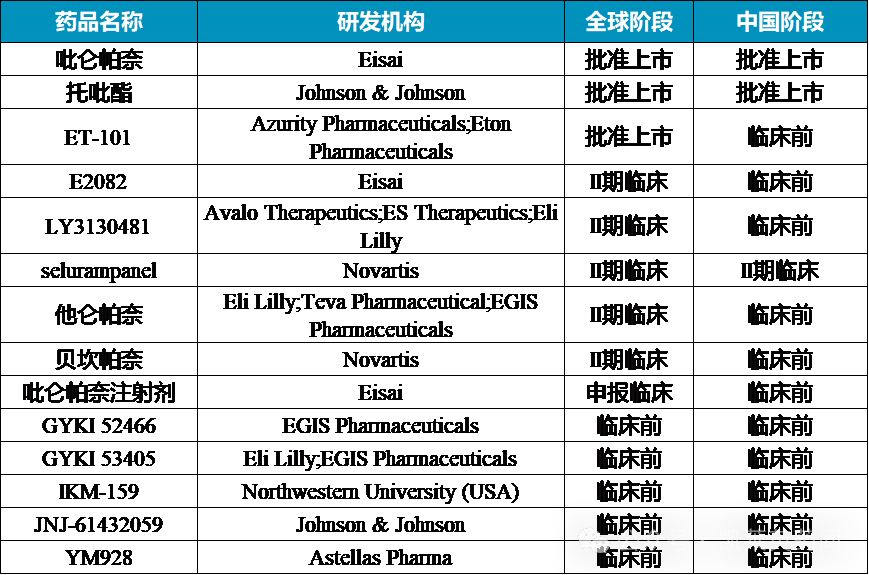
Fycompa is the only AED based on an AMPA receptor antagonist. The following is a summary of AMPA drugs currently under research for use as AEDs:
About Epilepsy
Epilepsy is a chronic brain disease caused by various etiologies, characterized by excessive discharge of brain neurons leading to recurrent, episodic, and transient dysfunction of the central nervous system. The clinical manifestations of epileptic seizures are complex and diverse, including episodic motor symptoms, sensory disturbances, autonomic dysfunctions, consciousness disorders, and psychiatric symptoms. Specifically, symptoms such as muscle twitching, staring eyes, gazing, convulsions, fainting, and confusion may occur. The greatest harm of epilepsy to the human body is brain damage; each seizure may cause brain cell edema and hypoxia, directly resulting in personality changes, delayed reactions, and memory decline in patients. Long-term repeated epileptic seizures not only cause physical pain but also lead to mental and psychological disorders, greatly affecting the patient's normal life. Moreover, the disease is difficult to completely cure and requires long-term standardized continuous monitoring and treatment to control the condition, imposing a heavy economic burden on families and society.
WHO data shows that there are approximately 50 million epilepsy patients globally, with 40 million in developing countries. Epidemiological data indicates that the overall prevalence of epilepsy in China is 7.0‰, the annual incidence rate is 28.8 per 100,000, and the prevalence of active epilepsy with seizures within one year is 4.6‰. In China, there are more than 10 million epilepsy patients, of which 6 million still experience seizures each year. Epilepsy has become the second most common disease in neurology, only after headache.
According to IMS data, the global anti-epilepsy drug market size was approximately $18.4 billion in 2020, with the Chinese market size at about $534 million. In recent years, the Chinese market has maintained a relatively high growth trend, and the anti-epilepsy drug market is expected to expand further.
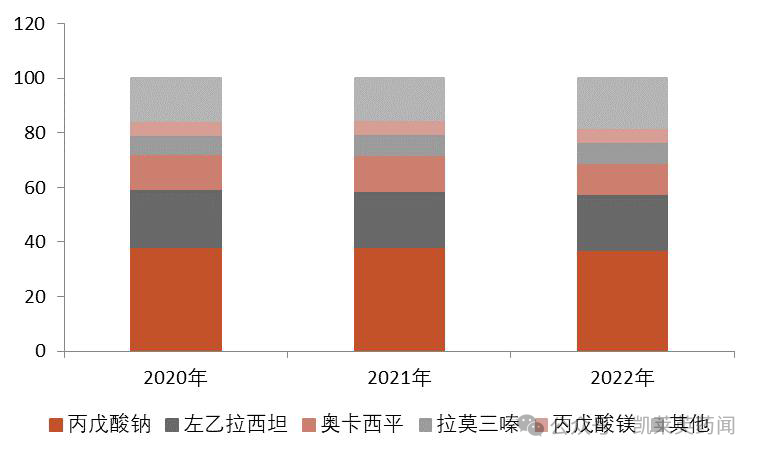
In China, the main anti-epileptic drugs include sodium valproate, levetiracetam, oxcarbazepine, lamotrigine, and magnesium valproate.
Market Share of Major Antiepileptic Drug Varieties in China
References
1. Company Official Website
2. China Academy of Information and Communications Technology, Pacific Securities




"Views"Click once