

Eisai's URAT1 Inhibitor Dotinurad Submitted for Market Approval in China, Targeting the Multi-Billion-Yuan Gout Therapeutics Market
Eisai
Pharmaceutical Product R&D and Manufacturer
Welcome to follow Asymchem Pharma News
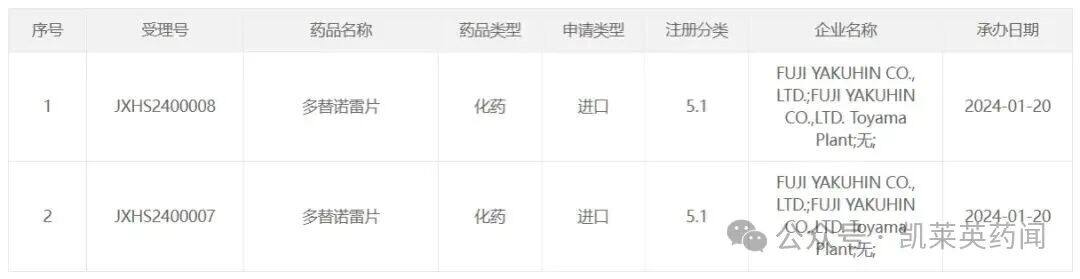
On January 22, 2024, the official website of the Center for Drug Evaluation (CDE) of the China National Medical Products Administration (NMPA) announced,The NDA for Eisai's Dutinore Tablets has been accepted.Dotinurad is a uricosuric agent that was previously launched in Japan in 2020 for the treatment of hyperuricemia and gout.
About Dutinore
Dotinurad selectively inhibits urate transporter 1 (URAT1), which is associated with uric acid reabsorption in the kidneys, thereby suppressing uric acid reabsorption and reducing serum uric acid levels; as a selective URAT1 inhibitor,Dotinurad effectively inhibits URAT1 in the renal proximal tubules without affecting the function of uric acid excretion factors ABCG2 and OAT1/3, demonstrating a higher efficiency in lowering serum uric acid compared to non-selective URAT1 inhibitors.
This NDA is based on a Phase 3 clinical study conducted in China aimed at evaluating the efficacy of Dotinurad and Febuxostat in treating gout. The study enrolled 451 gout patients, randomly assigned to either the Dotinurad 4mg group or the Febuxostat 40mg group. The primary endpoint was the percentage of patients achieving a serum uric acid level ≤ 6.0 mg/dL after 24 weeks of treatment. Previously, results from a Phase 3 clinical study conducted in Japan showed that Dotinurad 4mg treated hyperuricemia patients with or without gout.The proportion of patients with a blood uric acid level ≤6mg at 58 weeks was 100%.Long-term use has no significant impact on renal function and no clinically relevant impact on liver function.
AboutURAT1 Inhibitor
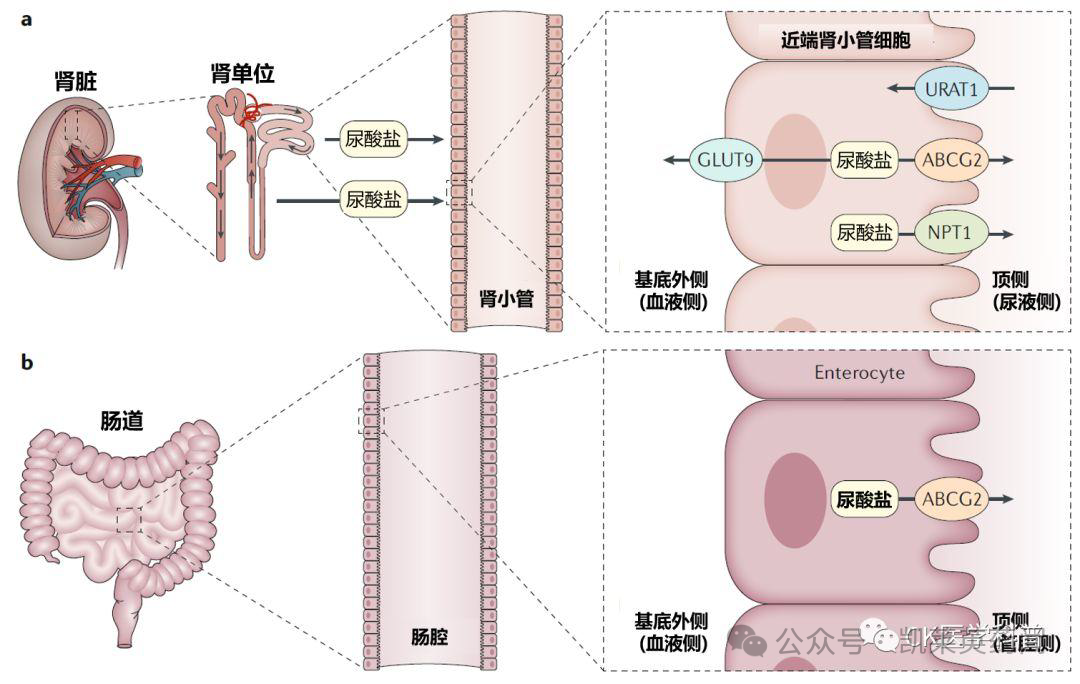
Urate Transporter (Urate Transporter 1 (URAT1) belongs to the organic anion transporter (OAT) family and is an important renal urate transporter, primarily involved in the reabsorption of uric acid in the proximal tubules of the kidney. URAT1 is a significant target for the treatment of chronic gout. URAT1 inhibitors can suppress the reabsorption of uric acid by inhibiting the activity of the URAT1 protein, thereby promoting uric acid excretion and reducing serum uric acid levels.
Schematic Diagram of URAT1 Inhibitor Mechanism of Action
Currently, the main URAT1 inhibitors approved for use worldwide are benzbromarone, probenecid, lesinurad, and dotinurad. In the Chinese market, the currently available URAT1 inhibitors are only benzbromarone and probenecid.
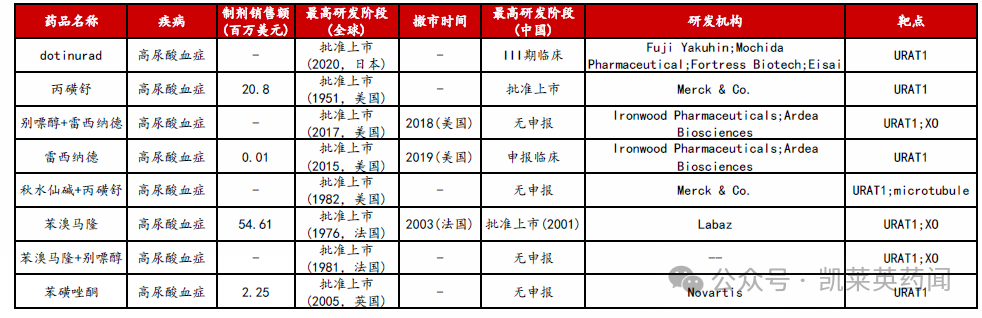
However, benzbromarone was withdrawn from the European market due to cases of fulminant hepatic necrosis; it was not approved for marketing in the United States. In the Chinese market, benzbromarone is still used as a first-line treatment for chronic gout, and patients are advised to closely monitor liver function during use. The mechanism of nephrotoxicity of lesinurad is still unclear and may be related to its structure and metabolites. Patients urgently need drugs with good long-term safety.
According to incomplete statistics, there are currently over 40 URAT1 drugs globally, with pipeline drugs in the research and development stage summarized as follows:
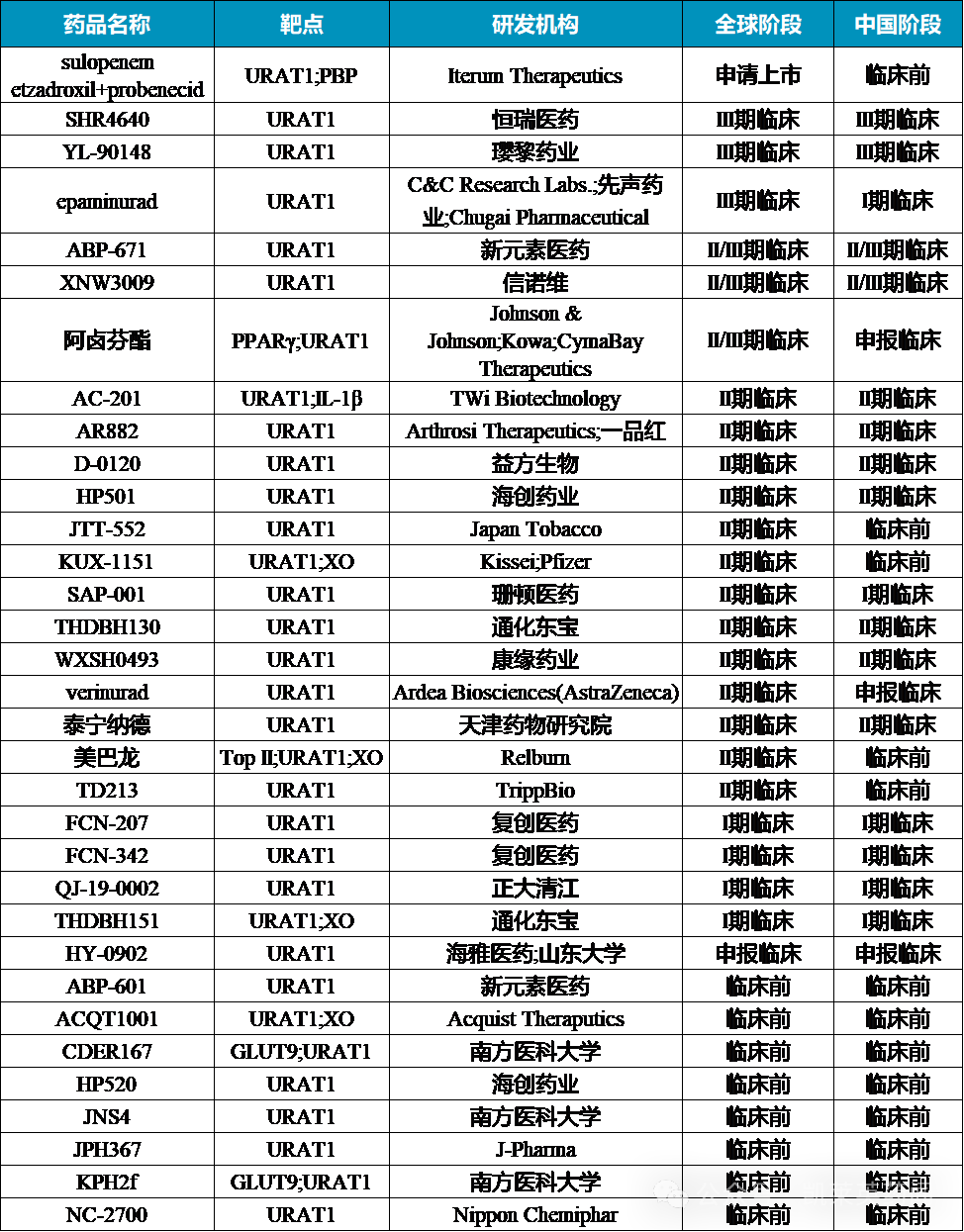
Among them, multiple companies in China have developed gout treatment drugs such as URAT1 inhibitors, including Hengrui Medicine, Yipinhong, Haichuang Pharmaceuticals, Yifang BioScience, Yingli Pharmaceuticals, and Xinnovate Bio. From the disclosed molecular structures, the current URAT1 inhibitors under research are mainly derived from optimizations of two molecules: benzbromarone and lesinurad.
1. Hengrui Medicine: SHR4640
SHR4640 is a highly selective URAT1 inhibitor independently developed by Hengrui Medicine, and is expected to become the first URAT1 inhibitor produced in China to be marketed. A multicenter, randomized, double-blind, controlled Phase II clinical trial was conducted to evaluate the efficacy and safety of SHR4640 in Chinese patients with hyperuricemia (with or without gout). The results showed that the high-dose group of SHR4640 had a more significant uric acid-lowering effect compared to benzbromarone.
2. Poinsettia: AR882
AR882 is a URAT1 inhibitor jointly developed by Euphorbia and Arthrosi; this molecule overcomes the shortcomings of lesinurad and benzbromarone, can bind to uric acid transporters for an extended period, with an efficacy lasting up to 24 hours. It blocks uric acid reabsorption around the clock without increasing renal load, thus avoiding nephrotoxicity. A repeated, randomized, double-blind, placebo-controlled, parallel-group trial was conducted to determine the safety and efficacy of two different dose levels of SEL-212 compared with placebo. The results showed that 78% and 89% of patients treated with high-dose and low-dose SEL-212, respectively, reached the primary endpoint during the trial.
3. Hilex Pharma: HP501
HP501 is a novel URAT1 small molecule inhibitor independently developed by Hilead Biotech; as an extended-release tablet, the drug achieves sustained release in the body, which not only ensures prolonged maintenance of effective blood drug concentration and long-lasting effects, but also potentially reduces the risk of adverse renal effects caused by peak drug concentration (Cmax). A double-blind, placebo-controlled, parallel-design, dose-finding, multicenter Phase II clinical trial was conducted with the primary objective of preliminarily evaluating the efficacy and safety of HP501 extended-release tablets in treating hyperuricemia (with or without gout). Preliminary results showed that the target achievement rates for uric acid reduction were 32% in the 40 mg/day dose group and 43% in the 50 mg/day dose group.
About Gout
With economic development and the improvement of people's living standards, the intake of high-sugar, high-fat, and high-purine foods has significantly increased. The number of people in China suffering from hyperuricemia and gout is on the rise. Hyperuricemia has become the "fourth high" after diabetes, hypertension, and hyperlipidemia, and gout has become the second largest metabolic disease, only after diabetes.
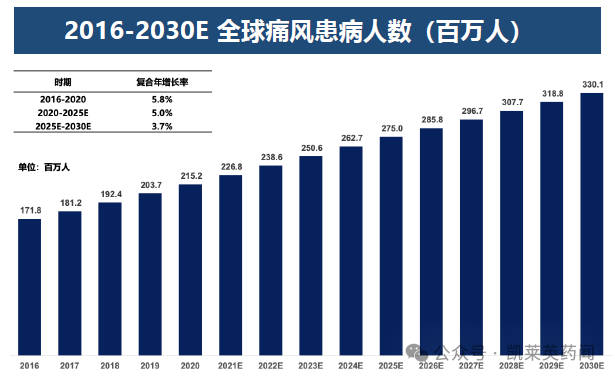
According to Frost & Sullivan analysis, the number of gout patients worldwide increased from 170 million in 2016 to 210 million in 2020, with a compound annual growth rate of 5.8%. It is estimated that by 2025, the global number of gout patients will reach 270 million and will reach 330 million by 2030, with compound annual growth rates of 5.0% and 3.7%, respectively, during this period.
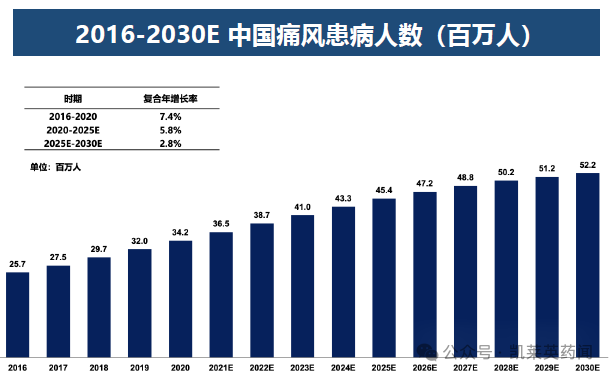
According to the "Chinese Guidelines for the Diagnosis and Treatment of Hyperuricemia and Gout (2019)" and data from the Sixth National Census by the National Bureau of Statistics, the overall prevalence rate of hyperuricemia in China is 13.3%, with approximately 177 million patients, while the overall incidence rate of gout is 1.1%, with about 14.66 million patients. Considering China's future population growth trends and the rising prevalence of gout, it is estimated that the number of gout patients in China will reach 45 million by 2025 and 52 million by 2030.
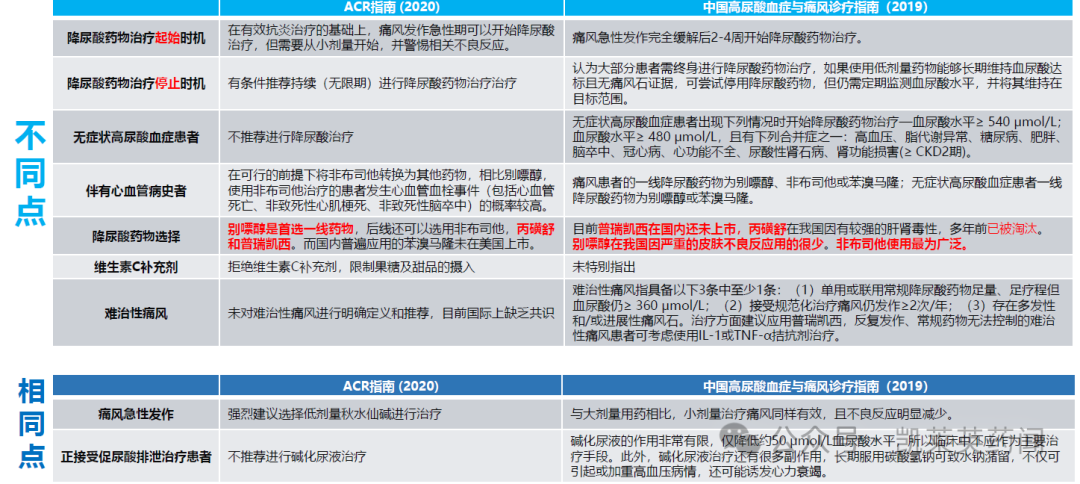
In terms of treatment, anti-inflammatory drugs are the first-line therapy for acute gout, such as NSAIDs and colchicine, which are considered the preferred medications during the acute phase of gout. For recurrent or chronic gout, the first-line treatment involves uric acid-lowering drugs, mainly including two categories: XO inhibitors and drugs promoting renal uric acid excretion. Xanthine oxidase (XO) inhibitors include allopurinol and febuxostat, while drugs promoting renal uric acid excretion include benzbromarone and probenecid. Second-line treatments recommend uric acid-degrading agents (such as pegloticase) or IL-1 antagonists.
Differences and Similarities in the Treatment Guidelines for Hyperuricemia and Gout in China and the United States
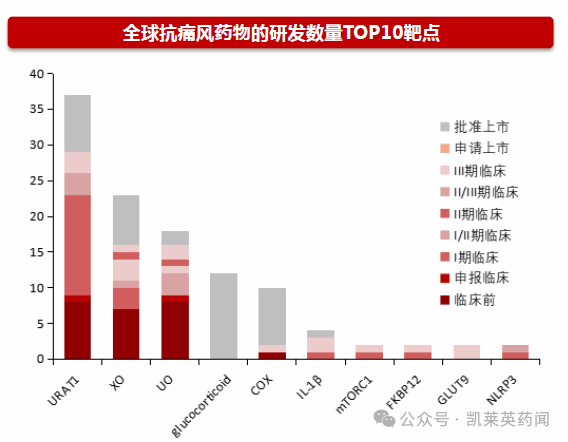
As of December 2023, there are a total of 147 drugs for hyperuricemia and gouty arthritis in clinical stages globally, with 43 already marketed (including 18 indicated for hyperuricemia, four of which are combination drugs), one filed for marketing approval, 13 in Phase III clinical trials, seven in Phase II/III clinical trials, and 21 in Phase II clinical trials. URAT1 is the most researched target for anti-gout drugs.
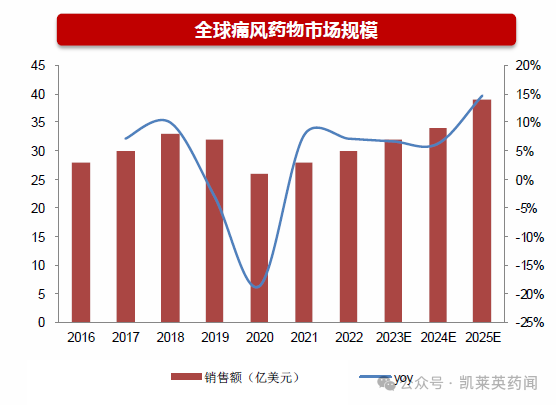
According to Frost & Sullivan data, the global gout drug market size grew from US$2.8 billion in 2016 to US$3.2 billion in 2019. Affected by the pandemic,2In 2020, the global gout drug market size decreased to 2.6 billion US dollars, equivalent to billions of RMB, is also a billion-dollar track.It is expected to grow to 3.9 billion US dollars in 2025, with an estimated compound annual growth rate of 9.1% from 2023 to 2025.
Data from Menet shows that the market size of China's anti-gout drugs exceeded 3 billion yuan in 2020. However, affected by the centralized procurement, the market size dropped to 2 billion yuan in 2021. The public medical institution terminal market saw the largest decline, with a year-on-year decrease of 40%, while the terminal market of China's online pharmacies increased by nearly 30% year-on-year.
References
1. Company Official Website
2. SDIC Securities, Southwest Securities, East Wu Securities


"Views"Click once