Novartis Announces Breakthrough with Lutathera as First-Line Therapy for GEP-NETs, Demonstrating Nearly Tripled Progression-Free Survival in Phase III NETTER-2 Trial

Novartis
Drug Development and Manufacturing
On January 19, 2024, Novartis announced the latest Phase III clinical data of Lutathera as a first-line treatment for gastroenteropancreatic neuroendocrine tumors (GEP-NETs) from the NETTER-2 trial at the ASCO-GI meeting.
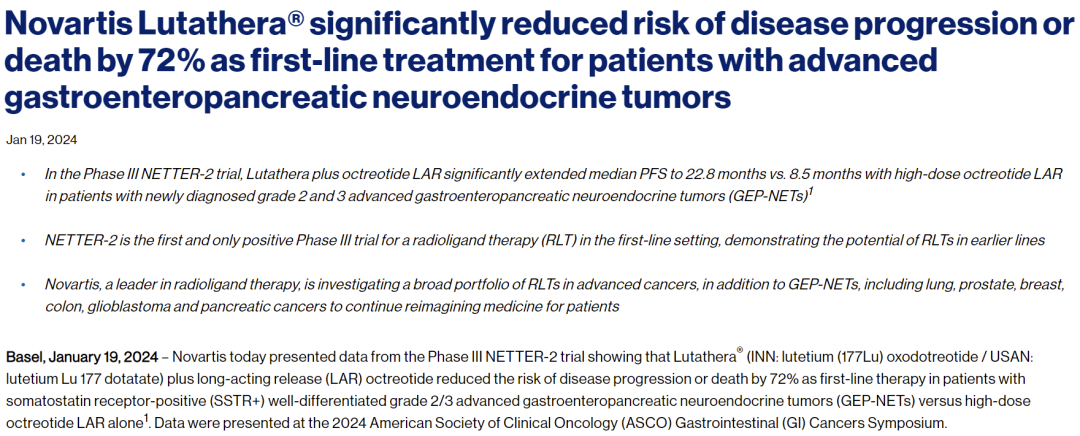
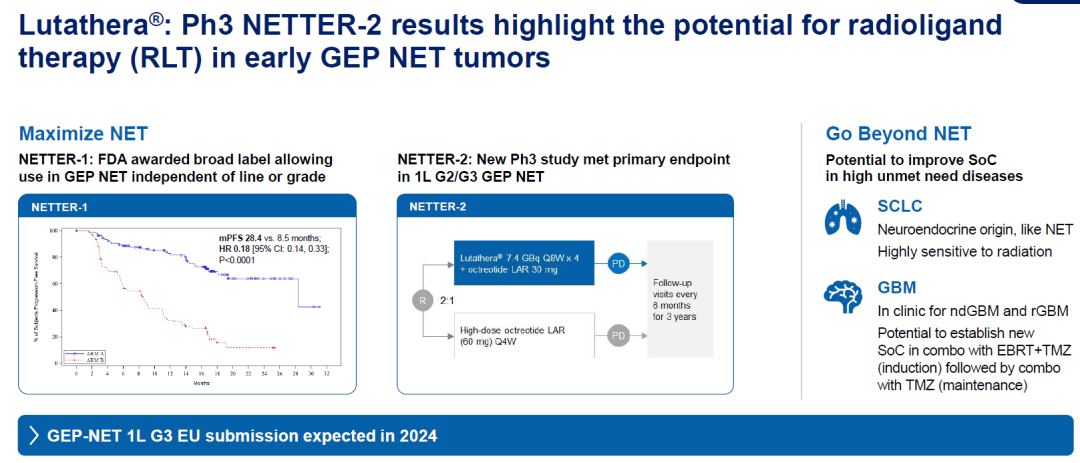
The primary endpoint mPFS was extended from 8.5 months to 22.8 months, nearly tripling, with a 72% reduction in the risk of disease progression or death, and an overall response rate (ORR) as high as 43%.

For the first-line treatment of GEP-NET, this is the first nuclear medicine therapy to obtain positive Phase III clinical data, and it is also the treatment regimen with the best efficacy and safety for this indication.

Novartis expects to submit a marketing application in the EU for first-line treatment of GEP-NET this year, while actively expanding new indications for SCLC and GBM. The sales peak of Lutathera is expected to exceed 1 billion US dollars.
Summary
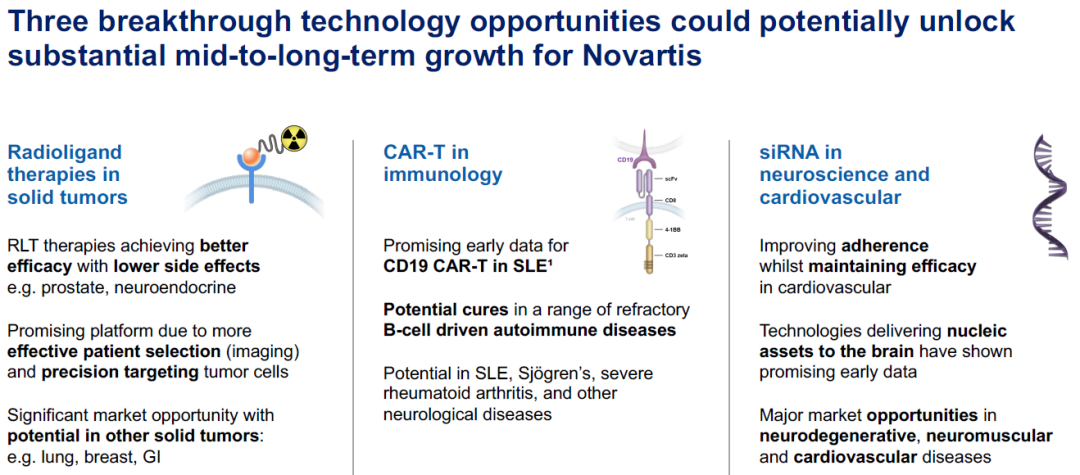
Novartis has been very active in the layout of new drug modalities, with breakthroughs mainly achieved in three areas: radiopharmaceuticals, CAR-T, and siRNA. Instead of focusing on ADC, Novartis has chosen to deepen its expertise in radiopharmaceuticals, believing that targeted radiopharmaceuticals offer better safety and can serve as an entry point for precision treatment. Novartis has already established a leading position in radiopharmaceuticals for prostate cancer and neuroendocrine tumors, while actively exploring larger market opportunities in solid tumors such as lung cancer, breast cancer, and gastrointestinal cancers.

Editor: Bai Ji
This article is a reprint from Pharma Intelligence. All images and text are owned by the original author, and the purpose of the reprint is to convey more information without representing the views of this platform. If there are any issues regarding content, copyright, or other matters, please leave a message on this platform, and we will address it promptly.